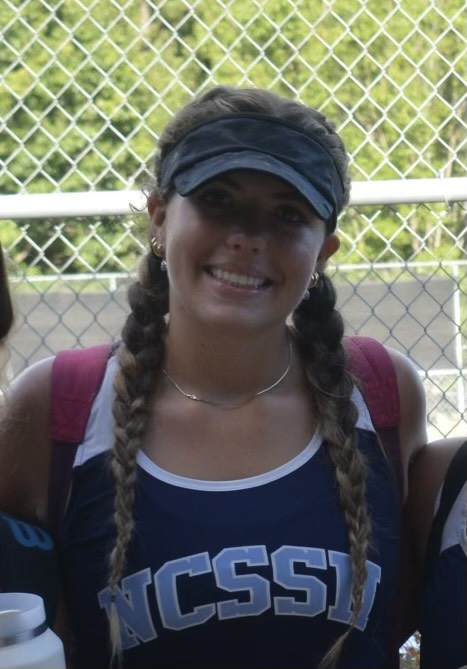
Shorty’s Famous Hot Dogs is a favorite for local hot dog lovers, including the NCSSM Women’s Tennis Team. The team thrives thanks to the dedication of juniors, seniors, and captain Lola Larsen ‘25.
A Winston-Salem native with over 12 years of tennis experience, Larsen enters her senior year balancing academics with her love for the sport.
For her, tennis is a stress reliever from her academic-heavy plate as she “goes outside and gets a good hit after a long day of class.” She aims to surpass last year’s semi-finals finish and lead her team to the state finals this season.
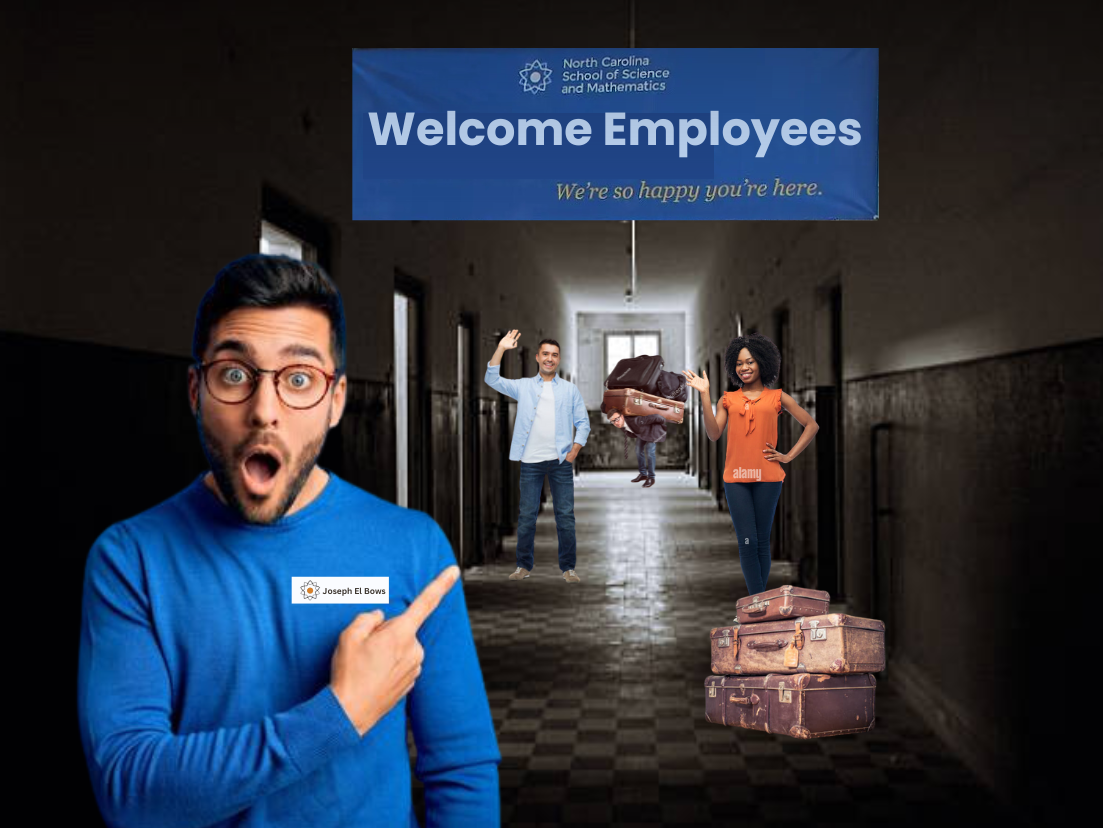
At the conclusion of an all-employee professional development session at NCSSM-Durham last month, members of the administration unveiled news that 5th Bryan was ready for employees to move in. They reportedly chanted “we are a community” louder and louder until complaining faculty members grew tired of objecting.
“So that’s why we bought that custom-made circular conference table?” a confused but increasingly aware employee, Joseph “Sharp” El Bows, observed. “Anyways, good riddance, because I always hated not being able to stare at everybody’s faces equally across the old square table. Oh, and I guess I’m excited to live rent-free.”
The move will be effective over Fall Break, while students “don’t have the chance to mess stuff up” and faculty members can move in “without a hitch,” aided by all available residential staff. This will be overseen by Dean of Students Patricia Punctly, who volunteered for the position. “Rain or shine, I’ll be there. This is a great opportunity to demonstrate that the NCSSM comm-UNI-ty has immense compassion for our students going above and beyond the scope of the classroom!” she declared, chuckling at her own wordplay.
Additionally, the 28 rooms on 5th Bryan will all be triples; an idea created by the new Director of Community Building, Wallopy Jones.
“I love that we’re finally seeing eye-to-eye with each other through the thick and thin,” said Jones. “In my past job, we didn’t get to live on school campus. We were always bored on the weekend! That’s why I quit.”
Other employees share Jones’ excitement, including Community Coordinator Mary Ramsbottom, who has been at NCSSM since 1994 and was ecstatic to live closer to her teacher friends but slightly disheartened to hear she wasn’t able to room with them. Wondering why she couldn’t invoke the “Seniority Privilege,” she was quickly shut down by the administration.
“I don’t need to share a room though, I’ve got mine right here,” Chancellor Tom Hawkins said, motioning to a hidden door on the far wall of his office, revealing a closet full of colorful sleeping bags fitting every holiday from Christmas to Tax Day. “I’m literally the chancellor of this place.”
While this move is certainly novel in a variety of ways, the consensus among faculty is overwhelmingly positive due to the convenience of residential living and the opportunity to see the relaxed side of their students.
“Sweet! In all my years at Science and Math, I’ve always wanted to work on the weekends and see what my students are really like–like, what they’re really like,” said counselor Chitan Lee. “I hate seeing my seniors through grades on their transcripts. Now that’s saying something.”
But despite the excitement of the administration, it was noted that during the professional development meeting, a fifth of the table stared at their fumbling hands in worry while imagining their work-life balance torn apart. Reporters were about to ask them for interviews before the loud chanting started and all forms of media was pushed out of the room.
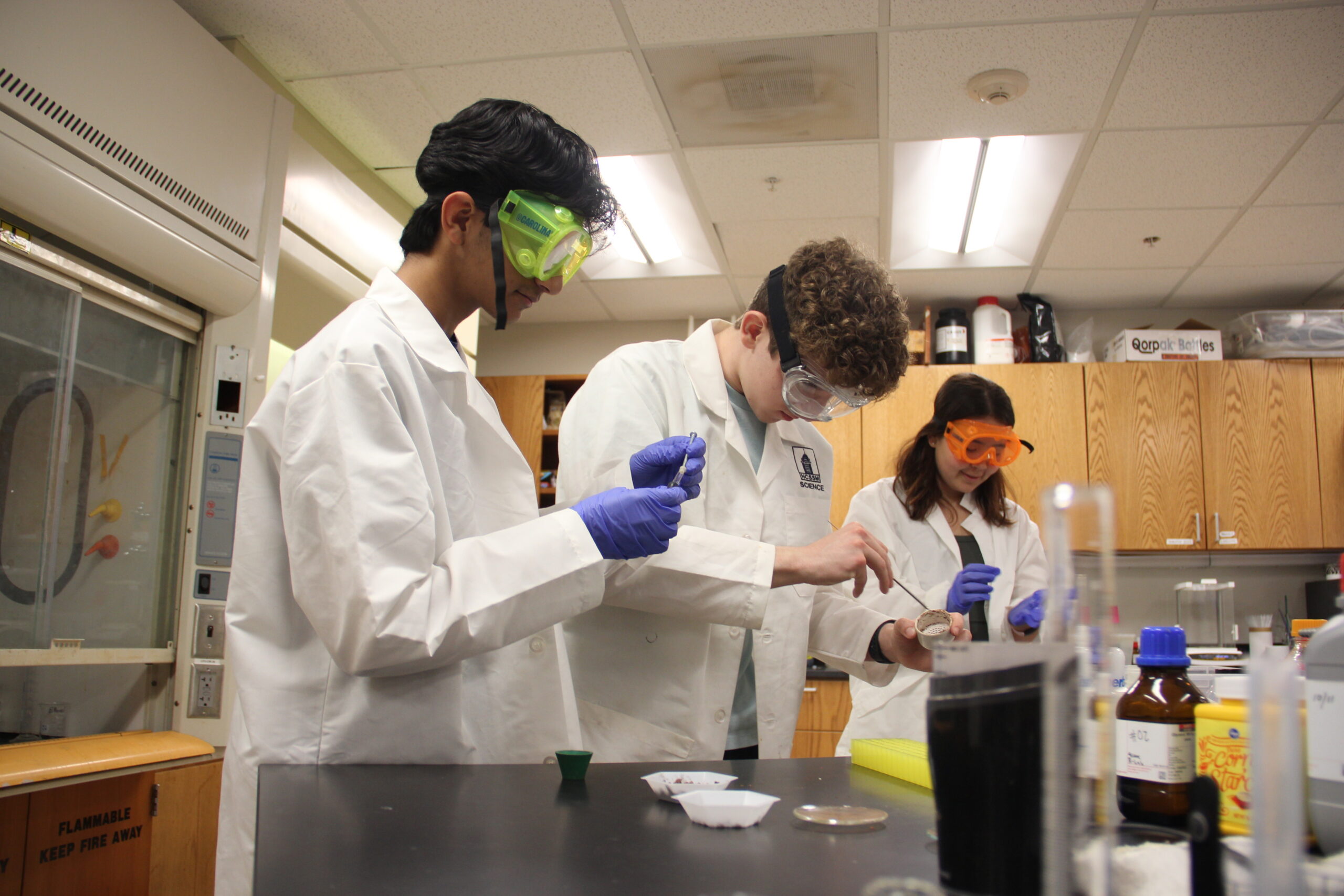
RChem students Nihar Kummetha ‘25, Matt Czar ‘25, and June Brewer ‘25. Luke Malta.
By Noah Fine, Stentorian Staff Writer
Research in Science (“RSci”) applications are on the horizon for juniors at NCSSM. What exactly are the RSci programs? Which one is right for you? What will you get out of the student research programs at NCSSM? What other research opportunities are there?
When people talk about RSci, they’re talking about four year-long courses: Research in Chemistry (“RChem”), Research in Biology (“RBio”), Research in Physics (“RPhys”), and Research in Computational Science (“RComp” or “RCompSci”). In addition, NCSSM also hosts Research in Mathematics (“RMath”). What sets these courses apart from other research opportunities?
Research starts during RSci students’ J-Term and continues through the spring semester into the Summer Research and Innovation Program (SRIP), and concludes in the fall semester of senior year. In addition, RChem, RBio, and RPhys (but not RComp) are double-blocked, which means that student researchers will be working on independent research during both F and G blocks. Double-blocking allows students the opportunity to dive into their research questions for twice as much time as in a normal class, in addition to SRIP, which is equivalent to a few months of normal class time. However, this also means that choosing to take an RSci is a large time commitment.
“Why would you want to spend hours and hours on an investigation if you aren’t enjoying it?” asked RPhys instructor Dr. Jonathan Bennett, who will be passing on the RPhys teaching position to Dr. Michael Falvo at the end of 2024.
However, RSci also gives students the opportunity to learn how to adapt when things don’t go their way the first time. “Usually there’s a point where students have had to deal with disappointment,” reflected RChem instructor Dr. Tim Anglin. “But they push through, and there’s always that time they bring me something and they’re like, ‘it worked!’”
Research in Biology (“RBio”)
In RBio, students will learn the ins and outs of research with model organisms. During J-Term RBio students spend between two and four weeks conducting a mini research project, setting a strong foundation for the skills they’ll need during the rest of the year: group work, wet bench techniques, and presenting their work, according to Dr. Kim Monahan, who teaches RBio alongside Dr. Heather Mallory.
After J-Term, RBio students begin to research questions that can be answered by studying a model organism. For example, a previous student researched multiple sclerosis by studying earthworms.
Organism choice is restricted by cost and regulations: E. coli could be a great choice, but A. mississippiensis, the American alligator, would not. Other popular organisms include C. elegans, plants, and embryonic zebrafish. Learning how to work with a student’s selected model organism—and how to adapt when their model organism produces unexpected results—is one of the core focuses of the RBio experience. Popular areas of study include neurodegenerative disease, genetic engineering, and more.
To an outside observer, RBio may feel like one big family of researchers. Dr. Monahan acknowledges that team building is “something me and [Dr.] Mallory work very hard on.” She says that learning how to communicate with peers, teachers, and those from other RSci programs is one of the most valuable experiences for an RBio student. Those science communication skills will come in handy during the spring when RBio students prepare an oral project defense, and in the late fall, when students are encouraged to submit their work to research symposiums and competitions.
Research in Chemistry (“RChem”)
RChem students solve problems using the language of atoms, molecules, and proteins. No prior chemistry lab experience is required, so RChem students spend the first two weeks of J-Term building a foundation of basic laboratory techniques, such as pipetting, as they work on a shared short-term research project. During the spring, students explore possible research questions and plan out experiments in preparation for project defenses in early April. For the remainder of the year, students work to synthesize and test chemical products.
In the past, students have enjoyed exploring environmental chemistry, polymer chemistry, and drug design. However, projects that involve research with primate cell lines or potentially dangerous chemicals may not be feasible. Finding creative ways to address problems while working around these limitations is at the heart of RChem problem-solving. The two RChem classes, taught by Anglin and Dr. Michael Bruno, work separately most days. However, there are always opportunities for collaboration between students, even those outside of RChem. In fact, Anglin says that he particularly enjoys projects that sit at the periphery of chemistry, as they allow him to collaborate with the other RSci programs.
Research in Physics (“RPhys”)
According to Dr. Bennett, each RPhys project is completely unique in terms of both research questions and techniques. Previous research topics include computationally modeling turbulent flow, building miniature ion thrusters, and a variety of quantum computing projects. Since it would be impractical to teach such a wide variety of research techniques, he explained that instruction throughout the year focuses on building the skills necessary to become a competent researcher.
Students focus on dissecting and evaluating scientific papers during J-Term, preparing them to develop a research question and write a proposal during spring semester. RPhys students then run experiments during SRIP and share their research through a poster and research paper in the fall. Students then have the opportunity to present at a professional physics conference and submit their research to symposiums and competitions. Dr. Bennett emphasizes building these skills in the hope that they will empower RPhys students even after leaving NCSSM.
Dr. Bennett highly encouraged applicants for the class of ‘26 to attend the upcoming interest meeting. “Go to that meeting, get the information, ask your question, and listen carefully to the instructors,” he said, and advised applicants to “be you, but do your homework, so you’ll be more informed [about what RPhys has to offer].”
Research In Computational Science (“RComp” or “RCompSci”)
RComp allows students the most freedom of the four RSci programs because any question that can be answered with computational methods is fair game. Past RComp projects have included facial recognition software for horses, automated dating of Egyptian hieroglyphic text, and analysis of fourth-down plays in football games.
RComp is currently taught by Mr. Bob Gotwals, who will be passing on the position to a new faculty member at the end of 2024. Dr. Daniel Egger, a professor from Duke University, is currently undergoing training to teach RComp starting in 2025.
Mr. Gotwals, who has led NCSSM’s Computational Science Department since 2006, warns that Research in Computational Science is not Research in Computer Science. For example, Mr. Gotwals advises students not to come in with the goal of learning Python code, but rather to think of Python code as a tool used to model whatever interests them.
In contrast to the other RSci programs, RComp has no traditional benchwork component. All experiments are run computationally, which means that students conduct research using either their personal computers or the Pittsburgh Supercomputing Center’s supercomputer. Also unique among the RSci programs, RComp students have the opportunity to find a mentor in the field they’re researching, who can help them understand their problem from the perspective of a researcher in the field.
Research in Mathematics (“RMath”)
RMath is a single-semester, spring course. An application to RMath during the school year does not come bundled with an application to RMath during SRIP—they are separate classes, taught by different teachers. This means that spring RMath applications are open to both juniors and seniors.
In contrast to RSci programs, where students start by developing their own research questions, RMath students begin their research by choosing a problem from The American Mathematical Monthly (AMM), a prestigious peer-reviewed math journal. Problems from AMM have only been solved once before, by the researchers who originally proposed them. Next, RMath students work in small groups to find a solution and publish their results. Particularly inventive or elegant solutions may even earn publication in a later issue of AMM.
RMath students learn how to format and typeset papers in LaTeX (a software for typesetting documents), present their findings to others, and conduct research in pure mathematics. Popular areas of research include combinatorics, game theory, and advanced calculus, but projects modeling real-life scenarios are not the focus.
“This is RMath, not RAppliedMath,” says Dr. Michael Lavigne, who will teach RMath during SRIP 2025.
RBio student Henry Hanson ‘25 observes plates through a microscope. Vincent Shen.
Advice & Next Steps For Applying
Now you’re interested in STEM research at NCSSM-Durham. What are the next steps? Attend the Research and Innovation fair and interest meetings, and then reach out to the teachers of the classes you’re interested in! Dr. Monahan says that RSci teachers are “always open if you have a question,” and Dr. Lavigne has free copies of past RMath papers on his door for interested students.
Most applications will ask you to submit some sort of project idea. Don’t take this as something that’s set in stone, instead try your best to think of something that’s realistic and you would enjoy spending a whole year learning about. Seniors who are currently in RSci are a great resource for this. Don’t be scared of applying, especially if you think that your project ideas aren’t good enough for the programs that you’re interested in.
On the other hand, don’t try to change your interests just for an application or to cater to what you think the RSci teachers want. “Students shouldn’t be thinking about how they can serve the class, it’s the other way around,” says Dr. Anglin. Think of ideas that excite you, and RSci will meet you halfway.
Finally, Mr. Gotwals emphasizes that RSci and RMath are amazing opportunities for student research, but that it’s important to remember they’re not the only opportunities. Mentorship, Research/Research Experience in Humanities (“RHum” and “RexHum” respectively), J-Term Courses Research Experience in Chemistry and Research Experience in Biology, and the multitude of SRIP programs offered each year provide opportunities to conduct research in an entirely different way, with the option of freeing up space in your schedule to take more classes that interest you.
Research-intensive classes, labeled with “*R*” in the course catalog, are also an opportunity to learn valuable techniques used by scientists in the field through a significant research project.
If you are willing to accept the challenge, NCSSM has a research opportunity for you.
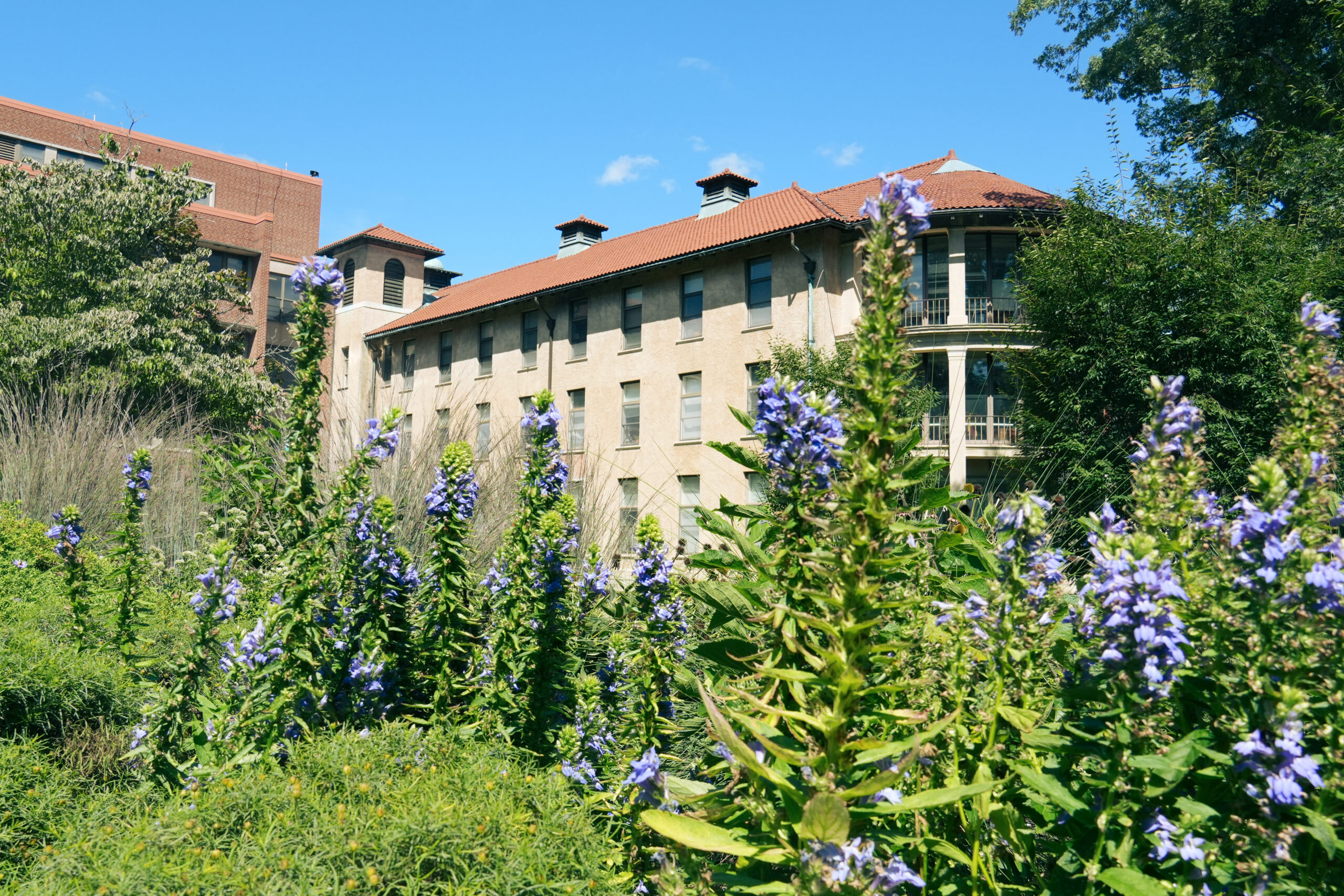
Sage plants in front of Bryan lobby. Vincent Shen.
By Lily Frank, Stentorian Staff Writer
On February 12, 2024, Governor Roy Cooper signed Executive Order 305, requiring that all North Carolina state property would be planted with native N.C. plants and seeds. This included NCSSM’s campus within its radius of influence. NCSSM was ahead of the curve with efforts in October 2023 to fill gardens with native plants.
NCSSM, however, had never had permanent garden features. With students leaving every two years, it became clear that there was no way to create “continuity” within the gardens as they were now. As biology instructor Dr. Heather Mallory pointed out, “It’s been hard and sad to see students put effort into planting a garden, and then it gets full of weeds, and things take over.”
A few years ago, the area in front of Bryan was filled with bushes that provided little for the space they took up. However, an opportunity presented itself when the previously planted bushes were bulldozed, creating a completely new space.
Dean of Science Dr. Amy Sheck, Plant Facilities, and many teachers, including Mallory, have led the recent changes that blossomed around campus. As required by the Executive Order, these gardens are focused on building a beautiful native ecosystem as well as acting as “an educational asset” that allows for “data collection, data management, data analysis, and opportunities to look at mutualisms, predation, and other symbioses,” according to Sheck.
Planting began last October. “I think it was Halloween because people came in costumes. It was quite the scene, but we got it all done in one afternoon.” Sheck recalled.
Then, in April of this year, the meadow was planted on the slope along Beall lawn. Around five hundred plants went in, which amounted to about forty species of native seeds. The idea is to keep it watered through the first year, and then after that, the gardens will take care of themselves because they are filled with well-adapted, hardy native plants.
Since April, these plants have grown quickly, with flowers blooming in time for move-in this fall and tall grasses filling in the slope. These flowers drew in various pollinators, including bees, wasps, flies, and butterflies. According to Sheck, “35 percent of the food plants we eat depend on pollinators,” so making space for them within our environment, even on campus, is vital. This also gave the Ecology class at NCSSM a chance to take the first census of pollinators, which may act as the “beginning of a long-term data set.”
Yet, managing such extensive gardens poses its own set of challenges. Five hundred plants in one garden is a lot. On top of that, there are about six other central gardens on campus, which has created an issue.
“We’ve got all these wonderful gardens; we just don’t have enough people to maintain them,” said Mallory. Previously, they would hold “garden days” where they would pull weeds and mulch with students and staff who volunteered, or clubs such as the greenhouse or garden club would help out frequently.
“Garden TA was a specific way to have students get interested, gain on-the-ground experience, do the weeding for certain gardens, and make decisions about plantings.” Mallory stated. It was about “having a group of individuals take ownership of the gardens.”
Through Sheck, teachers, staff, and students, the gardens around campus now have a clear plan of maintenance and care and ways for everyone on campus to get involved–whether through senior leadership, volunteer events, or clubs. These gardens are meant for everyone on campus and can act as an educational and propagational tool to spread the knowledge and seedlings of native NC plants.
As Sheck put it, “I’d love to give away plants to students and employees each year and spread these fantastic native plants.”
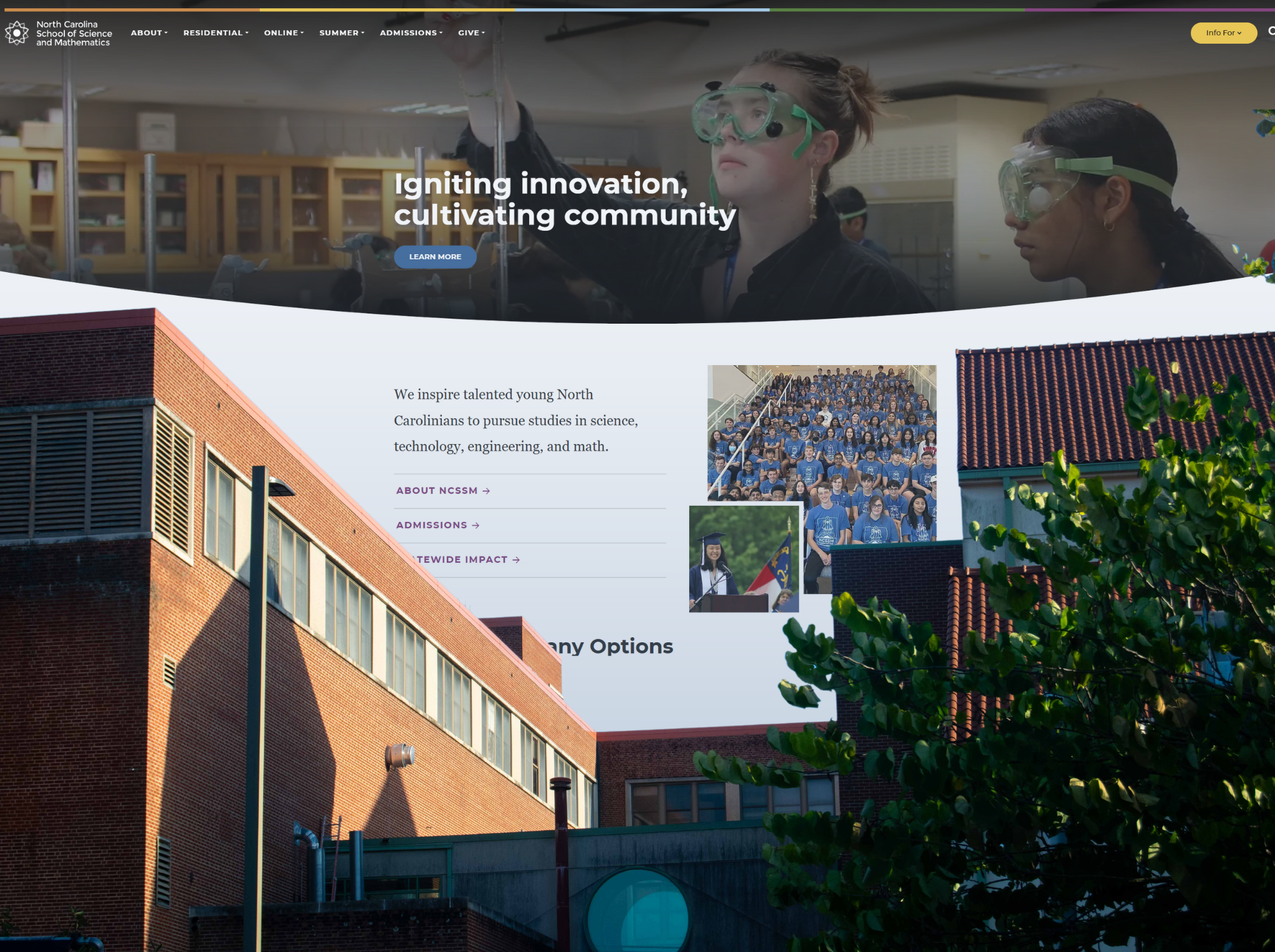
A viewer visiting the school website at ncssm.edu can immediately see the huge words, “Igniting innovation, cultivating community.” Inspiring words, but what does this really mean?
Initially, I did not plan on writing about the ncssm.edu website at all, considering it was redesigned between November 2021 and October 2023, according to webmaster Will Mack. Not to mention mixed concerns about the student newspaper giving any form of criticism to the school that governs it and has the power to shut us down. Yet, as a senior, with the student body gaining a larger digital presence, it’s time to take a stand.
The ncssm.edu website is the epitome of selective attention in representing a student body. Like the illusion of validity in politics, what is visible is superficial: there are very few families and applicants who wouldn’t like to be a part of the residential, online, or summer programs that NCSSM prides itself on in every marketing and outreach campaign. The reputation this selective marketing builds is outdated and reductive to the school’s current and prospective students.
Mack wrote that the website redesign was a two-year effort that “collected feedback from students, parents, faculty, and staff…to make it easy for new folks to understand what the school is, what its programs are, and which might be right for them.” But it’s hard to see what the school offers beyond research programs and how prospective funders can donate.
“Yes, we want to prospective students to check out the website, and for parents, donors. But there’s nothing really about the students,” said Chidera Ezenwenyi ‘25. “There’s a residential program. There’s online. There’s summer. But no actual student activities. It doesn’t showcase anything that we do.”
When you dig even a little bit deeper, it’s clear that the school administration’s idea of a good website is a good advertisement to expand, not to intensify–even if it means leaving voices from its employees and students behind.
If you’ve taken a look at the walls of Bryan lobby at all, the website’s tendency to wrap the school in vague and flowery language would not come as a surprise, but nonetheless a disappointment. As they claim to help “talented students find their niche and realize their potential,” they lag significantly behind in showcasing what niche and potential. While they say they promote a “highly talented, committed, and diverse workforce,” the supporting data is always behind a “coming soon” label or none at all, and they expect employees to make personal sacrifices out of compassion and loyalty to the school.
Even when they try to provide a window into what accomplishments or projects that students are working on, the news that are provided to the public are narrowly filtered into three types: the first or last day of school, retirees, and national/international recognitions. Everything we see in words seems prideful and great, but the coverage thoroughly undermines what else students can do once they come to NCSSM.
“Igniting innovation, cultivating community”
Now, I’m not an opponent of innovation and community. I love trying new things and socializing with people as much as anyone who lives under the sun. But the fact is that bragging about what we’re already the best at does nothing to innovate or grow the external–or even internal–community’s perceptions of NCSSM.
According to their website, third on NCSSM’s Strategic Plan 2024-2030 is to use an equity-oriented approach to meet student success and wellness needs, by implementing new and expanding existing programs that increase “faculty, staff, and student intercultural competence and humility” and give an avenue for students “to provide and receive feedback about their academic experiences.” While this is a valid objective for a diverse school, the first priority should be mitigating the causes of student dissatisfaction and troubles, whether that be academically or emotionally. Otherwise, they will just be plugging one hole while digging a wider one right next to it.
Once a student is accepted into the school, they tend to not visit the website at all, as Ezenwenyi and his parents never did. “I feel like everything is in Blackbaud, I’ve never had to go to this website for anything, which, in contrast to my old school, I definitely used the school website a lot,” he said.
At times, ncssm.edu’s lack of coverage speaks just as much as their coverage. We know that if something or someone is repeatedly covered in media, then they must be important to that media. It is telling when NCSSM’s idea of innovation and community, usually in the form of news coverage by communications specialist Brian Faircloth, barely even encompasses anything other than achievements in math and science.
Using the website’s search feature, we can see there are six mentions of Christina Koch ‘97, four of which are feature stories, and three of which contain primary-source quotes from her. Searching Rhiannon Giddens ‘95–Grammy Award-winning musician, MacArthur recipient, and Pulitzer Prize winner on vocals, fiddle, banjo, and viola–yields three stories, all of which are of recognitions to accolades.
In none was she directly interviewed by an NCSSM affiliate; all her remarks were outsourced from other mainstream media or her social media accounts. Prior to RexHum class, I didn’t even know Giddens was an alumnus, nonetheless that she was the banjo player in Beyoncé’s “Texas Hold ‘Em.” The selective perception is complicit even in searches of George Cheng ‘24, dubbed “STEM powerhouse,” who has three in-depth feature stories with interviews.
Regardless, if we are truly trying to build an innovative community encouraging students to think outside the box, we cannot continue to be an advertisement for the same old elite STEM education. If prospective students come to NCSSM only knowing the names of fancy-sounding courses and faulty links to Google Documents, then they will not be able to grasp what a vibrant community this campus really holds.
Students’ Definition of Student Culture
The team who worked on the website was comprised of the NCSSM Communications Team, ITS, External Relations, NCSSM-Morganton Administration, and the Communications Council, which is a representative committee of all departments at NCSSM. When asked if the purpose of a high school website should be promotional or as a window into current student life, Mack said they were “deliberate at making the primary purpose of our outwardly facing website to be introducing new people to NCSSM and all it offers.”
While it is understandable that NCSSM is an unusual school, it’s surprising to hear the team’s interpretation of “student life”: “Of course, a very important part of making that appealing for them is showing them glimpses of current students’ experiences, so we do seek to offer a window into current student life in all of the programs from Residential to Step Up to STEM to Summer Ventures to NCSSM Online and more.” Is that what students would expect to represent their everyday experience as a NCSSM student?
Taylor Eason ‘25 described what good qualities of a school website should look like, pinpointing the outdated news articles. “Honestly, being frequently updated to showcase what’s been going on in the clubs.” she said. “We have news about meeting the students, but [for example] in ‘NCSSM lets students craft tailor-made science research experiences,’ that student graduated two years ago.”
Eireann Marcus ‘25 added that the last quote from any student on the website was from 2023. “We don’t know who they are, and the pictures don’t help,” Marcus said.
What we need for a closer-to-true representation of NCSSM student culture is frequently updated information on ncssm.edu. Nevermind that we have 150+ student-run clubs and organizations across the two campuses; if the current website has a page for student publications, then we should continue to update all student publications whenever one is released, or ensure there are resources available to direct site viewers to the domains that students directly control. In the first place, student publications are supposed to be a representative showcase of students’ work and stories, and it’s advantageous for NCSSM to have four school-sponsored ones (Broad Street Scientific, Blue Mirror, Fifth World, and The Stentorian).
Ezenwenyi also thought of ideas. “I think the good qualities of a website are resources for the school students, and maybe some stuff for some parents. Having an interactive slide with photos of events that we do could also help,” he added.
Promoting the school, from an admissions and funding perspective, is inextricably tied to widening the outlet for student expression. Sure, this is an idea that might have complications that give a fraction of more work to the administration or webmasters to do and might seem like a wild risk to take for both publications and the school as a public institution, but that’s what igniting innovation means.
Letting Down Our Reputation As The #2 Best Public High School in America
I won’t argue that the website does have aesthetic appeal, and some functionalities are quite convenient. I like how each block looks different. I like our colors. I like the resources of the library. I like the ticking numbers that show our impact metrics. However, the vagueness of what students are doing to achieve those metrics graciously permits us to examine closely some of our school’s opinions and poll results on the Internet, since they’re not available on ncssm.edu.
NCSSM brags about their influence (do we not?); Institutional Effectiveness reports our total enrollment, including residential, online, and Connect students, represented 94 out of 100 North Carolina counties last year. NCSSM is ranked number one in Best College Prep Public High Schools in America and number two in Best Public High Schools in America. Well, let’s take a step back. Are we satisfied with where we are now? For instance, while the average graduation rate is 99 percent, the average SAT and ACT scores are 1440 and 33 respectively.
Is this all the “elite, academic reputation” that the NCSSM administration, the Board of Governors, the Board of Trustees, alumni, families, and donors want to see? The website certainly doesn’t live up to the standards the school has touted. It’s almost as if we, the students, aren’t solely academic machines but real people with breathing backgrounds and multiple disciplines to devote our bodies and minds. The same goes for faculty.
“There’s a navigation bar but it’s about residential, online, summer, and admissions, but NCSSM is so much more than those things,” Eason said. “How are you supposed to promote it if you don’t know anything about what it’s like to actually be here?”
Unless a student is one of the lucky chosen few who get a story done by Faircloth, students come and go without leaving a trace of their impact. Only if we are lucky enough to have access to social media, we can see the memorabilia of posts and past officers of clubs and organizations. Only if we are lucky enough to be permitted, tech-savvy to create a digital archive, or insistent enough to see real-life proof, we can access records of past students’ work, and likewise be inspired by their stories of struggle then success.
Is all of this the special legacy students want to take away from their two years at NCSSM?
If NCSSM’s website continue to be selective of our school’s student culture and life, we will forever be running on a hamster wheel of vague goals, blatant inappreciation, and laziness. We will constantly be asking ourselves the same question: where do I see myself in my “elite” school? Yet, the answer will always remain the same: we don’t.
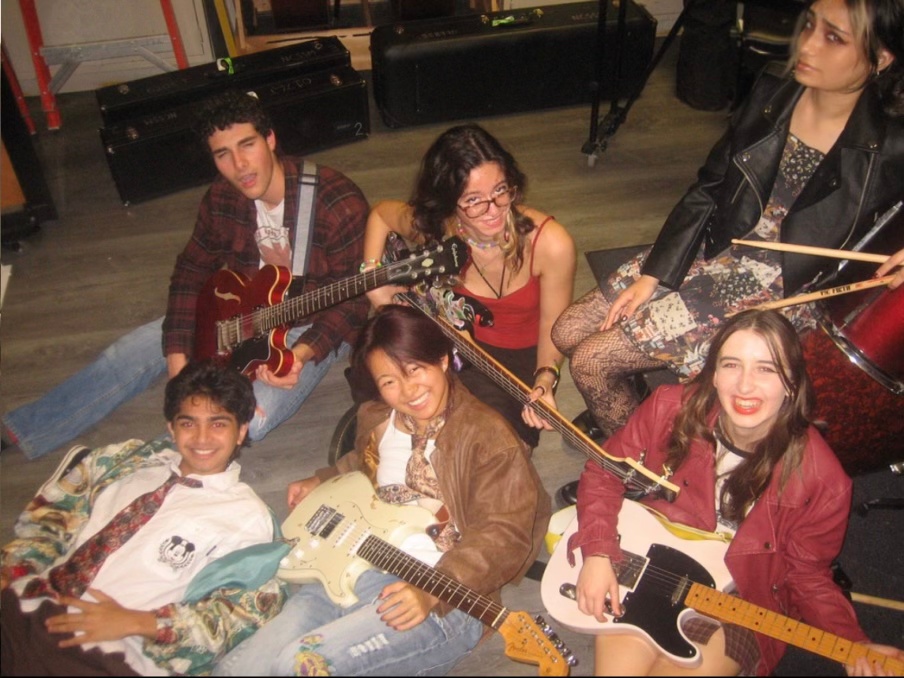
With the stress of everyday life at NCSSM, it can be difficult to develop passions with your friends, much less start a whole band. But not for this group! Here’s the “scoop” about Big Spoon!
Big Spoon is NCSSM’s very own student-led band, playing the songs of their choice at a variety of school and community events. Big Spoon was founded in 2023 by Grand-Senior James Dudek ‘24,. who wanted to create something where students could come together to make music and build bonds. Along the way, he found some friends that shared his passion, and they started the band as we know it.
The History
The name was not always Big Spoon–the group thought of many possible names, including “Dubious Boobius” and “The After-Hours,” a reference to their late practice times. The final name came from one of the original members’ roles in the spring musical Beauty and The Beast, and from then on they were “Big Spoon.” They have since performed at every Koffehaus–the school’s monthly outdoor talent show–and created Unipalooza, NCSSM’s own spin on Lollapalooza, a mini concert full of music and friends.
Even though all of the original members of Big Spoon have graduated, Big Spoon is still at large! This year will be the third generation of Big Spoon, aptly named Big Spoon the 3rd. For long-time and incoming Little Spoons (the nickname for their fans), here’s what they’re stirring up!
Meet This Year’s Spooners
Shirley Tian ‘25: Hey!! I’m Shirley–classical pianist, indie-rock guitarist, and guitarist for Big Spoon the Third. My top artists right now are flipturn, Radiohead, and Fiona Apple.
Isaac Bosman ‘25: Hey I’m Isaac and I play lead guitar for Big Spoon. My top three bands are My Chemical Romance, Mayday Parade, and Blink-182.
Kahaan Khatri ‘25: Hello I’m Kahaan, I love playing piano, I have plans to learn guitar, and my favorite artist right now is Crying City!
Hazel Cochran ‘26: Hi! My name is Hazel and I’m so excited to be joining Big Spoon as lead vocals. I also play guitar, bass and piano, so you might get to see me on those too. My top three artists would definitely have to be le tigre, Mitski, and Ludwig Goransson. I can’t wait to get onstage and play music with the band, and I hope to see all of you there!
Anna Tringale ‘25: Hi! My name is Anna Tringale, I’m from Mooresville (originally from Detroit) and I’m the biggest, baddest bassist for Big Spoon this year! My three favorite artists are System of a Down, Stromae, and PSY!
Jiya Zaveri ‘26: Heyy, I’m Jiya and I’m from Greensboro (shoutout northwest!) and I’m on drumset for Big Spoon this year. Some of my favorite artists are The Neighborhood, Ethel Cain, Maneskin and Arctic Monkeys, and I’m so pumped to play for you!
Big Spoon The 3rd
This generation of Spooners plan to be just as active as the Spooners before them. To get the inside scoop, I interviewed lead member Shirley Tian and lead guitarist Isaac Bosman ‘, slightly adjusted for clarity:
What is your personal history with Big Spoon?
Tian: I started playing guitar about a year and a half ago, and I really enjoy it. I remember going up to the Physics department and playing their little pink guitar. I was already close with some of them (the members), and Linda [Xue ‘24] finally got me into it. They asked me to play “Bags” with them on the piano.
Bosman: I’ve always been into music with orchestra and guitar. James asked me to sing at the last Koffeehaus, which I said no to, but I did end up playing guitar. After that, I just started jamming with them.
What is your fondest memory with Big Spoon?
Tian: My fondest memory is goofing off with the band during practice. We’re all there to have fun, and it’s nice to just have fun.
Bosman: My favorite memory was Malcolm [Louigarde ‘25] screaming his heart out to “Butterfly Wings” at Unipalooza.
To you, what is Big Spoon all about?
Bosman: Big Spoon is all about the people and the music. We just get to make music with cool, talented people.
What advice do you have to anyone who wants to get involved with Big Spoon?
Tian: Reach out! We love it when people come jam with us. You can message us @bigspoonband on Instagram or reach out to me or Isaac @shirleybirleyy and @isaac.bosman.
Big Spoon plans to play at every Koffeehaus this year, and around May 3rd they will be hosting another Unipalooza! Come see them–there’s something for everybody!
As a journalist and scientific mind, it is my job to question that which no one has and adventure into the mundane. I was taking my daily stroll down to Hunt Kitchen to feed Sam, the Sink Sea-Creature, as no one has been shoving food down the sink for him to eat (or so he tells me), and stopped to remark upon the unremarkable, or so it seemed.
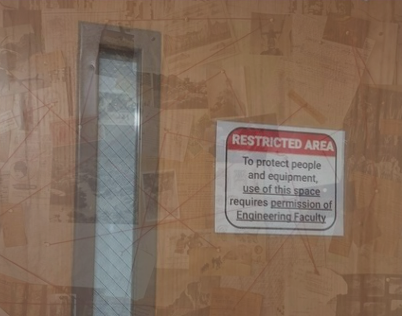
An unassuming door labeled “Restricted Area: To protect people and equipment use of this space requires permission of Engineering Faculty.” Now this got me thinking, what does the school have to hide from us? I had to drop this thought as I heard the yelp of a student who Sam had eaten. Sea creatures can be so melodramatic sometimes.
Later that night I was sitting in one of the Hunt couches trying to unpack why Chris crossed Applesauce and what could be done to repair the friendship, when I saw two zebra-striped jacket-wearing cloaked figures enter the restricted area with a suspicious box. I watched them closely, and they left with no box.
Unbeknownst to these figures, a thin, strong yellow strand, of what seemed like hay, fell out of their sleeves when they went to lock the door. I picked it up and ran to my room to add it to my “Is J-Todd A Lizard” board. Chris then called me to remind me about my mission. I thanked him and quickly made a “Is the Restricted Hunt Room a Cult Meeting Place?” board.
I had the evidence, but I needed a plan of attack. Then I remembered something: the figures were wearing zebra-print jackets for the Zebracorns, one of the school robotics teams! All I had to do was pretend to be a part of the team, and BOOM–I would be in.
The plan worked like a charm; all I had to say was that I was an important robotics person, and suddenly they all wanted my secret knowledge. Which, of course, I would have to give them in secret.
They led me inside the room, and a foul stench hit my nose: horse manure. Upon them leading me further inside, I was horrified but impressed. There were at least 100 zebras all in their own pens. Mysterious cloaked figures were feeding them and brushing their hair.
I quickly remarked on how that is a lot of zebras for a high school robotics team, to which they replied in the most nonchalant way that they skin them for their uniforms. Like an upstanding civilian, I whipped my phone out of my pocket to call PETA, but just as I did, Chris called me first!
My cover was immediately blown, and I had to sprint to safety. Unfortunately, the only place I could think of was under the sink with Sam. If you see this, save me first then save the zebras.
“He’s right behind me, isn’t he?” I say as the guy who I knocked out is right behind me. Comedy gold; I won the Oscar for that one. If you’ve been tuning into the recent movies to come out of the Marvel Cinematic Universe (MCU) lately, you are no stranger to moments such as the one above.
It’s no secret that the MCU has been on a decline in terms of quality ever since they started toying with the multiverse and making sure that no decision actually has any weight because everything can be undone. So, to see another Deadpool movie come out was really refreshing. Finally, something that can be compelling but not take itself too seriously; y’know how long I’ve been waitin’ for this? I saw it in theaters opening weekend, although I was unfortunately not able to snag one of the gorgeous limited-edition popcorn buckets. It’s safe to say that while I was not disappointed, Deadpool is not Marvel Jesus.
Deadpool and Wolverine, aka Deadpool 3, is an action comedy starring Ryan Reynolds as Deadpool and Hugh Jackman as Wolverine. The movie follows Deadpool after the events of Deadpool 2 and in the plot conflict of saving his timeline as he knows it. To do so, he must find Wolverine, and after an iconic dance scene with Logan’s bones (seriously, search “Deadpool Intro Bye Bye Bye” on YouTube; I promise it is worth your time), he hops dimensions to find another Wolverine. Through a series of well-placed cameos who will make a name for themselves and a captivating emotional scene to Madonna’s “Like a Prayer”–one that I have watched too many times–they ultimately save his universe. Vague description, I know, but I’m dedicated to giving no spoilers.
Overall, the movie was fun and lighthearted. I recommend seeing it if you need a good laugh and are into Deadpool’s humor or if you want to get the hidden references throughout this article to a card-slinging Cajun.
However, overall it was the same movie we have been seeing from the MCU, but this time with more provocative jokes. It ran through the “Oh no, my timeline, gotta go save it. Look at all these wacky hijinks and weird characters made possible by the multiverse. Oops, we spent so much time with wacky hijinks we forgot to make a complex villain, but that doesn’t matter because our hero just saved the day through the power of human connection.” Which is something we’ve seen a thousand times now.
While Deadpool and Wolverine is definitely better than most of the stuff that we’ve seen come from this era of Marvel, I don’t think it single-handedly saved the MCU. But who knows, with movies like Blade and The Fantastic Four: First Steps scheduled for 2025, this may be the start of something new.
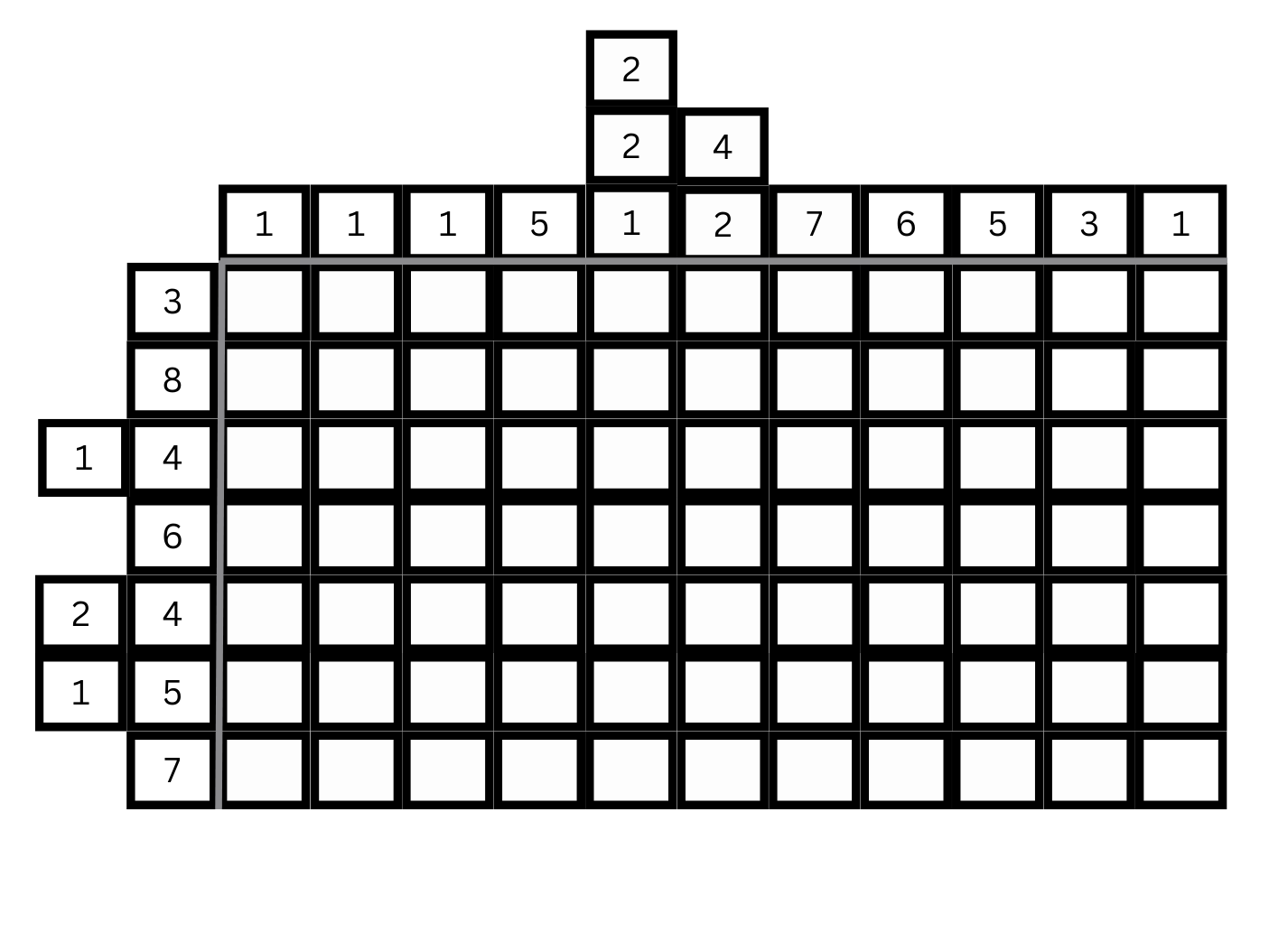
Fill in the blanks to reveal a picture! Fill in the blanks according to the columns and rows. Each row and column has numbers to the side to tell you how many consecutive numbers are in that column/row. Read them top to bottom and left to right. If there are more than one number, that means that there is one space between the consecutive blocks.