Author: bg.stentorian

  • I Love Hopi Hot Beef, and Other Things About My The West! J-Term

    I Love Hopi Hot Beef, and Other Things About My The West! J-Term

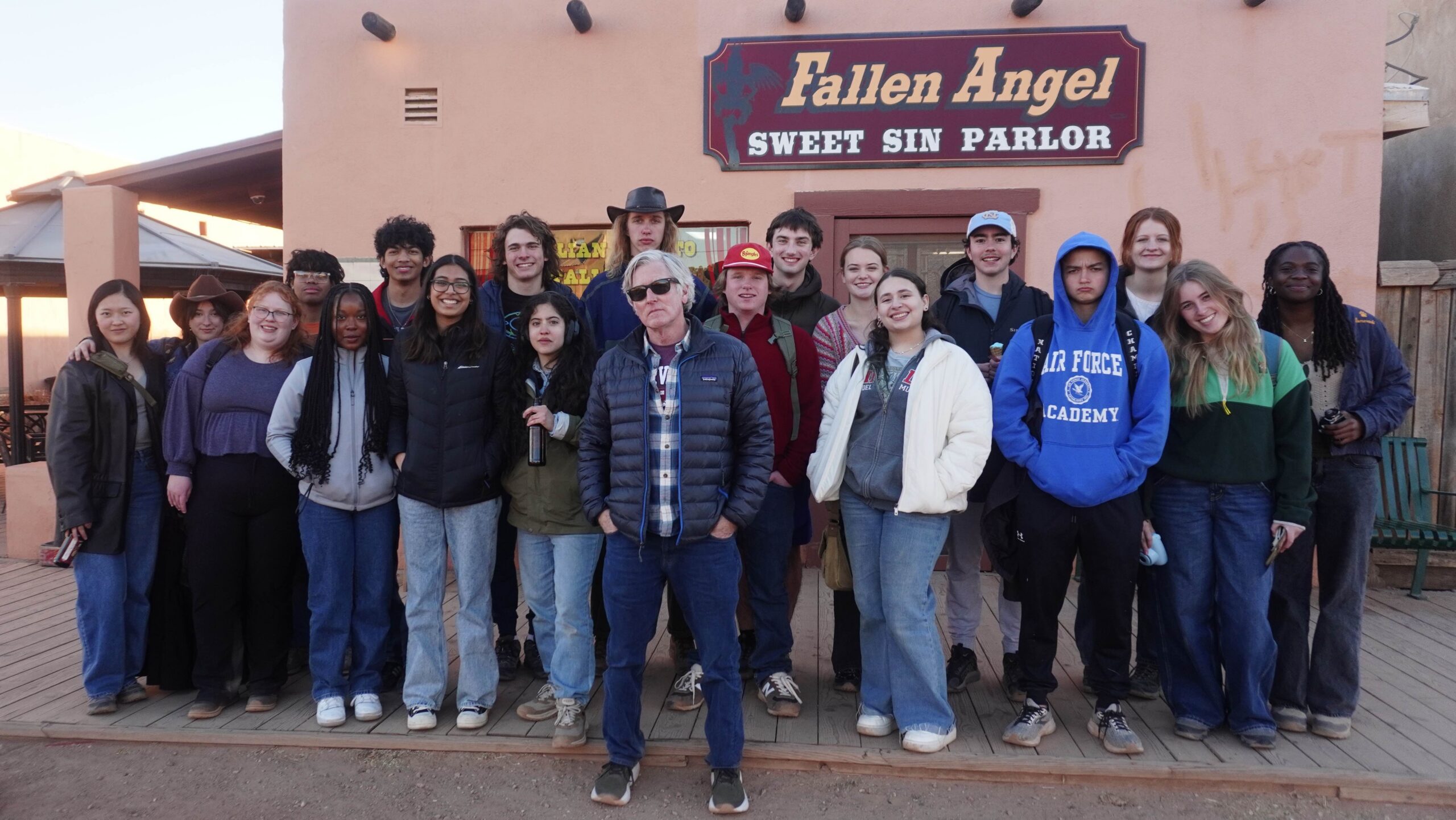
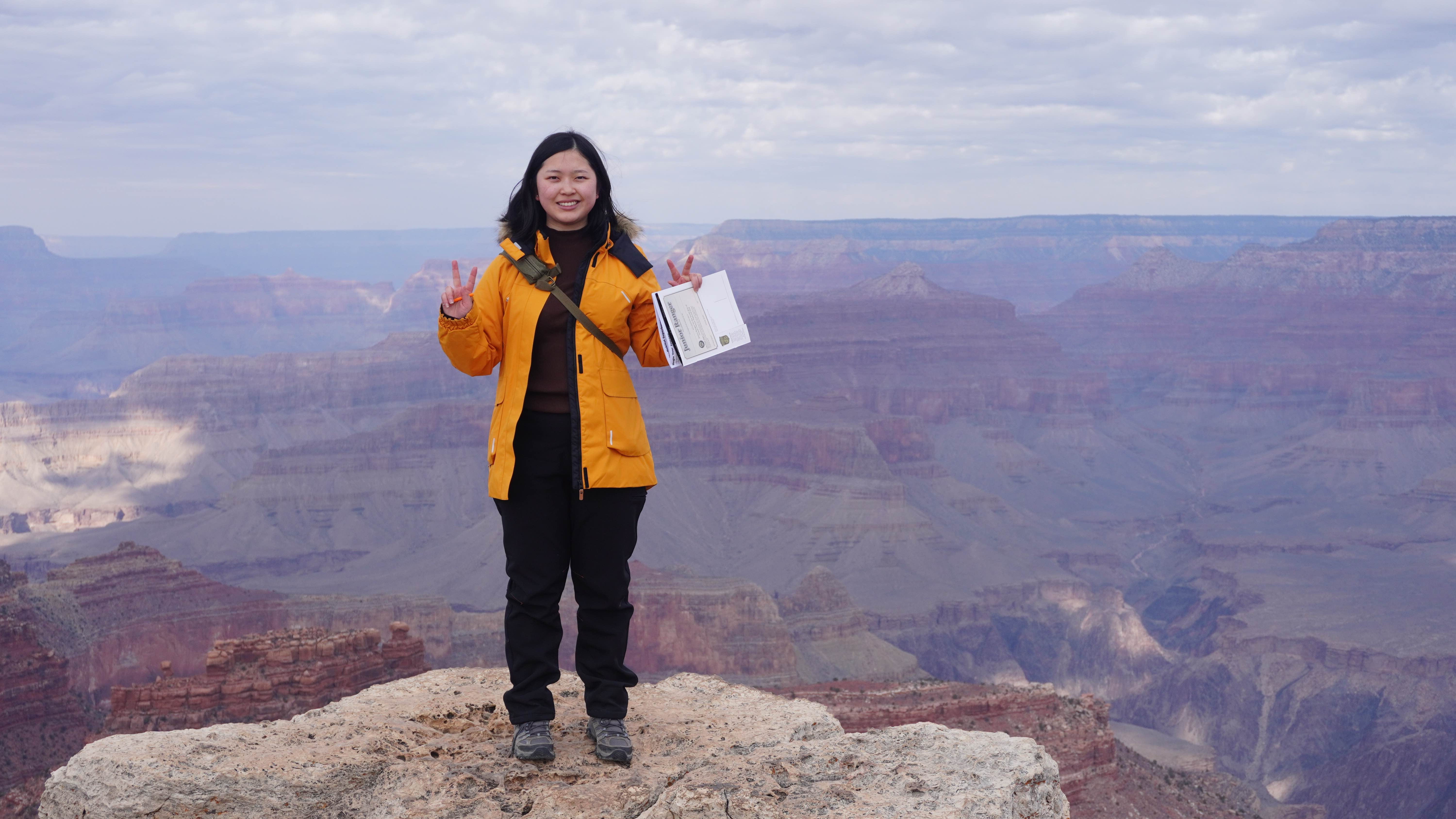
    I became a Junior Ranger of the Grand Canyon South Rim on my trip. Apparently, I am the 5th student to do so in the past 10 years of this trip, according to Dr. Cantrell. (Teresa Fang/The Stentorian)

    By Teresa Fang, Stentorian Editor-in-Chief

    I rarely plan my trips, and I always leave some space in my suitcase. Lack of prior knowledge and lightness are the two patron saints of a good journey, in my opinion. As the saying goes, those who travel with a light load have the best adventures or something like that. “The wealthy travel light,” but in my case I’m wealthy in my immense lack of knowledge, as I looked at the itinerary for my JTerm to Arizona the night before the first flight.

    Since emailing our trip sponsor, Dr. David Cantrell, my reasons for wanting to go on the To The West! JTerm trip in the spring of 2024, it’s come full circle; again a very wealthy bank of memories that reminds me why I like the movie Rango (2011) and the hardy terrain of a cacti-filled desert. In the week traveling from Southern Arizona to the North, I’ve learned so much about the landscapes, but even more about the world. Every museum and interaction with locals is a chance to absorb appreciation and wisdom, just like saguaro being physical forms of spiritual ancestors of the native tribal people.

    Through that week in Arizona, here are a few things I’ve taken away, and that I continue to remind myself.
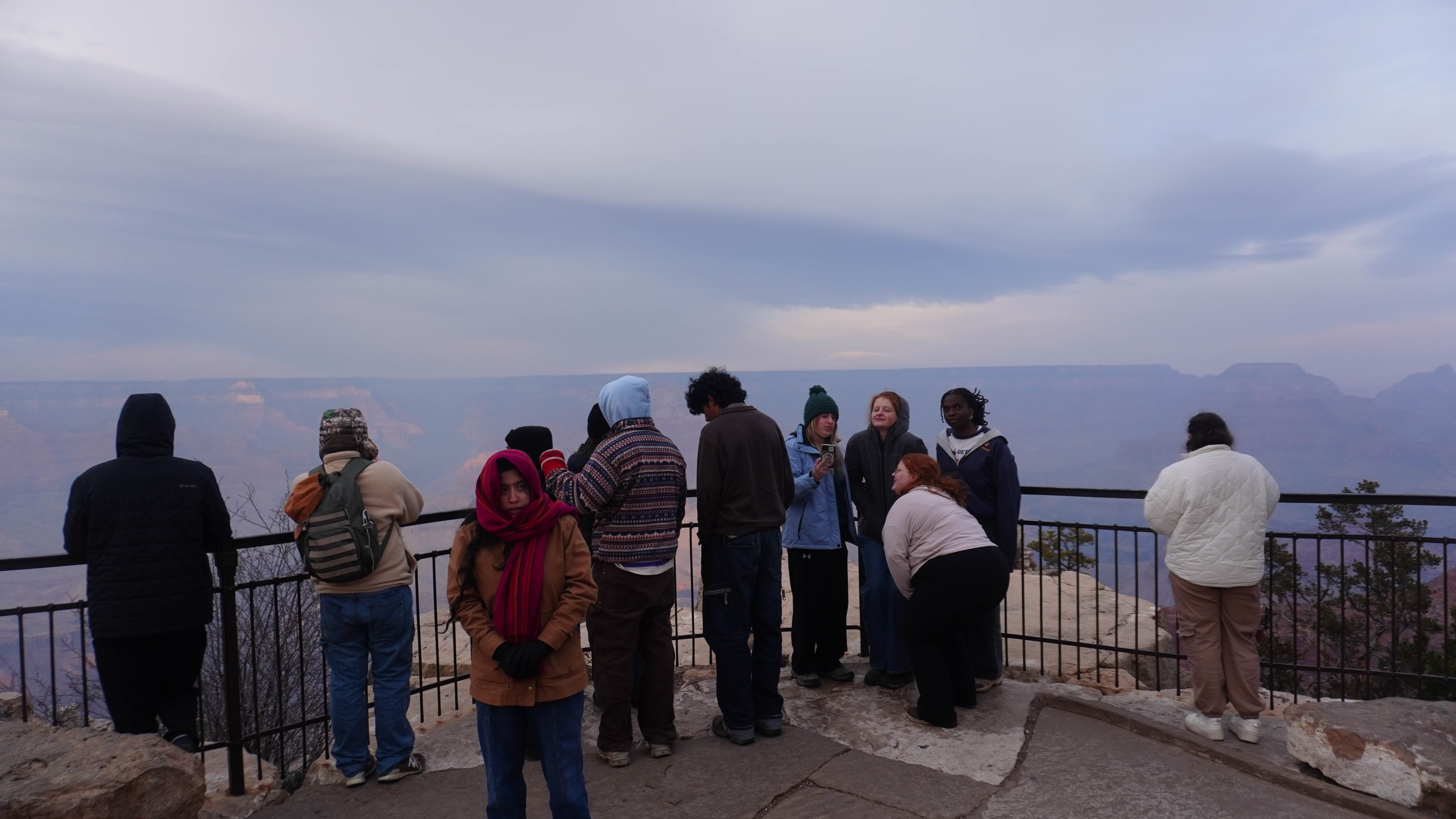
    The group takes in the view at the South Rim of the Grand Canyon. (Teresa Fang/The Stentorian)

    Appreciating little bits of happiness

    On the first day, I got lost—mentally, at least. Waking up at 3 a.m. is not for the weak, and as I boarded the shuttle at the Phoenix airport, watching the barren, beige-coded hills felt so out of pace with my life in sheltered suburbia—the world of neat lawns and nice cars, where grass was the shade of emeralds and Sprite, where political posters sprinkled every intersection. Phoenix, Bisbee, Flagstaff, the Hopi reservation—each place, a stark contrast.

    At the Hopi reservation, I kneeled in a millions-year-old bed of shells overlooking a huge limestone canyon. Our tour guide told us to express our thanks to the earth. I’m not religious or spiritual, but in that moment, I felt incredibly grateful. It’s amazing to think this Earth is the same Earth that everything I have seen in museums has also lived on and interacted with. It’s amazing to see exactly how the Hopi ancestors interpreted and interacted with this Earth (and the stars) on this land, especially through my own eyes. This firsthand experience has given me another perspective on what it means to live in the now—with appreciation and cautiousness of the past.
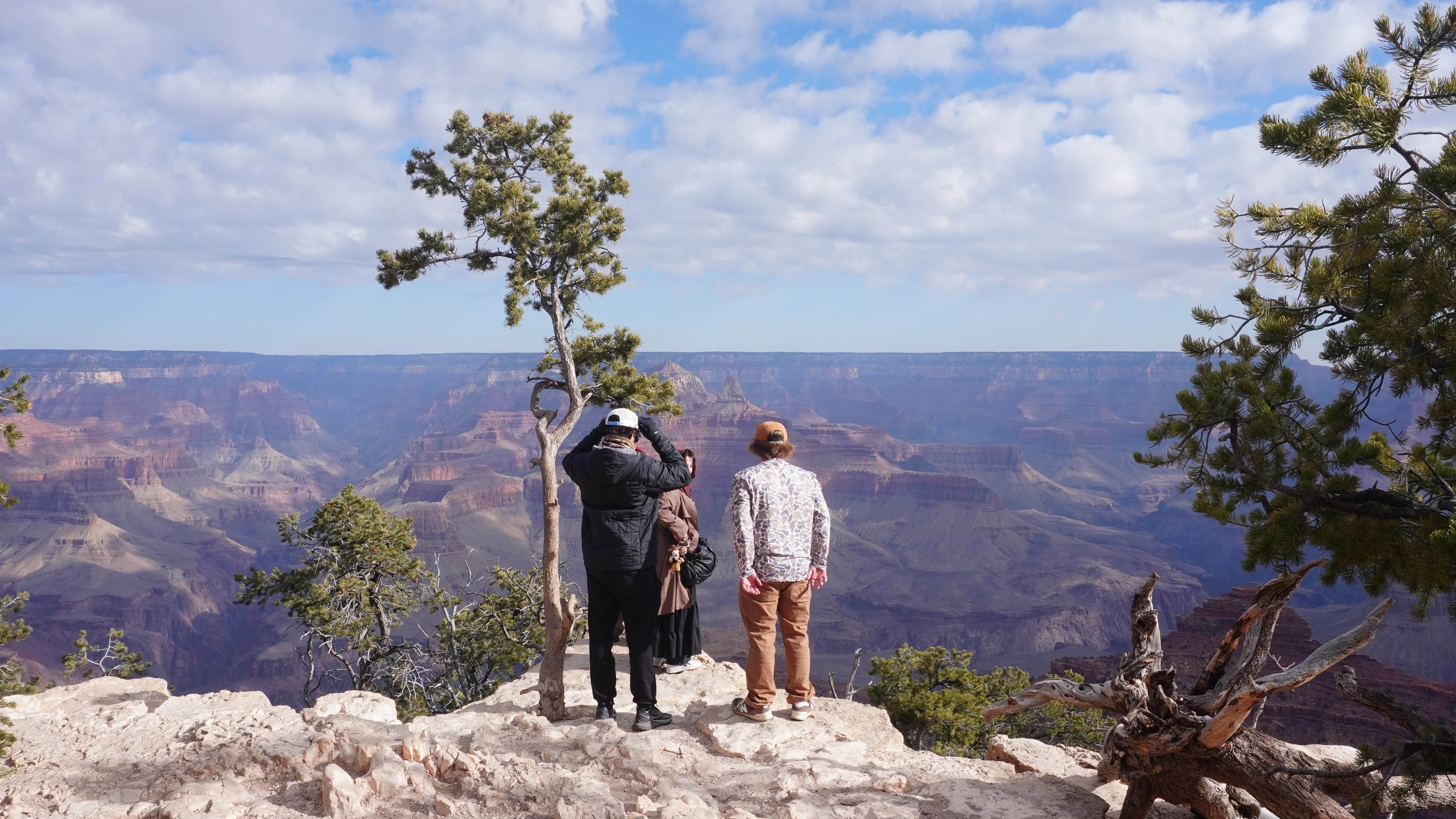
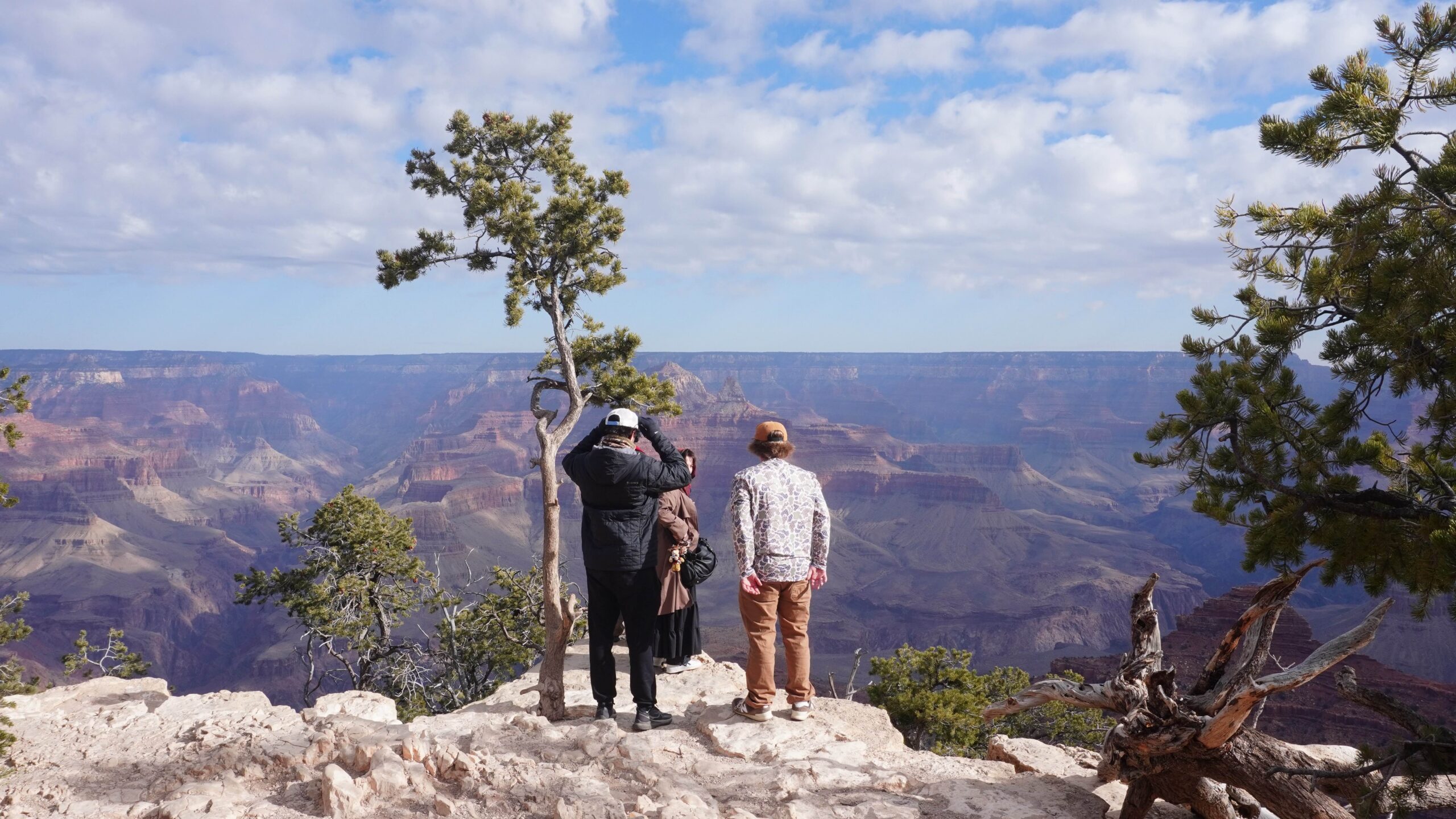
    Being very careful at the Grand Canyon. (Teresa Fang/The Stentorian)

    Perseverance takes many forms

    Somewhere between tumbling over rocks at Picacho Peak and getting lost at the Arizona-Sonora Desert Museum, I realized something: nature keeps moving forward, with or without me. The saguaros at Saguaro National Park, towering and ancient, continue to stand tall. The indigenous stories and artifacts at the Heard Museum are preserved and shared, even as modern life moves on. In Bisbee, a town full of cowboys and artists, the people seemed frozen in a perpetual, quiet celebration of life, adapting the past into a present that felt both nostalgic and brand-new. Just ask Anisa Hasanaj ‘25 about the psychic lady who foretold her “strong bloodline.”

    And in my own way, I was moving forward, too. At Montezuma Castle, I stared up at the five-story cliff dwelling built by the Sinagua people. It sat in the cliff above me, precarious yet permanent. What was the point of living in the cliffs? The structure, facing south, provided warmth in the winter and coolness in the summer. The elevation protected people from annual flooding. But I realized maybe I didn’t need to focus on why things just are—but instead on the lifestyle they created for the people living there.

    Montezuma Castle cliff dwellings. (Teresa Fang/The Stentorian)

    Stop looking for “the point” all the time

    On day five, we visited the Museum of Northern Arizona. The tour guide was passionate but had a voice that could put even the most enthusiastic historian to sleep. The poet who wrote us custom pieces delivered one that was painfully generic, even though I had specifically asked for something about the evolution of forgetfulness and acceptance. But maybe that was the point—sometimes, the journey matters more than the conclusion.

    At the Grand Canyon, I took the Junior Ranger oath. “Don’t feed the squirrels” was the only part I really remembered, but in a way, that summed it all up. Maybe the awe of the canyon, vast and unchanging, wasn’t meant to provide some grand revelation. Maybe I didn’t need to extract meaning from everything—I could just let it be.

    Saguaro National Park. (Teresa Fang/The Stentorian)

    Things go on

    Through writing this, I may have admitted publicly that I eat a lot (big backing had to be an obligation before it became a choice, alright). But my greatest discovery of the trip wasn’t an ancient artifact or a philosophical truth—it was Hopi Hot Beef. Fry bread, beef, a dish so good that it earned my eternal love and gratitude. Thank you, Hopi Nation. Thank you, Navajo Nation. Thank you, Arizona. And most of all, thank you Dr. Cantrell, Mr. Chris Thomas, Ms. Michelle Brenner, NCSSM Foundation, and sponsors for letting me go on such an adventure.

    Things go on. My Arizona J-Term has ended, but its memories continue etched into my notes, my mind, and now, here. And I will continue, too, maybe with a slightly fuller stomach, a slightly fuller suitcase, and a wealth of stories that don’t always need a point.
  • NIH Discovers Healthcare Breakthrough by Cutting Funding and Praying for Innovation

    NIH Discovers Healthcare Breakthrough by Cutting Funding and Praying for Innovation

    THE NIH REPORTS THAT THEIR EMAILS BACK TO CONGRESS ARE MET WITH THIS AUTOMATIC
    REPLY. (Teresa Fang/The Stentorian)

    By Teresa Fang, Stentorian Editor-in-Chief

    In a groundbreaking study funded by the National Institutes of Health (NIH)—right before their budget was unceremoniously slashed—scientists discovered that medical research does, in fact, require money. This shocking revelation, published in The Journal of Things We Already Knew, came just in time for Congress to announce its latest fiscal strategy: cutting NIH funding in favor of more “cost-effective” scientific solutions, such as wishful thinking and essential oils.

    Dr. Evelyn Carter, lead researcher at the now-defunct Institute for Curing Everything, expressed her concerns. “We were this close to finding a universal cancer vaccine. But, hey, I’m sure tax breaks for billionaires will cure something,” she said while packing up her lab equipment to sell on eBay.

    In response to public outcry, a government spokesperson assured citizens that medical advancements would not be affected. “We believe in the power of innovation,” he said. “And if there’s one thing history has taught us, it’s that the private sector, with its great track record of affordable insulin and fair hospital pricing, will surely step in.”

    Meanwhile, former NIH researchers have found creative ways to fund their work. Dr. James Patel, a neuroscientist, recently launched a GoFundMe titled Help Me Cure Alzheimer’s Before I Forget Why I Started This Campaign. It raised $27 before being overshadowed by a TikTok influencer’s fundraiser for designer dog sweaters.

    At press time, Congress was considering reallocating NASA’s budget to astrology, citing “strong public interest in Mercury retrograde.”

  • How T-Cell and B-Cell Epitope Prediction Preps You Against Pathogens

    How T-Cell and B-Cell Epitope Prediction Preps You Against Pathogens

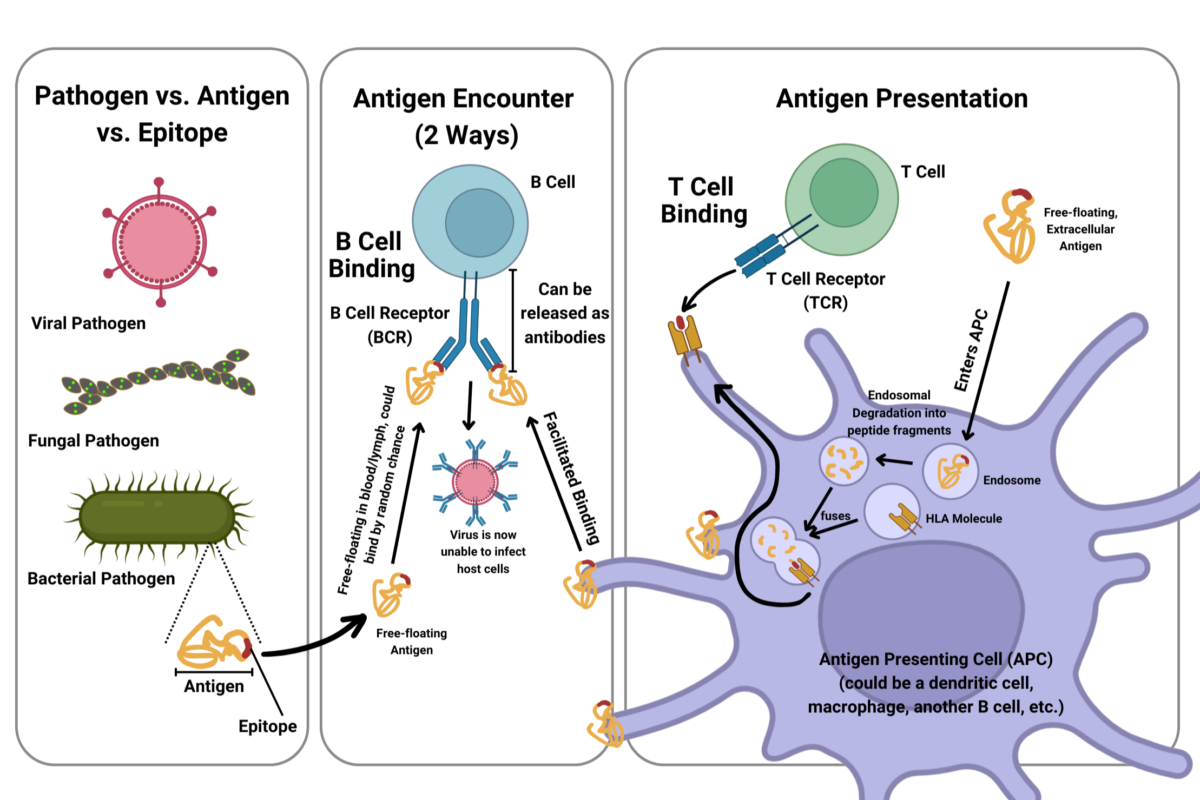
    (Teresa Fang)

    By Teresa Fang, Stentorian Editor-in-Chief

    There are always new viruses emerging, and, like SARS-CoV-2, which causes COVID-19, they are constantly evolving into different variants or strains. Researchers are racing to find vaccines and therapies that can improve outcomes for patients worldwide, using methods ranging from traditional lab work to computational biology (bioinformatics), and even artificial intelligence (AI). To understand vaccine development, we first need to understand how our immune system fights germs.

    “The scientific world is constantly on the lookout for potential new pandemics so when there is a new virus, we would be able to quickly predict and measure the immune response,” said Dr. Alessandro Sette, a professor at the La Jolla Institute for Immunology in San Diego, California, and Director of the Center for Cancer Immunotherapy and Center for Vaccine Innovation. Being able to predict and measure how the body’s immune system will respond to viruses is essential to developing effective vaccines. The immune system recognizes, remembers, and destroys disease-causing organisms, called pathogens, and can provide long-lasting protection from future attacks. Pathogens are made up of antigens, which activate the immune response. 

    The body’s immune response is mediated by B cells and T cells. They do not recognize pathogens as a whole but instead recognize epitopes, which are unique markers on the antigens. If you’ve ever seen pictures of the SARS-CoV-2 virus, the spikes on the virus’s surface are the antigens that allow researchers to develop COVID-19 vaccines. These are critical for the immune system’s ability to identify and respond to foreign invaders such as viruses and bacteria.

    Predicting B-cell vs. T-cell epitopes

    The difference between B cells and T cells makes it necessary to have multiple methods for predicting their epitopes. B cells produce antibodies that usually bind to cell-surface epitopes that are folded in a three-dimensional structure. This method used for B-cell epitope prediction is called discontinuous 3D structure-based epitope prediction.

    “Antibodies recognize things on the outside and often recognize three-dimensional structures that are made out of discontinuous epitopes,” said Dr. Sette. “These are epitopes that are made from parts of a protein that are not necessarily like ducks in a row.”

    (Teresa Fang)

    T cells are entirely different: They recognize chopped-up fragments of proteins bound to human leukocyte antigen (HLA) molecules. Also known as major histocompatibility complex (MHC), these are specialized molecules on a cell’s surface for detection, holding important epitopes, for T cells. T-cell epitope prediction, therefore, is not limited to far-apart 3D structures like B cells are. Instead of discontinuous epitopes, T cells recognize linear epitopes. This method is called linear sequence-based epitope prediction.

    “If you could see the structure of an HLA molecule with a peptide bound to it, it looks like a hot dog bun with a sausage in the middle,” Dr. Sette explained. “That is the fragment where the peptide is stretched out.”

    Currently, most vaccines and therapeutics target B cells because antibodies are easier to measure than epitope fragments in T cells, although both are important for vaccine design.

    Bioinformatics in advancing epitope prediction

    In the past, vaccines were developed by using whole inactivated pathogens (such as in polio), an approach that was not always successful, or by predicting epitopes using traditional lab techniques, which are laborious and time-consuming. Recent advances in computational biology and bioinformatics have significantly improved the ability to predict epitopes for B-cell and T-cell activation in a time-sensitive manner. 

    Dr. Sette is part of a team that develops and oversees the national Immune Epitope Database (IEDB), a free, widely-used bioinformatics resource database for storing epitope structures. It has two purposes: to function as a catalog for epitopes and as a collection of epitope prediction tools for immunology research around the world. The IEDB uses many methods to predict epitopes and is always being updated. Generally, it analyzes patterns in already-known epitope structures to predict the epitope for an unknown one for B-cell or T-cell activation. One key area in these advances lies in AI. Machine learning (ML) algorithms, trained on large datasets of known epitopes and their interactions, can improve the accuracy of predictions. Dr. Sette plans to use ML approaches to improve data curation and algorithm prediction.

    “We will be relying on predictions more than data that is already available because if it is a new virus, we’ll have to rely on more innovative approaches,” Dr Sette said. He believes that if another pandemic arrives, epitope prediction will give researchers an upper hand in fighting against its spread.

  • Best Day Ever of Western Civilization To Be Reached This Friday at 11:11 A.M.

    Best Day Ever of Western Civilization To Be Reached This Friday at 11:11 A.M.

    (AI-generated image)

    By Teresa Fang, Stentorian Editor-in-Chief

    An international panel of leading doctors, people with PhDs, online influencers who don’t have PhDs, historians, and so-called “almond moms” announced this week that Western civilization will reach the “best day ever” starting at 11:11 A.M. Friday.

    “From the data I got staring at the sun yesterday to analyzing the fluctuations in gravitational constants to creating a database of all the alpha wave music I found on YouTube to today’s top-grossing movies featuring naked world leaders, I have discovered there is a shared milestone in each of these activities, festering into one exact moment in time,” said MIT graduate student Robert Dukie, who is completing his PhD at the Best Lab, which focuses on evaluating the psychoanalytical and philosophical considerations of computational geologic dating. 

    He gestures towards a nearby line graph illustrating Western society’s highs and lows. He draws a circle at one peak using a fat red Sharpie. “We’ve been charting this scientific and cultural ascent for generations now, from the creation of sliced bread to the first monkey in space, to the graffiti we’ve scanned in bathroom stalls at 18092 different public high schools. Everything has been leading up to this Friday.”

    According to this unlikely group of panelists, the first miracle of “Best Day Ever” will occur at 11:11 a.m., when an Uber Eats driver will enter NCSSM-Durham’s PEC, believing the school to be a lackluster cubist prison, and, not finding what he is looking for, ask where “the freaking ‘brain’ lobby is supposed to be.”

    The man, dressed in Crocs and blue overalls and determined by researchers to be the first catalyst in humanity’s epic beginning of a new era, will then be met with a $5000 tip from a certain Greenville-native, who will pop up from the bushes.

    “This awesome day has been a long time coming,” said researcher Jamie Olivier, before picking up a hot pink marker and, seemingly without thought or intent, drawing an enormous, stupid-looking smiley face on his clipboard. “And by the looks of things, this will be our reaction.”

    Some social media influencers believe the coming cultural pinnacle–the most intellectually and spiritually upgrading moment conceivable by science or philosophy–will signal the start of a healthier and less indecisive lifestyle. Many celebrated by filming 6-hour long TikToks (separated into multiple parts) and talking into microphones about every other time they did “something good for myself.”

    “I’m just taking care of myself until that day,” said self-identified “carnivore” Miley Raymonds, mom of four, tearing out a hunk of what looked to be a skinned squirrel with her teeth. “God knows I trust those ‘see-in-tists’ completely. Our budget’s been constrained to the point we’ve had to scavenge for roadkill, and my little meat-eaters cannot be living on protein-less spinach and greens and less-than-quality red meat.”

    Despite the panel’s findings, many are skeptical that humanity will see a new change on Friday, claiming that good things in life are only rewarded to those who act. The same terrible things happening in the world are likely to continue as egg prices rise to $1000 per carton and ICE becomes SHICE, now committed to deporting all people with small hands, which are of course “un-manly” and “un-American.”

  • NCSSM Administration to start “Palentines” initiative

    NCSSM Administration to start “Palentines” initiative

    By Marcellus Day, Stentorian Staff Writer

    After determining this year’s Valentine’s Day to not be “up to community standards,” NCSSM’s administration has been looking at launching a new “Palentines” initiative to encourage community bonding. 

    NCSSM has long prided itself on helping facilitate “close-knit communities” and “life-long friendships.” However, this year the community statistics have shown a decrease in both, with close-knit communities only being loosely knit and life-long friendships being reduced to semester-long. “This is very concerning,” an NCSSM community statistician told Stentorian journalists. “Without these statistics being up to standard, we can’t brag about them on our website!” 

    Nowhere were these stats proven more true than this year’s Valentine’s Day, where indeed no love was in the air. In an attempt to remedy this, the statisticians enlisted SG to create the PFM complement tree in addition to reportedly supplying them with unlimited Lindor chocolates to bribe their friends with. However, their chocolate tricks did not work; on social media, NCSSM saw a 30% decrease in Galentine’s Day Instagram posts and a 25% increase in Instagram stories with sad songs and cringey messages. 

    Due to these concerning statistics, NCSSM administration is developing a new initiative for Valentine’s Day called Palentines. This initiative would seek to increase community on campus by giving students time to build friendships. The program would randomly pair each person on campus with a Palentine and mandate that they spend an hour of “quality time” together before logging their experience in Schoolinks. 

    “This will be greatly beneficial to the larger community, as we all know that forcing students to do something is the best way to get them to enjoy it,” an administrative staff member reported. This initiative is currently being tested on lab rats to ensure statistical success, and if successful, it will most likely be initiated in 2026.

  • Person Behind Stentorian Hate Account, NCSSM Uranus, Found

    Person Behind Stentorian Hate Account, NCSSM Uranus, Found

    One such post from The Uranus. (The Stentorian)

    By Teresa Fang, Stentorian Editor-in-Chief

    A super confidential investigative report into the disappearance of the Instagram account, NCSSM Uranus, which erased their carbon footprint with just one conveniently-placed “delete account” button, was created for the purpose of being rivals with The Stentorian. According to third-party investigator Shrew D. Dodgers, the account was run by one man who claimed his application was rejected by the editorial board. As the editorial board, we have no recollection of this man because he simply did not submit the application in time. He was recently found in the corner of the PFM, building a makeshift newspaper box using an amalgamation of scrapped 3D-printed parts and frozen earthworms as glue, for the latest issue of Uranus.

    “Idiot. Only live earthworms are sticky enough to use as glue.” – Jesus Berthardt, Box Engineer

    “Look, I’ve been saying it for a long time, I know it, everybody knows it, this man is bad news. Bad. Terrible guy. Very mean.” – Donald Grump, Communications Specialist

    “He was funny until he spelled my name wrong.” – Dominiquq ASdjlajm\\,a, Email Spellchecker

  • Where In The World Did Unis Travel This JTerm?

    Where In The World Did Unis Travel This JTerm?

    By Stentorian Editorial Board

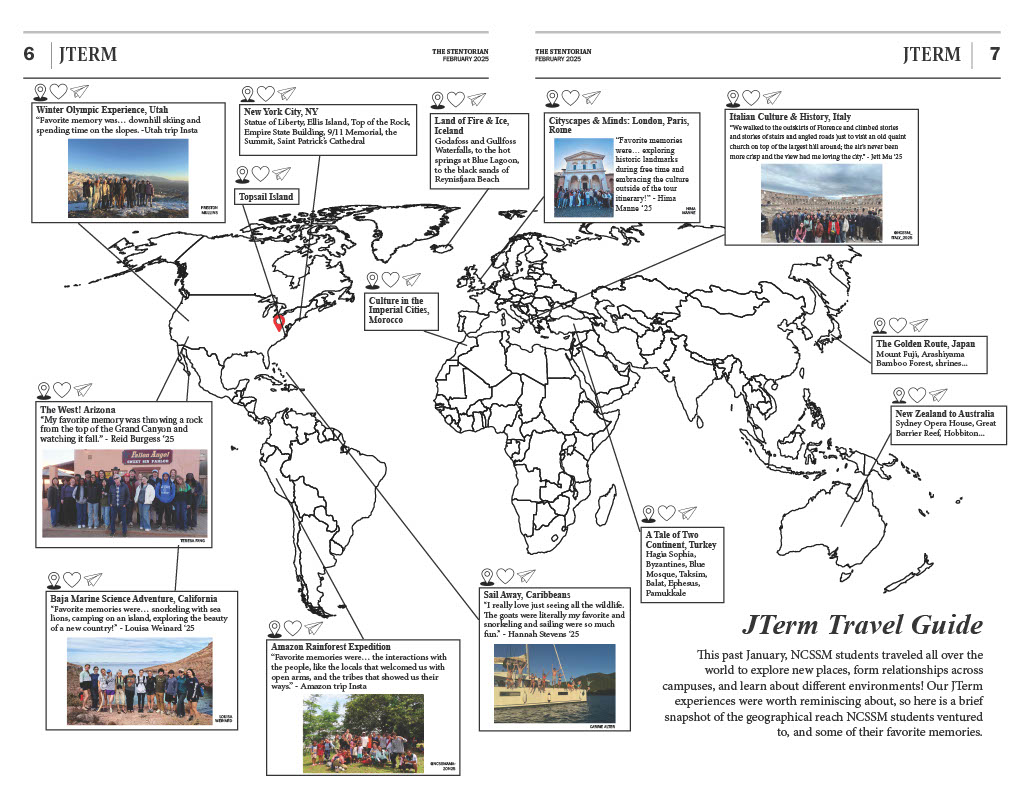
    Note: This is the center spread for the February 2025 issue, designed by editor-in-chief Teresa Fang.

    AROUND THE WORLD. This past January, NCSSM students and faculty traveled all over the world to explore new places, form relationships across campuses, and learn about different environments. Our JTerm experiences were worth reminiscing about, so here is a brief snapshot of the geographical reach our community ventured to.

  • You didn’t understand the assignment

    You didn’t understand the assignment

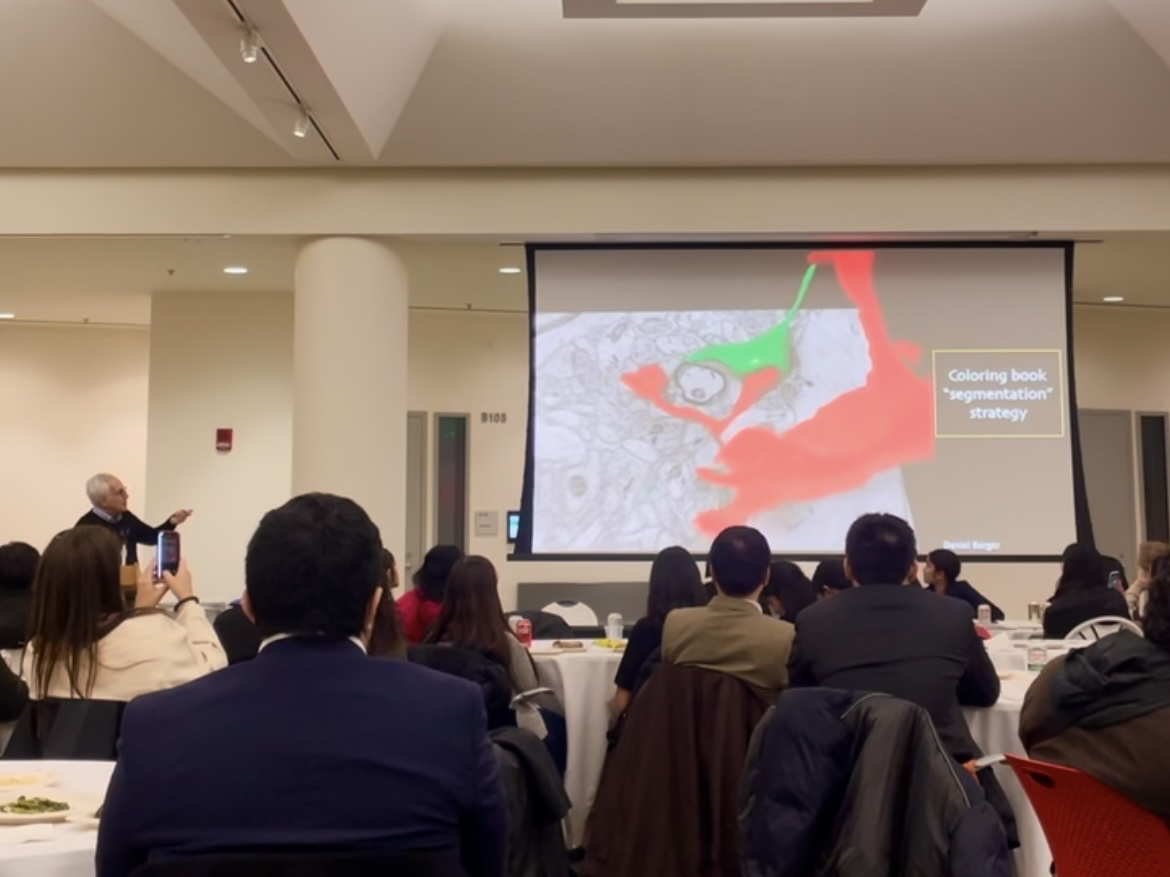
    Dr. Lichtman presented his thoughts on STEM education and his research at the Harvard Northwest Building on February 14. (Teresa Fang/The Stentorian)

    By Teresa Fang, Stentorian Editor-in-Chief

    Two weeks ago, Dr. Jeff Lichtman, Dean of Science at Harvard University, began his research talk with five claims, each answering the specific question, “What is school for?” Together, the five claims expanded on education in the 21st century, stemming from a variety of philosophical considerations throughout his 50 years of teaching.

    If you consider that almost everyone in the world (or at least, in this country) has access to a phone, “nearly all knowledge is at one’s fingertips,” which is the first claim Lichtman makes. I agree. I also agree with his fourth point, on behalf of educators: “The peril of education in the information age: because of the glut of information, professors are necessarily teaching an ever-smaller proportion of the extant data.” But the fifth point raises a series of questions as Lichtman questions the ways in which educators “fail” their students. Of these five claims, as someone who cherishes the value of education, I was curiously intrigued by his thoughts.

    Rather than dissect his claims, I would like to summarize his argument, which he does himself quite nicely:

    “First, irrelevancy. The subjects we [educators] teach are irrelevant to your ultimate career plans. For example, in medical school, you don’t use calculus. A doctor uses 0% of the calculus knowledge they learned in school.”

    After presenting his points, Dr. Lichtman asked the audience of high school student researchers if they disagreed with anything he said. I was already responding to his points mentally, so I took the first microphone immediately. “Why is that a failure?” I asked. When I emphasize the importance of school, like Dr. Lichtman, many people echo similar claims that most of what you learn in school will not be applicable in the real world or that they will forget nearly everything they once learned. But I say the answer depends on what type of learning we’re referring to: the type on the whiteboard or the type beyond the whiteboard.

    “Second, prematurity. When the courses are relevant, we [educators] hardly explain why they are, so you can’t focus on what is important as it is presented long before you might use this material, maybe 5-10 years later.”

    I might not remember that Columbus sailed the ocean blue in 1492 in twenty years when I’m trying to interview people for a job hiring. But I will definitely remember a friend saying, “you should design the poster art because you’re good at art, and I’ll write the content in the meantime.” I learned that designating tasks to an appropriate individual with the perfect skillsets will finish our task faster so we can finally eat our meals during lunch break.

    You may forget the curriculum, but you won’t forget the experience. Learning to judge one’s ability to fulfill certain responsibilities and justifying your selection are examples of knowledge that do matter. Perhaps, these are skills you might need that separate you from a good candidate for your dream job versus the ideal candidate for the responsibilities of the job.

    “Third, preoccupation with the right answer. Perhaps the most important failure is that the whole science enterprise [sic] is just a continuation of the secondary school preoccupation getting the correct answer on exams, problem sets, and homework assignments. Regurgitating an expected answer has little to do with the real world, where the ‘right’ answer is unknown.”

    Besides calling the entire occupation of researching science an “enterprise” (throwback to my previous piece on ncssm.edu’s misrepresented marketing of students) as if the sole purpose of research is to generate economic value, I think the preoccupation with the “right” answer is a universal failure that permeates through all subjects, not just in STEM. We endure numerous “irrelevant” courses in history, English, physics, and math, not because we intend to become an academic jack-of-all-trades (go on, make your snarky “erm, actually”s), but to develop our method of thinking and reasoning. Will I ever need to prove the Pythagorean theorem using geometry postulates when I’m in my late-30’s? No. But will I ever need to make a claim, learn how to support it with evidentiary facts, and arrive at a logical conclusion? Yes. I think me writing this article proves that I can.

    Thus, school is for teaching you how to think. Not what to think, but how to think. You are getting your critical thinking in, your collaboration skills, and most importantly, the connections you might need later in life, aka your support system or your potential business partners. Indeed, you could think of this column as the sequel to my article “Settling the debate between STEM and the humanities.” Do I wish that more people were aware that “Frankenstein” is more than just a classic Victorian novel but a commentary on Marxism, Freudian psychoanalysis, and much more? Or that Emerson and Thoreau are two completely different people camping around the same pond? Of course, I’d love if America’s level of general knowledge of literature, and social studies, or just being more news-savvy about the world was more proficient, but I do not think that it is equivalent to trashing the entire education system.

    “Last but not least, the fear of failure. Solving a problem often requires showing all reasonable ideas fail. Failure is a necessary part of finding a solution.”

    School is not a promise of success and prosperity, but I do think that Dr. Lichtman and others are approaching school with misjudged expectations. He makes many sound and fair points, and undeniably, it’s important that students learn the curriculums they are taught in the classroom. But they shouldn’t walk away with report cards and memorized flashcards. They should be walking away with new and improved models of thinking and an arsenal of approaches for the real, structure-less world. 

    It’s undeniable that the quality of our education system, federally and at NCSSM, is flawed. Nonetheless, there is still value in it. But if you measure the value of school based on test scores and grades, then I suppose you really didn’t understand the assignment.

  • Mixed Opinions of Super Bowl LIX

    Mixed Opinions of Super Bowl LIX

    The Philadelphia Eagles celebrate their victory with the Vince Lombardi Trophy. (Chris Graythen/Getty Images)

    By Preston Mullins, Stentorian Staff Writer

    Every year, there is great excitement leading up to the Super Bowl. Viewers around the world flock to their televisions to watch the game, halftime show, and unique commercials. This year, Super Bowl LIX drew mixed opinions from those who watched. The game itself was viewed by many as one of the worst in recent history, but Philadelphia Eagles fans certainly enjoyed watching their team beat up the Kansas City Chiefs 40-22. There was no suspense whatsoever as the Eagles had control of the game from start to finish. 

    Kendrick Lamar’s halftime performance was much anticipated and viewers were divided on whether or not it was a success. For some, it was a terrible, boring performance and for others, it was the best halftime show they had seen recently. One thing is for sure though, it had plenty of controversy as Lamar performed his viral Drake diss track, “Not Like Us.” Finally, we arrive at the commercials. Super Bowl commercials have always been a fun part of the broadcast as viewers watch to see what kinds of iconic and wacky advertisements companies have created. This year, however, those who tuned in pointed out that the commercials were not nearly as eye-catching and unique as usual, with the exception of a few, specifically the Mountain Dew “Kiss from a Lime” commercial featuring Seal. 

    The only thing we can be sure about when it comes to the reception of Super Bowl LIX is that there is no clear consensus on the public opinion of the broadcast. Some aspects were subpar and others were on point, but no one can agree on the quality of most of them. When it comes down to it, that’s really what makes the Super Bowl special. People around the world come together to watch each year and no one ever truly knows what to expect!

  • The Senior Night Spectacle for Uni Basketball

    The Senior Night Spectacle for Uni Basketball

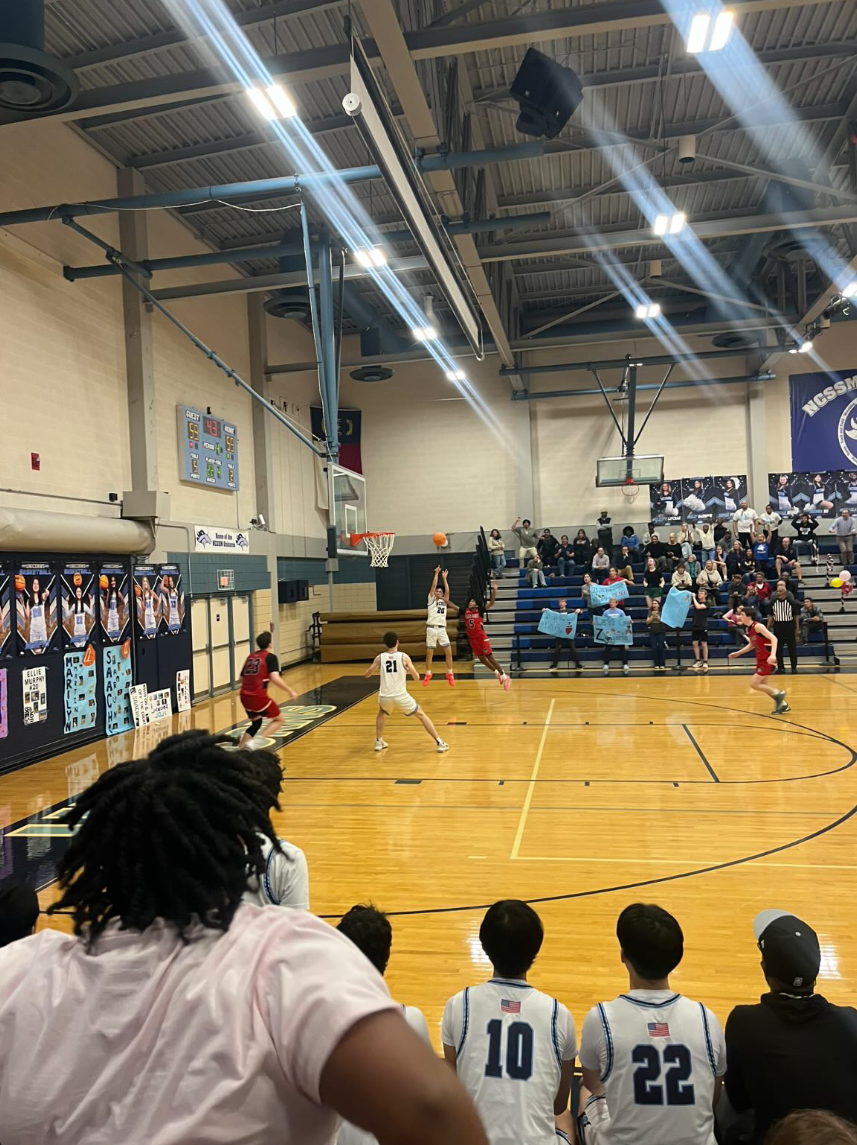
    Jay Peng ’26 takes the game-winning shot. (Louisa Weinard/The Stentorian)

    By Preston Mullins, Stentorian Staff Writer

    There was a little extra excitement in the air on the evening of February 3rd, 2025. It was Senior night and the Class of 2025 players, managers, and cheerleaders would be recognized pregame. 

    As soon as the Senior night festivities wrapped up, the players turned their attention to basketball. That evening, the boy’s team faced off against the Franklin Academy Patriots; the winner would be atop the Super Six Conference standings at the end of the night. The Unis weren’t exactly favorites; they had fallen 67-53 on the road to the Patriots less than two weeks earlier. Despite this, there was a hopeful vibe emanating from the crowd. The NCSSM boys basketball team was having one of the best seasons in their history; a win here would go a long way for their hopes of qualifying for the 2A State Playoffs. 

    The moment of the tip-off arrived and the two teams were off and running, trading baskets back and forth. NCSSM got hot right out of the gate, and the Unis held an 18-14 lead at the end of the first quarter. As the second quarter began, the Patriots settled in and began to shift the momentum back their way. 

    The home crowd that had been raucously cheering just minutes earlier had quieted down significantly by halftime with Franklin Academy snatching a slim 31-29 lead at the break. There was an air of uncertainty throughout the building. The third quarter got underway and the Unis silenced the away fans as they began to regain the momentum they had earlier in the game. They brought a whole new level of energy after halftime and retook the lead 48-46 by the end of the period. This matchup was clearly going to be a nail-biter to the finish and the nervousness of the fans and students was palpable by this point. 

    Franklin Academy would hold a 59-57 lead with under ten seconds to play, but the Unis had the ball. Guard Ethann Burkett ‘25 was fouled with 4.5 seconds to go, which meant he would head to the free throw line to take two shots to potentially tie the game. The pressure on his shoulders was enormous, but he would calmly sink both free throws to knot things up at 59. 

    On the ensuing Patriot inbounds pass, the unthinkable happened. Forward Jay Peng ‘26 stole the pass and took a mid-range jumper as the seconds ticked toward zero. 

    Swish. The buzzer sounded; the Unis had won! The fans and players from the bench stormed the court and crowded around Jay, cheering. 

    What a thrilling night for Uni basketball! I got a chance to speak with Peng, as well as Burkett and Harry Gribbin ‘26, a fan who was in attendance that night. 

    When asked about that final shot, Peng said, “I can’t say I’ve ever practiced that shot before but as it was leaving my hands I knew it was going in. I didn’t think about it, I just let it fly. When the game ended, the feeling was surreal. As the students rushed the court, I felt on top of the world. These are the moments you dream of; it felt like a dream come true.” 

    When explaining how he felt as he stepped up to the free throw line, Burkett said, “I knew that I couldn’t let the doubt and nervousness overcome me. I had to step up and be confident that I would hit those shots. I shot the first one and it felt just right so I knew as soon as I shot the second one that it was going in too.” 

    Finally, Gribbin described his experience as a fan by saying, “It was the most exciting last minute of basketball I’ve ever witnessed. When Jay Peng stole the ball and swished the most incredible buzzer-beater I’ve ever seen, the gym erupted in cheer and we stormed the court, celebrating with the team.” 

    Not only did this game deliver a thrilling finish, but it was also the perfect Senior Night result and a critical shot in the arm for the Unis, who were already having an extremely successful season. Nobody entering the building that night knew what was about to transpire, but it would certainly be a game that the students and fans would never forget.