After determining this year’s Valentine’s Day to not be “up to community standards,” NCSSM’s administration has been looking at launching a new “Palentines” initiative to encourage community bonding.
NCSSM has long prided itself on helping facilitate “close-knit communities” and “life-long friendships.” However, this year the community statistics have shown a decrease in both, with close-knit communities only being loosely knit and life-long friendships being reduced to semester-long. “This is very concerning,” an NCSSM community statistician told Stentorian journalists. “Without these statistics being up to standard, we can’t brag about them on our website!”
Nowhere were these stats proven more true than this year’s Valentine’s Day, where indeed no love was in the air. In an attempt to remedy this, the statisticians enlisted SG to create the PFM complement tree in addition to reportedly supplying them with unlimited Lindor chocolates to bribe their friends with. However, their chocolate tricks did not work; on social media, NCSSM saw a 30% decrease in Galentine’s Day Instagram posts and a 25% increase in Instagram stories with sad songs and cringey messages.
Due to these concerning statistics, NCSSM administration is developing a new initiative for Valentine’s Day called Palentines. This initiative would seek to increase community on campus by giving students time to build friendships. The program would randomly pair each person on campus with a Palentine and mandate that they spend an hour of “quality time” together before logging their experience in Schoolinks.
“This will be greatly beneficial to the larger community, as we all know that forcing students to do something is the best way to get them to enjoy it,” an administrative staff member reported. This initiative is currently being tested on lab rats to ensure statistical success, and if successful, it will most likely be initiated in 2026.
A super confidential investigative report into the disappearance of the Instagram account, NCSSM Uranus, which erased their carbon footprint with just one conveniently-placed “delete account” button, was created for the purpose of being rivals with The Stentorian. According to third-party investigator Shrew D. Dodgers, the account was run by one man who claimed his application was rejected by the editorial board. As the editorial board, we have no recollection of this man because he simply did not submit the application in time. He was recently found in the corner of the PFM, building a makeshift newspaper box using an amalgamation of scrapped 3D-printed parts and frozen earthworms as glue, for the latest issue of Uranus.
“Idiot. Only live earthworms are sticky enough to use as glue.” – Jesus Berthardt, Box Engineer
“Look, I’ve been saying it for a long time, I know it, everybody knows it, this man is bad news. Bad. Terrible guy. Very mean.” – Donald Grump, Communications Specialist
“He was funny until he spelled my name wrong.” – Dominiquq ASdjlajm\\,a, Email Spellchecker
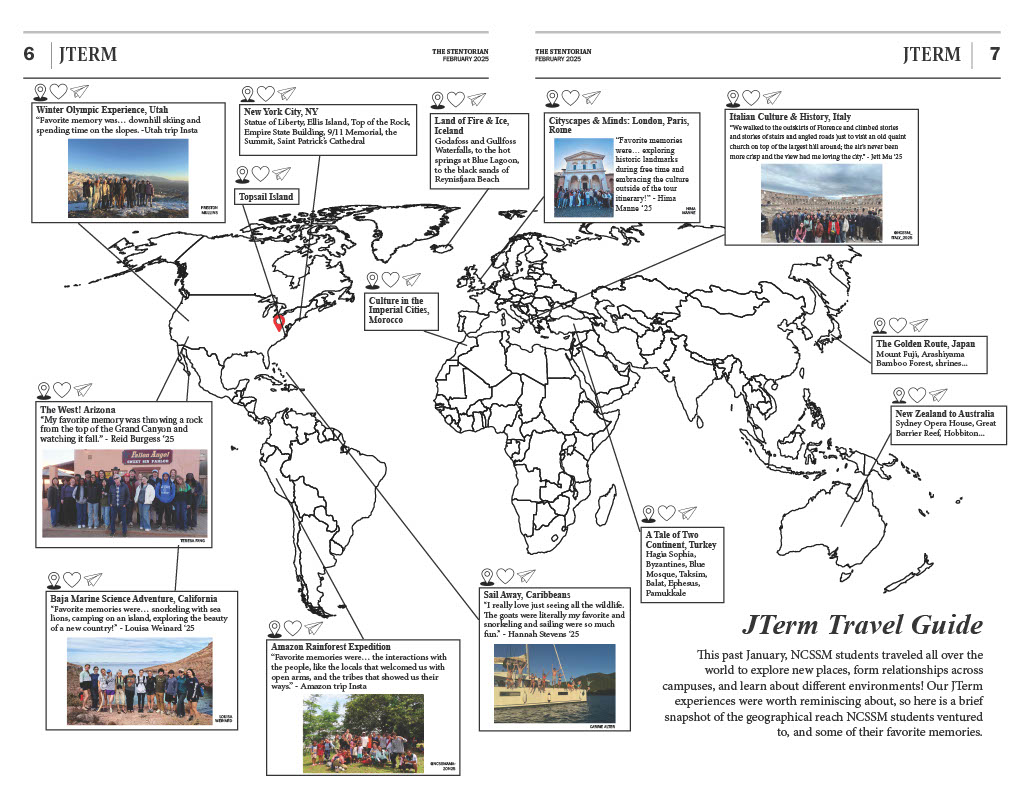
Note: This is the center spread for the February 2025 issue, designed by editor-in-chief Teresa Fang.
AROUND THE WORLD. This past January, NCSSM students and faculty traveled all over the world to explore new places, form relationships across campuses, and learn about different environments. Our JTerm experiences were worth reminiscing about, so here is a brief snapshot of the geographical reach our community ventured to.
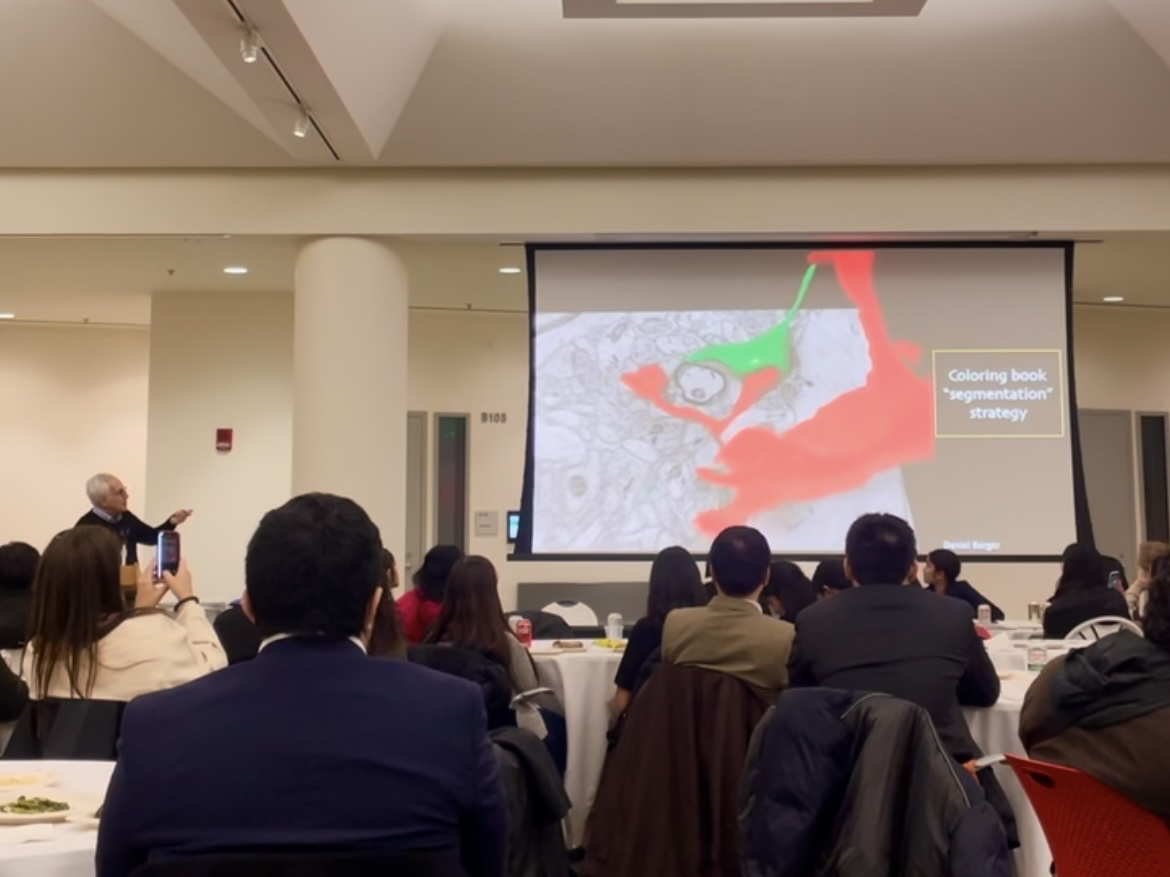
Dr. Lichtman presented his thoughts on STEM education and his research at the Harvard Northwest Building on February 14. (Teresa Fang/The Stentorian)
By Teresa Fang, Stentorian Editor-in-Chief
Two weeks ago, Dr. Jeff Lichtman, Dean of Science at Harvard University, began his research talk with five claims, each answering the specific question, “What is school for?” Together, the five claims expanded on education in the 21st century, stemming from a variety of philosophical considerations throughout his 50 years of teaching.
If you consider that almost everyone in the world (or at least, in this country) has access to a phone, “nearly all knowledge is at one’s fingertips,” which is the first claim Lichtman makes. I agree. I also agree with his fourth point, on behalf of educators: “The peril of education in the information age: because of the glut of information, professors are necessarily teaching an ever-smaller proportion of the extant data.” But the fifth point raises a series of questions as Lichtman questions the ways in which educators “fail” their students. Of these five claims, as someone who cherishes the value of education, I was curiously intrigued by his thoughts.
Rather than dissect his claims, I would like to summarize his argument, which he does himself quite nicely:
“First, irrelevancy. The subjects we [educators] teach are irrelevant to your ultimate career plans. For example, in medical school, you don’t use calculus. A doctor uses 0% of the calculus knowledge they learned in school.”
After presenting his points, Dr. Lichtman asked the audience of high school student researchers if they disagreed with anything he said. I was already responding to his points mentally, so I took the first microphone immediately. “Why is that a failure?” I asked. When I emphasize the importance of school, like Dr. Lichtman, many people echo similar claims that most of what you learn in school will not be applicable in the real world or that they will forget nearly everything they once learned. But I say the answer depends on what type of learning we’re referring to: the type on the whiteboard or the type beyond the whiteboard.
“Second, prematurity. When the courses are relevant, we [educators] hardly explain why they are, so you can’t focus on what is important as it is presented long before you might use this material, maybe 5-10 years later.”
I might not remember that Columbus sailed the ocean blue in 1492 in twenty years when I’m trying to interview people for a job hiring. But I will definitely remember a friend saying, “you should design the poster art because you’re good at art, and I’ll write the content in the meantime.” I learned that designating tasks to an appropriate individual with the perfect skillsets will finish our task faster so we can finally eat our meals during lunch break.
You may forget the curriculum, but you won’t forget the experience. Learning to judge one’s ability to fulfill certain responsibilities and justifying your selection are examples of knowledge that do matter. Perhaps, these are skills you might need that separate you from a good candidate for your dream job versus the ideal candidate for the responsibilities of the job.
“Third, preoccupation with the right answer. Perhaps the most important failure is that the whole science enterprise [sic] is just a continuation of the secondary school preoccupation getting the correct answer on exams, problem sets, and homework assignments. Regurgitating an expected answer has little to do with the real world, where the ‘right’ answer is unknown.”
Besides calling the entire occupation of researching science an “enterprise” (throwback to my previous piece on ncssm.edu’s misrepresented marketing of students) as if the sole purpose of research is to generate economic value, I think the preoccupation with the “right” answer is a universal failure that permeates through all subjects, not just in STEM. We endure numerous “irrelevant” courses in history, English, physics, and math, not because we intend to become an academic jack-of-all-trades (go on, make your snarky “erm, actually”s), but to develop our method of thinking and reasoning. Will I ever need to prove the Pythagorean theorem using geometry postulates when I’m in my late-30’s? No. But will I ever need to make a claim, learn how to support it with evidentiary facts, and arrive at a logical conclusion? Yes. I think me writing this article proves that I can.
Thus, school is for teaching you how to think. Not what to think, but how to think. You are getting your critical thinking in, your collaboration skills, and most importantly, the connections you might need later in life, aka your support system or your potential business partners. Indeed, you could think of this column as the sequel to my article“Settling the debate between STEM and the humanities.” Do I wish that more people were aware that “Frankenstein” is more than just a classic Victorian novel but a commentary on Marxism, Freudian psychoanalysis, and much more? Or that Emerson and Thoreau are two completely different people camping around the same pond? Of course, I’d love if America’s level of general knowledge of literature, and social studies, or just being more news-savvy about the world was more proficient, but I do not think that it is equivalent to trashing the entire education system.
“Last but not least, the fear of failure. Solving a problem often requires showing all reasonable ideas fail. Failure is a necessary part of finding a solution.”
School is not a promise of success and prosperity, but I do think that Dr. Lichtman and others are approaching school with misjudged expectations. He makes many sound and fair points, and undeniably, it’s important that students learn the curriculums they are taught in the classroom. But they shouldn’t walk away with report cards and memorized flashcards. They should be walking away with new and improved models of thinking and an arsenal of approaches for the real, structure-less world.
It’s undeniable that the quality of our education system, federally and at NCSSM, is flawed. Nonetheless, there is still value in it. But if you measure the value of school based on test scores and grades, then I suppose you really didn’t understand the assignment.
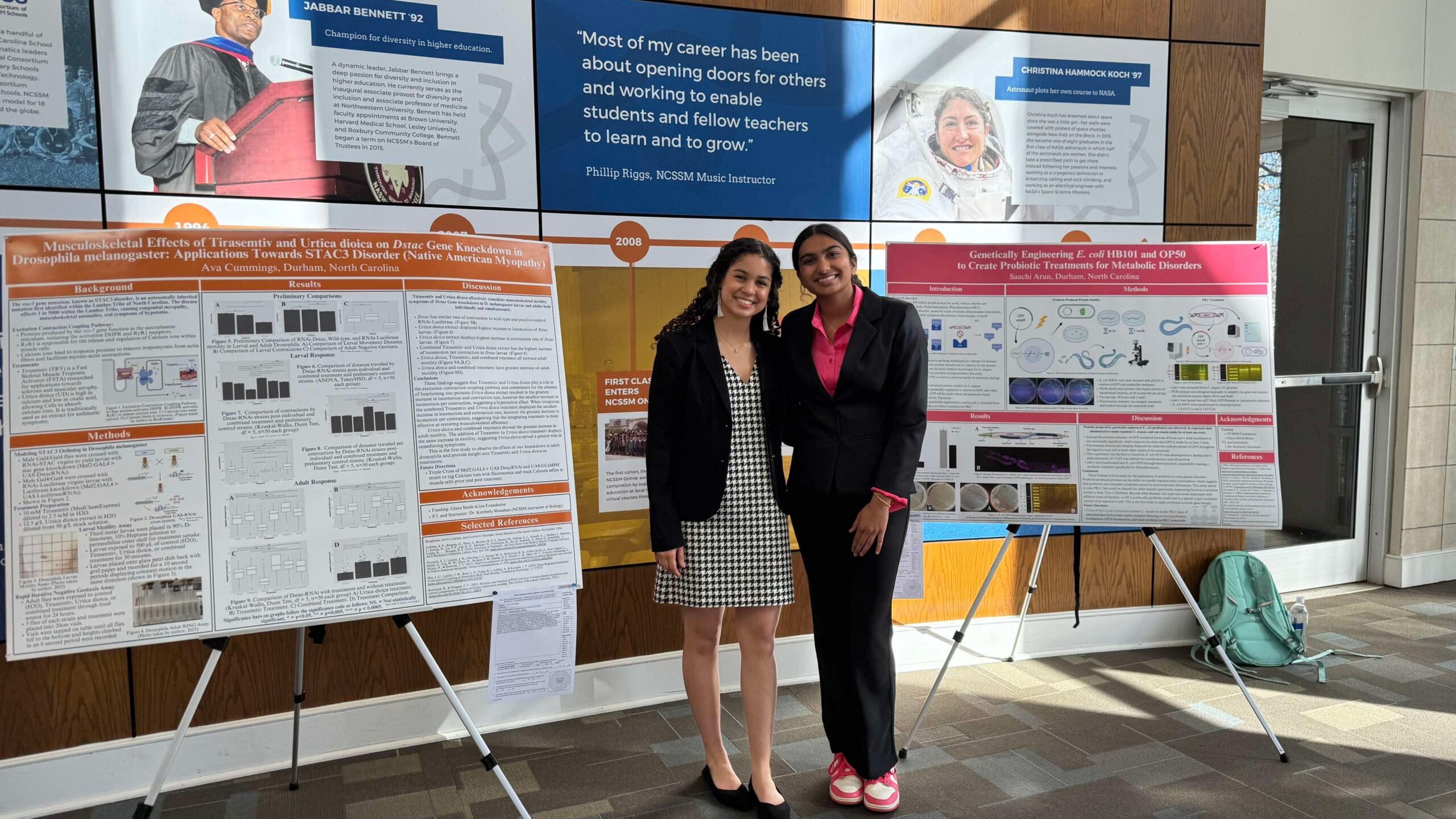
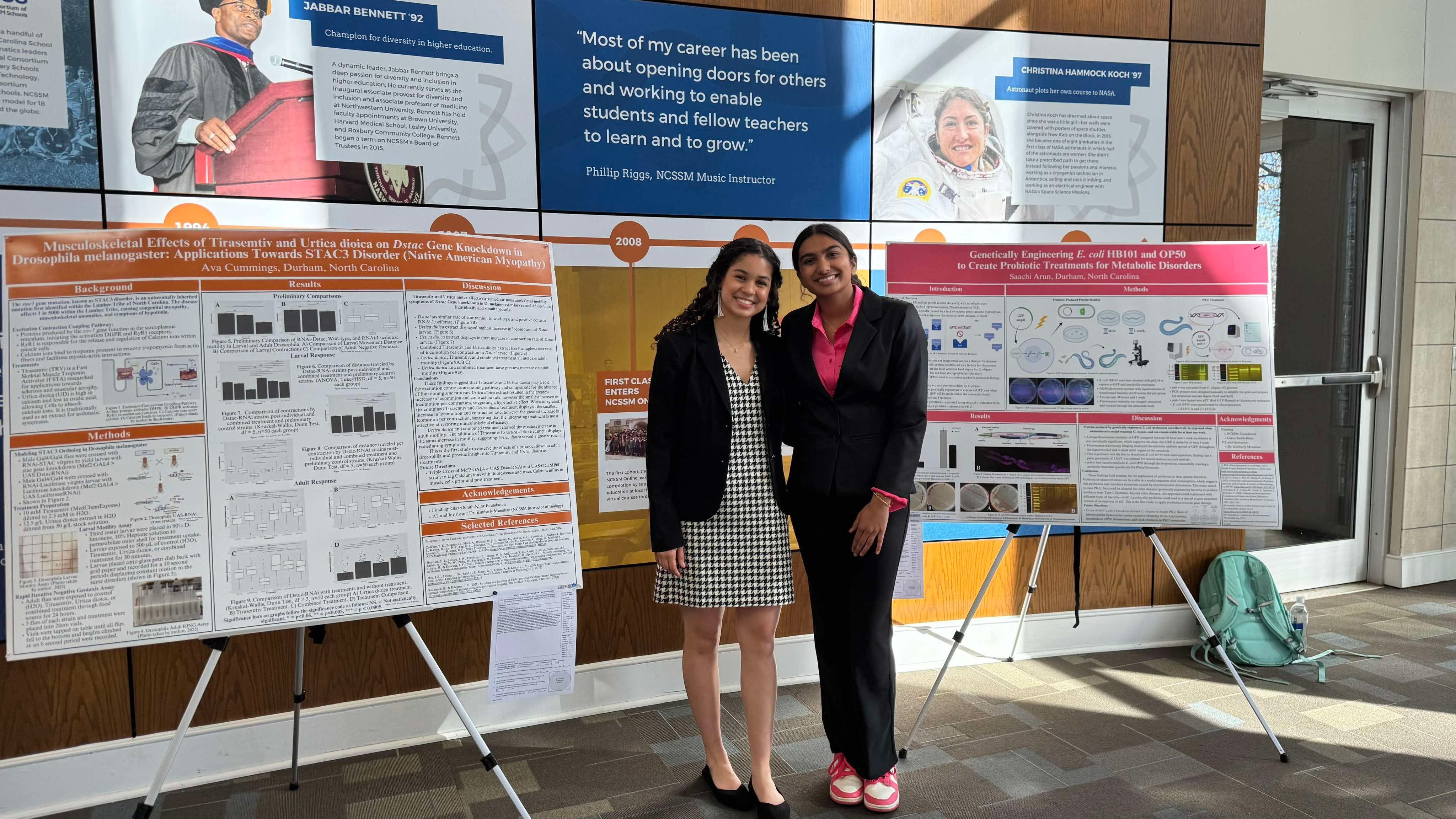
AVA CUMMINGS ‘25 AND SAACHI ARUN ‘25 OF RBIO WITH THEIR RESEARCH POSTERS AT NCSEF REGION 3B ON FEBRUARY 17. (ANNELIESE HEYDER)
By Anneliese Heyder, Stentorian Editor-in-Chief
The “Science Season” is upon us: when the summer months start getting closer and science fairs, conferences, and competitions begin popping up like flowers. Throughout the spring semester, students at NCSSM will be presenting their research at school and around the state and country.
The North Carolina Science and Engineering Fair, or NCSEF, kicked off on February 17th at NCSSM as Region 3b, with both juniors and seniors competing by sharing their research with judges, teachers, and students. Some students completed research independently or with a team, while others were part of the RSci or Mentorship programs.
Luke Malta ‘25 was an RChem student who presented at NCSEF. “I spent a lot of time perfecting my poster, sitting down and making sure I have as much information as possible,” he described his preparation. “I also planned on practicing presenting in front of the current RChem students to get some feedback from them and Dr. Bruno.”
Sawyer Kribbs ‘25 from RBio did the same.“I began to prepare by practicing my speech a couple of nights before presenting it to the judges. I was pretty nervous, but I felt ready,” he said, adding that he enjoyed talking with other students about his research and was impressed with the other projects at the fair.
Some of the students who presented did their research at another university with a mentor and a team of undergraduate or graduate students. “I would say NCSEF was a great experience! It prepared me for future symposiums I plan to attend since there will be judges who are experts in the topic I’m researching, and how to interact with them,” said Hima Manne ‘25, who was part of the Mentorship program.
Manne also explained how she prepared for NCSEF, stating “Planning included updating my research findings on the poster I previously had and prepping for specific questions about methods and future directions.”
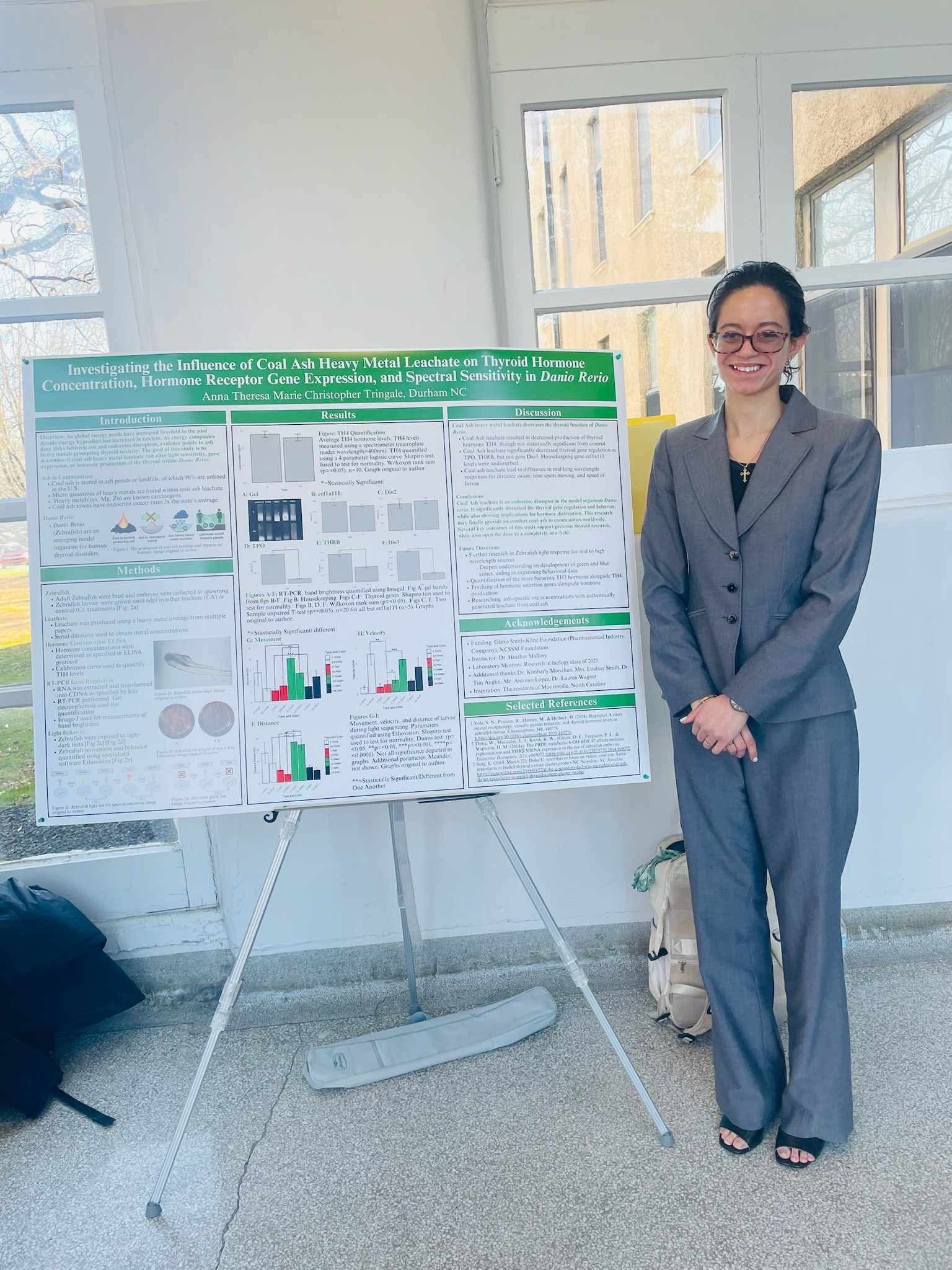
DANTE TRINGALE ‘25 WITH THEIR RESEARCH POSTER. (Anneliese Heyder)
Most of the eight categories advance the three top winners to the state-level North Carolina Science and Engineering Fair. The categories include Biological Science A, Biological Science B, Chemistry, Environmental/Earth Science, Engineering, Mathematics, Technology, and Physics. There are other special prizes as well, such as the Regeneron Biomedical Science Award, the Stockholm Junior Water Prize, and the NC One Water Award. However, the grand prize is an all-expense paid trip to the International Science and Engineering Fair in May.
Not only must they practice their speaking and speaking skills, but students must also make sure they have all the required documents signed and their posters ready to be presented. Mentors play a significant role in helping their students prepare–printing posters, checking over materials, and organizing the event.
Both teachers and students dedicate their time to making sure the fair goes smoothly for everyone. NCSEF provides an opportunity for peers to show one another their passions and skills and learn about various research topics. It is also a great way to make connections and meet professionals in the field–for some students, their research is just the first step in their future careers.
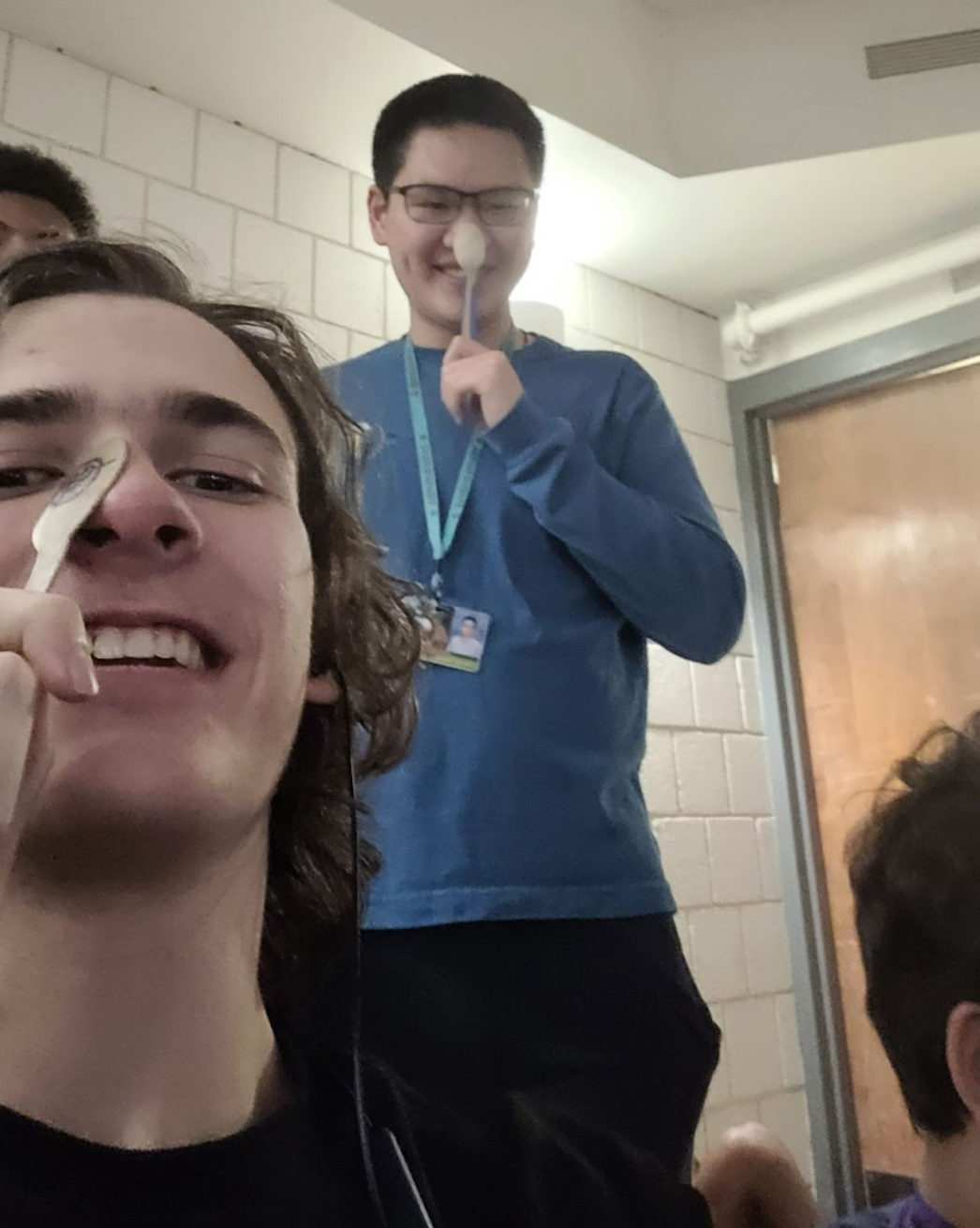
Barboriak, as a junior, takes a picture with Eddie Zhang ’24 while playing Spoons. (Vincent Barboriak)
By Tejasvi Shirolkar, Guest Contributor
Usually used in a bowl of PFM cereal or soup, spoons are an essential part of the NCSSM dining experience. However, this February marked an annual tradition many chose to partake in: “Spoons.” Holding a wooden spoon to their nose, NCSSM students pass through hallways, go up stairs, and to their dorm halls.
To an outsider, Spoons may seem like a silly pastime. However, any NCSSM community member knows that the tradition is so much more; it celebrates the beginning of the Spring semester and allows both Seniors and Juniors to connect beyond the classroom.
The Mastermind Behind This Year’s Spoons
Vincent Barboriak ‘25, from 3rd West, is this year’s supervisor (or “Spoon’s Master,” as he describes it). As last year’s Spoons winner, Barboriak became the overseer for this year. He tracks eliminations, updates charts related to the game, and modifies rules for all participants.
How The Game Works
On February 5th, 205 Juniors and Seniors each received a spoon with another player’s name on it–the person the player had to eliminate. For any player to be eliminated, they must be tapped on the shoulder with the spoon.
However, there is a catch: if a player has held up a spoon to their nose, that player is protected. Additionally, educational spaces such as classrooms and the library are considered “safe zones” to prevent distractions while learning.
Some NCSSM students go to great lengths when playing Spoons. Antavious Ashe, a Community Coordinator (CC) on 2nd Hill, chimed in regarding some of the Spoons stories he had heard of. A member of 2nd Hill went as far as carrying his spoon in the shower, preventing another hallmate from tapping him out.
Chloe Harnphanich ‘26, from 3rd Beall, echoed a similar story. While walking out of the PFM, Harnphanich kept her spoon to her nose. Near her, her eliminator lurked, waiting until the moment Harnphanich took the spoon off her nose. Despite her elimination from Spoons, Harnphanich seemed satisfied regarding her participation in the game.
What Spoons Means to the NCSSM Community
When asked why she participated in Spoons, Harnphanich stated, “[I] wanted to collaborate more with the student body [as a Junior Senator] and I think in general, [this game] is a very fun, engaging way to have a stress relieving aspect in… life, especially with such rigorous coursework at school.”
As a former student and now as a CC, Ashe responded, “At first, I thought [Spoons] was really random, but in a way, it seems to bring the campus together… I think [the competition] can be taken to extremes, but for the most part, [Spoons] is a good thing.”
To Keep or Not to Keep?
While the winner for Spoons this year is yet to be declared, the student body seems to be in consensus: the sense of community, friendly competition, and camaraderie the game creates is what makes every participant a champion. The annual game is here to stay, and hopefully be embedded into the rich history of NCSSM.
I hope this finds you well. I am writing this to spread information about the vast impacts Hurricane Helene has had on my home community and the surrounding western North Carolina (WNC) region.
My family was fortunate enough to be out of town when the hurricane hit and we are safe and physically well. The county I have grown up in almost my entire life, Yancey County, has been virtually destroyed. It has been extremely disheartening to experience this knowing that people in my own state have little to no knowledge about the severity, because of a lack of media and news coverage.
I understand that this does not only apply to my county but the entire WNC region. If you are willing to read the following about the situation, I ask that you do so with care and attention to detail. I hope that people can grasp at least a sliver of what my community is going through and find sympathy to donate and reach out to those in need. At the very end of this email are various links to help donate and pictures of my hometown in its current state.
Before Hurricane Helene even swept through, the region was flooded from predecessor rain events (rain that occurs around 36 hours before a storm and can span 600 miles poleward from the storm’s center). These rain events brought in about 12 inches of rain- enough to flood interstates, fill the ground, and create a few inches or so of present groundwater. Hurricane Helene brought a total of 30 inches to my town Burnsville in Yancey County, NC.
On Thursday night and Friday into the early afternoon, Hurricane Helene swept through my county. On Friday morning, I was in contact with a friend in my hometown about the conditions of the area where she had already lost power but was able to communicate through her family’s solar-powered satellite wifi.
After 10 a.m., I was no longer able to contact anyone from my county or surrounding counties. No one else could communicate either, not within the area or outside of it. To give context, in many of these rural communities, families have lived here for generations. Grandparents, aunts and uncles, cousins, and other family members (of multiple generations) live in the area and these small towns are all their last names have ever known. This area is also one of the most impoverished areas of the state.
For loved ones who were not directly impacted by the storm but were concerned for their family, no communication meant that they had no one to reach out to. Their entire extended family was at risk and suddenly everyone was isolated from one another. Scrolling on Facebook pages of my town was and is still apocalyptic-like. Hours spent scrolling through family members reporting their loved ones missing and asking for any information on specific roads/areas. This absence of communication is still ongoing but has improved daily and there are wifi centers set up, if people can access them.
My dad is an OB/GYN and travels to regional hospitals for his work. He was working in a hospital just south of Asheville. Even at a hospital, he had no power or service. He reported to us at 4 a.m. on Saturday that he was okay. The hospital had no source of information besides looking out the windows and hearing reports from people stumbling into the building. My dad was also told that he was the only surgeon in the hospital for the day and night he was there.
From a friend with a family member who works at the hospital closest to my house, the hospital was again described as “an apocalypse” after the storm passed. With no running water or service, people were showing up at the hospital doors with major injuries, severe limb damage, and pleas for help.
The story of a man who was pinned under a tree for three hours is most haunting. A friend shared with my mom the story of a nearby sheriff: how he worked for 72 hours straight rescuing and searching for others; how his team had to leave bodies floating down flood waters; how the death toll is still increasing as more bodies are uncovered.
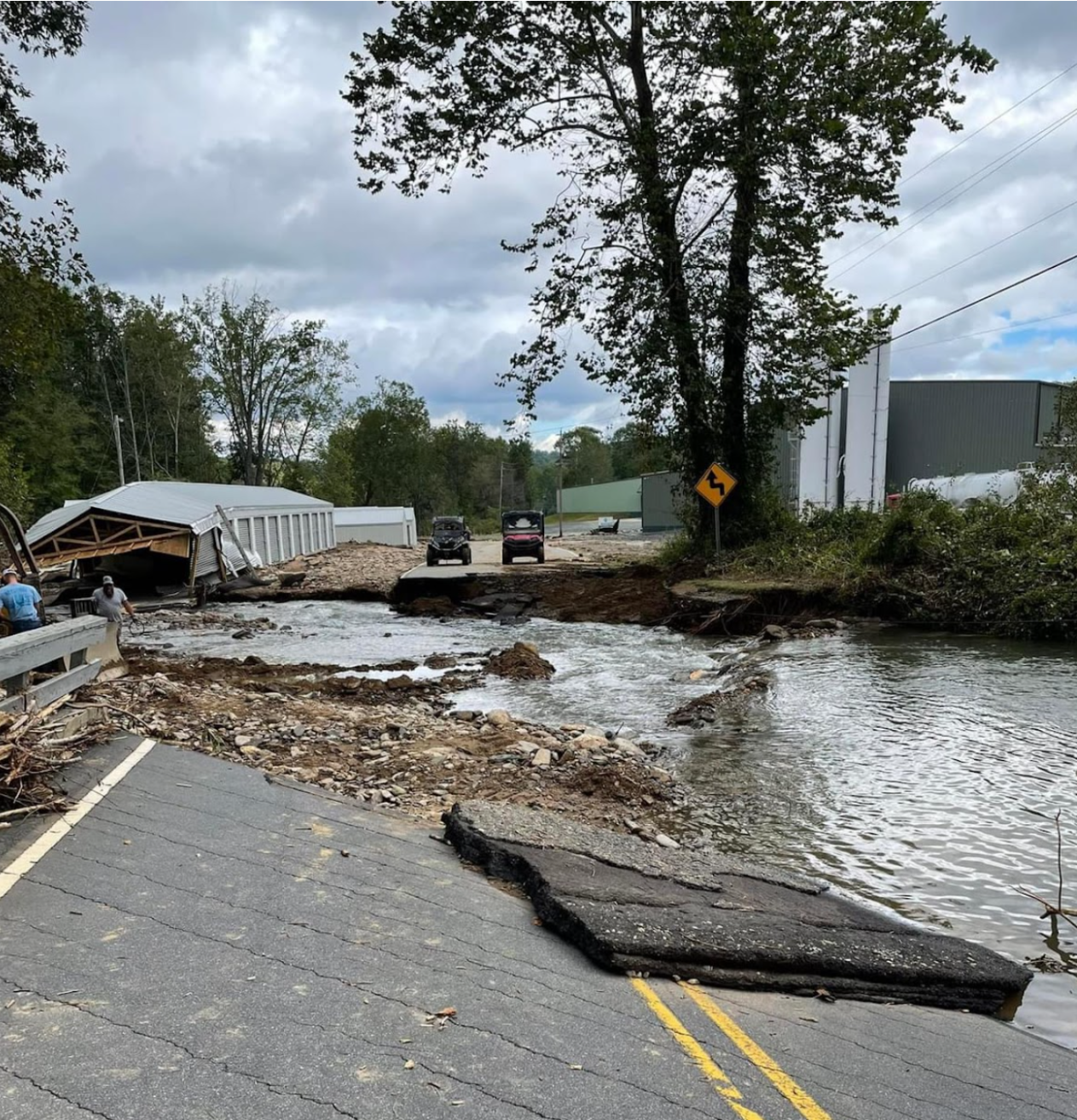
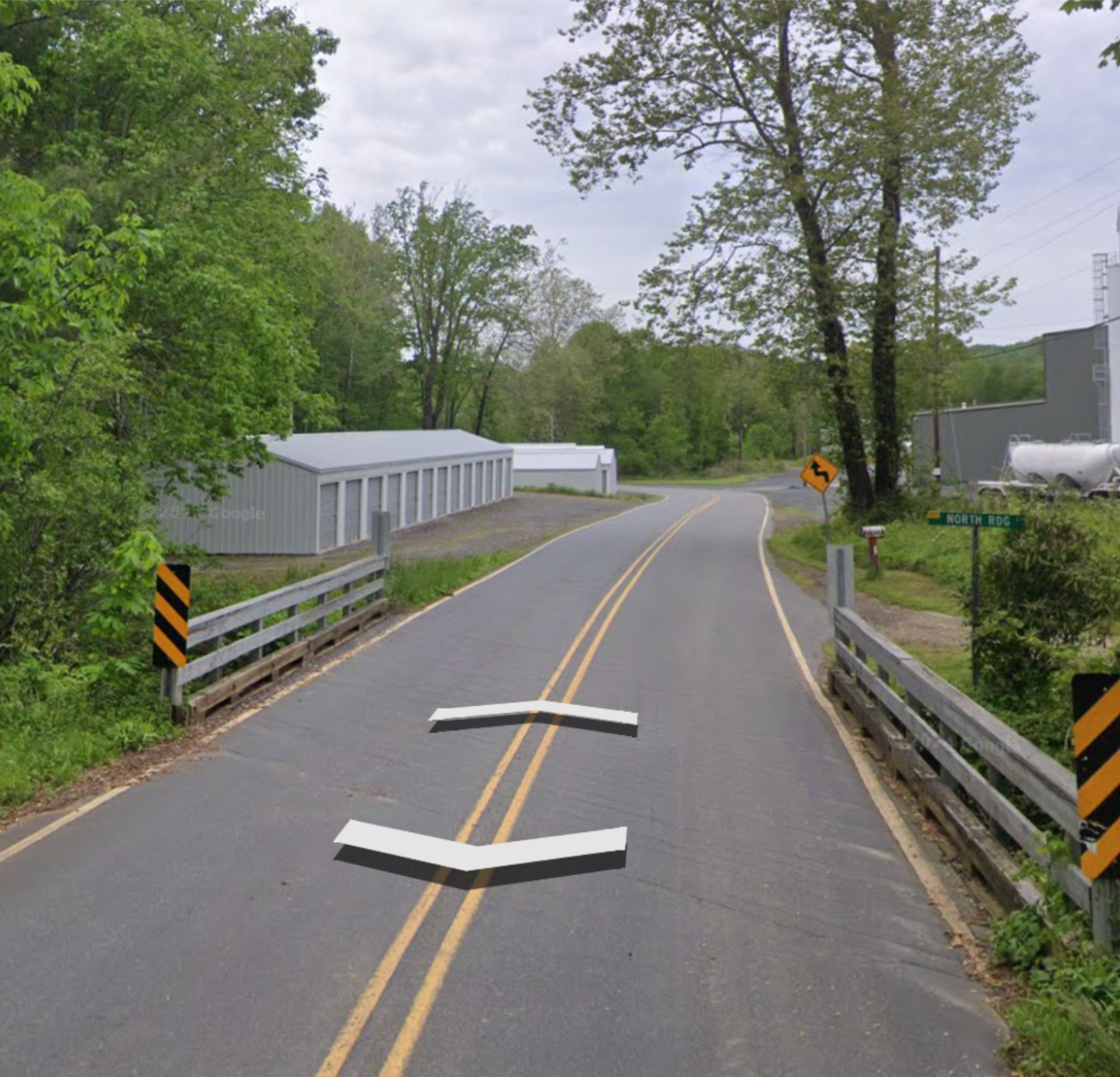
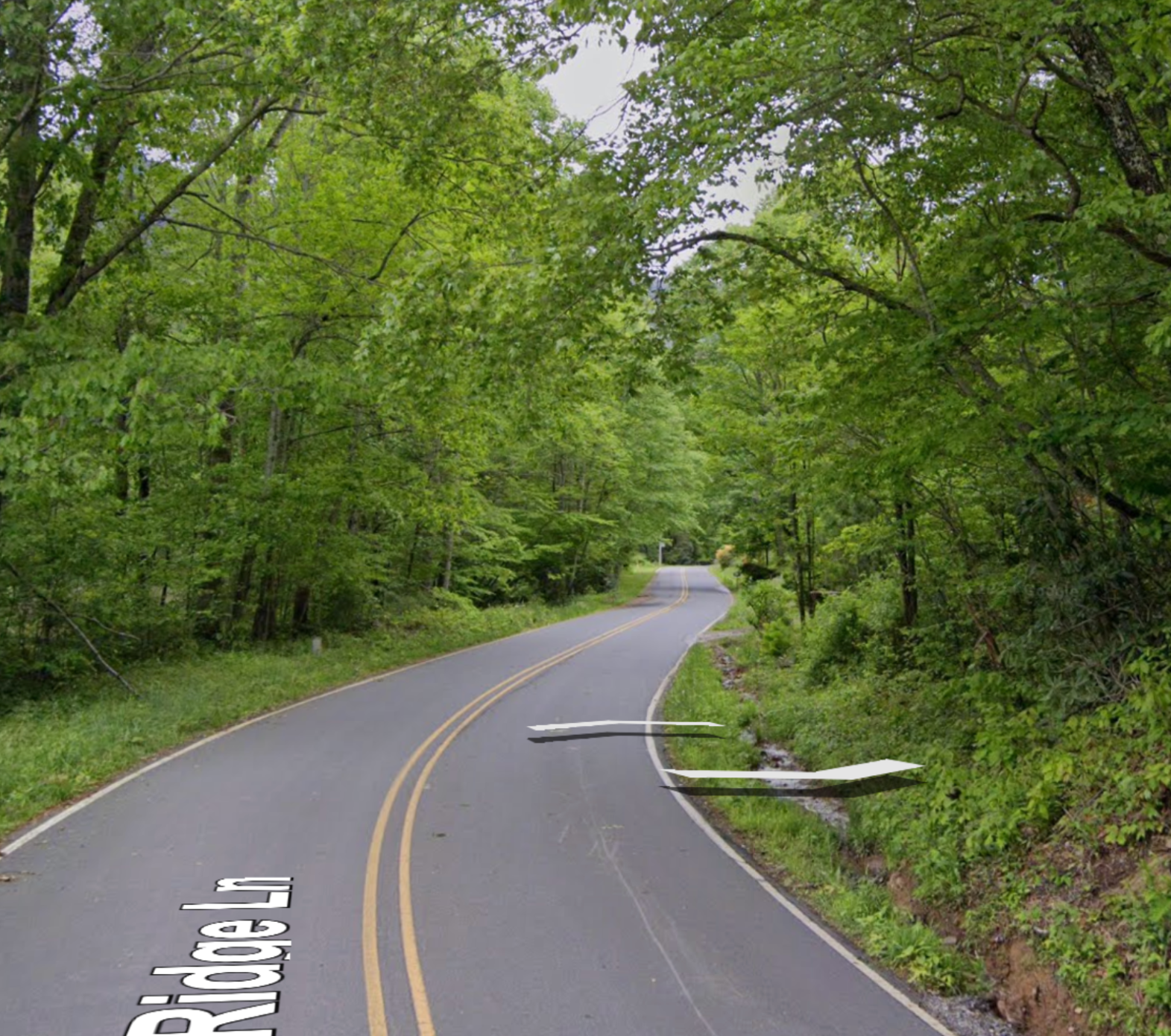
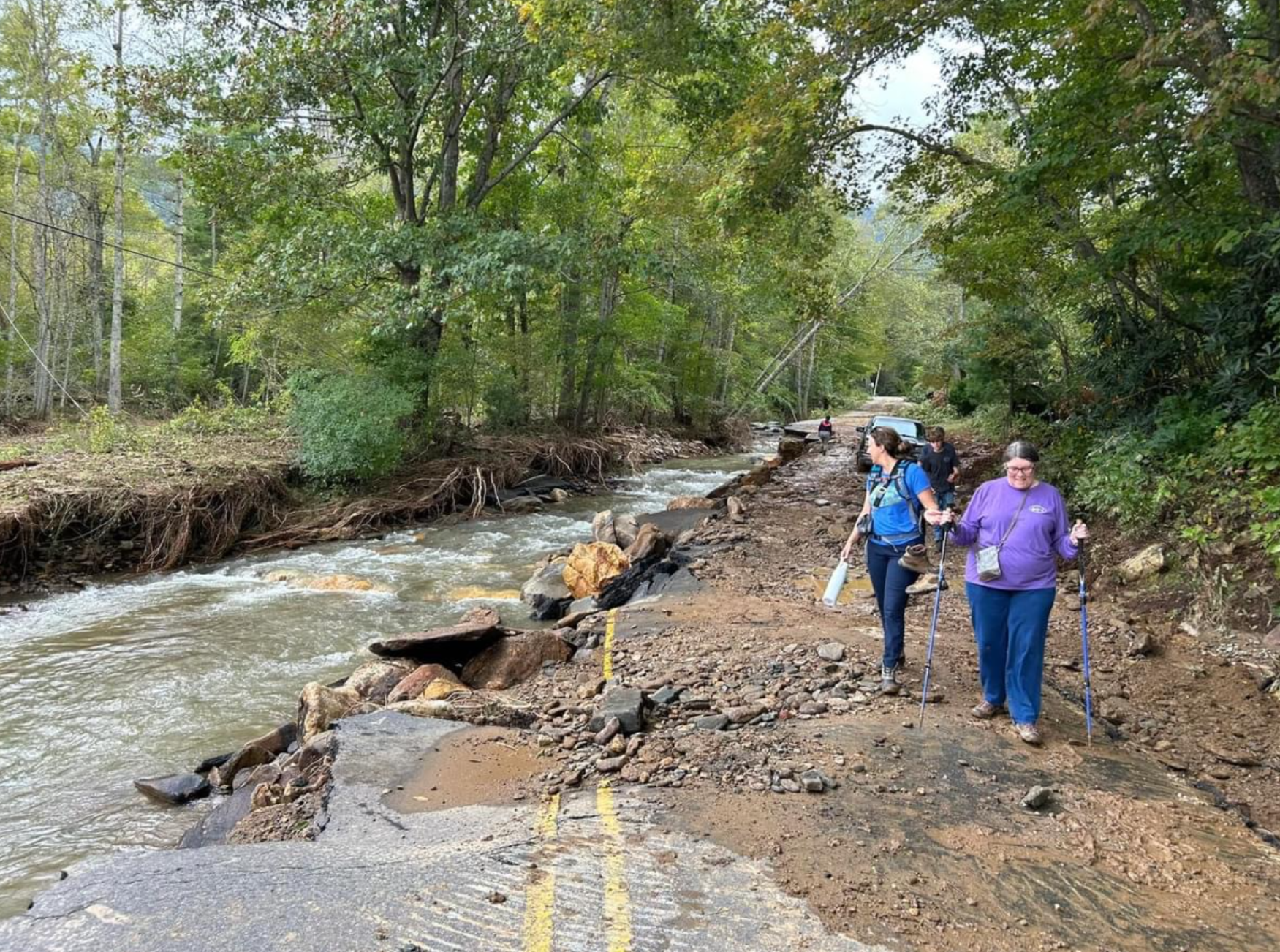
Access to emergency facilities was incredibly limited because of the destruction of the roads. Major interstates are closed between towns and into towns due to fallen trees, mudslides, bridges collapsed, flooding, powerlines down, or the pavement is literally no longer there and swept away by flood waters. This not only applies to major interstates and highways but to almost every single side road, neighborhood, and driveway.
The damage to these roads is severely isolating. Without access to homes by car, people must walk for miles to reach a main highway or even any sort of public infrastructure. To provide additional context, Yancey County has a population of about 19,000 and has a square mileage of 312.6 miles. Durham County has a population of about 333,000 and has a square mileage of 287.5 miles. I include this to say there is no large neighborhood. There is not a centralized location. People across my county are incredibly spread out. There is no interstate in my county, only 2 major highways that connect the thousands of side roads. Bridges that connect these roads to the highways are washed out completely. Hundreds of trees and powerlines have fallen on singular driveways. Many live on gravel roads, and those are completely impassable. It will take months and years to fix this issue and until then, traveling to or from home will be impossible or extremely difficult.
With this lack of transportation and communication, people are starved of physical resources and resources of knowledge. At this time only a few locations throughout the county have power. Many homes do not have running water, electricity, service, a source of food, or transportation (and for those who do have a way of traveling with their vehicles, there is barely any access to gas). This applies to those fortunate enough to have an intact home. For some, flood waters have destroyed levels of their home, trees have fallen on rooms or entire houses, their houses are completely underwater, mudslides have caused the houses to lose their foundations, or houses near rivers have been swept away entirely.
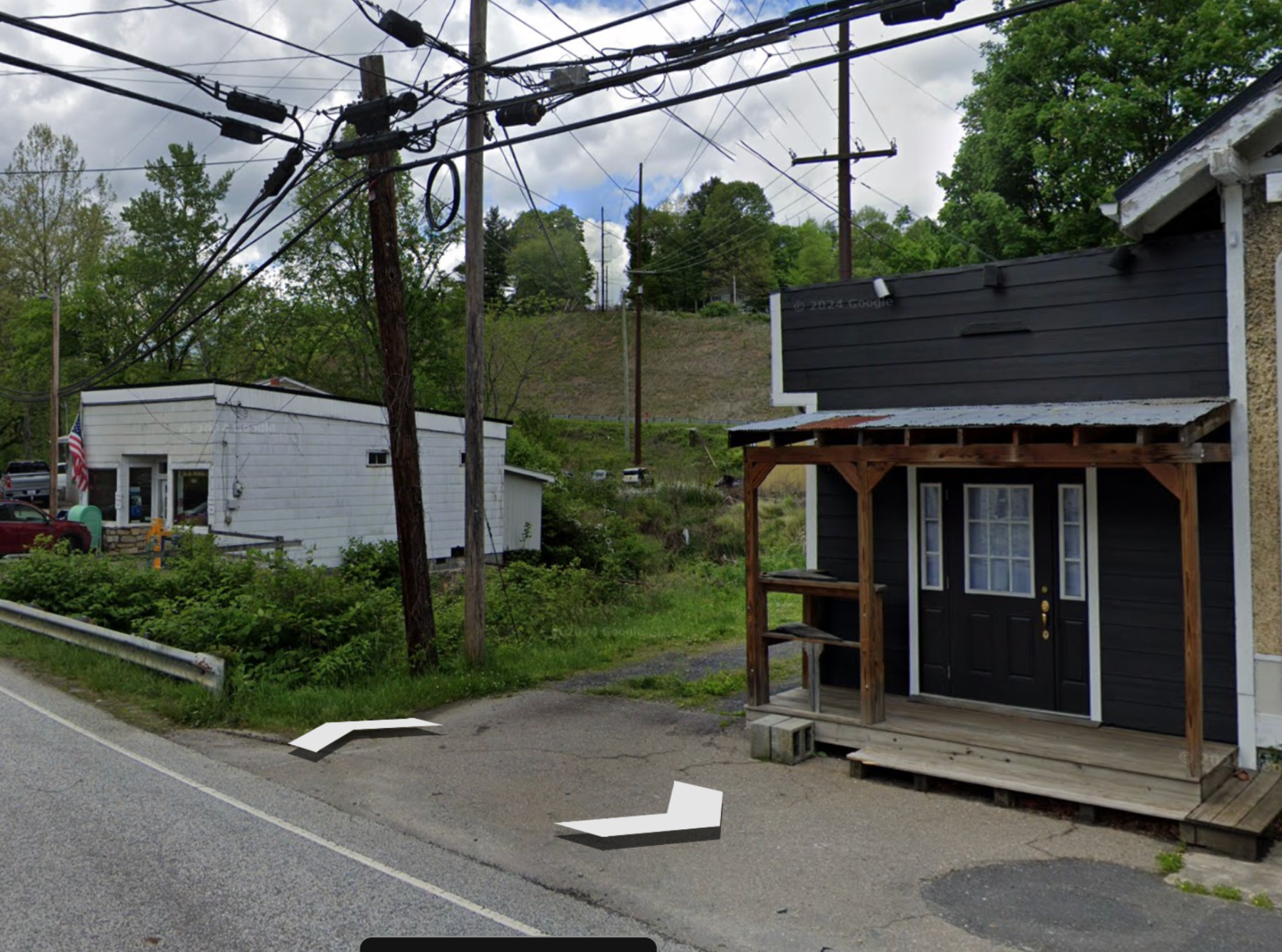
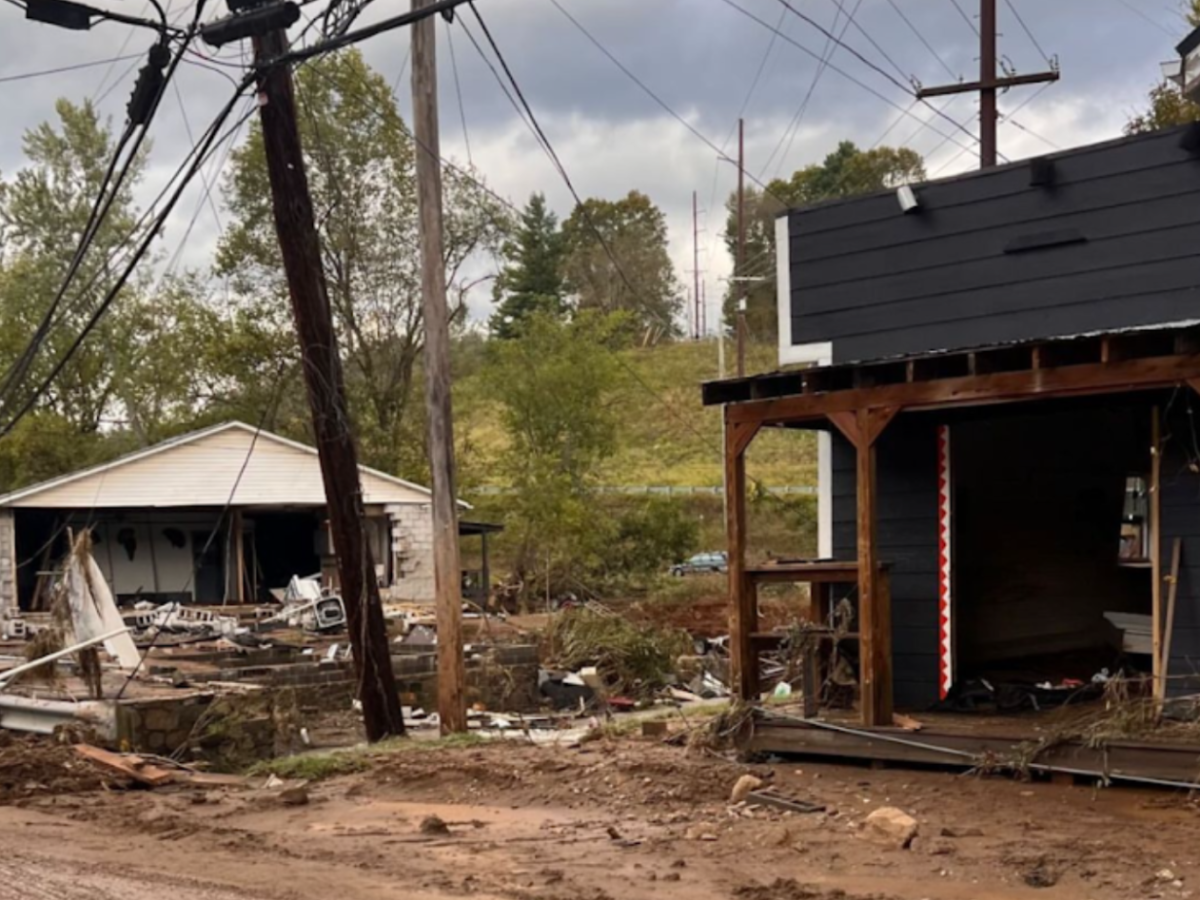
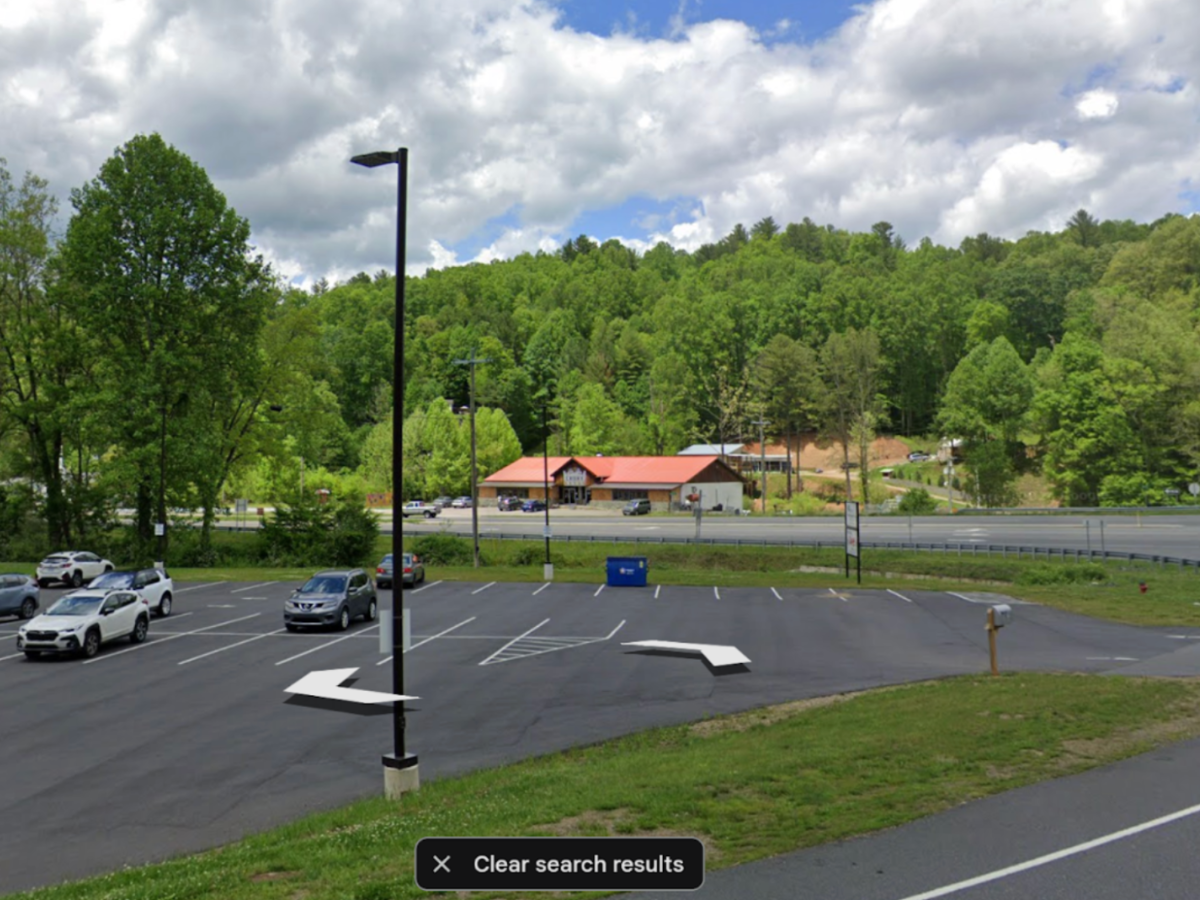
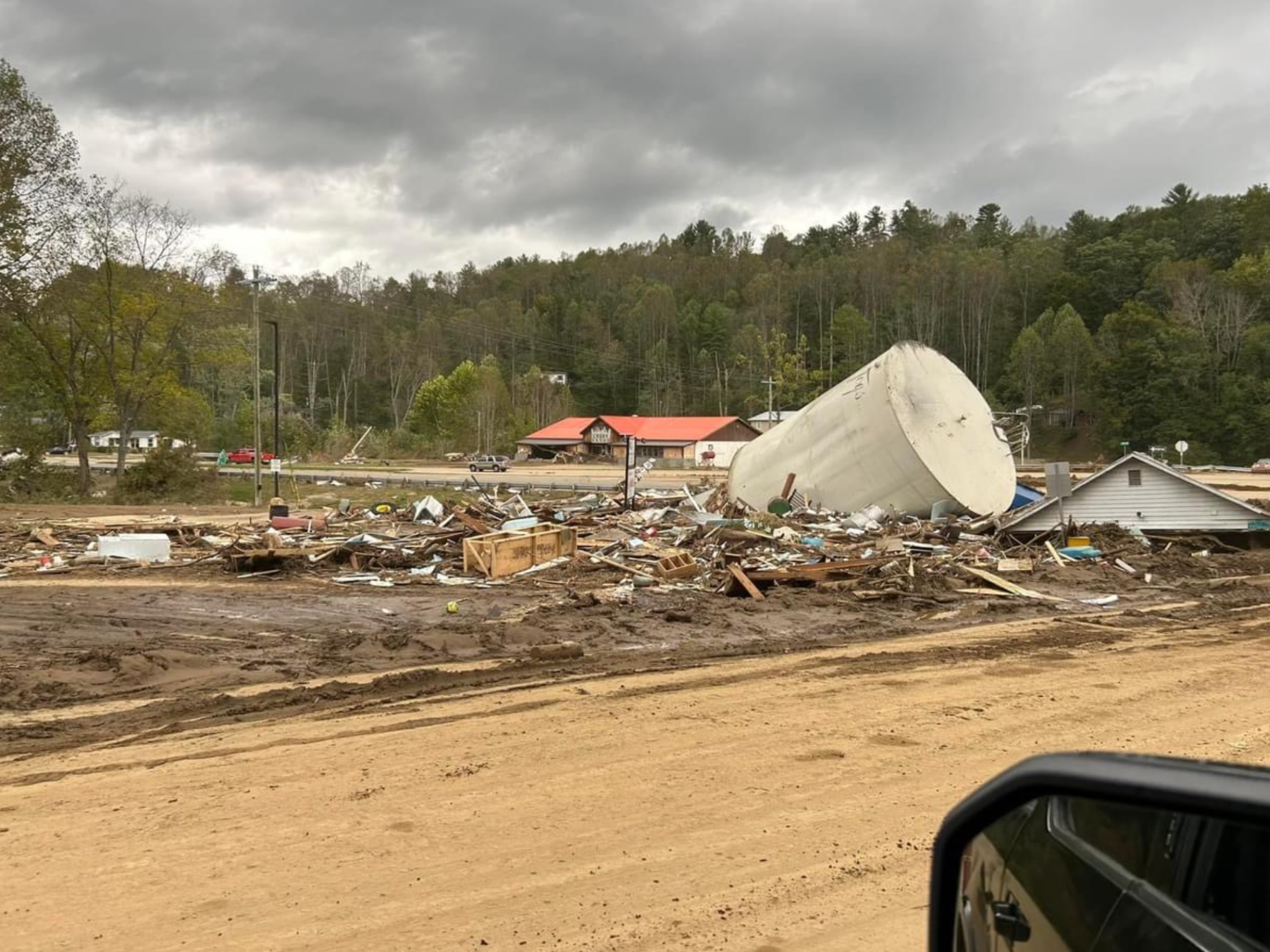
Damage to this extent has not only impacted homes but also cars and public buildings. The post office closest to my house consists of only the cinder block foundation now. I spent my summers swimming in the South Toe River; the swimming hole is down about 20 feet in a ravine from where you park your car. The river is now level with the road. The multiple bridges to access my house are completely washed out. Our neighbors hitchhiked into town to send us an email urging us to not return for a while.
I have been fortunate enough to hear from a majority of loved ones, but even 48-72 hours from the storm I worry about friends and valued community members. The majority of people are okay but conditions are terrible. Communities have banded together to make it through this. It will take months and years to reach relative stability.
I write all of this to provide context that hopefully helps you to understand the severity of the situation. I strongly urge you to share this email or by word of mouth with everyone: spouses, parents, friends, colleagues, teachers, neighbors, anyone. Below are pictures of my hometown and links to ways to donate money and resources.
Thank you,
Ellie Murphy
/
HERE ARE SOME BEFORE AND AFTER PHOTOS. I HAVE TRIED TO MATCH THE IMAGE OF DESTRUCTION WITH AN IMAGE FROM GOOGLE EARTH A COUPLE YEARS AGO. WHITE BUILDING IS THE POST OFFICE CLOSEST TO MY HOUSE. IT IS NO LONGER THERE AND THE BUILDING DIRECTLY NEXT TO IT IS MISSING A WALL. (ELLIE MURPHY)
Happy Half has been an NCSSM tradition for years: the last 30 minutes before check is the precious time when students can socialize with friends and take a break from the stress of school.
While participation can vary depending on the day and weather, you can usually find at least 15-20 out on Hill Street enjoying the half an hour before check. However, a new element has been brought into the Happy Half scene: spike ball.
Spikeball is a game that involves a ball, a net, and four competitive players. It’s become a popular activity at NCSSM and boasts a club that hosts tournaments and events dedicated to the sport. Recently, however, spike ball has caused Happy Half to move from its famous spot on Hill Street to the Royall Lawn, affecting the Happy Half scene–something many students are indeed not “happy” with.
Cooper Uhl ‘25, a frequent Happy-goer, asked students their opinions one night.
“[Spikeball] was cool at first when it was just one or two [nets], but now it’s like five or six,” stated Stevie Richardson ‘25.
“I think it has been detrimental to the culture of Happy Half because it’s meant for people to be able to talk about their days,” Lola Larsen ‘25 said. “But when you are playing spike ball, it’s very difficult to have a conversation.”
Not all students are against the new Happy Half addition; many are very supportive and believe it should be here to stay.
“It’s a good activity to keep people moving and it brings the school together. It really builds a community to be able to come out to,” said Hannah Amadi ‘25.
Rishi Jalagam ‘25 believed spike ball was “the greatest thing in the history of the school.” When asked to elaborate, he replied, “Are you gonna do a legislative law? Because I’m all for anarchism.”
There is quite a divide between students when it comes to who should dominate the last 30 minutes before check–some are upset with the addition of spike ball, and others believe it brings something new and exciting to the atmosphere.
Landon Jiminez ‘25 expressed the idea of a compromise. “I don’t think it’s bad, but I also feel that we need normal Happy. Maybe we can make a deal–three days a week, 1-2 nets. But 4-5 nets every single day… it’s just kind of ruining Happy for years to come and the years to follow.”
After a minute, he added, “We’re losing our tradition as the North Carolina School of Science and Mathematics!”
Ethan Burkett ‘25 agreed. “You don’t get to hear about the daily shenanigans, and you miss out on the socialization and familial ties of Happy Half.”
What happens if spike ball suddenly dies out? Will Happy Half continue on the Royall Lawn? Traditions are important to students at NCSSM–it’s what makes the two years we spend together memorable. However, who says that traditions can’t change? Maybe it’s time for the classes of 2025 and 2026 to add their own traditions to the mix.
The Philadelphia Eagles celebrate their victory with the Vince Lombardi Trophy. (Chris Graythen/Getty Images)
By Preston Mullins, Stentorian Staff Writer
Every year, there is great excitement leading up to the Super Bowl. Viewers around the world flock to their televisions to watch the game, halftime show, and unique commercials. This year, Super Bowl LIX drew mixed opinions from those who watched. The game itself was viewed by many as one of the worst in recent history, but Philadelphia Eagles fans certainly enjoyed watching their team beat up the Kansas City Chiefs 40-22. There was no suspense whatsoever as the Eagles had control of the game from start to finish.
Kendrick Lamar’s halftime performance was much anticipated and viewers were divided on whether or not it was a success. For some, it was a terrible, boring performance and for others, it was the best halftime show they had seen recently. One thing is for sure though, it had plenty of controversy as Lamar performed his viral Drake diss track, “Not Like Us.” Finally, we arrive at the commercials. Super Bowl commercials have always been a fun part of the broadcast as viewers watch to see what kinds of iconic and wacky advertisements companies have created. This year, however, those who tuned in pointed out that the commercials were not nearly as eye-catching and unique as usual, with the exception of a few, specifically the Mountain Dew “Kiss from a Lime” commercial featuring Seal.
The only thing we can be sure about when it comes to the reception of Super Bowl LIX is that there is no clear consensus on the public opinion of the broadcast. Some aspects were subpar and others were on point, but no one can agree on the quality of most of them. When it comes down to it, that’s really what makes the Super Bowl special. People around the world come together to watch each year and no one ever truly knows what to expect!