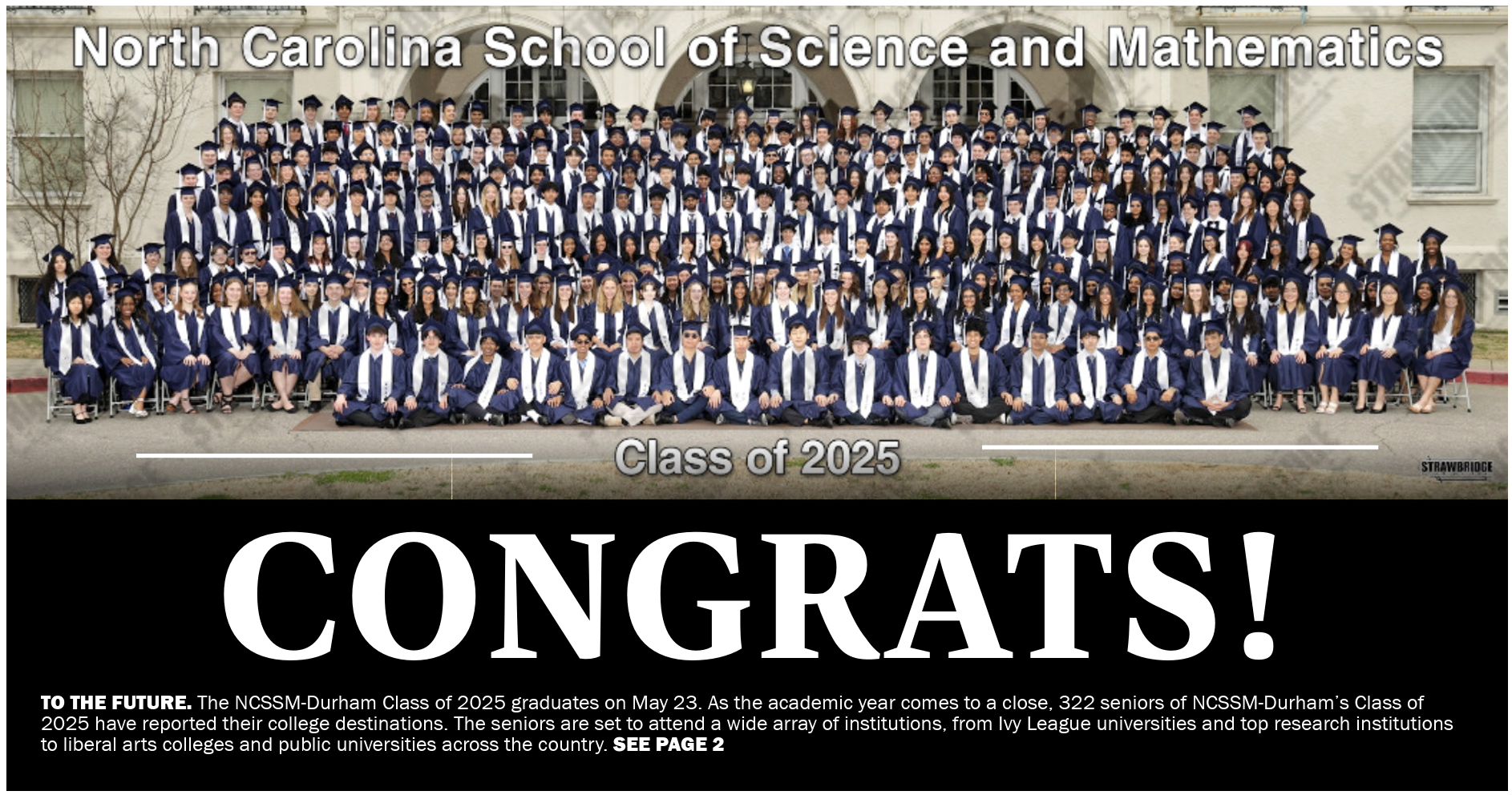
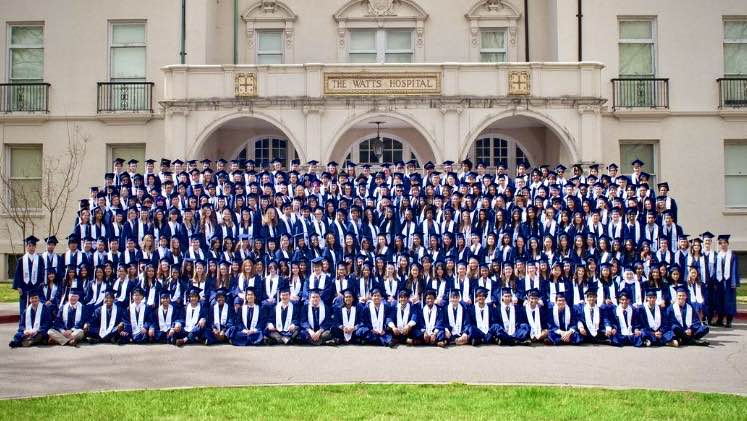
As the academic year comes to a close, 322 seniors of NCSSM-Durham’s Class of 2025 have reported their college destinations. The seniors are set to attend a wide array of institutions, from Ivy League universities and top research institutions to liberal arts colleges and public universities across the country.
According to Program Assistant Pam Oxendine, NCSSM Counseling Services worked with seniors from May 1-5 to complete their final transcript requests. After May 1, seniors self-reported their decisions to the department, which has released data on the colleges the class of 2025 committed to for The Stentorian. As of May 14, 2024, college commitment data was available for 322 out of the total 342 graduating seniors (94 percent reporting), including early decision, early action, and regular decision commitments.
Unsurprisingly, the most popular destination is the University of North Carolina at Chapel Hill, where 169 NCSSM-Durham students—more than half of those reporting, or roughly 52 percent of the senior body—will enroll this fall. NC State University follows with 68 students, continuing a long-standing pipeline between NCSSM and the state’s flagship STEM university.
Beyond North Carolina, students are spreading out across the nation. Four students will attend Yale University, another four will enroll at Columbia University, and four more are heading to Stanford University. Duke University, located just minutes from campus and a popular research partner for many NCSSM students, will welcome 13 undergraduates this fall.
The class also boasts acceptances to all eight Ivy League institutions, with students enrolling at Harvard, Columbia, Cornell, Dartmouth, Princeton, UPenn, and Yale. Other notable destinations include the Massachusetts Institute of Technology (2 students), the University of Pennsylvania (5), Carnegie Mellon University (3), Georgia Tech (5), and the University of Chicago (2).
Smaller liberal arts colleges are well represented too. Students will attend Barnard, Davidson, Haverford, Swarthmore, Spelman, and Williams. One student is heading to the United States Air Force Academy, and another to McGill University in Canada.
Two students have chosen to take a gap year before continuing their academic journeys.
Altogether, the Class of 2025 reported plans to attend 47 different colleges and universities, showcasing the diversity of interests and ambitions that define the NCSSM experience.
Here is a full breakdown of college destinations for the class of 2025:
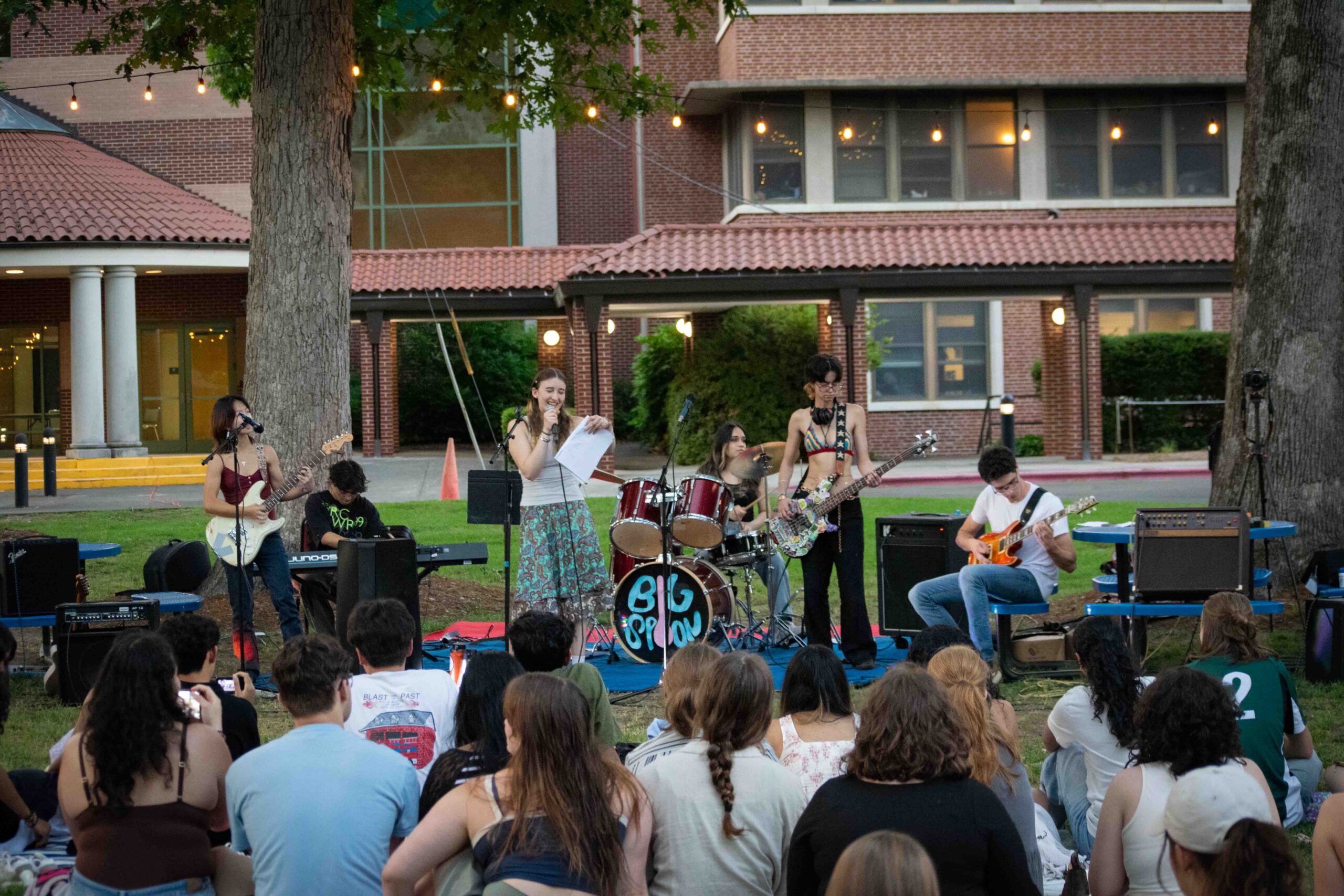
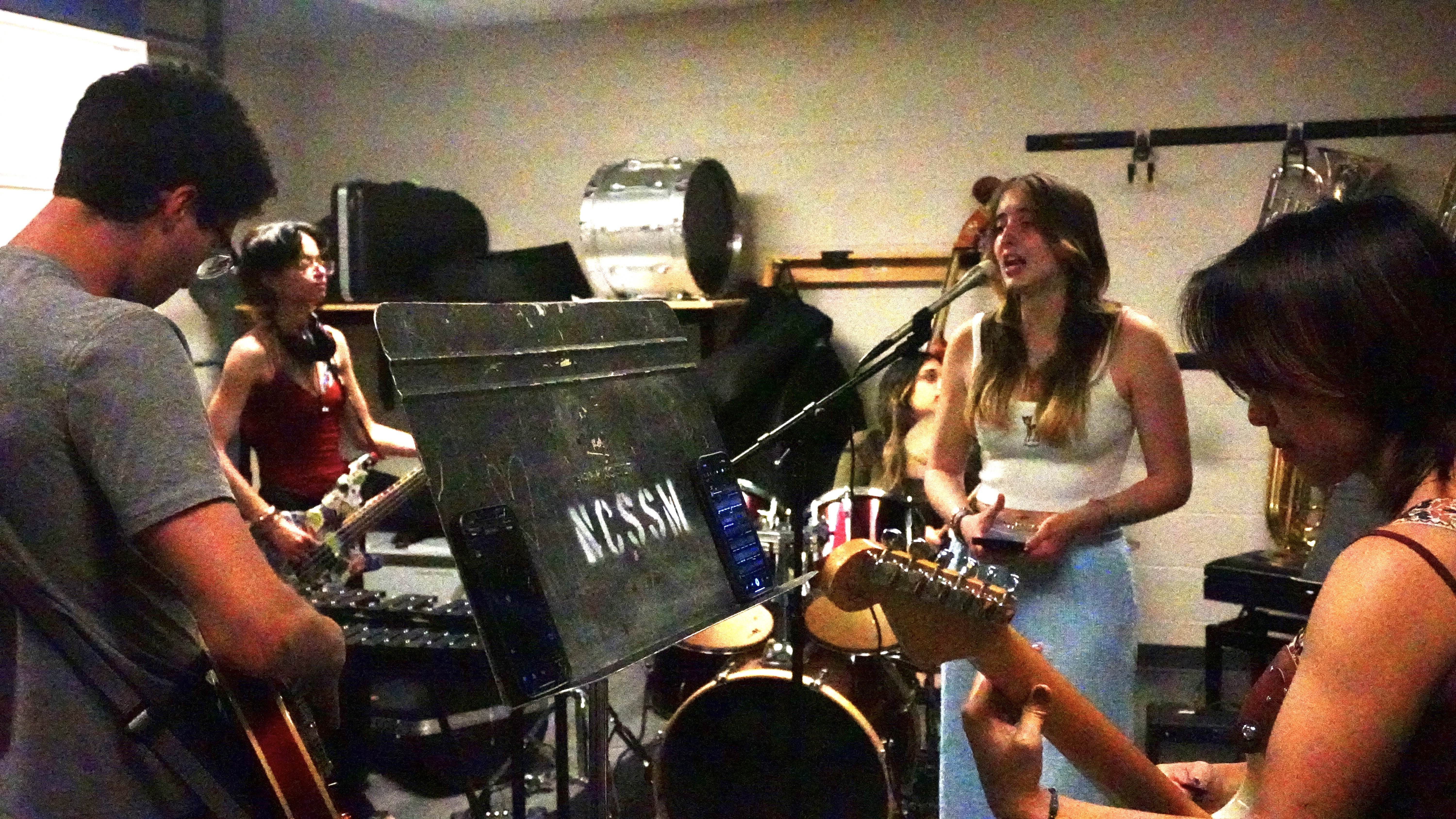
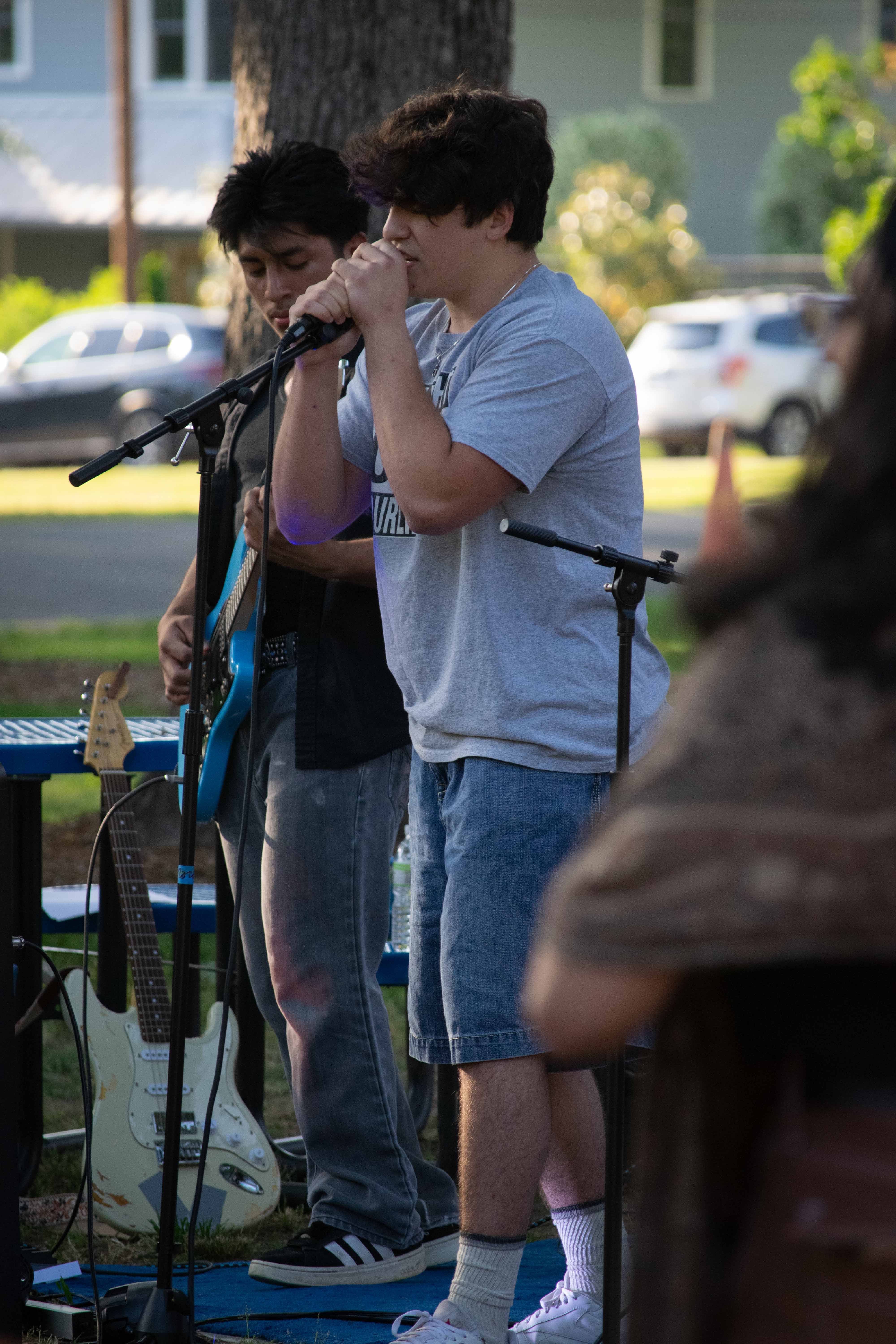
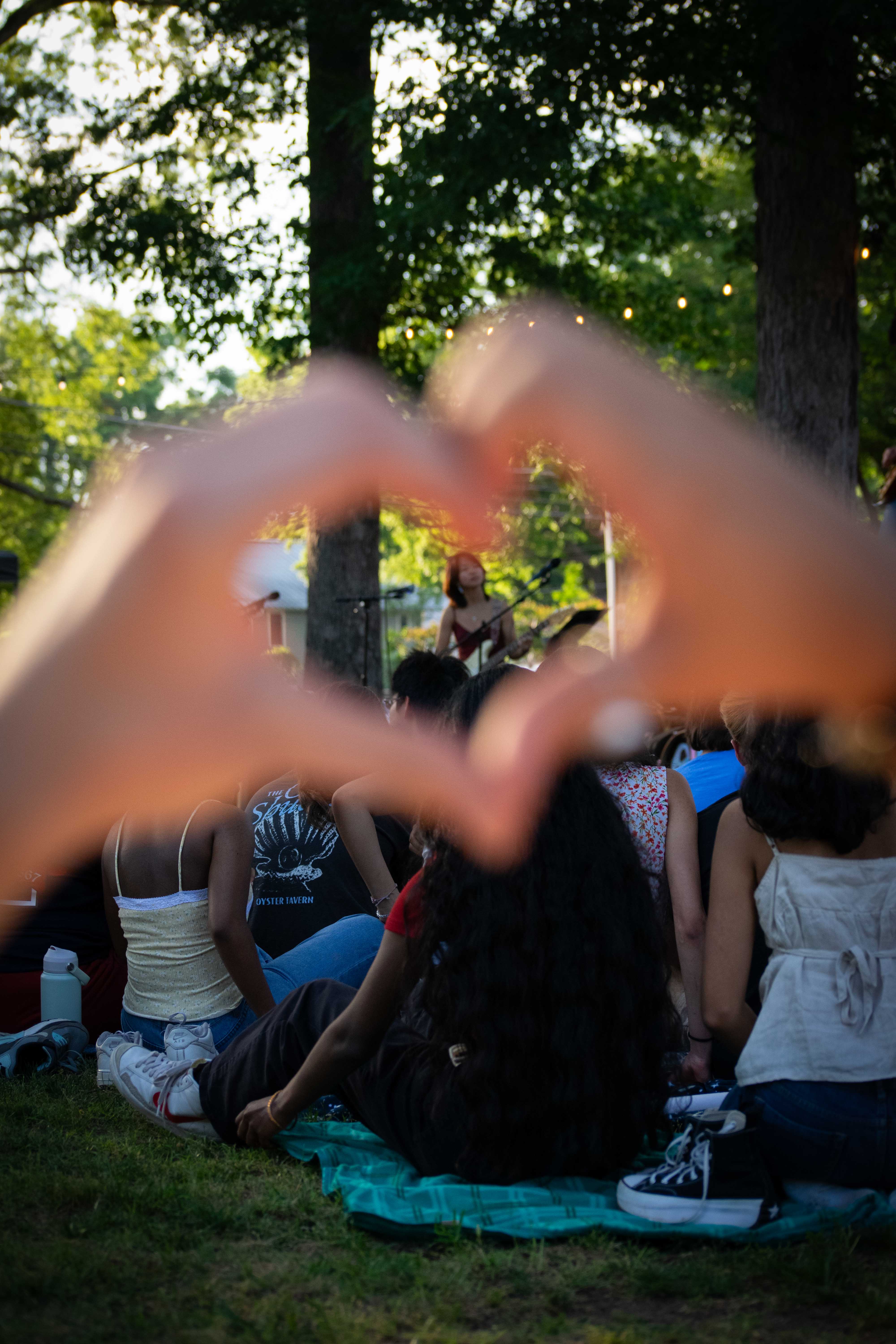
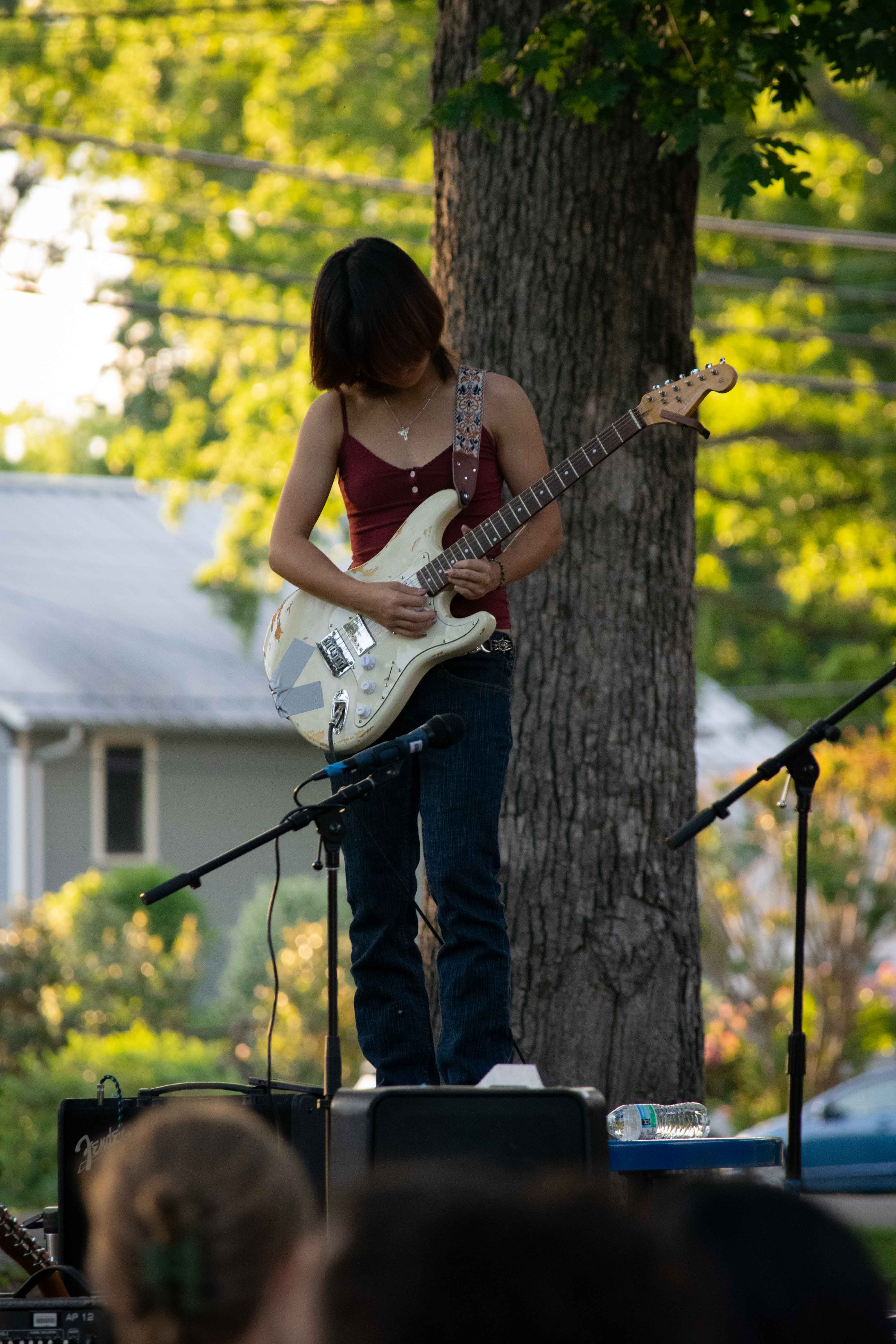
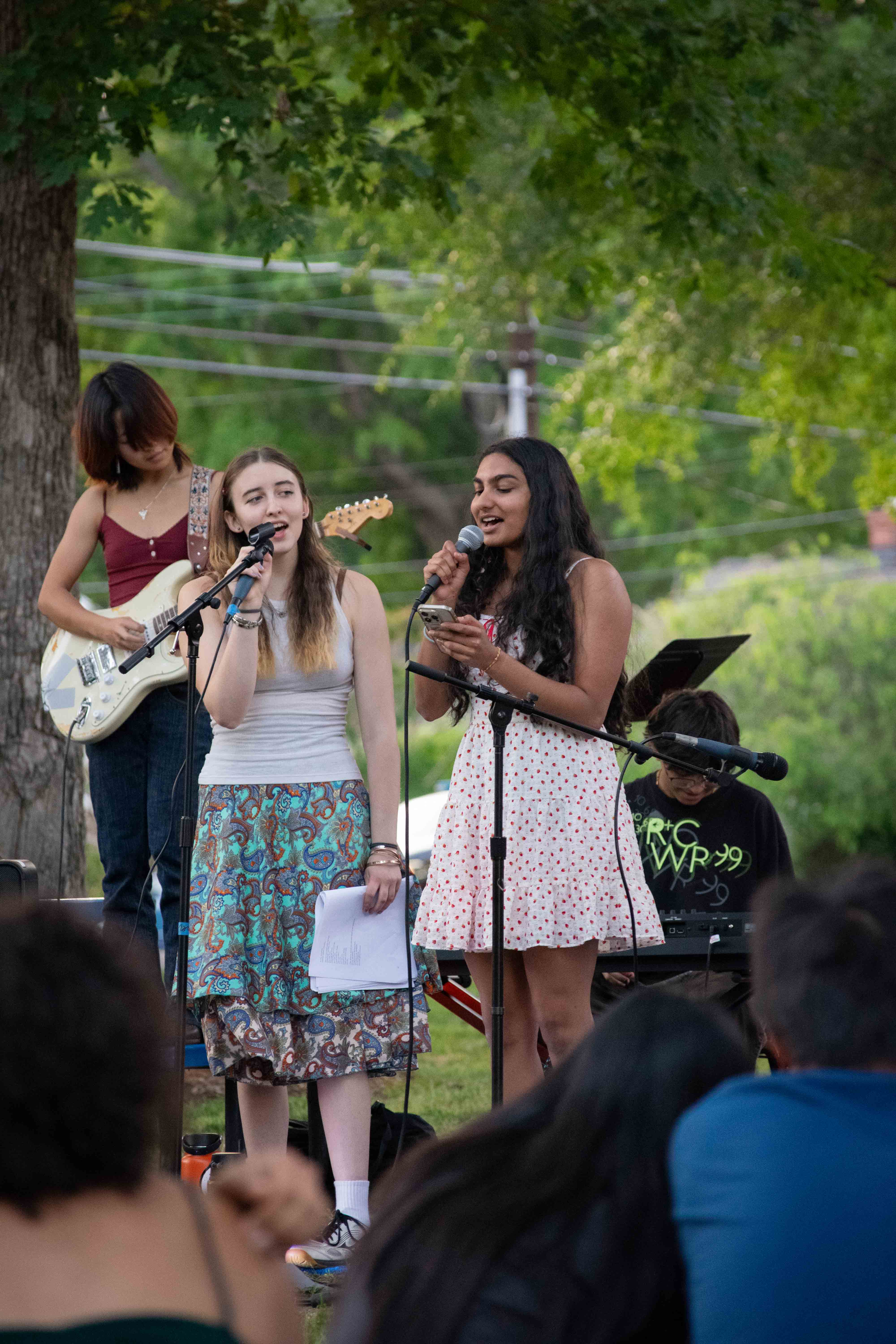
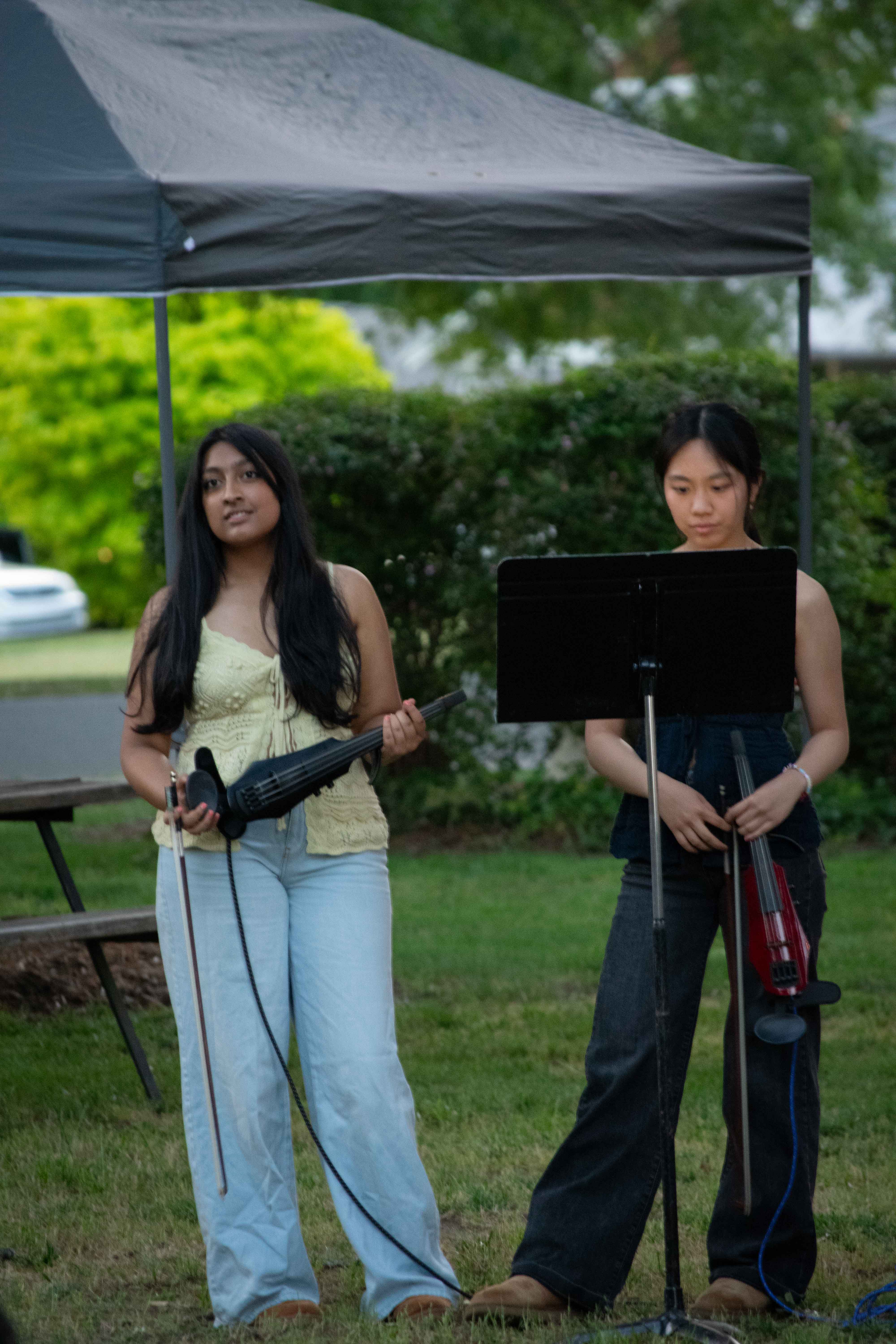
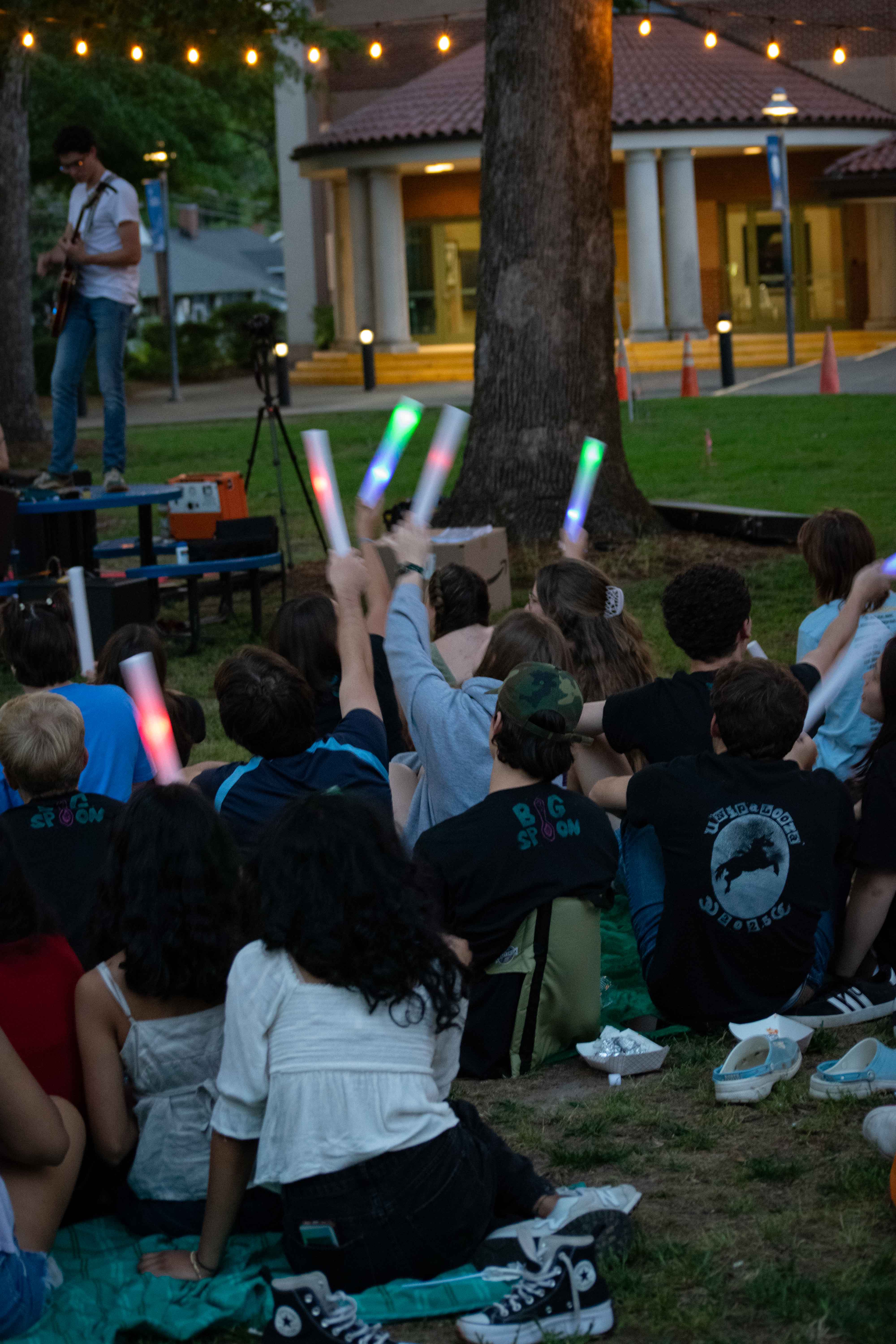
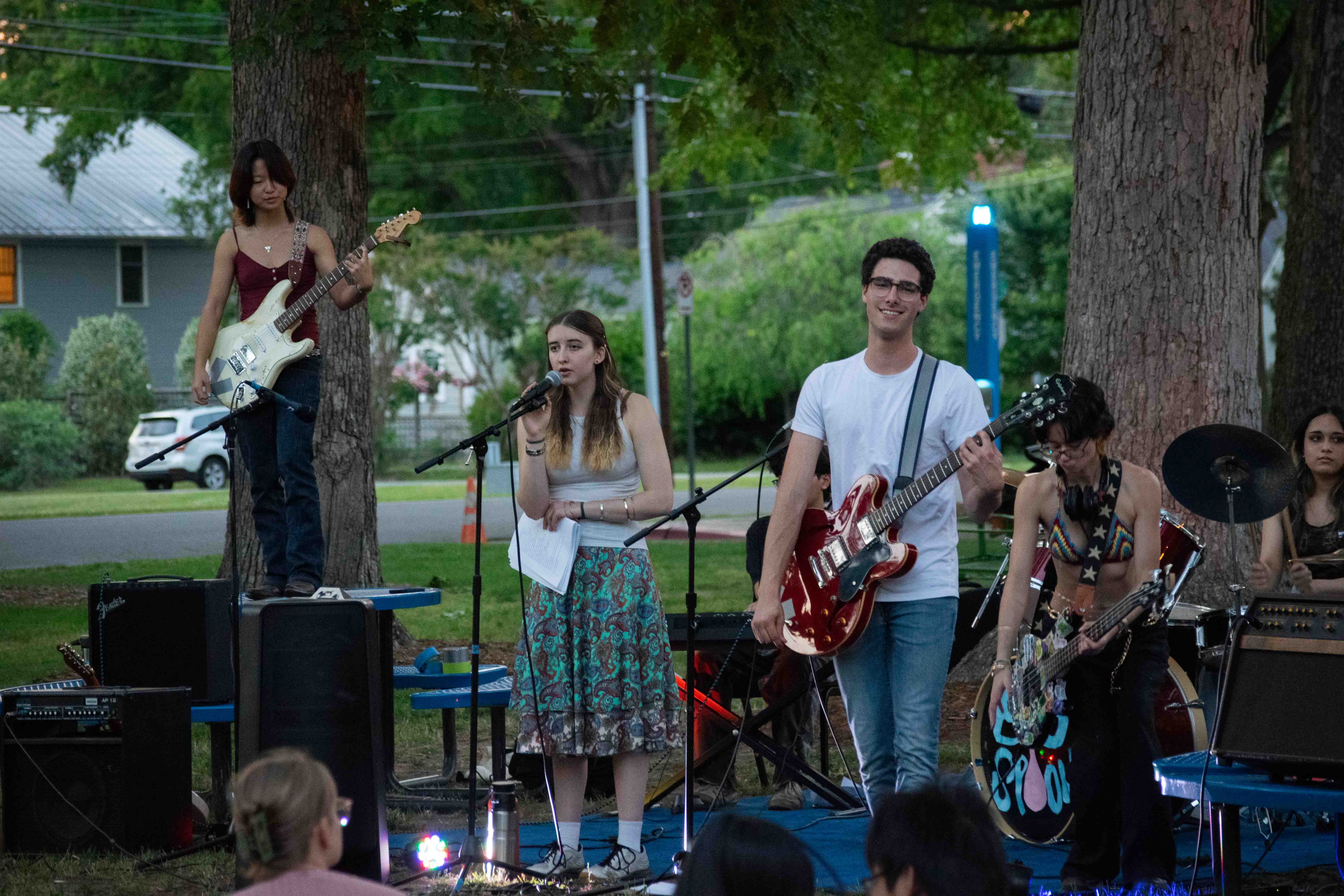
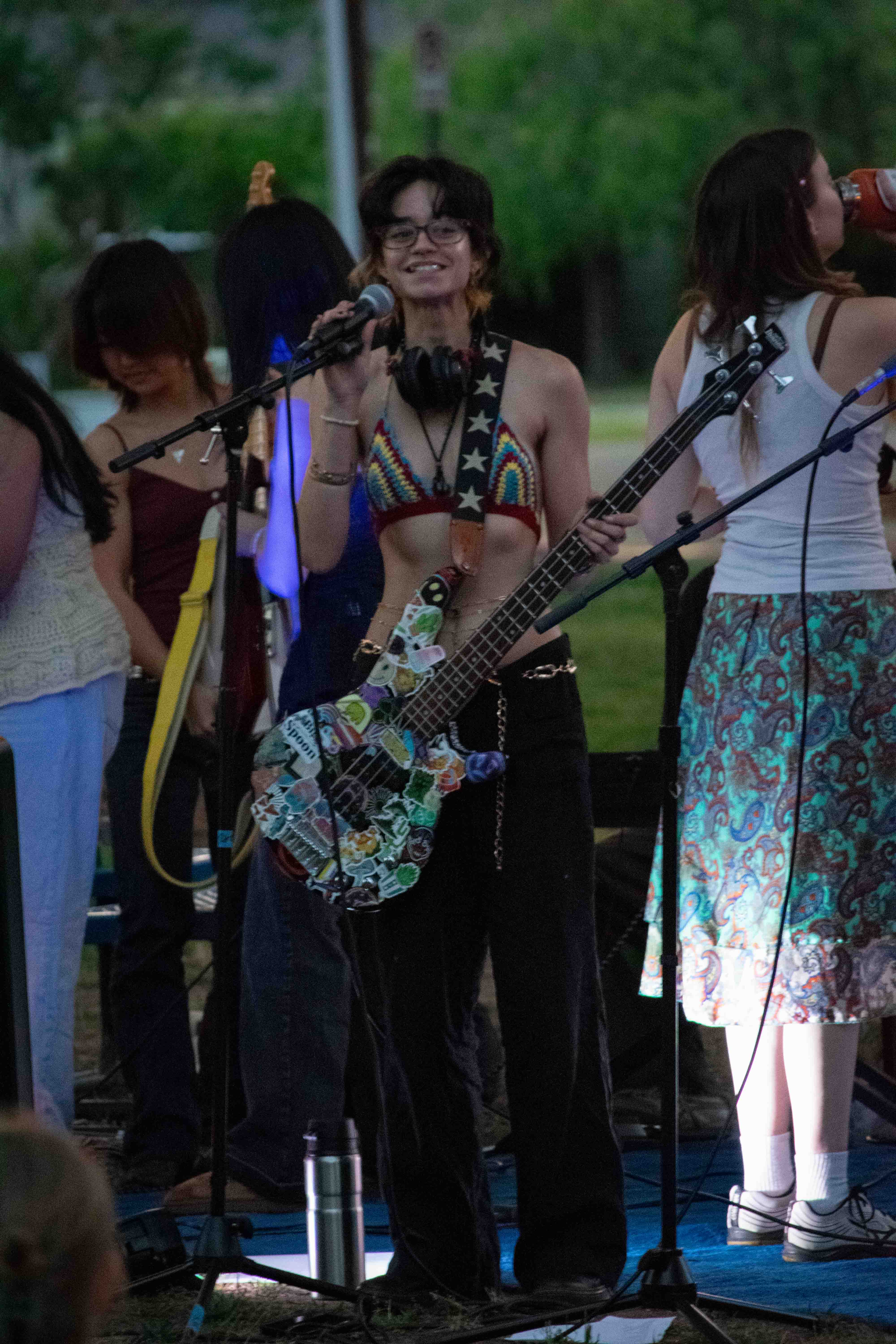
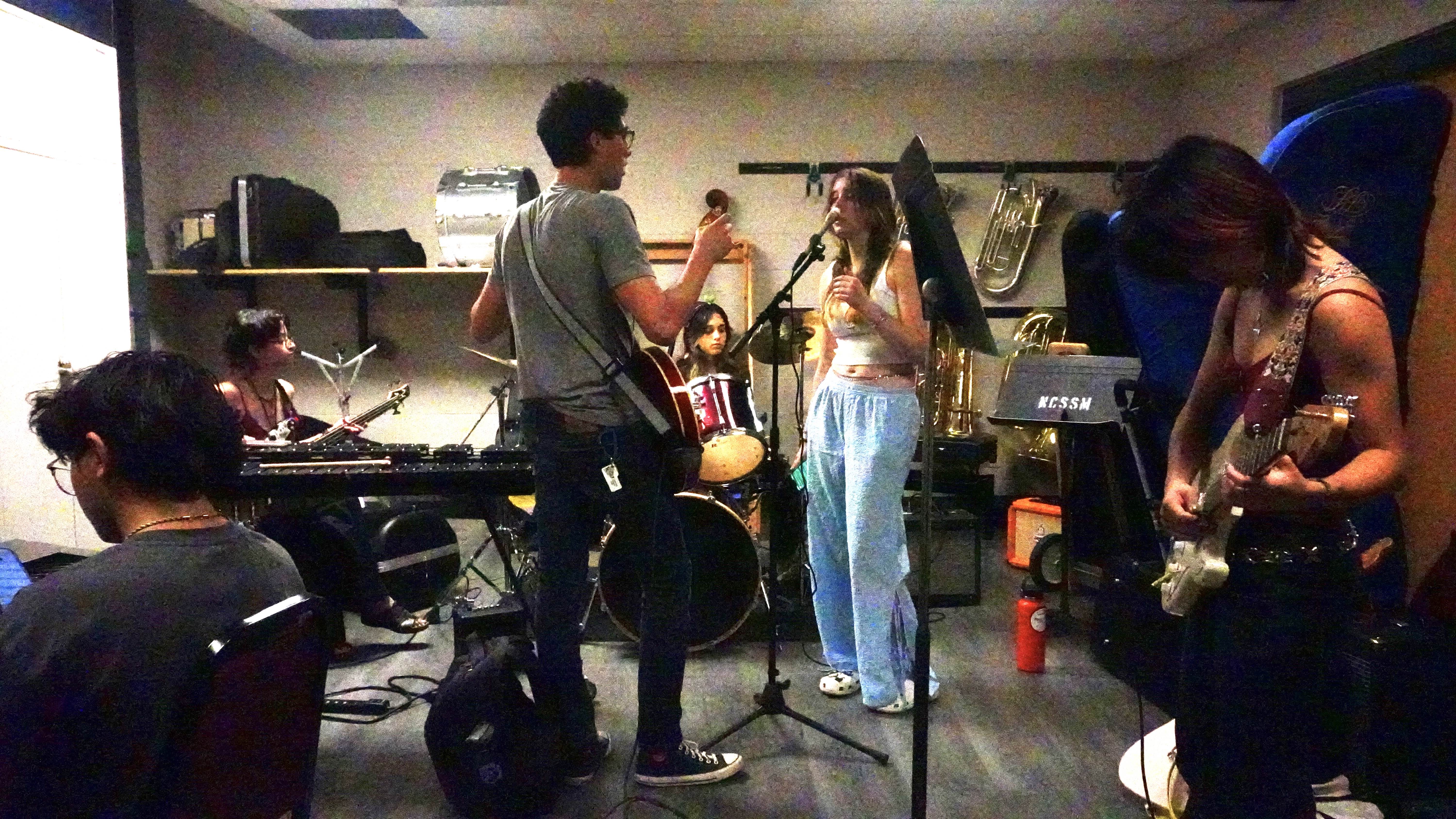
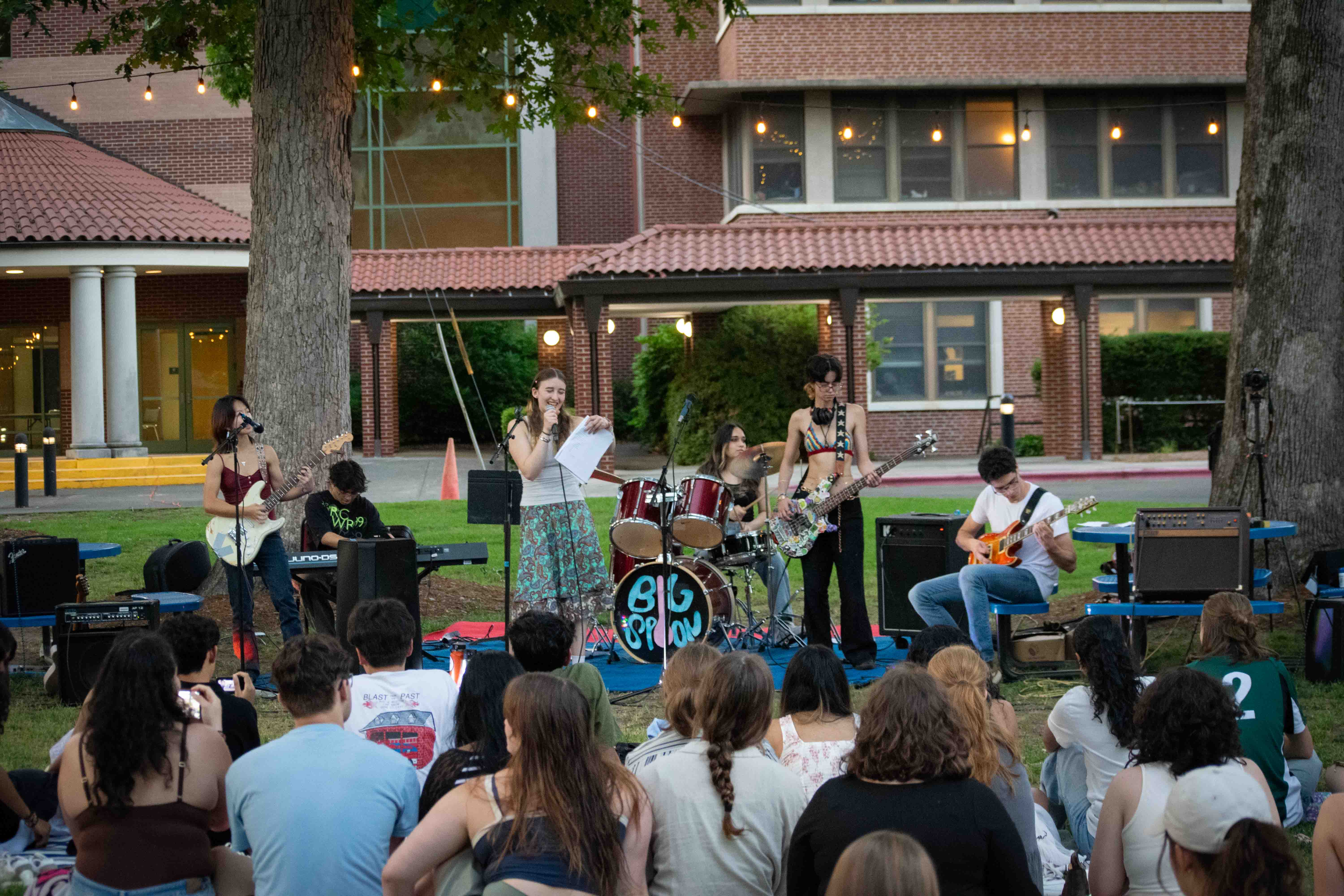
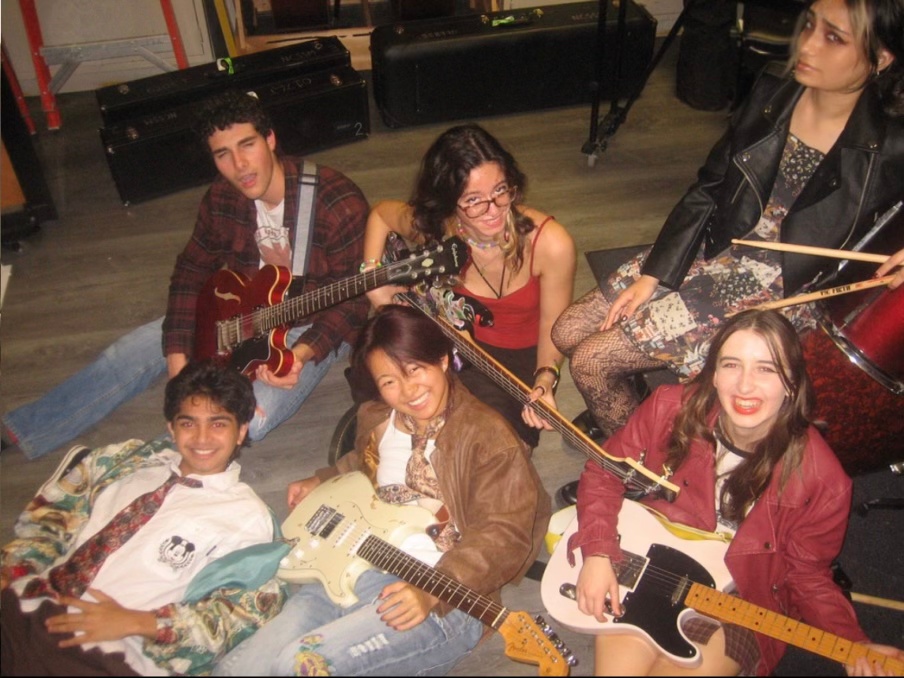
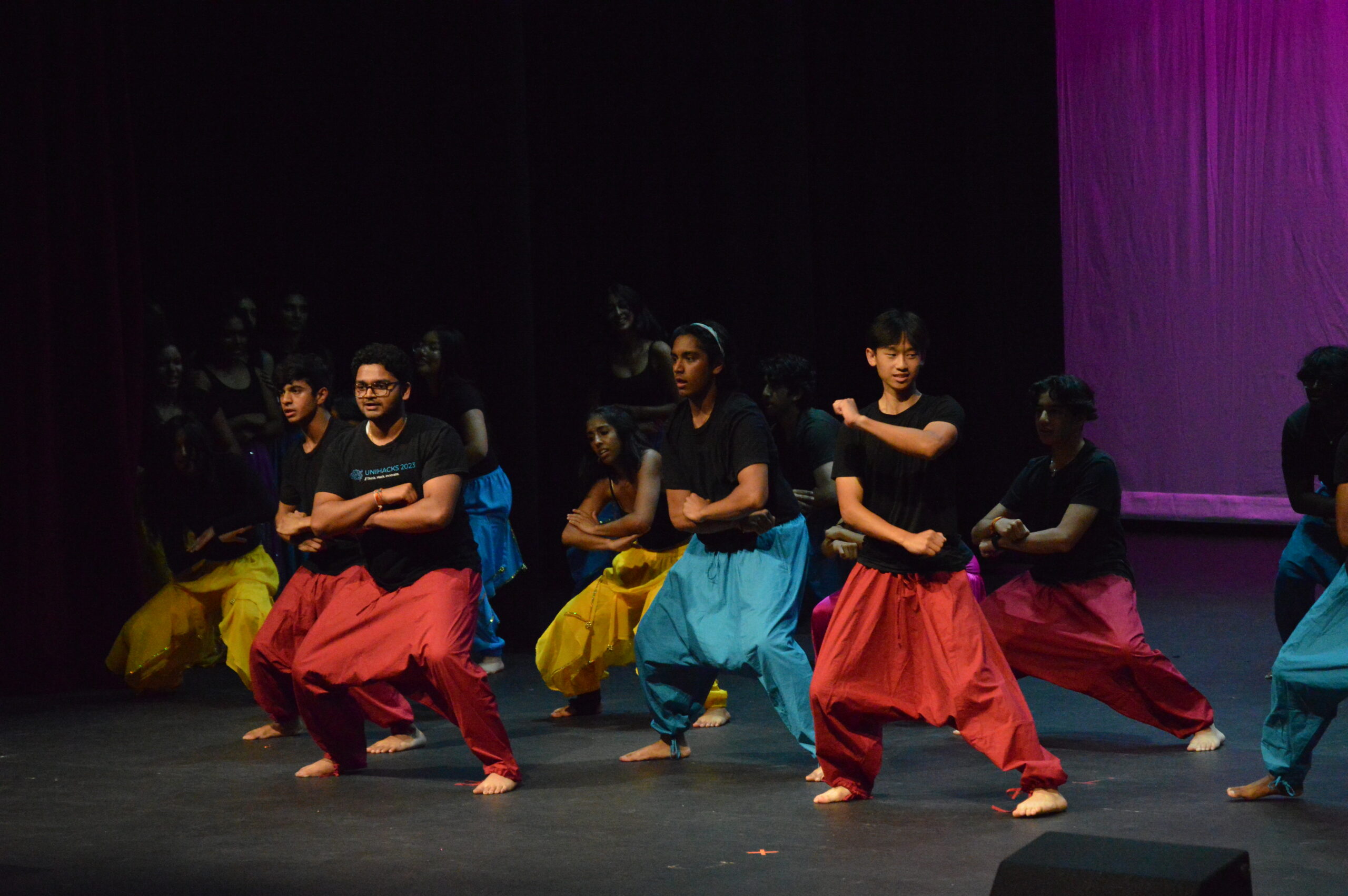
“Having practice is really fun but when you’re doing it for that much time and you know that when you go back to your room you’re just going to have to work on homework and do other stuff SSM students have to do, it starts to drag.” This is the reality for most of the openers and NCSSM’s very own Big Spoon’s members. As Hazel Cochran ‘26 states above, UniPalooza wasn’t all fun times, a lot of hard work was put into it.
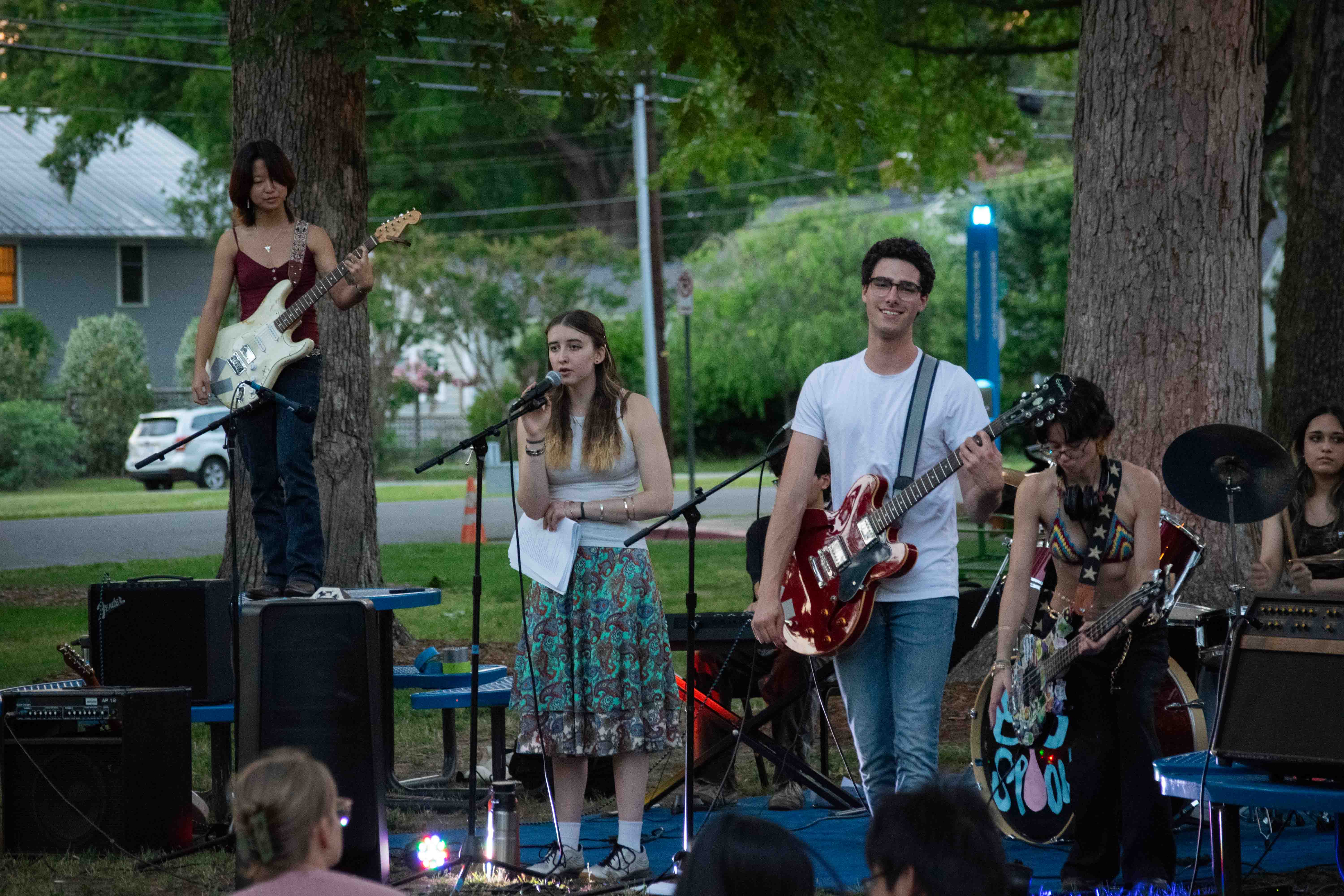
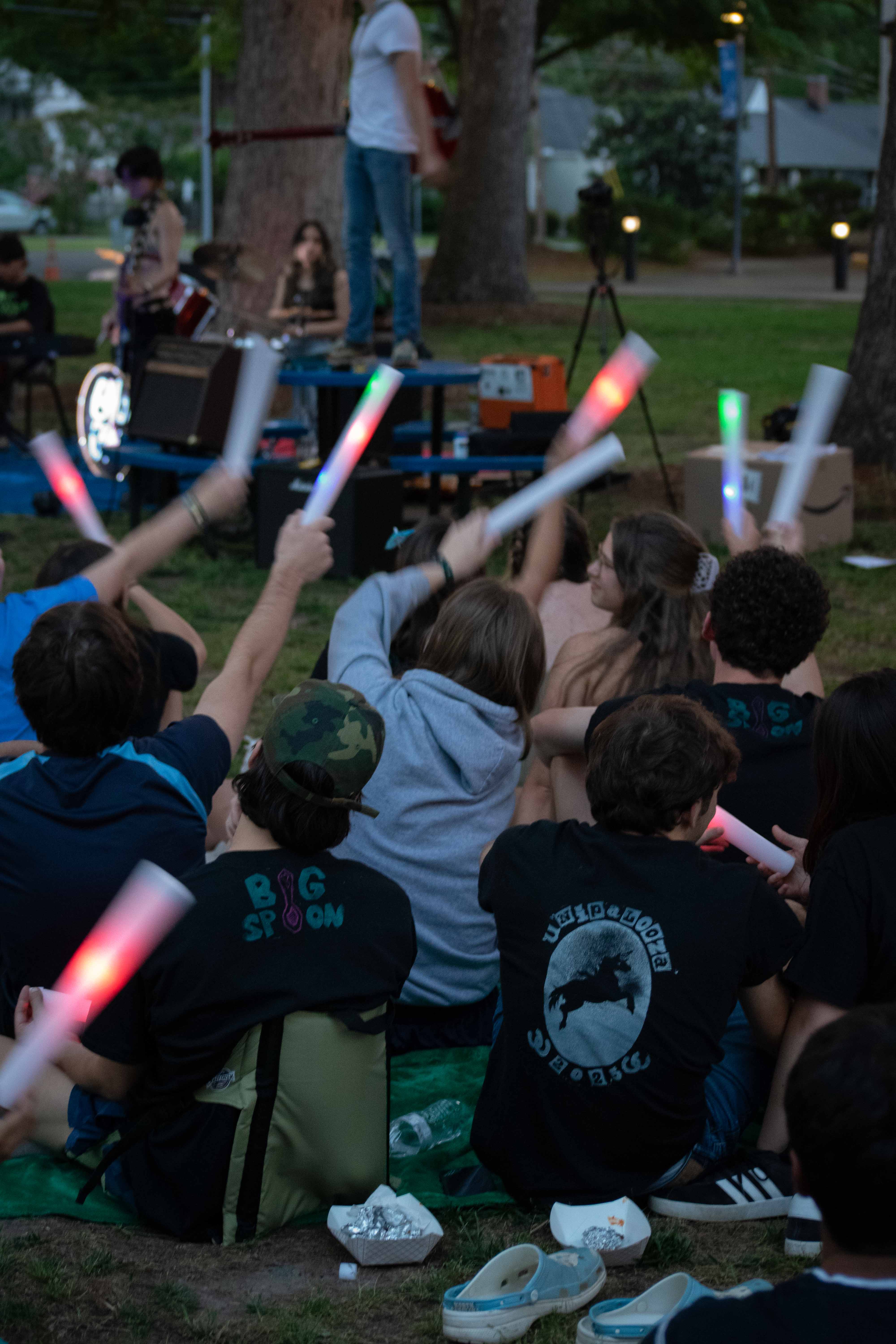
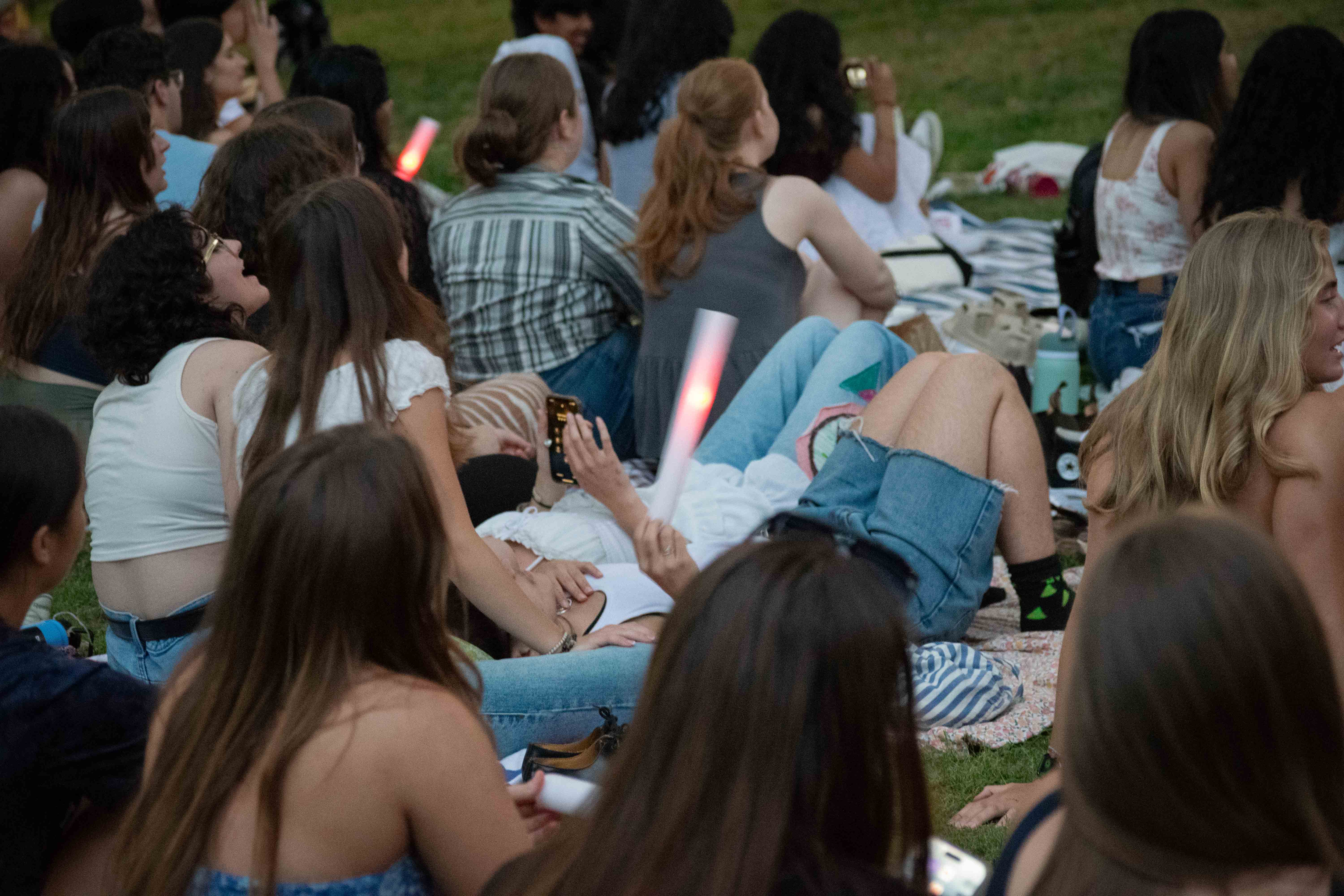
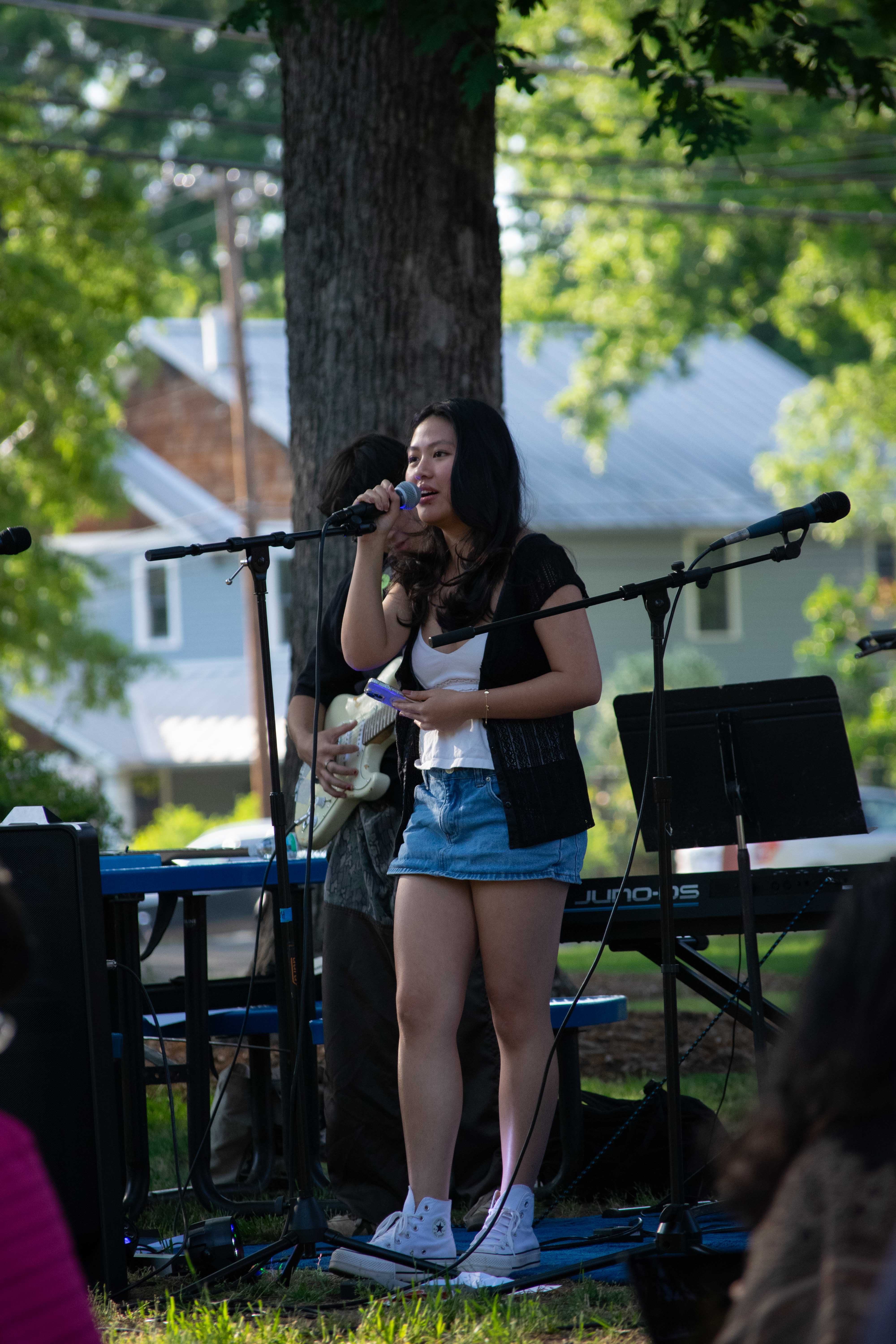
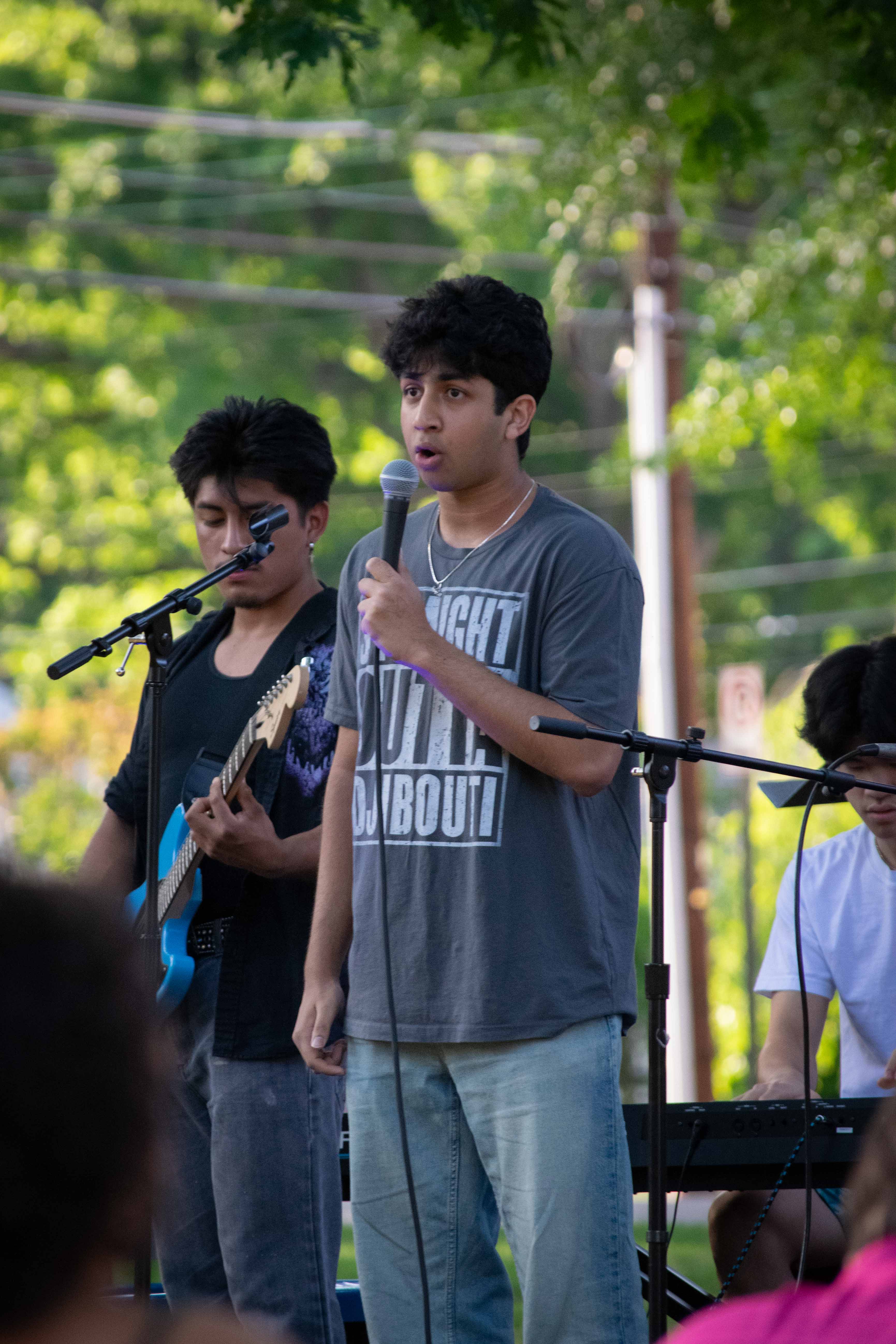
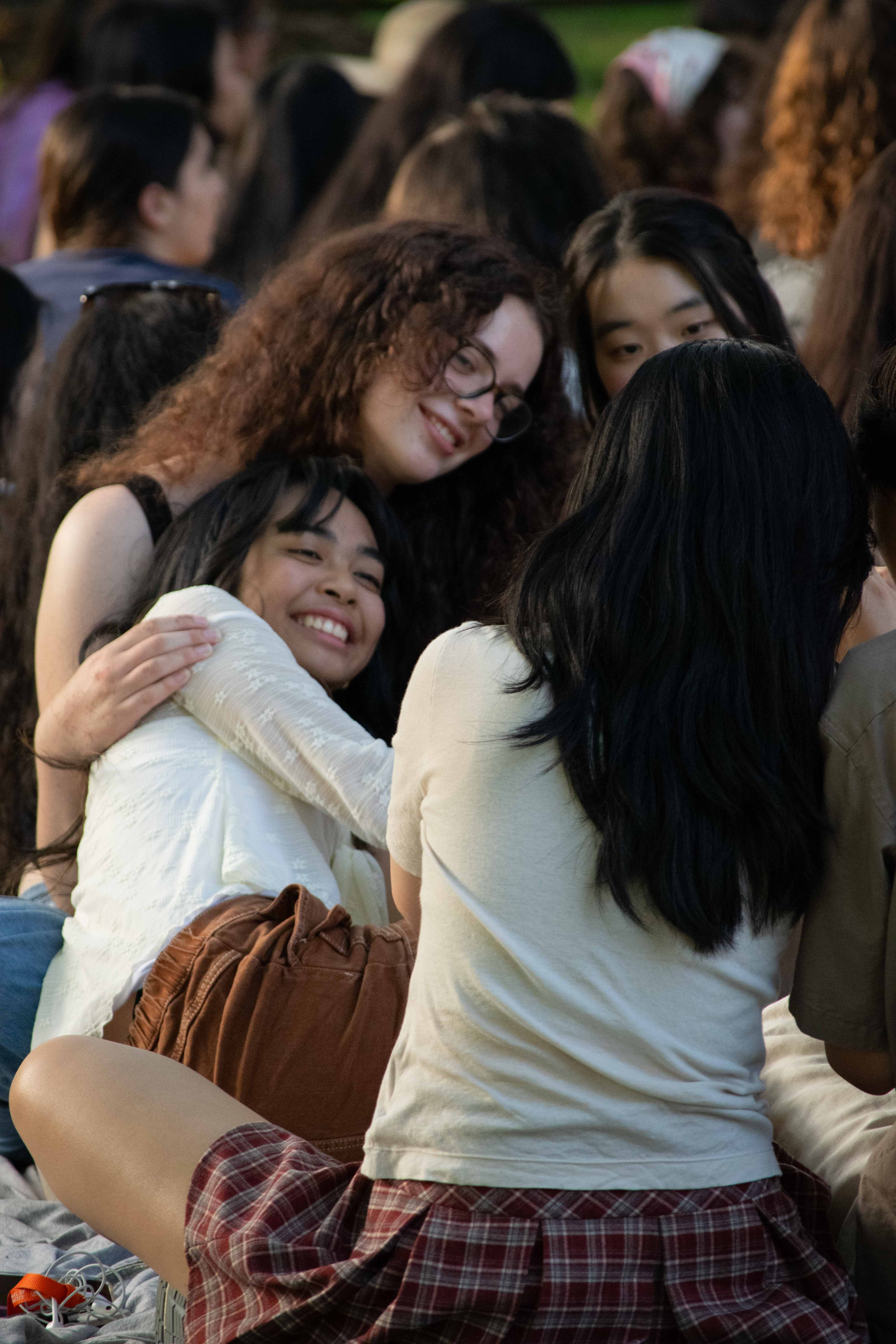
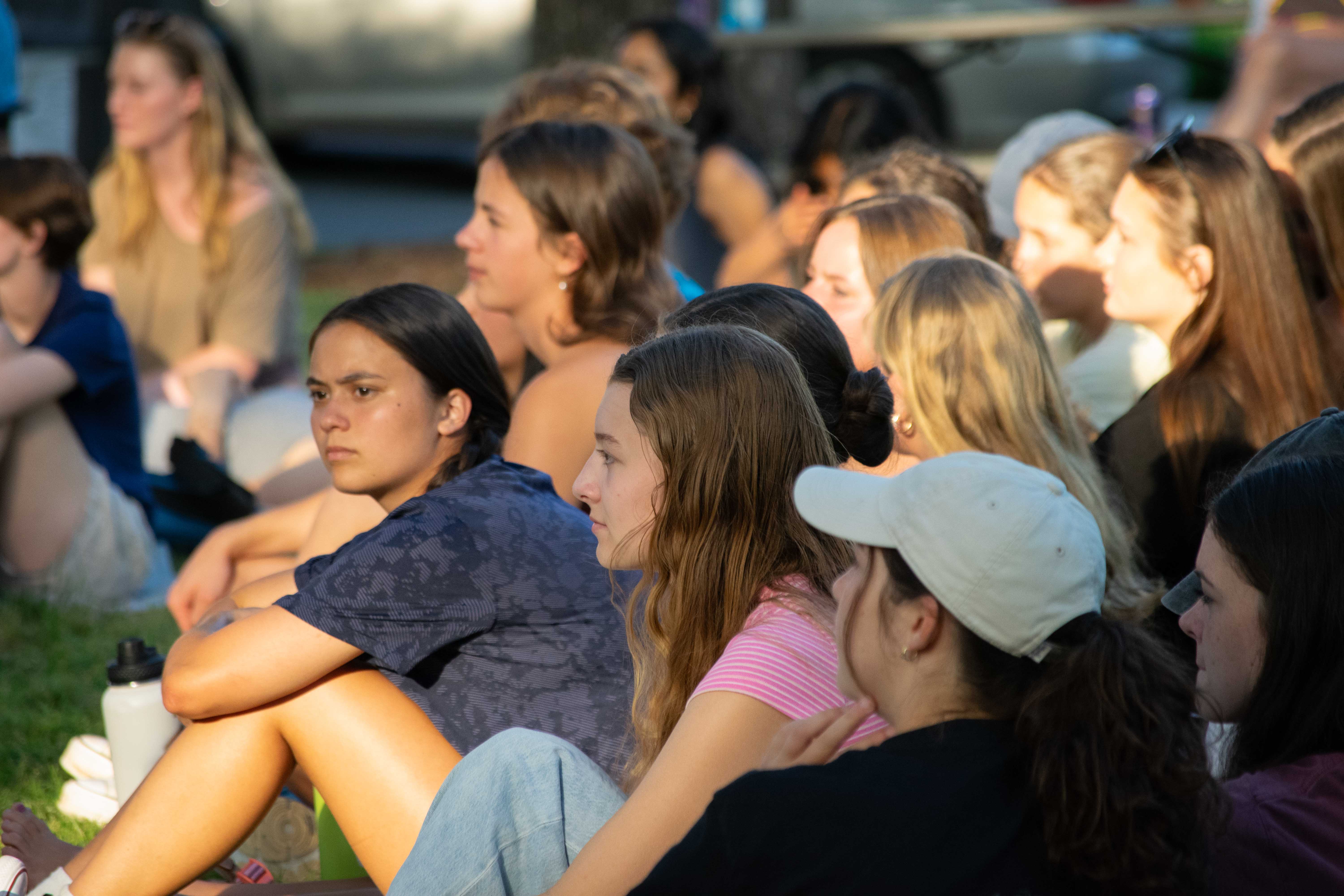
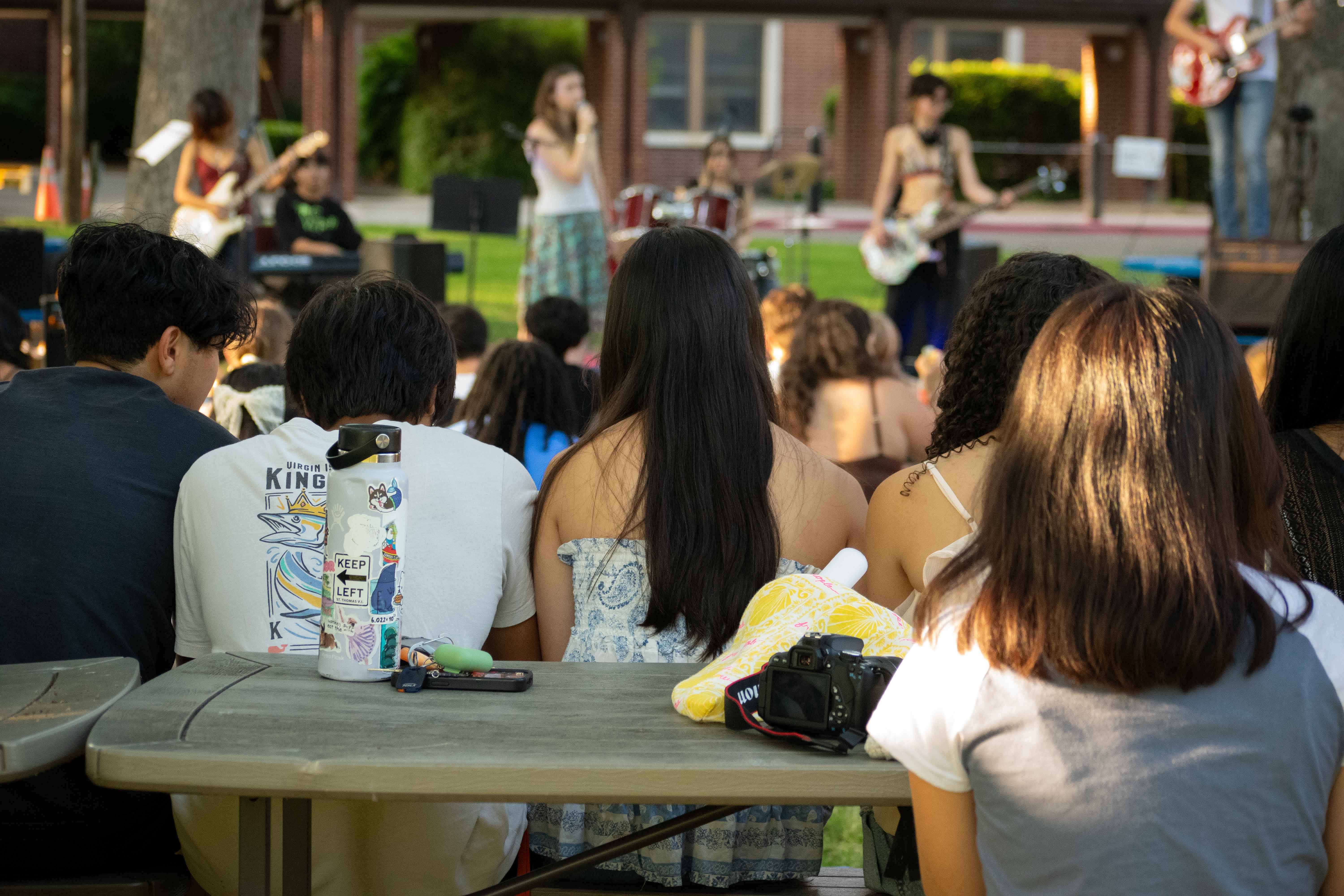
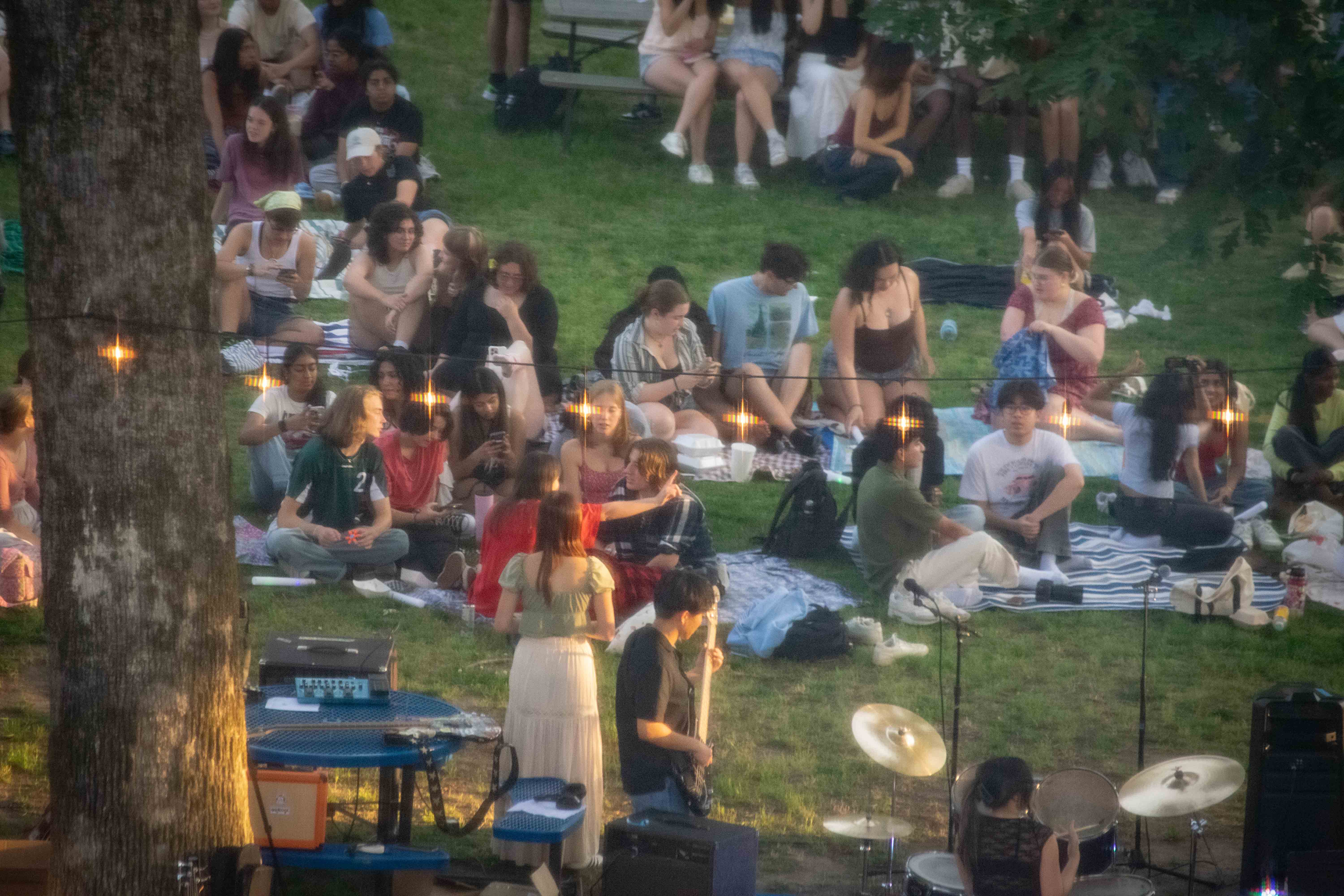
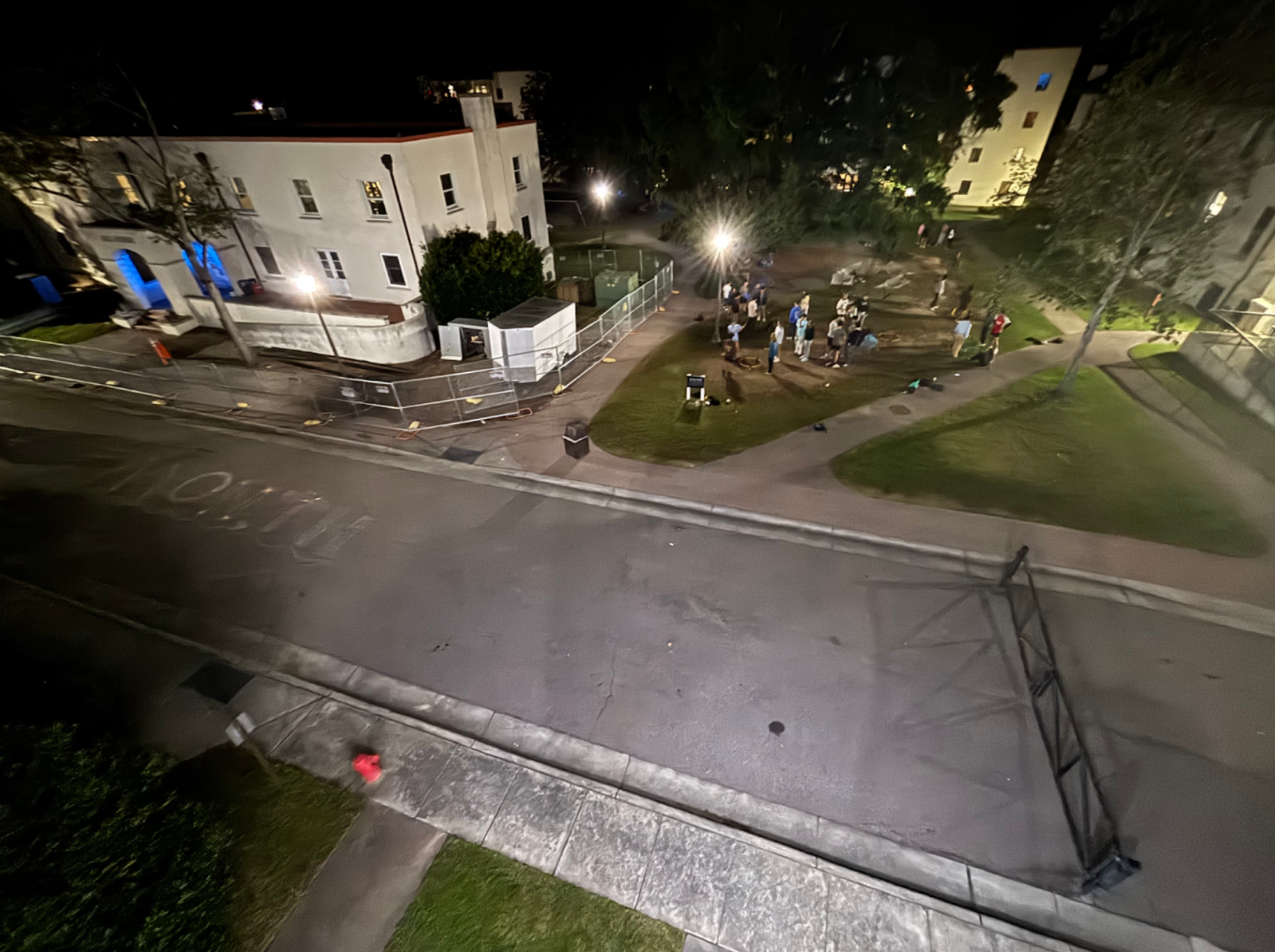
UniPalooza, the name, a spin off of Lollapalooza, is, I’d argue, one of the most important cultural events of the school year. This year it was headlined by Big Spoon the Third and supported by … On the humid grounds of Blawn, dozens of students gathered to support this event on an unsuspecting Friday afternoon, more specifically, May 9th.
Students had generally good things to say. As the #1 Curls on campus, our very own Sadie Albright said, “I liked how everyone came together, however, Scotty Doesn’t Know was a choice…he definitely knew.” I can agree with this statement and so can various anonymous sources saying other points such as, “I wish Kahan had a solo, the technical difficulties were not that noticeable, and it wasn’t as hype as last year.”
The actual show wasn’t all I was interested in however, it was the musicians’ experiences that stood out to me the most. As it was touched on above, the stress and hardwork the band members put into this show were admirable to say the least. Big Spoon had to learn and memorize around 2 hours of songs to play though and began practicing early on. For three weeks before this event, Big Spoon practiced everyday for 2 hours, adding up to a total of 14 hours of practice a week. Perhaps a seemingly low amount but then added onto the initial stress and expectations of schoolwork, the workload becomes intense. However, when asked, there was no tension between the band members at all, a surprising fact based on the apparent strenuous practices
Big Spoon’s legacy is also an interesting one. When asked if they’ve figured out any of the members for the next generation of the band, rising seniors Jiya Zaveria and Hazel Cochran stated that, “it was still in the works,” despite them being sad to see their seniors go. Big spoon is a band that is flexible, an ongoing legacy rather than something concrete. The sound may be different next year, members will be different but it’ll still somehow be Big Spoon. Jiya and Hazel will continue the traditions that we know and love, Koffehouses and UniPaloza, but also hope to continue writing and performing their own songs while making a push to perform at more non-school venues (shoutout Local 506).
From Mayday Parade to Janelle Monáe, inspiration for the Big Spoon members came from a lot of places, something that’s evident in their song choices for Unipalooza. Members had the chance to pick two “save songs,” stated Hazel Cochran’26, songs that had to be included, even if the other members didn’t want to. However, the setlist wasn’t just made up of “save songs,” agreed upon covers and originals were sprinkled into the recipe as well. Seemingly, the band came together in a lot of ways, from their practice and writing sessions to the big performance, Big Spoon became a new band this year that the student population surely will be sad to see go.
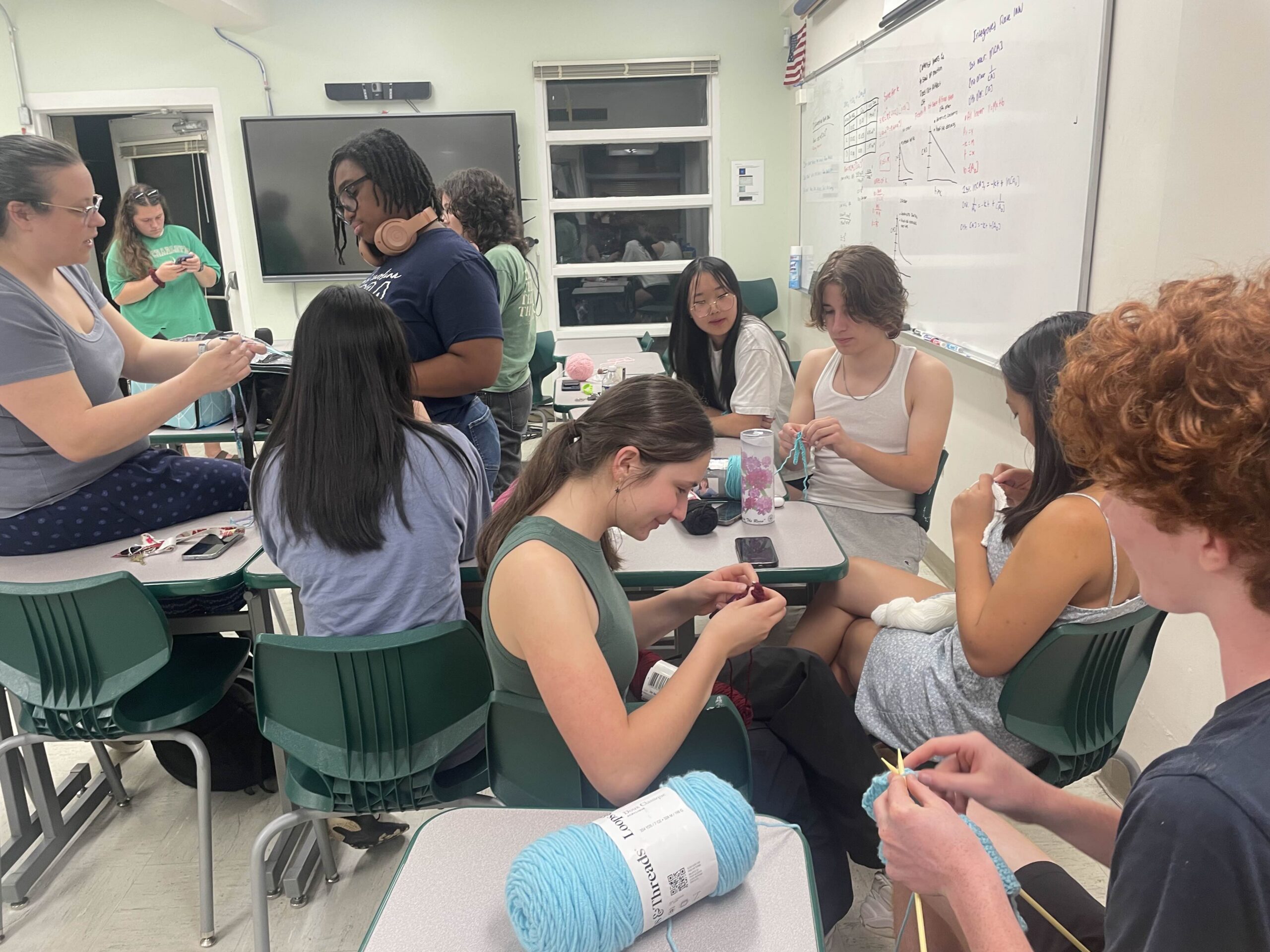
With the stress of a heavy academic workload heavy on their minds, it’s easy for NCSSM students to forget to appreciate the small joys present in everyday life. That’s where Grandma Club comes in—a sweet new edition to the slate of clubs offered on campus, this club offers the perfect outlet for students to embrace life’s simpler pleasures in community.
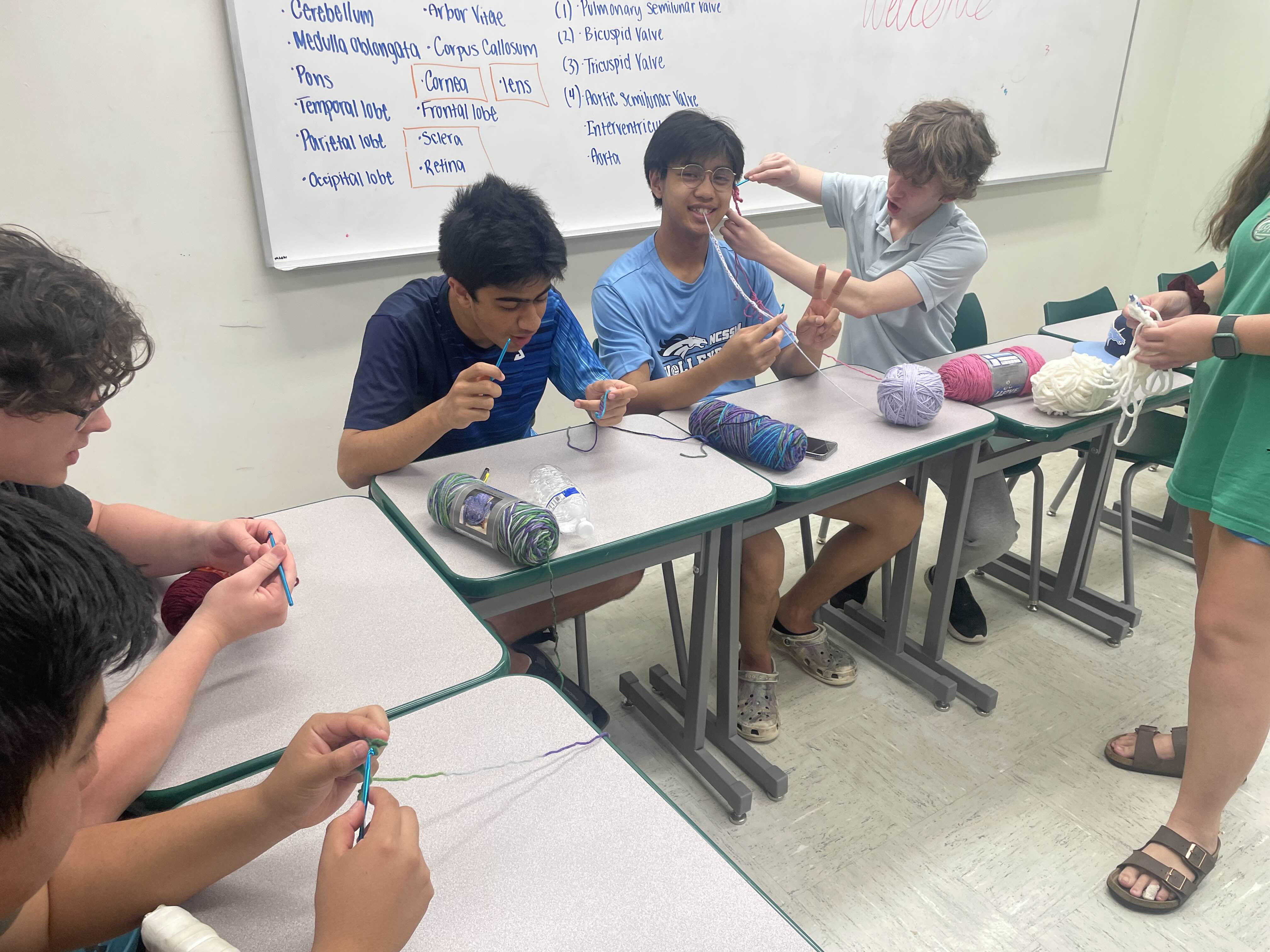
Led by a devoted group of juniors nicknamed the “Gran Jury,” Grandma club provides a welcoming space for students to play cards, crochet, knit, craft, sip tea, snack cookies and candies, and enjoy the presence of other “old souls.” According to Celia Cecchini, one of the club leaders, Grandma club was founded on the belief that “a person does not have to wait to be a ‘grandma’ or ‘grandma age’ to do the things they like or enjoy the subtleties of life.” This philosophy has held true through events like their tea and cookie social, valentines card making event, and many other creative opportunities. Special guests, such as Dr. Cooper, have even joined in to help teach students to crochet, emphasizing the club’s focus on community and celebrating a “grandma mindset” accessible to all.
While still relatively young, Grandma club is excited to expand and take on more elaborate events in the future. Rising seniors and incoming juniors: keep an eye out for club meetings and exciting opportunities to connect with fellow students, take advantage of free food, and embrace your inner grandma qualities!
With the weather turning from spring to summer, the later sunsets and the reminder that last day of classes and finals are around the corner, students in the past can be found socializing with friends whom they may not see till term, anxiously gossiping about final projects, or just enjoying the warm weather outside during the last 30 minutes before check. However, as you walk down Hill Street and past Hill Lounge, the campus is quiet; students aren’t packed together, throwing footballs with the steady stream of chatter flowing down the road. Hill Street and Hill Lounge are dark and ominous, with no student life. What has become of the beloved Happy Half tradition? Is there any way to save it, or have we accepted that some traditions die off and others must be born?
For those unaware, Happy Half is a time during the last half an hour before check at 10 pm where students can chat with friends, hang out outside, and unwind from the stress of the day. During the months when the weather is warmer, Hill Street is noisy, with lots of student chatter. Even in the colder months, students could be found congregating in Hill Lounge, playing foosball or ping pong. For students, it’s a nice thing to look forward to after classes and studying all day. However, it has quite literally “died off”. Instead of the yells of classmates to “Meet at Happy” in the library or the whispers of “I’ll tell you at Happy” during class, there is nothing.
Some seniors have opinions about why that is.
Felicity Lipchak ‘25 shared that she believes that Happy Half declined due to the Class of 2024 leaving last year, and that the current seniors didn’t protect the legacy.
Zoe MacDonald ‘25 also voiced a similar opinion and added, “The former classes would be disappointed to know that Happy Half has ceased to exist. Class of 2026, it’s up to you to bring it back before it’s gone.”
Other seniors recall some of their favorite memories from Happy Half.
Connelly Martin ‘25 shared, “Happy Half was once a place that I found lots of joy and socialization with my peers from all across the student body. And now, as I’m reaching the end of my senior year, Happy Half has transformed into something that is not attended by many. It’s slowly dying, which is sad for me to see, as it was once a place of such joy, every night.”
Lipchak shared her favorite parts of Happy Half. “I loved just going out to talk to everyone after long days, especially when we were gone for long weekends or breaks; everyone would go out for the first half we were back. There were great conversations. And that’s how a lot of like friendships were built. And now that doesn’t happen at all.”
However, when asked what the junior class thought, these were their responses.
Morgan Price ‘26 stated, “I’ve never been to Happy Half”, which adds to the point that the nightly tradition is becoming less and less popular among both the junior and senior classes.
Lilly Ferry ‘26 chimed in, saying she thinks the importance of Happy Half was relayed to the juniors, and that the junior class “were busy and didn’t care.”
When asked her favorite memory of Happy Half, she said she liked to attend and sit in the hammocks and watch the spikeball games.
There are certainly other traditions and annual events here at school. The annual watermelon run hosted by the Watermelon Club, the Holi events during the spring, senior skip day and senior sunset/sunrise, and many more. These traditions have lasted and endured, which raises the question of why Happy Half hasn’t?
So what does this mean for future classes at NCSSM? Is Happy Half gone for good? It’s up to the current juniors to decide if they want to keep the tradition alive or allow it to rest for good. If so, what new custom will they bring to the table, and what will it have in store for the rising juniors? Only time will tell…
As you meander or perhaps rush to your classes through the Reynolds breezeway, your gaze will linger on the rather demanding mural of all the graced students who have won the achievement of being crowned a “top 40 finalist” in the Regeneron competition. Soon, our very own senior Ava Cummings’ ‘25 name will be highlighted.
For all those who don’t know, the Regeneron competition is a nationwide science competition for seniors, placing a particular emphasis on research. It is known as a “prestigious” competition as defined by their parent company. As Dante Tringale ‘25 states, “It is the largest and oldest science talent search in the country, where they look for the next leaders of the generation of scientific exploration.” They begin with all the applicants then slowly whittle down to the “Top 300 Scholars,” where you receive a $2,000 (unfortunately taxed) scholarship and an internship offer, and “Top 40 Finalists” where you can present your work along with a $25,000 scholarship (taxed too, sigh) and a chance to compete for higher prizes. Both tempting benefits are when deciding whether you want to submit your work.
As someone unfamiliar with the inner workings of the competition and miles away from the science community committed to achieving some sort of title within Regeneron, I had the chance to learn about the competition from a fairly unbiased point of view. What I found particularly interesting was their inclusion of the story behind the research when considering the students’ applications. They take this into account when reading the additional essays that applicants were required to write when submitting their research. Tringale ‘25 brought this to my attention during our conversation about the application process saying, “It’s a completely separate application process (not through the school), similar to a scholarship application you write additional essays about what you researched, why, and what your future contributions to science will be, as well as turning in the 30-page research paper.”
Your journey, if you so choose, might start through one of the various research programs our school offers, such as RBio or RChem, among others, or through an Independent Study. Either one has its benefits or disadvantages depending on the person or topic.`
I learned after spending my afternoon with Aretha Datta ‘25, a “Top 300 scholar,” that the competition wasn’t exactly the end goal for many students in NCSSM’s research programs. Regeneron wasn’t on the front burners, despite my impressions after passing by the large mural in Reynolds breezeway every day, I simply chalked it up to be another example of the school favoring science rather than encouraging interdisciplinary work and the inclusion of the humanities, something ever-present in my school life. However, I learned that their research was much more than that after hearing how they wanted to continue it in college, hopefully ending up benefiting their community. I also noticed, as I passed by all of the research presentations on February 19th, that most of the researchers began their work after noticing a humanitarian issue and wanted to make a change. I’ve actually noticed that it was the student’s passion for their topic that far surpassed the sponsor’s support in some cases.
When applying to NCSSM’s research programs, students are met with encouragement that no matter their background and previous experience, they have the opportunity to pursue research.
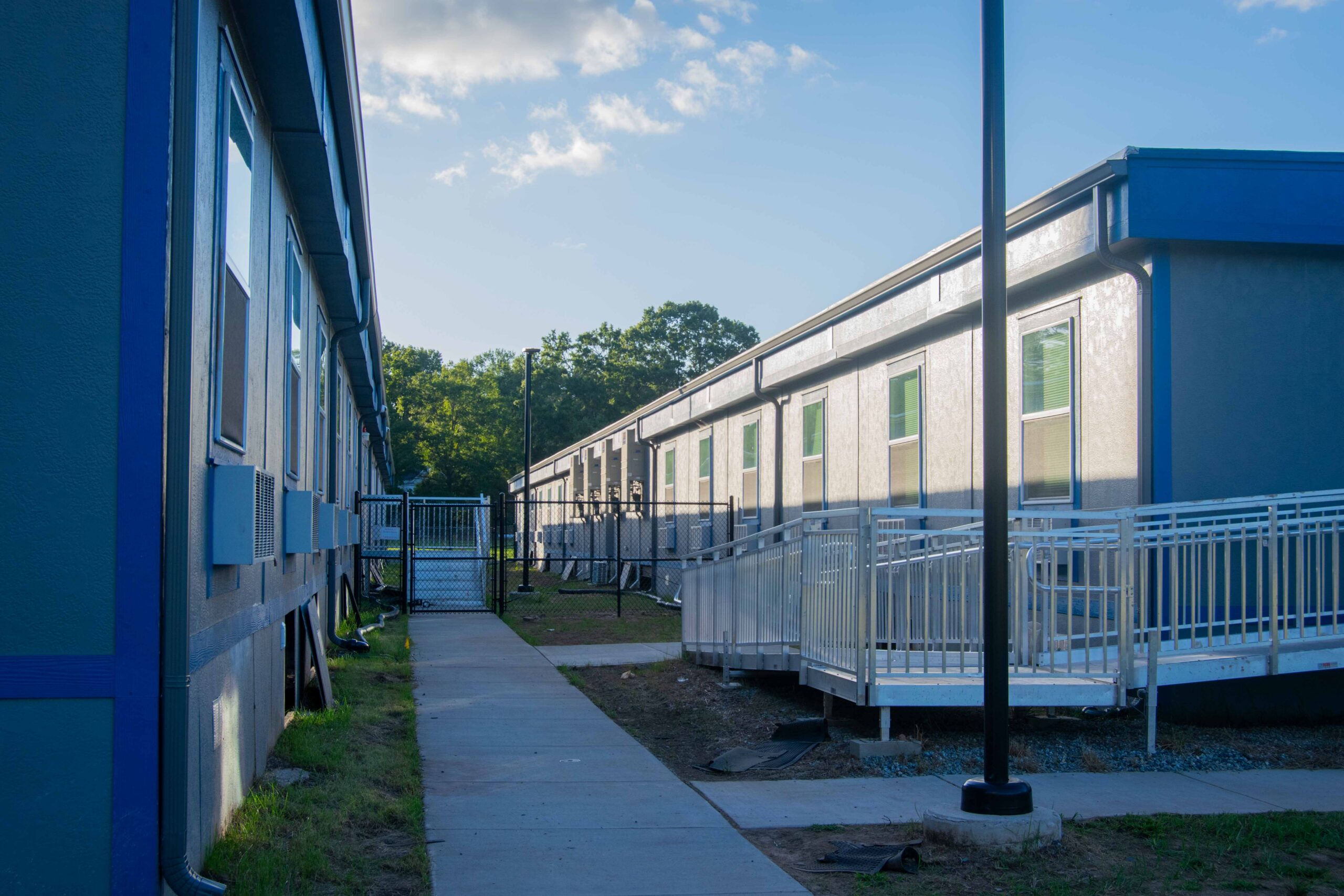
As a part of the campus’s renovation plans, all of Reynolds moved into the modular units over the February extended weekend to little fanfare. Both Greynolds halls and half of 1d1c2c moved into modular one, and Reynolds 1e2e2d and the other half of 1d1c2c moved into modular two. While this move was warranted with the plethora of issues the building was facing, many Reynold’s students advocated for the move not to happen, due to it being so late in the year. Regardless, on March 2nd all were moved into the modular units, where Reynolds will likely stay until Spring 2026. Here are some of their thoughts about mod life and the move:
“I like the bigger room, but otherwise, Reynolds was much better. If I wanted to hike to class through the rain every day, I would’ve lived on Royall, and I went from a hall size of 10 people to a size of 45- a HUGE change for the middle of the school year. The walls are paper thin, and everything feels temporary- because it’s meant to be.” – Anonymous
“It was generally alright, just wish we had more of an opportunity to see rooms and that jazz prior to the move.” – Anonymous
“The facilities are nice, but we still haven’t gotten soap dispensers (we’re having an intense soap shortage and have learned the art of violently pressing the bare soap box skeletons with our palms and rubbing them together for a slim hope of making bubbles) and it’s too far away from classes. However, there’s a dual-edge sword to its far location; at the end of the day it feels satisfying after a long walk to finally settle down in your dorm room. It feels like a sense of coming home, though in a weird, temporary way. “ – Lily Galapon
The class of 2027 can also expect to live on the modular units, which might shift campus perception on them as they move in at the start of their NCSSM careers. In the meanwhile, all current Reynolds people are preparing to move out for the second time, with the seniors saying goodbye to campus forever.
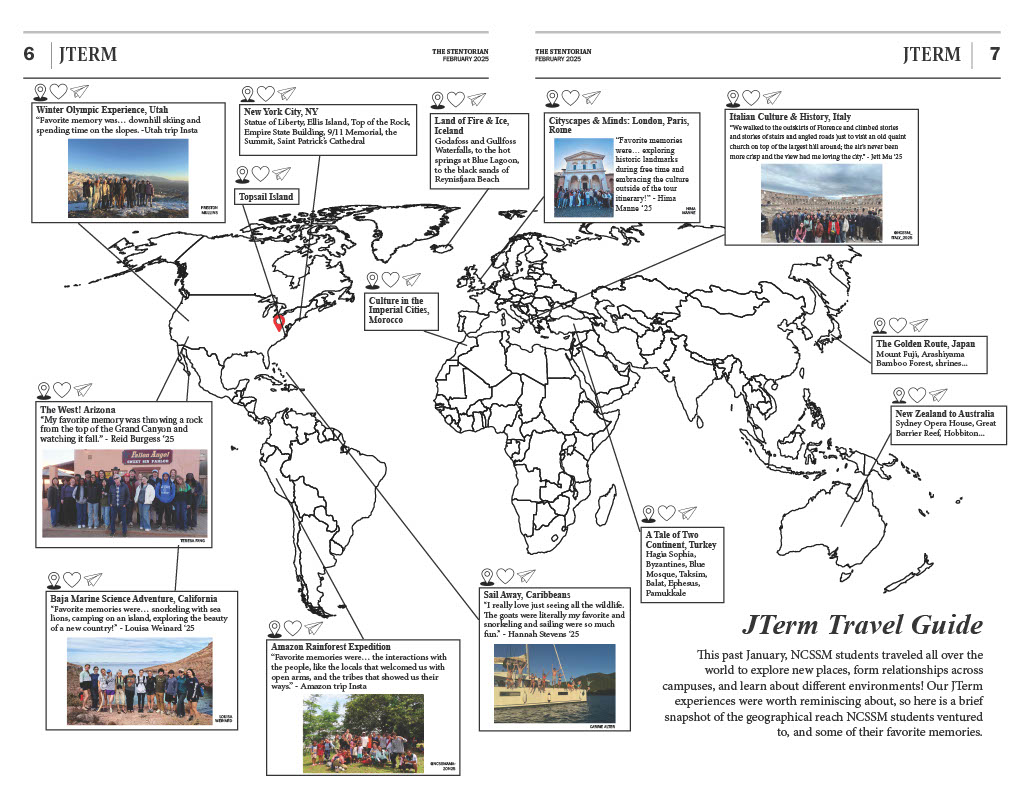
Note: This is the center spread for the February 2025 issue, designed by editor-in-chief Teresa Fang.
AROUND THE WORLD. This past January, NCSSM students and faculty traveled all over the world to explore new places, form relationships across campuses, and learn about different environments. Our JTerm experiences were worth reminiscing about, so here is a brief snapshot of the geographical reach our community ventured to.
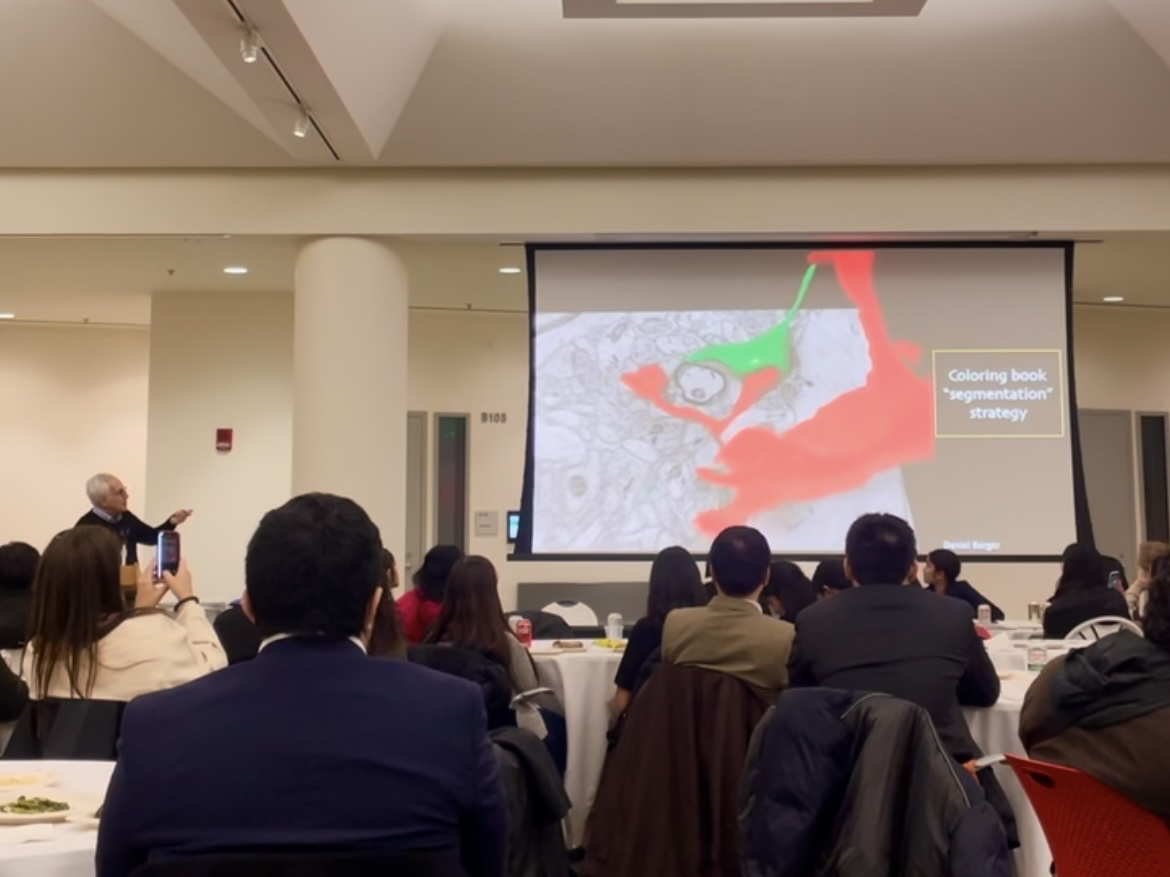
Dr. Lichtman presented his thoughts on STEM education and his research at the Harvard Northwest Building on February 14. (Teresa Fang/The Stentorian)
By Teresa Fang, Stentorian Editor-in-Chief
Two weeks ago, Dr. Jeff Lichtman, Dean of Science at Harvard University, began his research talk with five claims, each answering the specific question, “What is school for?” Together, the five claims expanded on education in the 21st century, stemming from a variety of philosophical considerations throughout his 50 years of teaching.
If you consider that almost everyone in the world (or at least, in this country) has access to a phone, “nearly all knowledge is at one’s fingertips,” which is the first claim Lichtman makes. I agree. I also agree with his fourth point, on behalf of educators: “The peril of education in the information age: because of the glut of information, professors are necessarily teaching an ever-smaller proportion of the extant data.” But the fifth point raises a series of questions as Lichtman questions the ways in which educators “fail” their students. Of these five claims, as someone who cherishes the value of education, I was curiously intrigued by his thoughts.
Rather than dissect his claims, I would like to summarize his argument, which he does himself quite nicely:
“First, irrelevancy. The subjects we [educators] teach are irrelevant to your ultimate career plans. For example, in medical school, you don’t use calculus. A doctor uses 0% of the calculus knowledge they learned in school.”
After presenting his points, Dr. Lichtman asked the audience of high school student researchers if they disagreed with anything he said. I was already responding to his points mentally, so I took the first microphone immediately. “Why is that a failure?” I asked. When I emphasize the importance of school, like Dr. Lichtman, many people echo similar claims that most of what you learn in school will not be applicable in the real world or that they will forget nearly everything they once learned. But I say the answer depends on what type of learning we’re referring to: the type on the whiteboard or the type beyond the whiteboard.
“Second, prematurity. When the courses are relevant, we [educators] hardly explain why they are, so you can’t focus on what is important as it is presented long before you might use this material, maybe 5-10 years later.”
I might not remember that Columbus sailed the ocean blue in 1492 in twenty years when I’m trying to interview people for a job hiring. But I will definitely remember a friend saying, “you should design the poster art because you’re good at art, and I’ll write the content in the meantime.” I learned that designating tasks to an appropriate individual with the perfect skillsets will finish our task faster so we can finally eat our meals during lunch break.
You may forget the curriculum, but you won’t forget the experience. Learning to judge one’s ability to fulfill certain responsibilities and justifying your selection are examples of knowledge that do matter. Perhaps, these are skills you might need that separate you from a good candidate for your dream job versus the ideal candidate for the responsibilities of the job.
“Third, preoccupation with the right answer. Perhaps the most important failure is that the whole science enterprise [sic] is just a continuation of the secondary school preoccupation getting the correct answer on exams, problem sets, and homework assignments. Regurgitating an expected answer has little to do with the real world, where the ‘right’ answer is unknown.”
Besides calling the entire occupation of researching science an “enterprise” (throwback to my previous piece on ncssm.edu’s misrepresented marketing of students) as if the sole purpose of research is to generate economic value, I think the preoccupation with the “right” answer is a universal failure that permeates through all subjects, not just in STEM. We endure numerous “irrelevant” courses in history, English, physics, and math, not because we intend to become an academic jack-of-all-trades (go on, make your snarky “erm, actually”s), but to develop our method of thinking and reasoning. Will I ever need to prove the Pythagorean theorem using geometry postulates when I’m in my late-30’s? No. But will I ever need to make a claim, learn how to support it with evidentiary facts, and arrive at a logical conclusion? Yes. I think me writing this article proves that I can.
Thus, school is for teaching you how to think. Not what to think, but how to think. You are getting your critical thinking in, your collaboration skills, and most importantly, the connections you might need later in life, aka your support system or your potential business partners. Indeed, you could think of this column as the sequel to my article“Settling the debate between STEM and the humanities.” Do I wish that more people were aware that “Frankenstein” is more than just a classic Victorian novel but a commentary on Marxism, Freudian psychoanalysis, and much more? Or that Emerson and Thoreau are two completely different people camping around the same pond? Of course, I’d love if America’s level of general knowledge of literature, and social studies, or just being more news-savvy about the world was more proficient, but I do not think that it is equivalent to trashing the entire education system.
“Last but not least, the fear of failure. Solving a problem often requires showing all reasonable ideas fail. Failure is a necessary part of finding a solution.”
School is not a promise of success and prosperity, but I do think that Dr. Lichtman and others are approaching school with misjudged expectations. He makes many sound and fair points, and undeniably, it’s important that students learn the curriculums they are taught in the classroom. But they shouldn’t walk away with report cards and memorized flashcards. They should be walking away with new and improved models of thinking and an arsenal of approaches for the real, structure-less world.
It’s undeniable that the quality of our education system, federally and at NCSSM, is flawed. Nonetheless, there is still value in it. But if you measure the value of school based on test scores and grades, then I suppose you really didn’t understand the assignment.
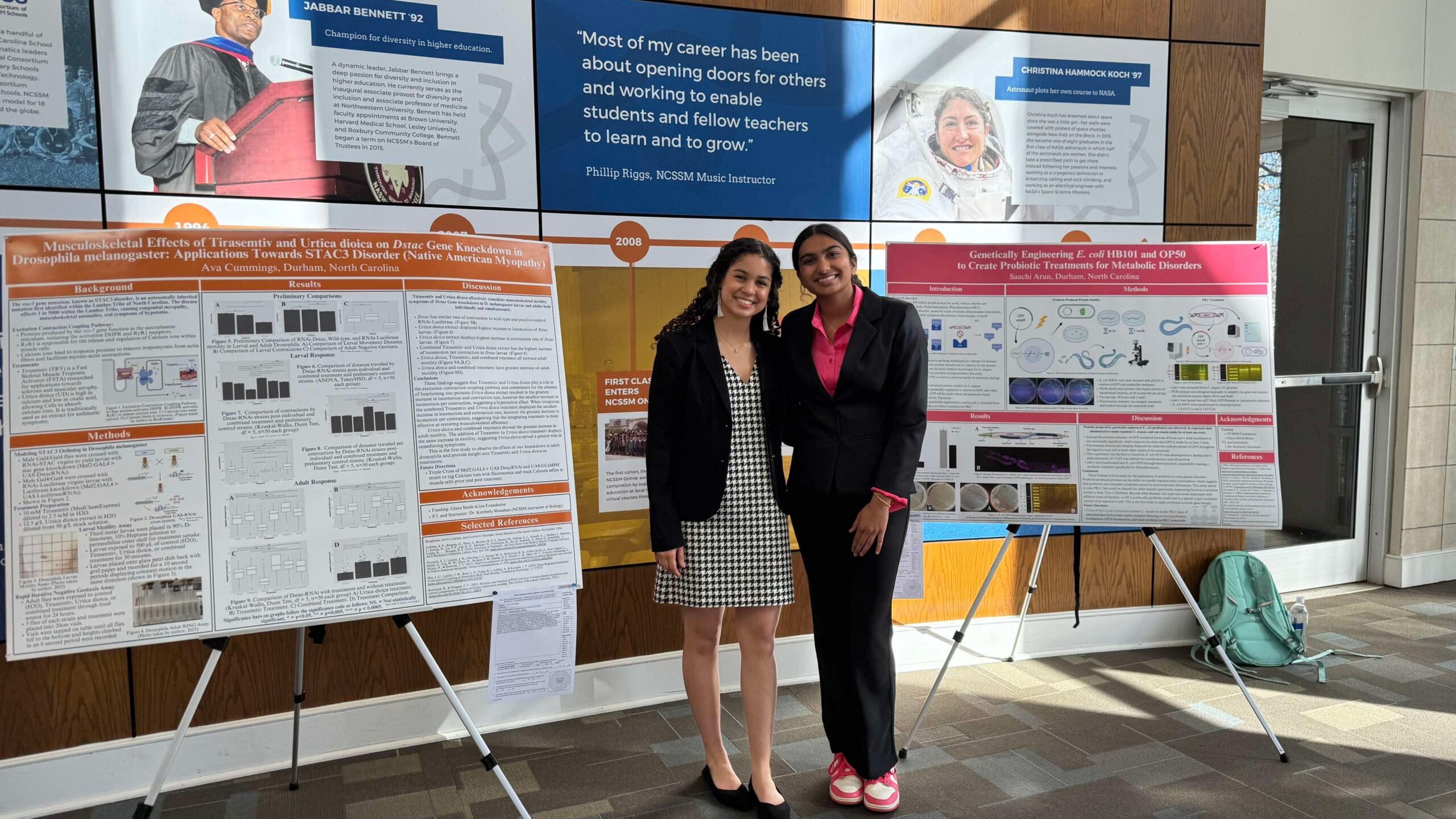
AVA CUMMINGS ‘25 AND SAACHI ARUN ‘25 OF RBIO WITH THEIR RESEARCH POSTERS AT NCSEF REGION 3B ON FEBRUARY 17. (ANNELIESE HEYDER)
By Anneliese Heyder, Stentorian Editor-in-Chief
The “Science Season” is upon us: when the summer months start getting closer and science fairs, conferences, and competitions begin popping up like flowers. Throughout the spring semester, students at NCSSM will be presenting their research at school and around the state and country.
The North Carolina Science and Engineering Fair, or NCSEF, kicked off on February 17th at NCSSM as Region 3b, with both juniors and seniors competing by sharing their research with judges, teachers, and students. Some students completed research independently or with a team, while others were part of the RSci or Mentorship programs.
Luke Malta ‘25 was an RChem student who presented at NCSEF. “I spent a lot of time perfecting my poster, sitting down and making sure I have as much information as possible,” he described his preparation. “I also planned on practicing presenting in front of the current RChem students to get some feedback from them and Dr. Bruno.”
Sawyer Kribbs ‘25 from RBio did the same.“I began to prepare by practicing my speech a couple of nights before presenting it to the judges. I was pretty nervous, but I felt ready,” he said, adding that he enjoyed talking with other students about his research and was impressed with the other projects at the fair.
Some of the students who presented did their research at another university with a mentor and a team of undergraduate or graduate students. “I would say NCSEF was a great experience! It prepared me for future symposiums I plan to attend since there will be judges who are experts in the topic I’m researching, and how to interact with them,” said Hima Manne ‘25, who was part of the Mentorship program.
Manne also explained how she prepared for NCSEF, stating “Planning included updating my research findings on the poster I previously had and prepping for specific questions about methods and future directions.”
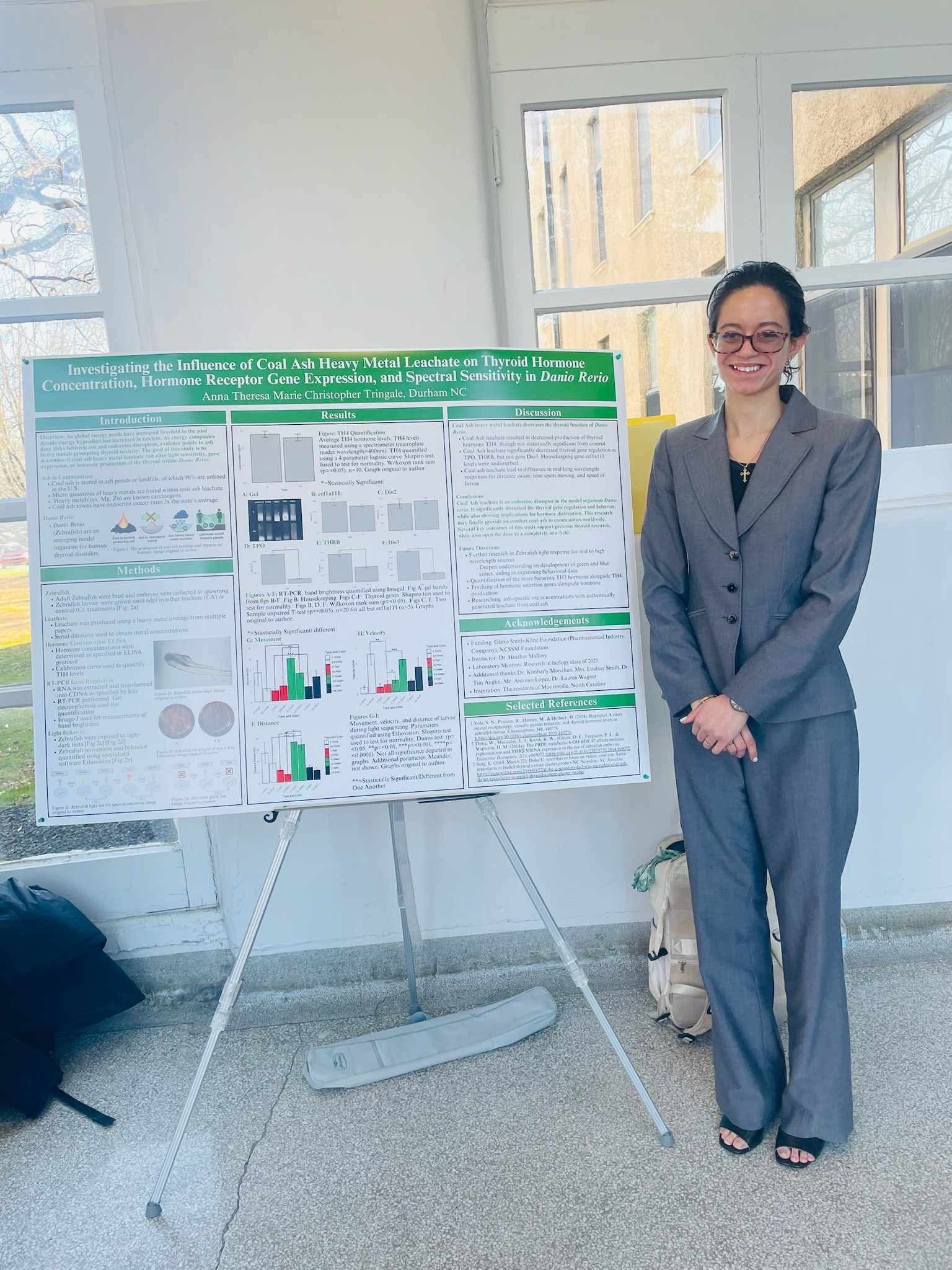
DANTE TRINGALE ‘25 WITH THEIR RESEARCH POSTER. (Anneliese Heyder)
Most of the eight categories advance the three top winners to the state-level North Carolina Science and Engineering Fair. The categories include Biological Science A, Biological Science B, Chemistry, Environmental/Earth Science, Engineering, Mathematics, Technology, and Physics. There are other special prizes as well, such as the Regeneron Biomedical Science Award, the Stockholm Junior Water Prize, and the NC One Water Award. However, the grand prize is an all-expense paid trip to the International Science and Engineering Fair in May.
Not only must they practice their speaking and speaking skills, but students must also make sure they have all the required documents signed and their posters ready to be presented. Mentors play a significant role in helping their students prepare–printing posters, checking over materials, and organizing the event.
Both teachers and students dedicate their time to making sure the fair goes smoothly for everyone. NCSEF provides an opportunity for peers to show one another their passions and skills and learn about various research topics. It is also a great way to make connections and meet professionals in the field–for some students, their research is just the first step in their future careers.
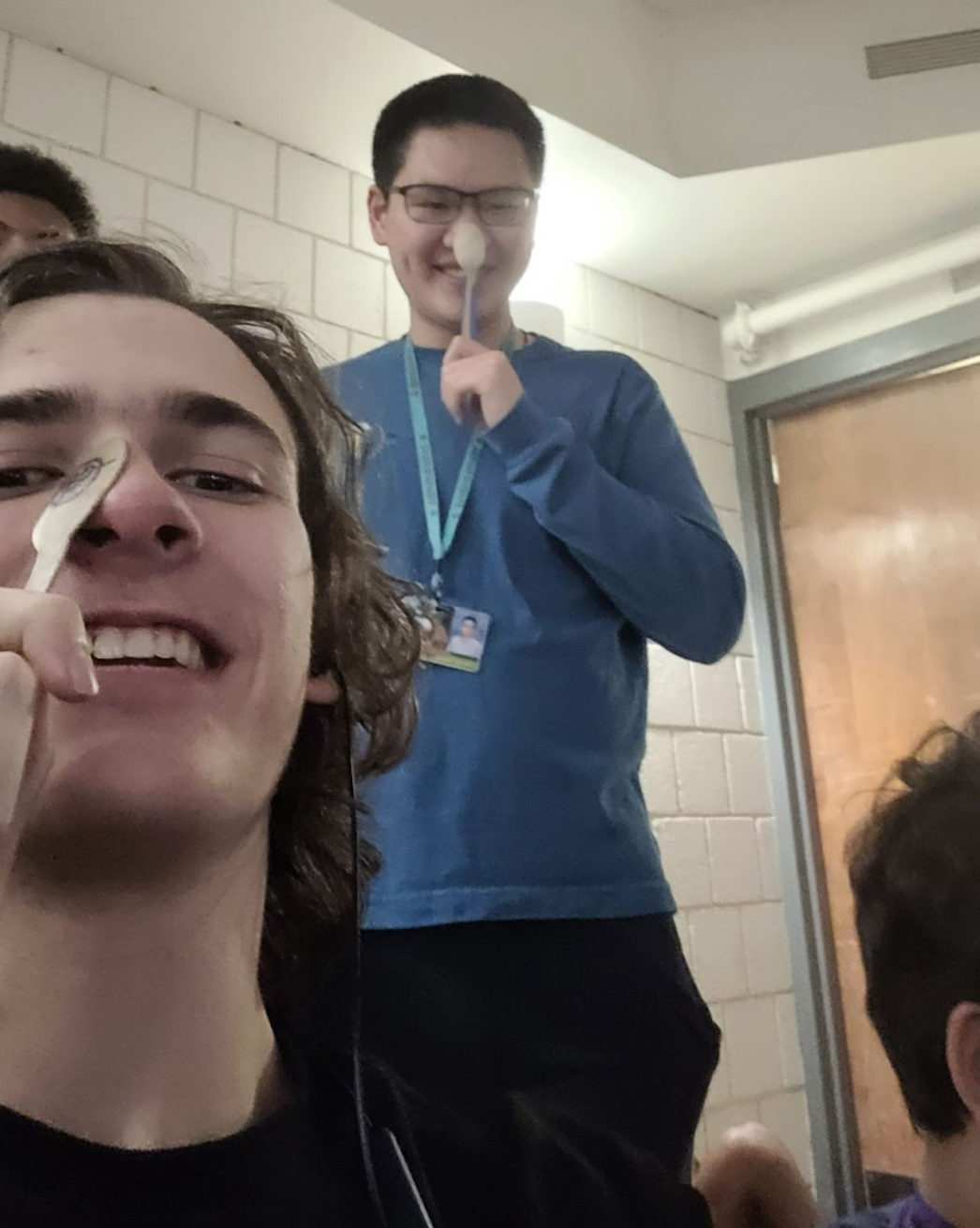
Barboriak, as a junior, takes a picture with Eddie Zhang ’24 while playing Spoons. (Vincent Barboriak)
By Tejasvi Shirolkar, Guest Contributor
Usually used in a bowl of PFM cereal or soup, spoons are an essential part of the NCSSM dining experience. However, this February marked an annual tradition many chose to partake in: “Spoons.” Holding a wooden spoon to their nose, NCSSM students pass through hallways, go up stairs, and to their dorm halls.
To an outsider, Spoons may seem like a silly pastime. However, any NCSSM community member knows that the tradition is so much more; it celebrates the beginning of the Spring semester and allows both Seniors and Juniors to connect beyond the classroom.
The Mastermind Behind This Year’s Spoons
Vincent Barboriak ‘25, from 3rd West, is this year’s supervisor (or “Spoon’s Master,” as he describes it). As last year’s Spoons winner, Barboriak became the overseer for this year. He tracks eliminations, updates charts related to the game, and modifies rules for all participants.
How The Game Works
On February 5th, 205 Juniors and Seniors each received a spoon with another player’s name on it–the person the player had to eliminate. For any player to be eliminated, they must be tapped on the shoulder with the spoon.
However, there is a catch: if a player has held up a spoon to their nose, that player is protected. Additionally, educational spaces such as classrooms and the library are considered “safe zones” to prevent distractions while learning.
Some NCSSM students go to great lengths when playing Spoons. Antavious Ashe, a Community Coordinator (CC) on 2nd Hill, chimed in regarding some of the Spoons stories he had heard of. A member of 2nd Hill went as far as carrying his spoon in the shower, preventing another hallmate from tapping him out.
Chloe Harnphanich ‘26, from 3rd Beall, echoed a similar story. While walking out of the PFM, Harnphanich kept her spoon to her nose. Near her, her eliminator lurked, waiting until the moment Harnphanich took the spoon off her nose. Despite her elimination from Spoons, Harnphanich seemed satisfied regarding her participation in the game.
What Spoons Means to the NCSSM Community
When asked why she participated in Spoons, Harnphanich stated, “[I] wanted to collaborate more with the student body [as a Junior Senator] and I think in general, [this game] is a very fun, engaging way to have a stress relieving aspect in… life, especially with such rigorous coursework at school.”
As a former student and now as a CC, Ashe responded, “At first, I thought [Spoons] was really random, but in a way, it seems to bring the campus together… I think [the competition] can be taken to extremes, but for the most part, [Spoons] is a good thing.”
To Keep or Not to Keep?
While the winner for Spoons this year is yet to be declared, the student body seems to be in consensus: the sense of community, friendly competition, and camaraderie the game creates is what makes every participant a champion. The annual game is here to stay, and hopefully be embedded into the rich history of NCSSM.
Happy Half has been an NCSSM tradition for years: the last 30 minutes before check is the precious time when students can socialize with friends and take a break from the stress of school.
While participation can vary depending on the day and weather, you can usually find at least 15-20 out on Hill Street enjoying the half an hour before check. However, a new element has been brought into the Happy Half scene: spike ball.
Spikeball is a game that involves a ball, a net, and four competitive players. It’s become a popular activity at NCSSM and boasts a club that hosts tournaments and events dedicated to the sport. Recently, however, spike ball has caused Happy Half to move from its famous spot on Hill Street to the Royall Lawn, affecting the Happy Half scene–something many students are indeed not “happy” with.
Cooper Uhl ‘25, a frequent Happy-goer, asked students their opinions one night.
“[Spikeball] was cool at first when it was just one or two [nets], but now it’s like five or six,” stated Stevie Richardson ‘25.
“I think it has been detrimental to the culture of Happy Half because it’s meant for people to be able to talk about their days,” Lola Larsen ‘25 said. “But when you are playing spike ball, it’s very difficult to have a conversation.”
Not all students are against the new Happy Half addition; many are very supportive and believe it should be here to stay.
“It’s a good activity to keep people moving and it brings the school together. It really builds a community to be able to come out to,” said Hannah Amadi ‘25.
Rishi Jalagam ‘25 believed spike ball was “the greatest thing in the history of the school.” When asked to elaborate, he replied, “Are you gonna do a legislative law? Because I’m all for anarchism.”
There is quite a divide between students when it comes to who should dominate the last 30 minutes before check–some are upset with the addition of spike ball, and others believe it brings something new and exciting to the atmosphere.
Landon Jiminez ‘25 expressed the idea of a compromise. “I don’t think it’s bad, but I also feel that we need normal Happy. Maybe we can make a deal–three days a week, 1-2 nets. But 4-5 nets every single day… it’s just kind of ruining Happy for years to come and the years to follow.”
After a minute, he added, “We’re losing our tradition as the North Carolina School of Science and Mathematics!”
Ethan Burkett ‘25 agreed. “You don’t get to hear about the daily shenanigans, and you miss out on the socialization and familial ties of Happy Half.”
What happens if spike ball suddenly dies out? Will Happy Half continue on the Royall Lawn? Traditions are important to students at NCSSM–it’s what makes the two years we spend together memorable. However, who says that traditions can’t change? Maybe it’s time for the classes of 2025 and 2026 to add their own traditions to the mix.
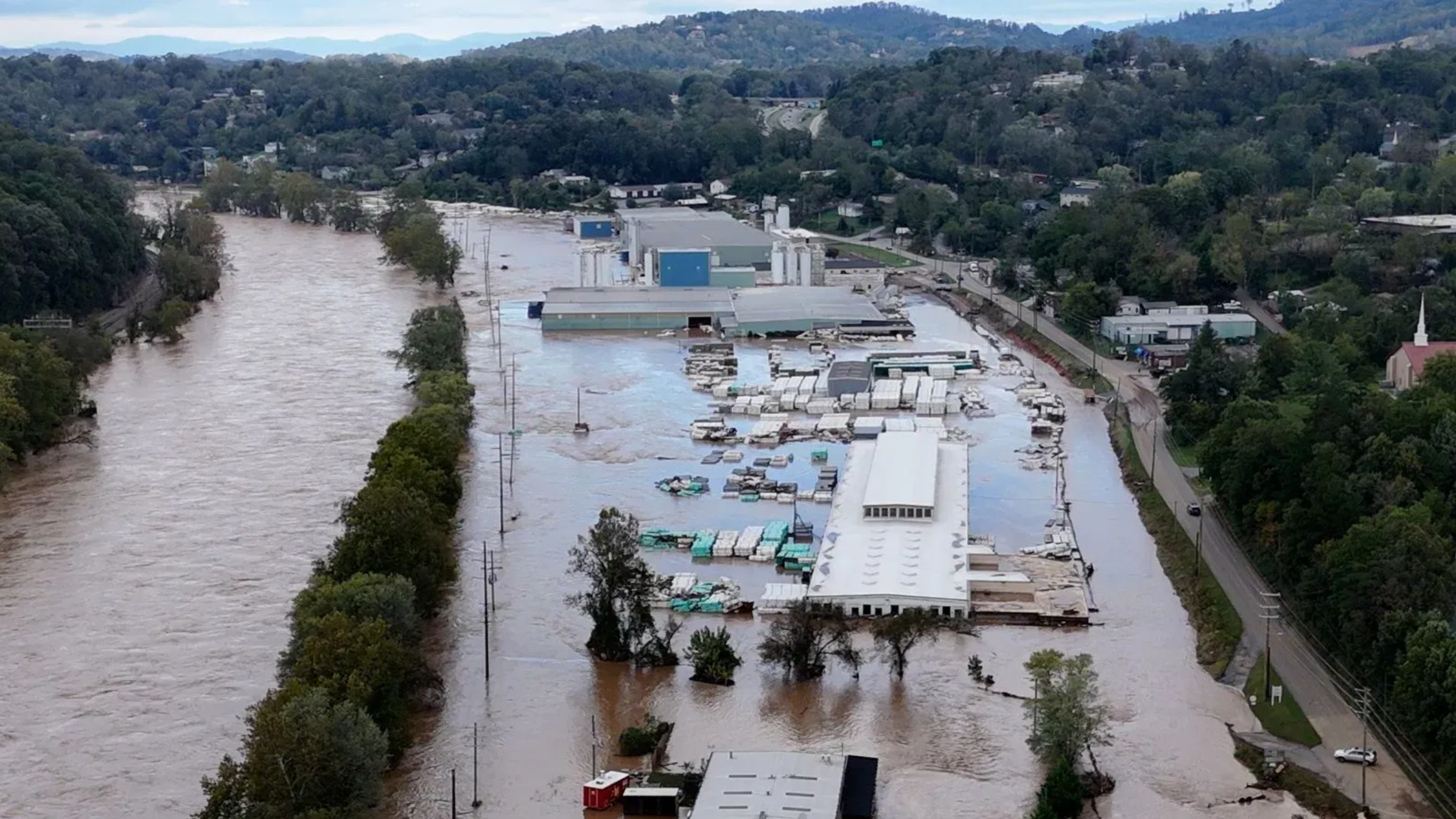
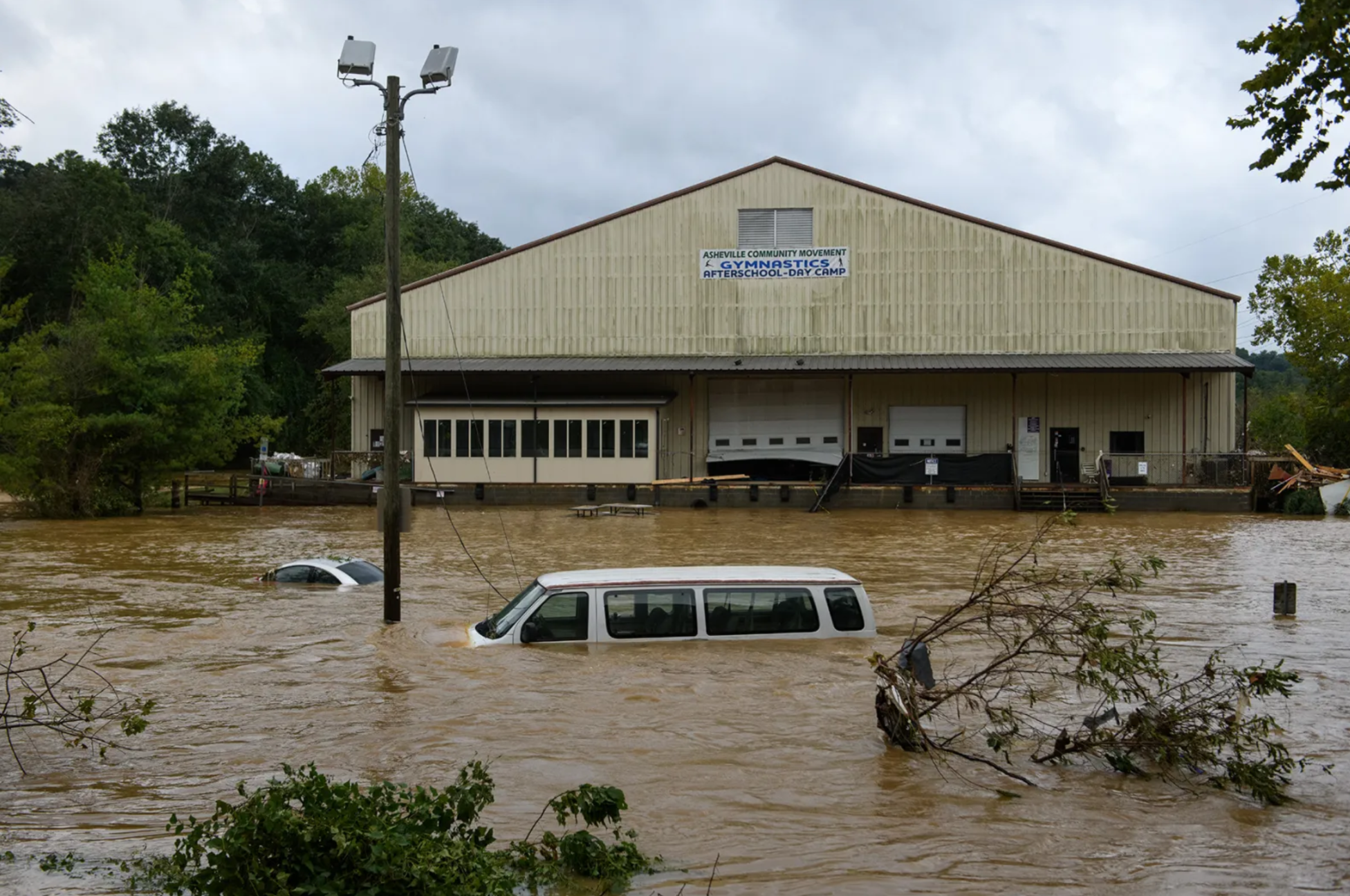
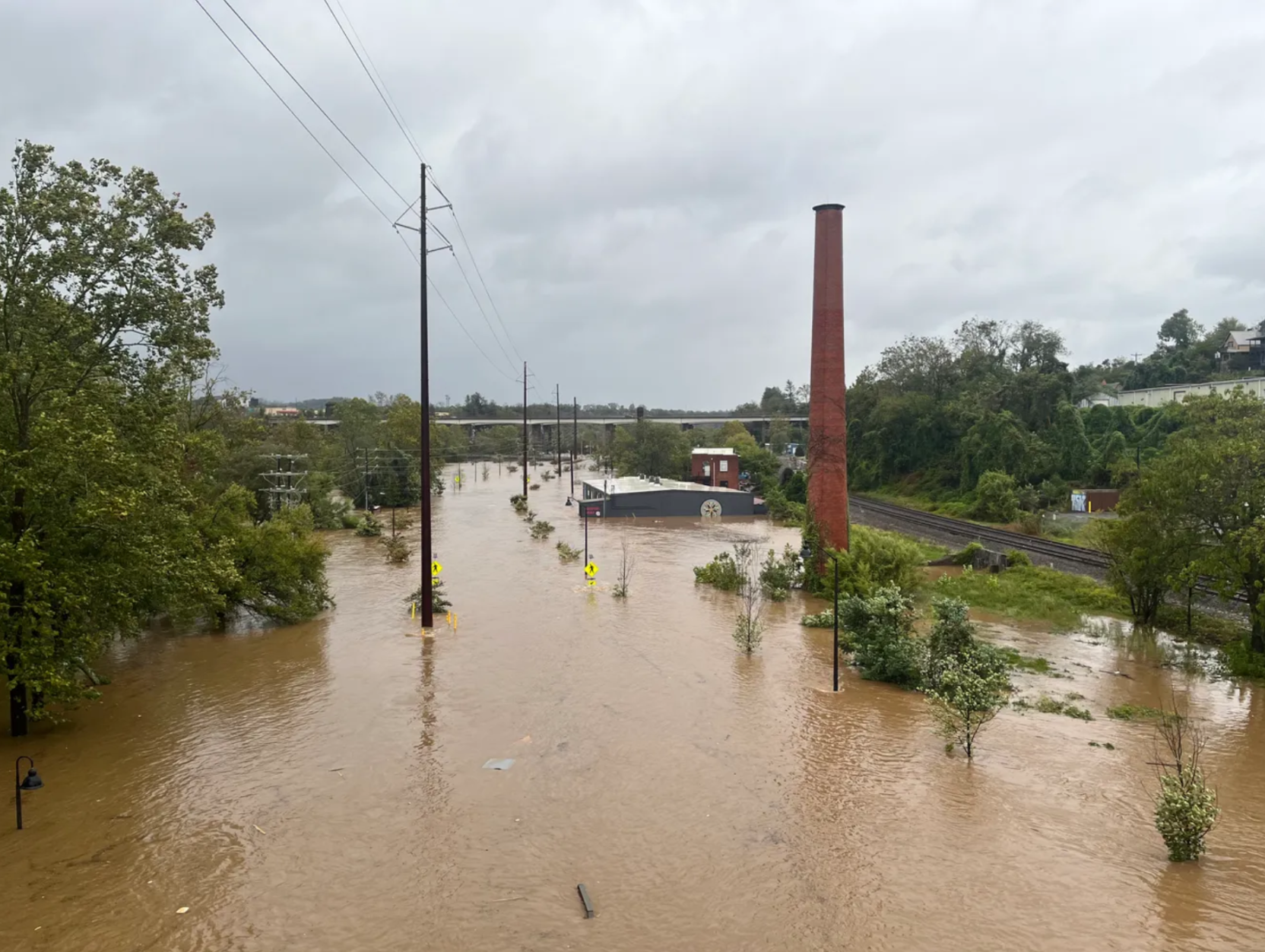
DRONE FOOTAGE ON SEPT. 28 SHOWING FLOODING AND DAMAGE IN THE ASHEVILLE AREA AFTER HELENE DUMPED RAIN AND DOWNED TREES ACROSS WESTERN NORTH CAROLINA. (WLOS 13 NEWS)
By Laela Cash, Stentorian Editor-in-Chief
Editor’s Note: This article was initially planned to be published in October 2024. Due to unprecedented circumstances, it was pushed back to be published in February 2025. The editorial board has decided to publish this article again corresponding with the print release.
On September 27, 2024, Hurricane Helene hit Western North Carolina only two days after it made landfall in Florida. The result? Record-breaking flooding and destruction that most would have thought impossible for an area roughly 500 miles away from the ocean. While not only the Western part of the state was affected, it was definitely hit the hardest.
In total, 4.5 million people lost power in a week from the hurricane with 1.5 million of those being in North Carolina, according to USA Today. On September 27 alone, there were six confirmed tornadoes across the state with one as far east as Rocky Mount according to the North Carolina State Climate Office. But that was only the beginning.
The Climate Office also reported that most Western counties got at least a foot of rain, with many reaching over two feet–effectively getting three months’ worth of precipitation in three days. Some areas including Busick, located in Yancey County, got almost three feet. Because of this, rivers including the French Broad, Watagua, Swannanoa and Catawba, almost immediately reached major flood levels and above. This nearly-submerged many towns including Asheville, Black Mountain, Boone, Morganton and Swananoa started to fill with feet of excess water.
The NASA Earth Observatory recorded that the French Broad reached a height of 24.7 feet which is a foot higher than the previous record while the Swannanoa River reached a height of 26.1 feet breaking the previous record by over six feet.
Asheville flooded rapidly as water flowed down from areas with higher elevation creating landslides along the way. Many areas became completely inaccessible almost immediately, as water breached rooftops.
At the same time, the Broad River basin was flooding, resulting in authorities attempting to evacuate areas downstream if the Lake Lure Dam broke while waves of water and debris hit the towns of Chimney Rock and Lake Lure. In total, AP News reported that the hurricane brought a total of 40 trillion gallons of water to the Southern United States.
It wasn’t only flooding that was breaking records. ECONet weather stations measured wind at a speed of 106 miles per hour on Mount Mitchell, making it the highest recorded since 2011. Similarly at Frying Pan Mountain, winds of 87 miles per hour were the highest recorded since 2004.
Such high winds inevitably led to more dangerous conditions and extreme property damage in addition to flooding. Most roads were immediately closed and travel bans were immediately put in place for the entirety of Western North Carolina. Many counties also enacted curfews to limit unnecessary traffic that may impede the travel of emergency vehicles on the remaining roads that were still accessible.
While rescue efforts started immediately, it was a long time before the full extent of the damage was realized and the timeline of recovery is still unsure. However, in the wake of this deadly storm, there has been a lot of false information spread about the aftermath. In order to understand the impact that this hurricane has had on communities in Western North Carolina and to grasp the magnitude of the crisis, it is necessary to understand the factors at play and the extremity of the events.
(MELISSA SUE GERRITS/GETTY IMAGES)
Immediate Aftermath
As the rain started to let up, the full implications of the last three days set in. In the coming days and weeks, emergency services and hundredsof volunteers worked tirelessly to rescue people. These efforts were especially difficult in remote areas that were only accessible by roads that were more or less obliterated.
According to The New York Times as of October 22, 2024, across the six states that the hurricane plowed through, more than 200 people have been killed as a direct result of the natural disaster. In North Carolina alone, the death toll is at 96 with 42 of those being from Buncombe County with 26 people who are still reportedly missing.
According to AP News, hospitals almost immediately become overwhelmed. Additionally, many were running on backup generators after the power went out and therefore had limited capabilities while some had to close completely. Mission Hospital in Asheville set up mobile units in the days after the hurricane, offering showers, handwashing stations, and free food, water, and toiletries. According to WRAL News, these tents were only possible because of federal relief and they also allowed the hospital’s staff to treat more people. This was extremely necessary as the hospital was reportedly over 200% capacity on September 27.
While some may regard property loss as more easily replaceable compared to lives, property damage is still life-changing. Governor Roy Cooper’s administration released a statement on October 23 estimating 53 billion dollars in damage.
Almost everyone who was lucky enough to still have their homes lost electricity, water, and cell service. Two weeks after the hurricane, roughly 14,000 people still did not have power in the state according to NPR. Many people, especially those in the Asheville area, went even longer, according to the city. However, Citizen Times reported as of October 18 that only 95% of that water is potable and therefore everyone is being told to boil their water. Without the internet, many people turned to Starlink as their only way to communicate with their loved ones.
Even so, many people did not have the option of getting away from these conditions, not only did they not have the resources to do so but also because the roads were destroyed in many cases, according to the Asheville Citizen Times.
(JACOB BIBA/ASHEVILLE CITIZEN TIMES)
Why Was Helene’s Impact So Surprising?
According to BBC Weather, one of the reasons that the storm’s large impact was unexpected is due to how rapidly it grew. It drew a great deal of its energy and momentum from warm waters in the Gulf of Mexico.
The local News and Observer interviewed head of N.C. State University’s Marine, Earth and Atmospheric Sciences department Gary Lackmann in order to answer this question. He stated that these waters were warmer than usual due to global warming saying that the Gulf of Mexico had a surface temperature of 86.7 degrees Fahrenheit, which is over two degrees higher than the average previous average, while the hurricane was forming. He explained that water vapor, created due to warm ocean temperatures, fuels hurricanes.
Right before the hurricane hit Florida, it quickly strengthened from Category One to Category Four in just a few days. This hurricane in particular, also had a much larger cloud cover and wind field compared to others, reported BBC. However, this does not entirely explain why the hurricane reached the usually unaffected Appalachian mountains.
Why Did Residents Not Evacuate?
One of the largest reasons is that the Western part of the state is rarely majorly affected by hurricanes.
Some people were entirely unaware that the storm was coming because they did not expect it to become so relevant to their safety. Most eyewitness and news sources say that the last time a hurricane substantially hit the Appalachian Mountains was in 2004. So, not only were many new residents unaware of this possibility, but even people who had lived through hurricane damage in 2004 would’ve believed that another would be an unlikely occurrence. This was further extenuated by the fact that the hurricane grew very quickly giving residents little time to adequately prepare or make evacuation plans.
Additionally, according to the Washington Post, disaster experts evacuation would have been extremely difficult if not impossible based on the terrain and geography especially because there are often only a few ways to get in and out of remote, mountainous areas. Also, there are no evacuation routes designated by round, blue signs like there often are in coastal communities. For that matter, there are also no flood sirens due to the general lack of flood prevention infrastructure.
Western North Carolina is known internationally for our beautiful forests and mountains, but Hurricane Helene brought devastation to ways of living and infrastructure on a scale no one could have predicted. The floods washed away not just homes and businesses, but the sense of safety and security that the mountains once offered.
Families are now left piecing together shattered lives in a place that once seemed untouched by such catastrophic storms. The road to recovery will not only be long but also a challenge as they rebuild what was lost and grapple with speculation of what factors intensified the aftermath in the first place. Yet, amidst the destruction, there is resilience—in time, the communities of Western North Carolina will rebuild as they already are working with help from the many volunteers who have stepped up to help and donations from across the country.
As someone from Western North Carolina, I urge you to do your research–this is only an overview of the full story. Everyone’s experiences are different and important. And after understanding that many people lost everything in just a few days, please help in any way that you can. We will link additional resources on our website to help you do so.
After the grueling month that was September, while still trying to get back into the flow of neverending schoolwork, shining ahead like a golden prize was the promise of Fall Break.
This promise was gracefully fulfilled for some students of NCSSM but for others was nothing but a cruel joke in the wake of Hurricane Helene. Normally, students would fill out the fall break form, clicking the Asheville bus as their mode of transportation or would return home by getting picked up, a long commute looming overhead regardless.
On Thursday, September 26, as the hurricane steadily approached, students with homes in Western North Carolina were restless to see the effects left behind as we huddled in the Greynolds tunnel, feeling the weight of the continuous tornado warnings.
At this point, the Asheville bus was pushed back from Thursday afternoon to Friday morning because of uncertain dangerous road conditions. At this point my peers and I were overall disappointed, but grateful we still had the chance to leave. Many opted for the optimistic point of view where we got to stay overnight at our empty school, seeing it as a challenge rather than a letdown. However, this quickly shifted to the latter as the bus was delayed even further to Friday afternoon.
Many, including myself, began echoing the question, “Will we even make it back?” At this point, numerous students were not able to get into contact with their families and friends back home, unable to update them on the bus’ wavering plans of departure.
We were left behind and in the dark. Time stretched by slowly as we were on edge, unsure of our family and friends’ safety, and bound to the school’s premises which disallowed us from leaving.
For seniors, the option of college applications was available to kill time. For juniors, it was late work that needed to be completed. However, this proved to be useless as all attention and concentration was on our communities nestled in the Appalachian mountains.
According to Bella Rizzuto ’26: “Everything was up in the air. I didn’t know if my family or house was okay, at this point I hadn’t been able to get into contact with them for over a day.” Similar sentiments were echoed by the remaining students left at school.
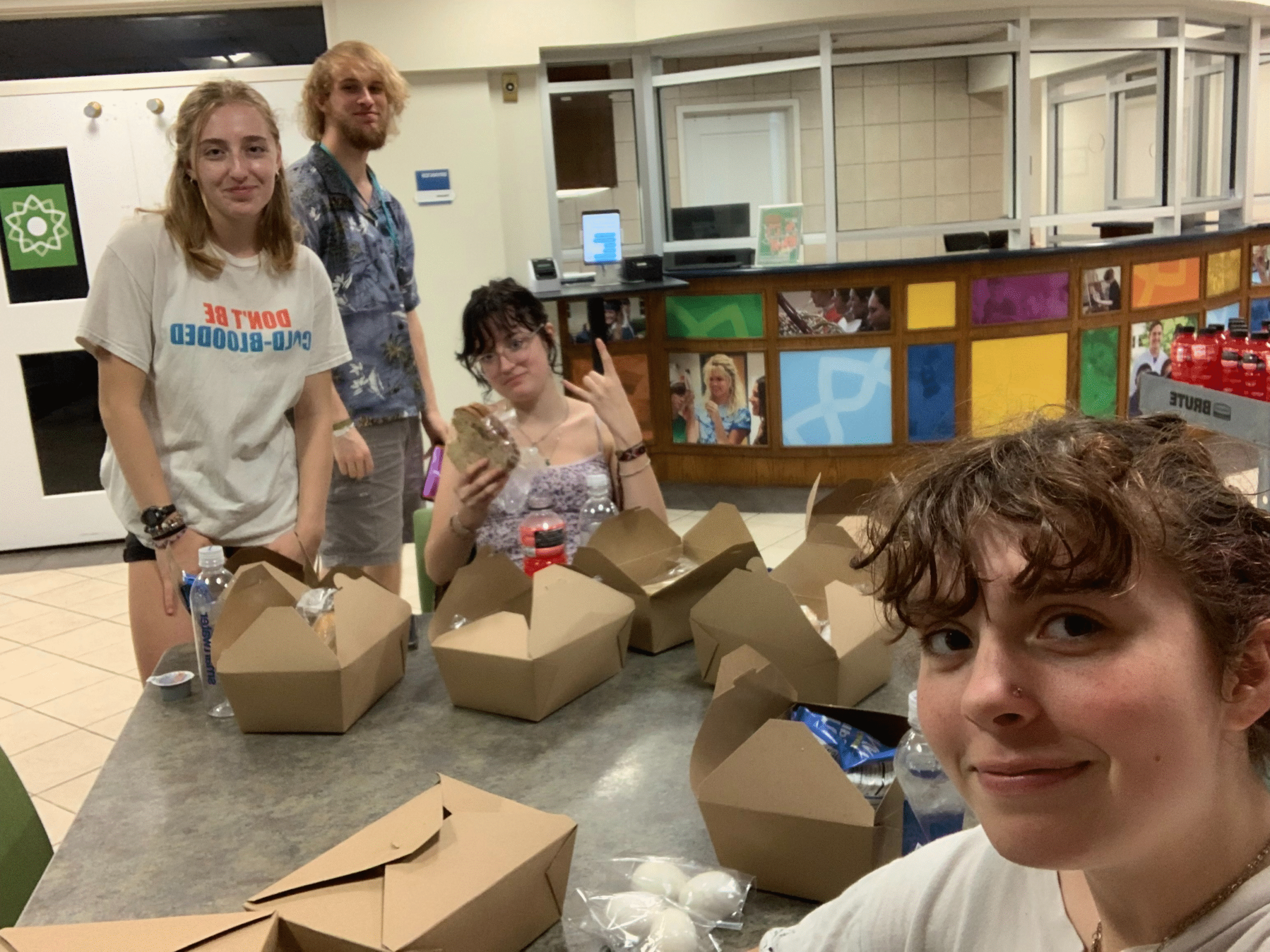
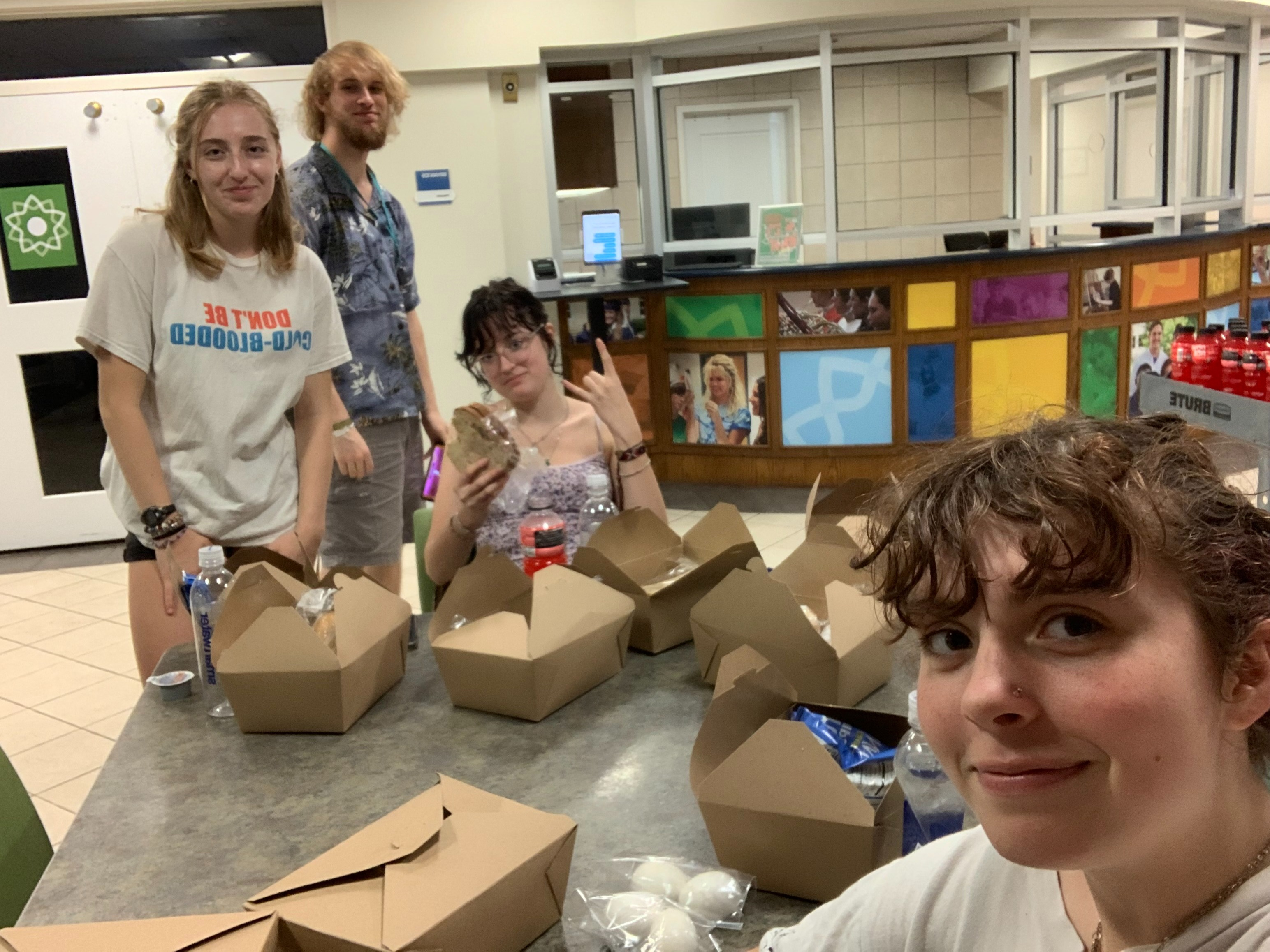
Despite the situation, the CCs and faculty came together to try and make the best out of the very apparent, bad situation. The boxed lunches and breakfasts turned into outings to get pizza at Costco and a group trip to Chancellor Todd Roberts’ hospitable home. Despite NCSSM staff being flexible and understanding, the students were still frustrated as the new update regarding the bus departing time pinged on our phones. We are unsure of when the bus will be able to depart.
Slowly, as news filtered out of the mountains we were greeted with stories of flooding, collapsed bridges, and fallen trees on buildings.
From the fifteen students delayed, it turned to twelve and later dwindled to three left, spending the entire fall break on campus, unable to return home.
The Triangle region of North Carolina has plenty of exciting options for sports fans to indulge in. Whether you want to watch the tactical showdown of a soccer match or the fast-paced action of a basketball game, a wide variety of major sports are available. This comprehensive guide will detail all of the teams that a fan can see in the Triangle area.
The Hurricanes of the National Hockey League (NHL) are the only team in the Triangle from one of the “Big Four” North American sports leagues; the NHL, Major League Baseball (MLB), National Basketball Association (NBA), and National Football League (NFL). The “Canes,” as fans call them, are consistently competitive at North America’s highest level of hockey, winning the Stanley Cup in the 2005-06 NHL season. Head over to the Lenovo Center in Raleigh for some exhilarating professional hockey!
UNC Tar Heels, Duke Blue Devils, and NC State Wolfpack
The Triangle has the unique privilege of being home to three college sports powerhouses, offering fans in the region the opportunity to experience a multitude of National Collegiate Athletics Association (NCAA) Division I athletic events from field hockey to football. All three of these schools compete in the Atlantic Coast Conference and have plenty of national championships across all of the sports they field, so you are sure to see a high level of play when attending one of these events.
North Carolina FC and North Carolina Courage are the Triangle’s respective premier professional men’s and women’s soccer clubs. They compete in The United Soccer League (USL) Championship and the National Women’s Soccer League respectively. The clubs’ home stadium at WakeMed Soccer Park is the epicenter of Triangle soccer and a great place to catch a match. Fans can take a trip over to Cary to see goals galore scored by these two excellent clubs!
The Durham Bulls are a minor league baseball team; the Triple-A affiliate of the Tampa Bay Rays. They play at Durham Bulls Athletic Park, conveniently located in downtown Durham, and games there are always exciting–a great way to see upcoming Major League Talent play before they head up to the big leagues. The Durham Bulls bring the fun of professional baseball to the Triangle!
The Carolina Mudcats are the other minor league baseball team in the Triangle, but they play three levels below the Bulls as the Milwaukee Brewers’ single-A affiliate. Mudcats games are another great professional baseball option; lower-level minor league games showcase raw talent unlike the developed players of the higher levels who are on the cusp of reaching the major leagues. The Mudcats currently play at Five County Stadium in Zebulon but will be moving to Wilson in 2026.
The large selection of sporting events in the Triangle means that there is always something new to explore at just about any time of the year. With baseball and soccer in the spring and summer, football in the fall, basketball and hockey in the winter, and more, there is never a dull moment when it comes to Triangle sports. No matter what sport you choose, you’ll surely have a great time.
Students volunteer with staff at the NCSSM Mailroom. (Denise Burgette)
By Teresa Fang, Stentorian Editor-in-Chief
Service Learning coordinator Sue Anne Lewis and Mailroom staff organize a successful Western NC Supply Drive, thanks to students who have donated and volunteered to pack supplies and teachers including Ms. Gabriela Stefan who took shifts supervising the truck.
The truck, a 40-foot long container on wheels, was driven to Western North Carolina by Director of Residential Education and Housing Michael Newbauer on Friday morning. This supply drive was born out of a way for NCSSM to “support our community and neighbors in need” and “send as many supplies as possible to Western NC,” Lewis wrote in a October 2 email.
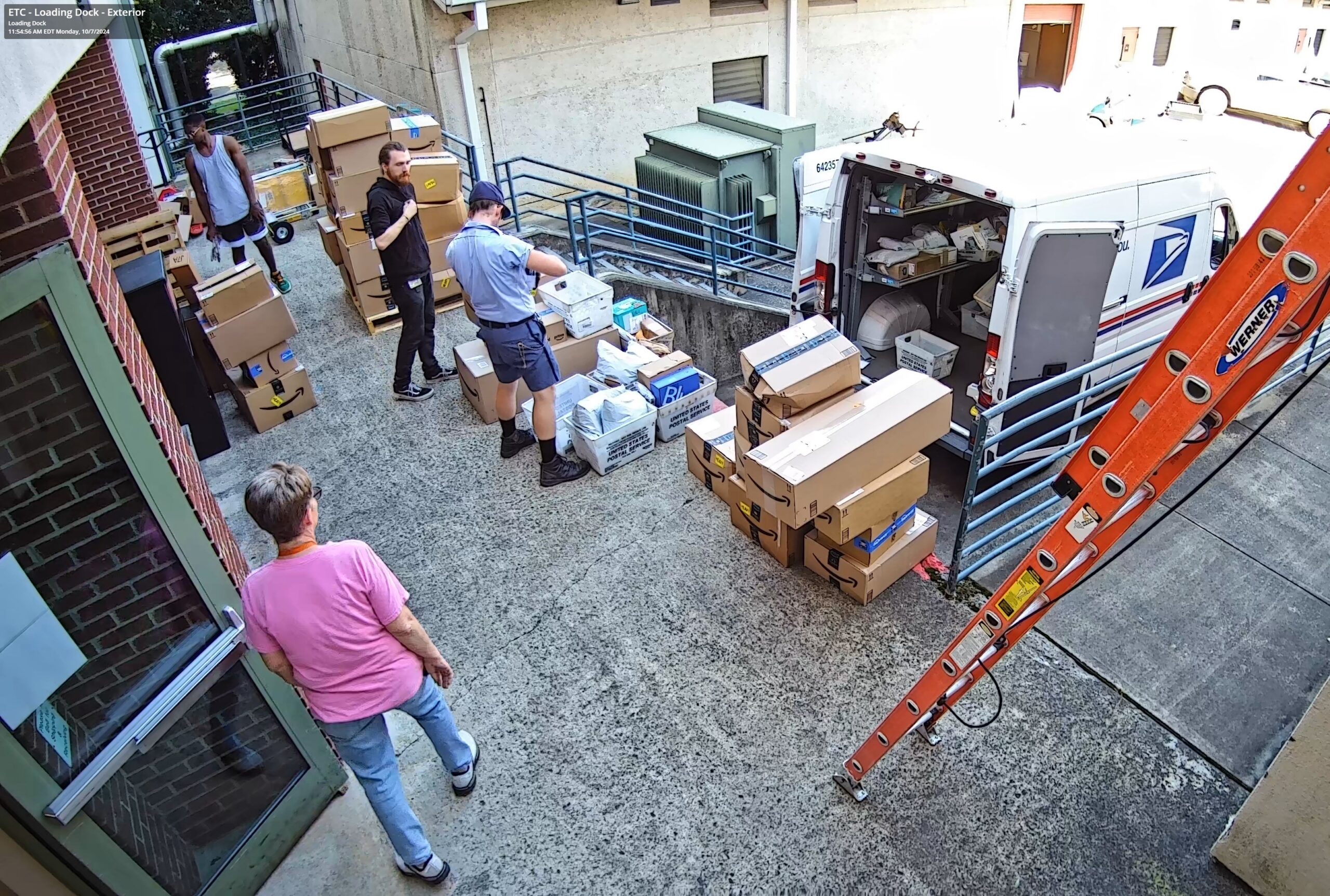
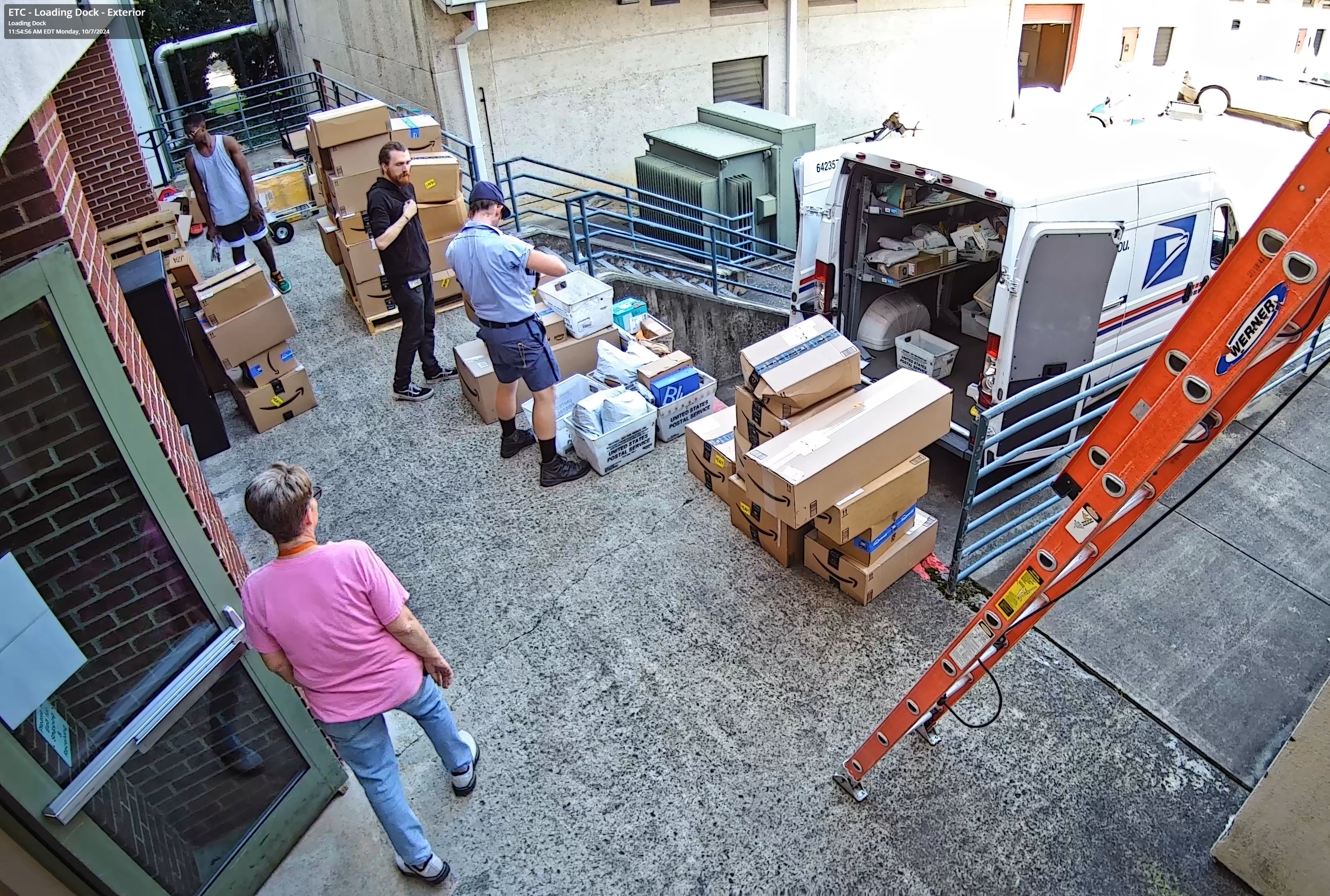
From October 2-12, items were donated to the drive via dropping them off directly at the truck in the Bryan parking lot or shipped as packages directly to the Mailroom. More than 120 students signed up to help pack those items in cardboard boxes, labeled, then carried to the truck, contributing more than 400 total hours.
“We repacked them to make sure baby bottles, baby formula, and the like, all went in a box and we labeled it. Batteries, first-aid kids, medicine, feminine products, stuff like that.” said Mailroom Manager Denise Burgette. “We had a lot of those. So we just took them all. The students that came over were just totally amazing.”
During our chat, she gave me a tour of the Mailroom storage, where she showed me a box of white shipping labels ripped off from packages. She says that Lewis plans to have some students write thank you notes to the senders.
“Within two hours, we had 372 Amazon packages.” Burgette said, describing the scene in the Mailroom on October 14. “They couldn’t fit on the shelf so we had them lined up on the dock, and there were extra tables for the students to work, breaking down packages and everything.”
In addition to just holding the supply drive, NCSSM partnered with local Durham business Lee’s 24-Hour Towing to bring a “Stuff the Truck” semitrailer at the parking lot at Club Boulevard and Broad Street. Students were also encouraged to sign a large “NCSSM <3 Western NC” poster in the Bryan lobby and share images on social media promoting the supply drives.
RChem students Nihar Kummetha ‘25, Matt Czar ‘25, and June Brewer ‘25. Luke Malta.
By Noah Fine, Stentorian Staff Writer
Research in Science (“RSci”) applications are on the horizon for juniors at NCSSM. What exactly are the RSci programs? Which one is right for you? What will you get out of the student research programs at NCSSM? What other research opportunities are there?
When people talk about RSci, they’re talking about four year-long courses: Research in Chemistry (“RChem”), Research in Biology (“RBio”), Research in Physics (“RPhys”), and Research in Computational Science (“RComp” or “RCompSci”). In addition, NCSSM also hosts Research in Mathematics (“RMath”). What sets these courses apart from other research opportunities?
Research starts during RSci students’ J-Term and continues through the spring semester into the Summer Research and Innovation Program (SRIP), and concludes in the fall semester of senior year. In addition, RChem, RBio, and RPhys (but not RComp) are double-blocked, which means that student researchers will be working on independent research during both F and G blocks. Double-blocking allows students the opportunity to dive into their research questions for twice as much time as in a normal class, in addition to SRIP, which is equivalent to a few months of normal class time. However, this also means that choosing to take an RSci is a large time commitment.
“Why would you want to spend hours and hours on an investigation if you aren’t enjoying it?” asked RPhys instructor Dr. Jonathan Bennett, who will be passing on the RPhys teaching position to Dr. Michael Falvo at the end of 2024.
However, RSci also gives students the opportunity to learn how to adapt when things don’t go their way the first time. “Usually there’s a point where students have had to deal with disappointment,” reflected RChem instructor Dr. Tim Anglin. “But they push through, and there’s always that time they bring me something and they’re like, ‘it worked!’”
Research in Biology (“RBio”)
In RBio, students will learn the ins and outs of research with model organisms. During J-Term RBio students spend between two and four weeks conducting a mini research project, setting a strong foundation for the skills they’ll need during the rest of the year: group work, wet bench techniques, and presenting their work, according to Dr. Kim Monahan, who teaches RBio alongside Dr. Heather Mallory.
After J-Term, RBio students begin to research questions that can be answered by studying a model organism. For example, a previous student researched multiple sclerosis by studying earthworms.
Organism choice is restricted by cost and regulations: E. coli could be a great choice, but A. mississippiensis, the American alligator, would not. Other popular organisms include C. elegans, plants, and embryonic zebrafish. Learning how to work with a student’s selected model organism—and how to adapt when their model organism produces unexpected results—is one of the core focuses of the RBio experience. Popular areas of study include neurodegenerative disease, genetic engineering, and more.
To an outside observer, RBio may feel like one big family of researchers. Dr. Monahan acknowledges that team building is “something me and [Dr.] Mallory work very hard on.” She says that learning how to communicate with peers, teachers, and those from other RSci programs is one of the most valuable experiences for an RBio student. Those science communication skills will come in handy during the spring when RBio students prepare an oral project defense, and in the late fall, when students are encouraged to submit their work to research symposiums and competitions.
Research in Chemistry (“RChem”)
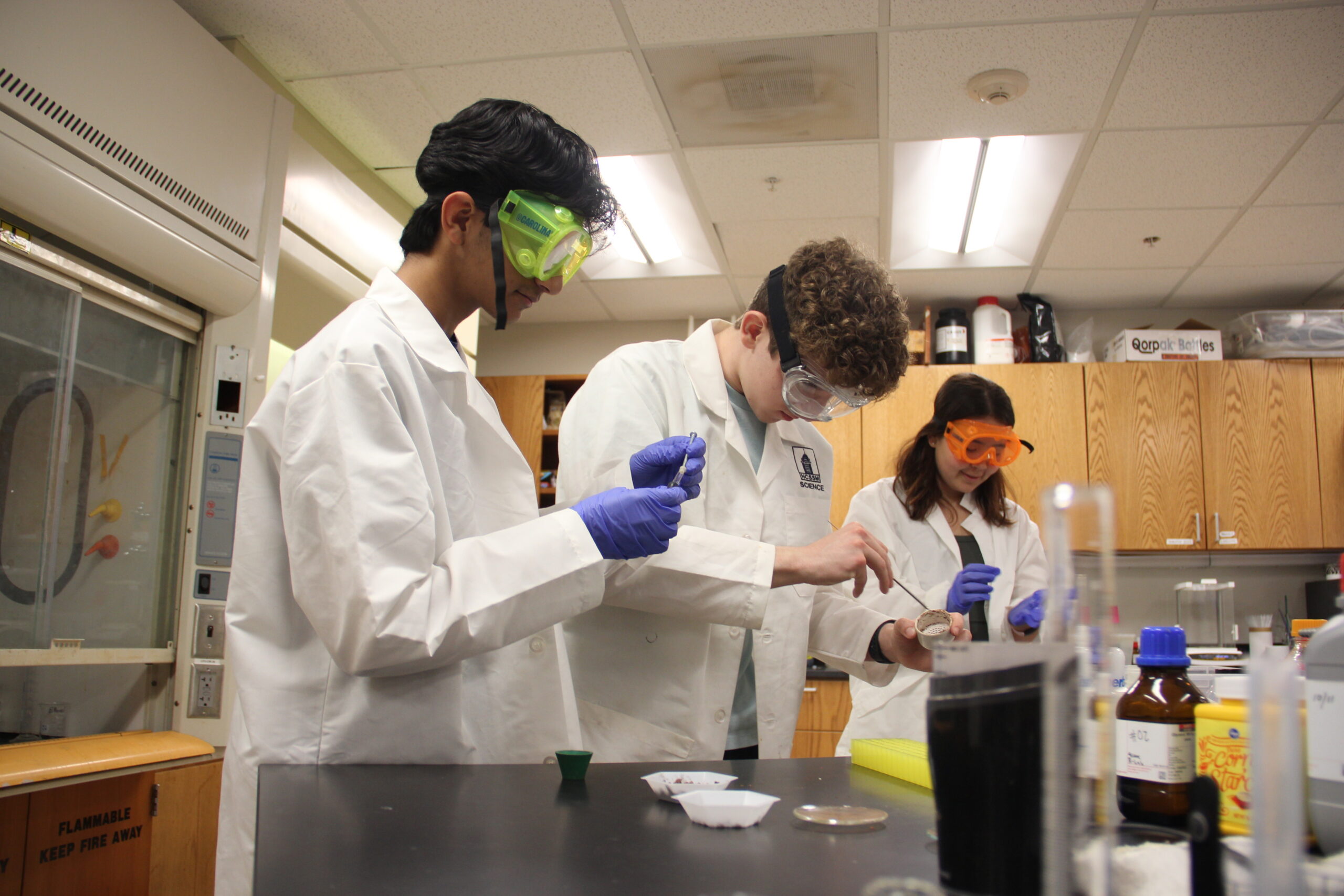
RChem students solve problems using the language of atoms, molecules, and proteins. No prior chemistry lab experience is required, so RChem students spend the first two weeks of J-Term building a foundation of basic laboratory techniques, such as pipetting, as they work on a shared short-term research project. During the spring, students explore possible research questions and plan out experiments in preparation for project defenses in early April. For the remainder of the year, students work to synthesize and test chemical products.
In the past, students have enjoyed exploring environmental chemistry, polymer chemistry, and drug design. However, projects that involve research with primate cell lines or potentially dangerous chemicals may not be feasible. Finding creative ways to address problems while working around these limitations is at the heart of RChem problem-solving. The two RChem classes, taught by Anglin and Dr. Michael Bruno, work separately most days. However, there are always opportunities for collaboration between students, even those outside of RChem. In fact, Anglin says that he particularly enjoys projects that sit at the periphery of chemistry, as they allow him to collaborate with the other RSci programs.
Research in Physics (“RPhys”)
According to Dr. Bennett, each RPhys project is completely unique in terms of both research questions and techniques. Previous research topics include computationally modeling turbulent flow, building miniature ion thrusters, and a variety of quantum computing projects. Since it would be impractical to teach such a wide variety of research techniques, he explained that instruction throughout the year focuses on building the skills necessary to become a competent researcher.
Students focus on dissecting and evaluating scientific papers during J-Term, preparing them to develop a research question and write a proposal during spring semester. RPhys students then run experiments during SRIP and share their research through a poster and research paper in the fall. Students then have the opportunity to present at a professional physics conference and submit their research to symposiums and competitions. Dr. Bennett emphasizes building these skills in the hope that they will empower RPhys students even after leaving NCSSM.
Dr. Bennett highly encouraged applicants for the class of ‘26 to attend the upcoming interest meeting. “Go to that meeting, get the information, ask your question, and listen carefully to the instructors,” he said, and advised applicants to “be you, but do your homework, so you’ll be more informed [about what RPhys has to offer].”
Research In Computational Science (“RComp” or “RCompSci”)
RComp allows students the most freedom of the four RSci programs because any question that can be answered with computational methods is fair game. Past RComp projects have included facial recognition software for horses, automated dating of Egyptian hieroglyphic text, and analysis of fourth-down plays in football games.
RComp is currently taught by Mr. Bob Gotwals, who will be passing on the position to a new faculty member at the end of 2024. Dr. Daniel Egger, a professor from Duke University, is currently undergoing training to teach RComp starting in 2025.
Mr. Gotwals, who has led NCSSM’s Computational Science Department since 2006, warns that Research in Computational Science is not Research in Computer Science. For example, Mr. Gotwals advises students not to come in with the goal of learning Python code, but rather to think of Python code as a tool used to model whatever interests them.
In contrast to the other RSci programs, RComp has no traditional benchwork component. All experiments are run computationally, which means that students conduct research using either their personal computers or the Pittsburgh Supercomputing Center’s supercomputer. Also unique among the RSci programs, RComp students have the opportunity to find a mentor in the field they’re researching, who can help them understand their problem from the perspective of a researcher in the field.
Research in Mathematics (“RMath”)
RMath is a single-semester, spring course. An application to RMath during the school year does not come bundled with an application to RMath during SRIP—they are separate classes, taught by different teachers. This means that spring RMath applications are open to both juniors and seniors.
In contrast to RSci programs, where students start by developing their own research questions, RMath students begin their research by choosing a problem from The American Mathematical Monthly (AMM), a prestigious peer-reviewed math journal. Problems from AMM have only been solved once before, by the researchers who originally proposed them. Next, RMath students work in small groups to find a solution and publish their results. Particularly inventive or elegant solutions may even earn publication in a later issue of AMM.
RMath students learn how to format and typeset papers in LaTeX (a software for typesetting documents), present their findings to others, and conduct research in pure mathematics. Popular areas of research include combinatorics, game theory, and advanced calculus, but projects modeling real-life scenarios are not the focus.
“This is RMath, not RAppliedMath,” says Dr. Michael Lavigne, who will teach RMath during SRIP 2025.
RBio student Henry Hanson ‘25 observes plates through a microscope. Vincent Shen.
Advice & Next Steps For Applying
Now you’re interested in STEM research at NCSSM-Durham. What are the next steps? Attend the Research and Innovation fair and interest meetings, and then reach out to the teachers of the classes you’re interested in! Dr. Monahan says that RSci teachers are “always open if you have a question,” and Dr. Lavigne has free copies of past RMath papers on his door for interested students.
Most applications will ask you to submit some sort of project idea. Don’t take this as something that’s set in stone, instead try your best to think of something that’s realistic and you would enjoy spending a whole year learning about. Seniors who are currently in RSci are a great resource for this. Don’t be scared of applying, especially if you think that your project ideas aren’t good enough for the programs that you’re interested in.
On the other hand, don’t try to change your interests just for an application or to cater to what you think the RSci teachers want. “Students shouldn’t be thinking about how they can serve the class, it’s the other way around,” says Dr. Anglin. Think of ideas that excite you, and RSci will meet you halfway.
Finally, Mr. Gotwals emphasizes that RSci and RMath are amazing opportunities for student research, but that it’s important to remember they’re not the only opportunities. Mentorship, Research/Research Experience in Humanities (“RHum” and “RexHum” respectively), J-Term Courses Research Experience in Chemistry and Research Experience in Biology, and the multitude of SRIP programs offered each year provide opportunities to conduct research in an entirely different way, with the option of freeing up space in your schedule to take more classes that interest you.
Research-intensive classes, labeled with “*R*” in the course catalog, are also an opportunity to learn valuable techniques used by scientists in the field through a significant research project.
If you are willing to accept the challenge, NCSSM has a research opportunity for you.
The modular units, also known as “Univille.” Louisa Weinard.
By Mabel Kennedy, Stentorian Staff Writer
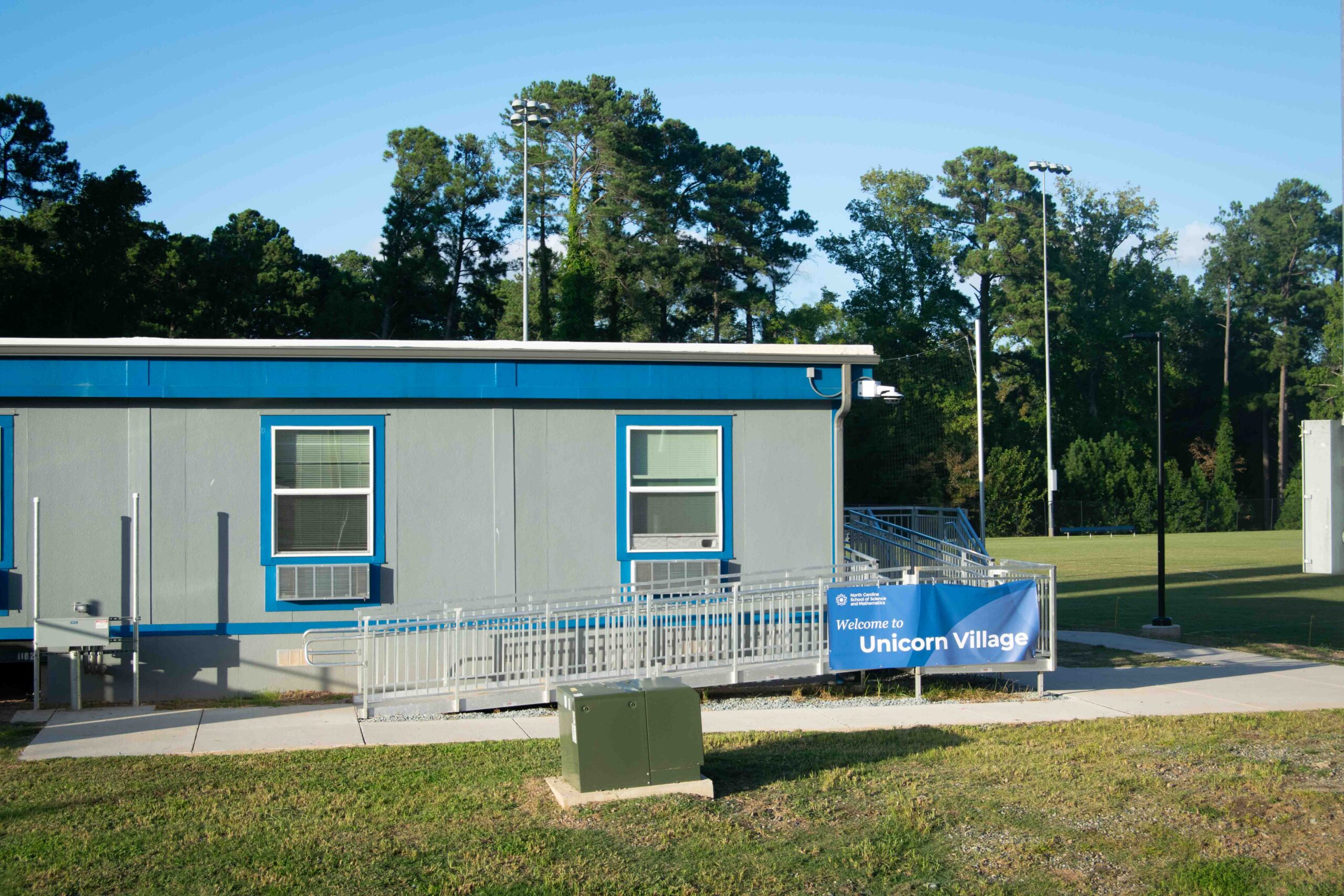
From supposed fox sightings, bigger rooms, and an overall change in NCSSM culture, the non-Hill residents of NCSSM have been consistently curious about the much-needed insights into modular life, aka UniVille. After the first Interhall Visit (IVIZ) of the year on September 6, an event allowing students to explore and visit friends in 1st Hill, many questions have been answered: this article presents itself to answer the remaining few.
As this year’s Convocation’s speaker Katharine Stewart ‘85 notably described, it seems as though every graduating class has some misshapen anecdote about their years at this school. Whether that be the COVID-19 lockdown or perhaps something more relatable as the past year’s storm at Convocation, or the present Hill renovations.
It’s important to note the luxuries of the new modular units (“modulars”), primarily the bigger rooms in comparison to the previous ones in Hill House and the apparently substantial walk-in closets. All this to say the modulars aren’t free from their downfalls.
When asked if they would rather live on Hunt, Andrew Hattle ‘26 reported the vibe of the resident buildings was better. “They have ping pong but our hall lounge only has a foosball table, a TV, and some chairs. Hardly anyone goes into the lounge. But in the [Hunt] building at least one person in the lounge, just chilling.”
I found this to be the case across the board, with an apparent lack of lounge activity present. Could this be the case because of the new round of juniors or rather the lack of the long-serving Hill House? Either might be the case, but the bottom line stands that the modulars are evidently a quiet hall to reside in. Notably, the faulty water heaters, spotty air conditioning systems, and distance from the center of campus give the modulars an equal playing field with the rest of the resident halls.
However, with the 1st Hill IVIZ now complete, many wonder if the tradition of “Haunted Hill” will continue. Or is this it?
We can still look forward to this classic NCSSM event, revealed by Khalil Murray-Azam ‘25, who said the tradition was “in the works,” contrary to the student’s general assumptions that this event would no longer be hosted in the now off-limits Hill House.
Will campus culture change after the relocation of Hill House to the modulars? Some interviewees said there wasn’t much change, while some said there was. Even so, the common conclusion is that the modulars aren’t the same. Obviously, this was going to be the case but with the lengthy distance to key points of campus, it becomes a more important annoyance to anybody in this situation.
Adriel Simeon ‘25 recalled that at Hill last year, “All you had to do was to walk outside and you can see everyone, and a lot of people went inside the lounge just to hang out.” But after the relocation between the soccer and baseball field, “it just wasn’t the same.”
Murray-Azam echoes these sentiments.“Now at Happy Half people go in right at 10 pm, when people would still live on Hill they’d stay out right until 10:05 pm,” he said.
All this to say Hill–or should I say, the modulars–regardless of their location will always have their ups and downs. Yet the school year has just begun, leaving much to be known.
Sage plants in front of Bryan lobby. Vincent Shen.
By Lily Frank, Stentorian Staff Writer
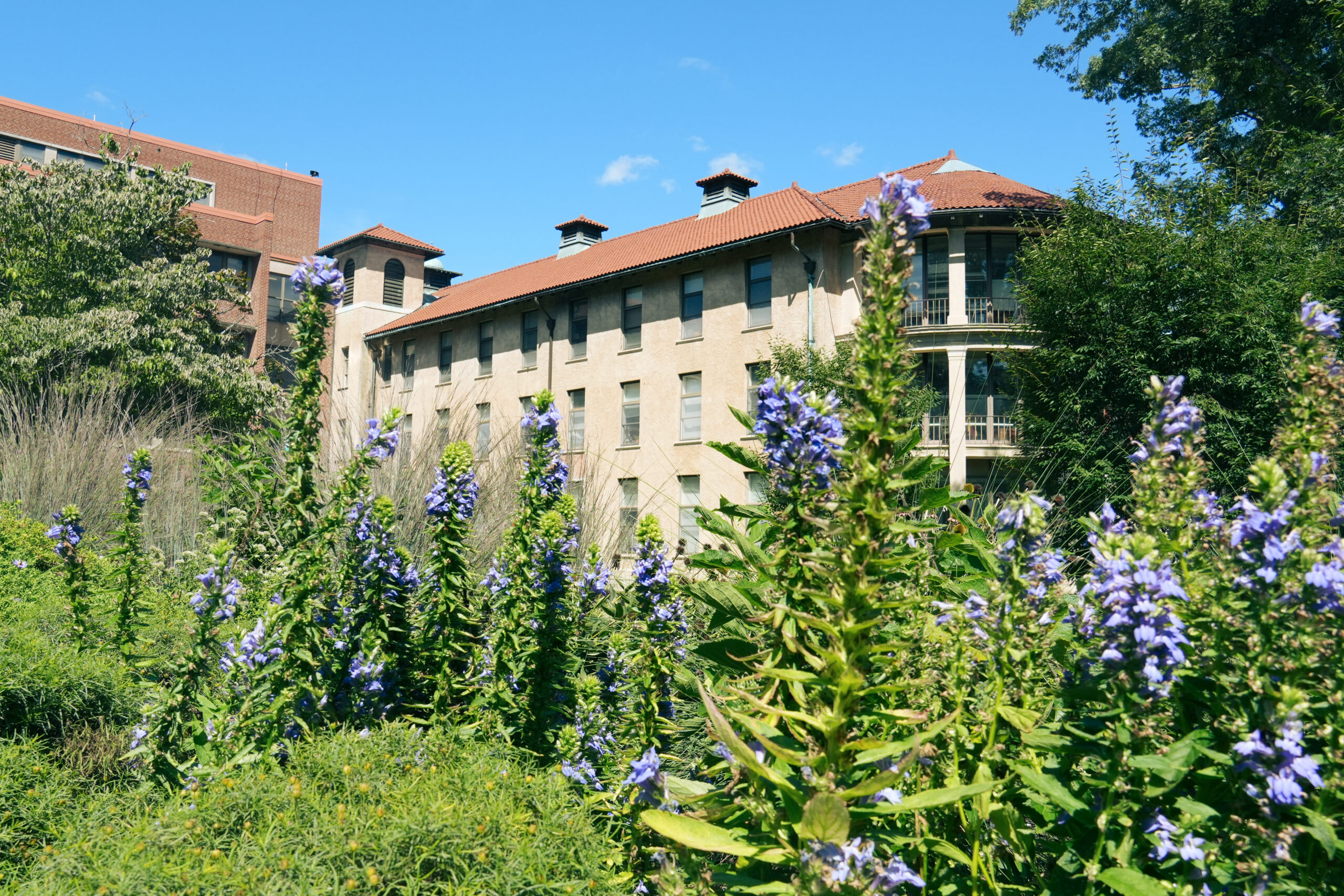
On February 12, 2024, Governor Roy Cooper signed Executive Order 305, requiring that all North Carolina state property would be planted with native N.C. plants and seeds. This included NCSSM’s campus within its radius of influence. NCSSM was ahead of the curve with efforts in October 2023 to fill gardens with native plants.
NCSSM, however, had never had permanent garden features. With students leaving every two years, it became clear that there was no way to create “continuity” within the gardens as they were now. As biology instructor Dr. Heather Mallory pointed out, “It’s been hard and sad to see students put effort into planting a garden, and then it gets full of weeds, and things take over.”
A few years ago, the area in front of Bryan was filled with bushes that provided little for the space they took up. However, an opportunity presented itself when the previously planted bushes were bulldozed, creating a completely new space.
Dean of Science Dr. Amy Sheck, Plant Facilities, and many teachers, including Mallory, have led the recent changes that blossomed around campus. As required by the Executive Order, these gardens are focused on building a beautiful native ecosystem as well as acting as “an educational asset” that allows for “data collection, data management, data analysis, and opportunities to look at mutualisms, predation, and other symbioses,” according to Sheck.
Planting began last October. “I think it was Halloween because people came in costumes. It was quite the scene, but we got it all done in one afternoon.” Sheck recalled.
Then, in April of this year, the meadow was planted on the slope along Beall lawn. Around five hundred plants went in, which amounted to about forty species of native seeds. The idea is to keep it watered through the first year, and then after that, the gardens will take care of themselves because they are filled with well-adapted, hardy native plants.
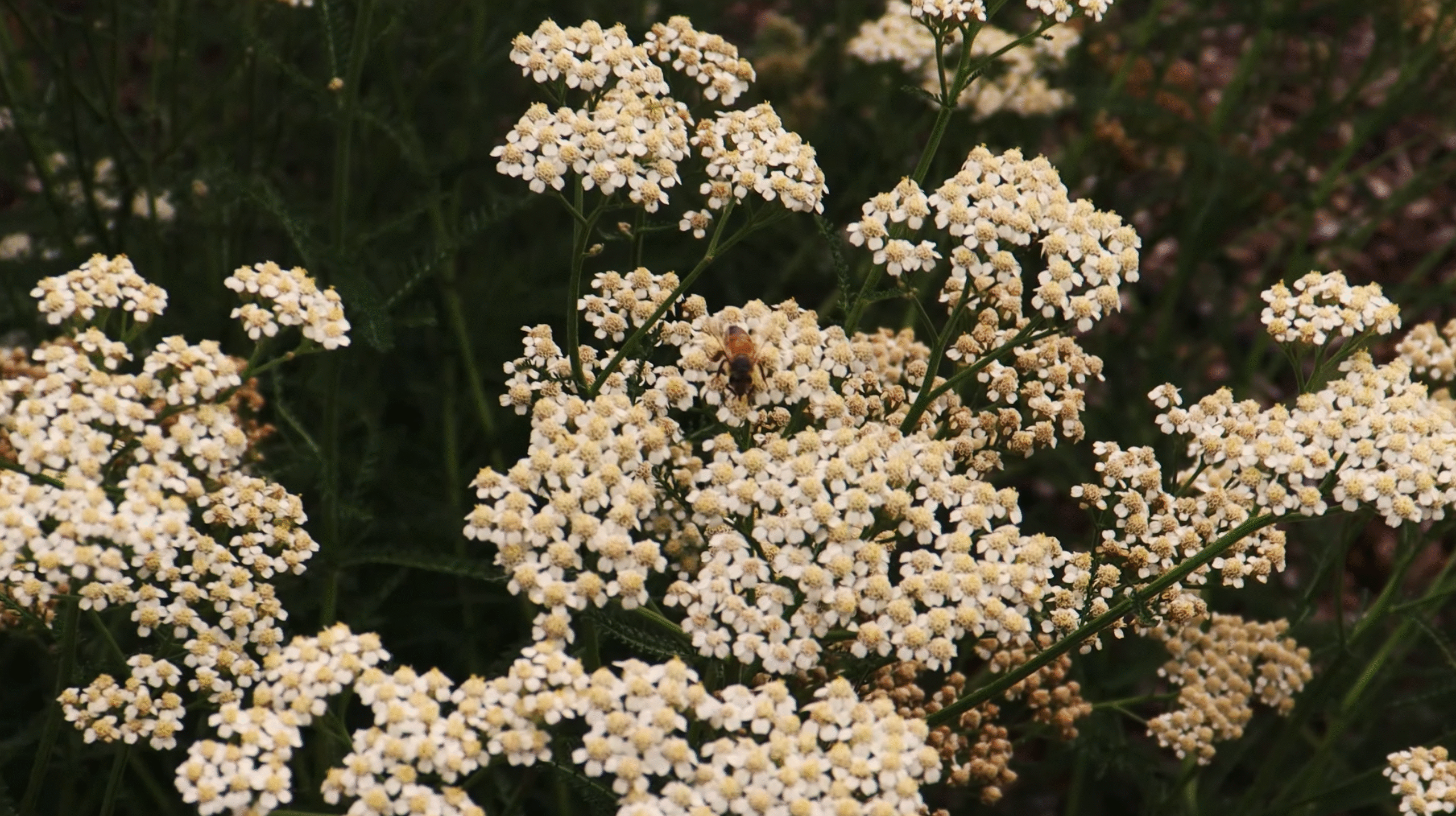
Since April, these plants have grown quickly, with flowers blooming in time for move-in this fall and tall grasses filling in the slope. These flowers drew in various pollinators, including bees, wasps, flies, and butterflies. According to Sheck, “35 percent of the food plants we eat depend on pollinators,” so making space for them within our environment, even on campus, is vital. This also gave the Ecology class at NCSSM a chance to take the first census of pollinators, which may act as the “beginning of a long-term data set.”
Yet, managing such extensive gardens poses its own set of challenges. Five hundred plants in one garden is a lot. On top of that, there are about six other central gardens on campus, which has created an issue.
“We’ve got all these wonderful gardens; we just don’t have enough people to maintain them,” said Mallory. Previously, they would hold “garden days” where they would pull weeds and mulch with students and staff who volunteered, or clubs such as the greenhouse or garden club would help out frequently.
“Garden TA was a specific way to have students get interested, gain on-the-ground experience, do the weeding for certain gardens, and make decisions about plantings.” Mallory stated. It was about “having a group of individuals take ownership of the gardens.”
Through Sheck, teachers, staff, and students, the gardens around campus now have a clear plan of maintenance and care and ways for everyone on campus to get involved–whether through senior leadership, volunteer events, or clubs. These gardens are meant for everyone on campus and can act as an educational and propagational tool to spread the knowledge and seedlings of native NC plants.
As Sheck put it, “I’d love to give away plants to students and employees each year and spread these fantastic native plants.”
It has been almost a month since becoming a junior at NCSSM. Over the course of four weeks, I adjusted to the unpredictable schedule of classes, with unfamiliar faces shifting into friends. To look back and feel as though the first week was ages ago registers as surreal.
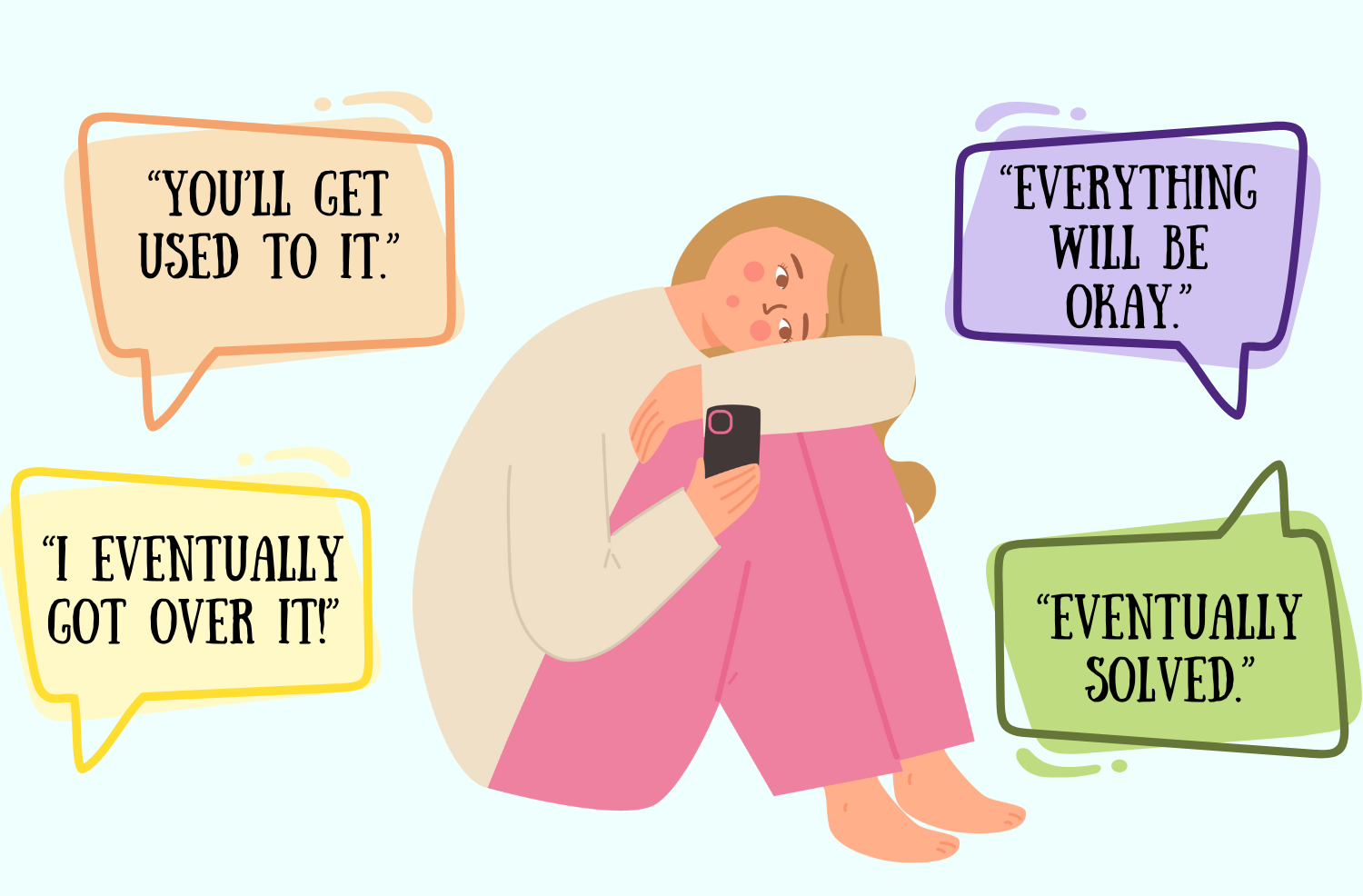
Yet, I still remember the burning heat of the first Ice Cream Social, of learning and struggling to complete my first housekeeping task, and of feeling so overwhelmed. But for the first week, I was wrapped with positive affirmations by so many seniors that “it will all turn out okay” and the classic reassuring phrase, “You’ll get used to it.”
Enthusiasm flashed in the faces of seniors as they recounted the early days of their junior year, narrating their difficult experiences with newfound humor of the present. They backed up their experience by telling stories of the amazing friends they’d made over the years, of having fun at school clubs and performing at festivals. Every sentence of hardship they said was followed by, “I eventually got over it.”
“It,” to them, was now a small reference seniors made as they looked back in retrospect.
But to me, It is the overwhelming current of my reality, the pounding in my ears, the expanding hole in my stomach when trying to make sense of this new life. It means feeling unsure in almost every step, and hopelessly clinging onto the words of the students before you that everything will be fine.
The discomfort of being a junior needs to be talked about more–of feeling that you are doing everything wrong, of starting fresh and being so terrified about it. Of beginning a new high school journey and not knowing what to do with all the blank pages. The endless support from this community is something I appreciate; however, there needs to be more conversation about feeling lost. Of not glossing over the nuances when navigating junior year, but focusing on them.
When we talk about ourselves not in retrospect, but in the present, is when life becomes more real. Instead of discussing every time how adjusting to school life was “eventually solved,” why not expand the conversation to how we are “currently in progress?”
Life isn’t static–we’re constantly dealing with new problems, subtle moments emerging and revealing themselves every day.
To say that “at this moment, you don’t have everything figured out”–that’s what feels more reassuring. More relatable. Of maybe talking about how there are things we still haven’t fully adjusted to, or acknowledging that we are currently struggling with certain things.
When we open the door to feeling lost, that’s when we can begin to find our way into the world again.
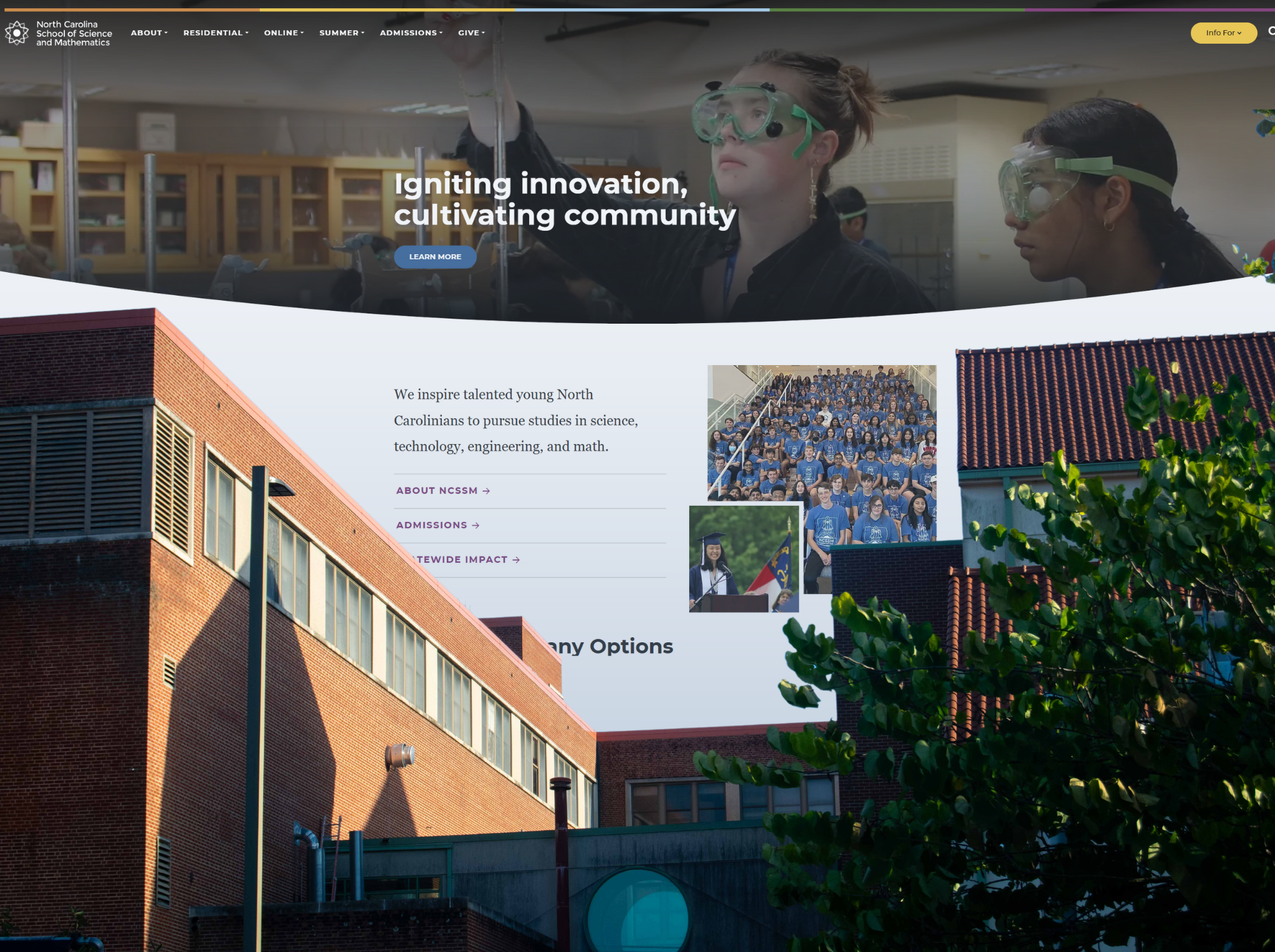
A viewer visiting the school website at ncssm.edu can immediately see the huge words, “Igniting innovation, cultivating community.” Inspiring words, but what does this really mean?
Initially, I did not plan on writing about the ncssm.edu website at all, considering it was redesigned between November 2021 and October 2023, according to webmaster Will Mack. Not to mention mixed concerns about the student newspaper giving any form of criticism to the school that governs it and has the power to shut us down. Yet, as a senior, with the student body gaining a larger digital presence, it’s time to take a stand.
The ncssm.edu website is the epitome of selective attention in representing a student body. Like the illusion of validity in politics, what is visible is superficial: there are very few families and applicants who wouldn’t like to be a part of the residential, online, or summer programs that NCSSM prides itself on in every marketing and outreach campaign. The reputation this selective marketing builds is outdated and reductive to the school’s current and prospective students.
Mack wrote that the website redesign was a two-year effort that “collected feedback from students, parents, faculty, and staff…to make it easy for new folks to understand what the school is, what its programs are, and which might be right for them.” But it’s hard to see what the school offers beyond research programs and how prospective funders can donate.
“Yes, we want to prospective students to check out the website, and for parents, donors. But there’s nothing really about the students,” said Chidera Ezenwenyi ‘25. “There’s a residential program. There’s online. There’s summer. But no actual student activities. It doesn’t showcase anything that we do.”
When you dig even a little bit deeper, it’s clear that the school administration’s idea of a good website is a good advertisement to expand, not to intensify–even if it means leaving voices from its employees and students behind.
If you’ve taken a look at the walls of Bryan lobby at all, the website’s tendency to wrap the school in vague and flowery language would not come as a surprise, but nonetheless a disappointment. As they claim to help “talented students find their niche and realize their potential,” they lag significantly behind in showcasing what niche and potential. While they say they promote a “highly talented, committed, and diverse workforce,” the supporting data is always behind a “coming soon” label or none at all, and they expect employees to make personal sacrifices out of compassion and loyalty to the school.
Even when they try to provide a window into what accomplishments or projects that students are working on, the news that are provided to the public are narrowly filtered into three types: the first or last day of school, retirees, and national/international recognitions. Everything we see in words seems prideful and great, but the coverage thoroughly undermines what else students can do once they come to NCSSM.
“Igniting innovation, cultivating community”
Now, I’m not an opponent of innovation and community. I love trying new things and socializing with people as much as anyone who lives under the sun. But the fact is that bragging about what we’re already the best at does nothing to innovate or grow the external–or even internal–community’s perceptions of NCSSM.
According to their website, third on NCSSM’s Strategic Plan 2024-2030 is to use an equity-oriented approach to meet student success and wellness needs, by implementing new and expanding existing programs that increase “faculty, staff, and student intercultural competence and humility” and give an avenue for students “to provide and receive feedback about their academic experiences.” While this is a valid objective for a diverse school, the first priority should be mitigating the causes of student dissatisfaction and troubles, whether that be academically or emotionally. Otherwise, they will just be plugging one hole while digging a wider one right next to it.
Once a student is accepted into the school, they tend to not visit the website at all, as Ezenwenyi and his parents never did. “I feel like everything is in Blackbaud, I’ve never had to go to this website for anything, which, in contrast to my old school, I definitely used the school website a lot,” he said.
At times, ncssm.edu’s lack of coverage speaks just as much as their coverage. We know that if something or someone is repeatedly covered in media, then they must be important to that media. It is telling when NCSSM’s idea of innovation and community, usually in the form of news coverage by communications specialist Brian Faircloth, barely even encompasses anything other than achievements in math and science.
Using the website’s search feature, we can see there are six mentions of Christina Koch ‘97, four of which are feature stories, and three of which contain primary-source quotes from her. Searching Rhiannon Giddens ‘95–Grammy Award-winning musician, MacArthur recipient, and Pulitzer Prize winner on vocals, fiddle, banjo, and viola–yields three stories, all of which are of recognitions to accolades.
In none was she directly interviewed by an NCSSM affiliate; all her remarks were outsourced from other mainstream media or her social media accounts. Prior to RexHum class, I didn’t even know Giddens was an alumnus, nonetheless that she was the banjo player in Beyoncé’s “Texas Hold ‘Em.” The selective perception is complicit even in searches of George Cheng ‘24, dubbed “STEM powerhouse,” who has three in-depth feature stories with interviews.
Regardless, if we are truly trying to build an innovative community encouraging students to think outside the box, we cannot continue to be an advertisement for the same old elite STEM education. If prospective students come to NCSSM only knowing the names of fancy-sounding courses and faulty links to Google Documents, then they will not be able to grasp what a vibrant community this campus really holds.
Students’ Definition of Student Culture
The team who worked on the website was comprised of the NCSSM Communications Team, ITS, External Relations, NCSSM-Morganton Administration, and the Communications Council, which is a representative committee of all departments at NCSSM. When asked if the purpose of a high school website should be promotional or as a window into current student life, Mack said they were “deliberate at making the primary purpose of our outwardly facing website to be introducing new people to NCSSM and all it offers.”
While it is understandable that NCSSM is an unusual school, it’s surprising to hear the team’s interpretation of “student life”: “Of course, a very important part of making that appealing for them is showing them glimpses of current students’ experiences, so we do seek to offer a window into current student life in all of the programs from Residential to Step Up to STEM to Summer Ventures to NCSSM Online and more.” Is that what students would expect to represent their everyday experience as a NCSSM student?
Taylor Eason ‘25 described what good qualities of a school website should look like, pinpointing the outdated news articles. “Honestly, being frequently updated to showcase what’s been going on in the clubs.” she said. “We have news about meeting the students, but [for example] in ‘NCSSM lets students craft tailor-made science research experiences,’ that student graduated two years ago.”
Eireann Marcus ‘25 added that the last quote from any student on the website was from 2023. “We don’t know who they are, and the pictures don’t help,” Marcus said.
What we need for a closer-to-true representation of NCSSM student culture is frequently updated information on ncssm.edu. Nevermind that we have 150+ student-run clubs and organizations across the two campuses; if the current website has a page for student publications, then we should continue to update all student publications whenever one is released, or ensure there are resources available to direct site viewers to the domains that students directly control. In the first place, student publications are supposed to be a representative showcase of students’ work and stories, and it’s advantageous for NCSSM to have four school-sponsored ones (Broad Street Scientific, Blue Mirror, Fifth World, and The Stentorian).
Ezenwenyi also thought of ideas. “I think the good qualities of a website are resources for the school students, and maybe some stuff for some parents. Having an interactive slide with photos of events that we do could also help,” he added.
Promoting the school, from an admissions and funding perspective, is inextricably tied to widening the outlet for student expression. Sure, this is an idea that might have complications that give a fraction of more work to the administration or webmasters to do and might seem like a wild risk to take for both publications and the school as a public institution, but that’s what igniting innovation means.
Letting Down Our Reputation As The #2 Best Public High School in America
I won’t argue that the website does have aesthetic appeal, and some functionalities are quite convenient. I like how each block looks different. I like our colors. I like the resources of the library. I like the ticking numbers that show our impact metrics. However, the vagueness of what students are doing to achieve those metrics graciously permits us to examine closely some of our school’s opinions and poll results on the Internet, since they’re not available on ncssm.edu.
NCSSM brags about their influence (do we not?); Institutional Effectiveness reports our total enrollment, including residential, online, and Connect students, represented 94 out of 100 North Carolina counties last year. NCSSM is ranked number one in Best College Prep Public High Schools in America and number two in Best Public High Schools in America. Well, let’s take a step back. Are we satisfied with where we are now? For instance, while the average graduation rate is 99 percent, the average SAT and ACT scores are 1440 and 33 respectively.
Is this all the “elite, academic reputation” that the NCSSM administration, the Board of Governors, the Board of Trustees, alumni, families, and donors want to see? The website certainly doesn’t live up to the standards the school has touted. It’s almost as if we, the students, aren’t solely academic machines but real people with breathing backgrounds and multiple disciplines to devote our bodies and minds. The same goes for faculty.
“There’s a navigation bar but it’s about residential, online, summer, and admissions, but NCSSM is so much more than those things,” Eason said. “How are you supposed to promote it if you don’t know anything about what it’s like to actually be here?”
Unless a student is one of the lucky chosen few who get a story done by Faircloth, students come and go without leaving a trace of their impact. Only if we are lucky enough to have access to social media, we can see the memorabilia of posts and past officers of clubs and organizations. Only if we are lucky enough to be permitted, tech-savvy to create a digital archive, or insistent enough to see real-life proof, we can access records of past students’ work, and likewise be inspired by their stories of struggle then success.
Is all of this the special legacy students want to take away from their two years at NCSSM?
If NCSSM’s website continue to be selective of our school’s student culture and life, we will forever be running on a hamster wheel of vague goals, blatant inappreciation, and laziness. We will constantly be asking ourselves the same question: where do I see myself in my “elite” school? Yet, the answer will always remain the same: we don’t.
With the stress of everyday life at NCSSM, it can be difficult to develop passions with your friends, much less start a whole band. But not for this group! Here’s the “scoop” about Big Spoon!
Big Spoon is NCSSM’s very own student-led band, playing the songs of their choice at a variety of school and community events. Big Spoon was founded in 2023 by Grand-Senior James Dudek ‘24,. who wanted to create something where students could come together to make music and build bonds. Along the way, he found some friends that shared his passion, and they started the band as we know it.
The History
The name was not always Big Spoon–the group thought of many possible names, including “Dubious Boobius” and “The After-Hours,” a reference to their late practice times. The final name came from one of the original members’ roles in the spring musical Beauty and The Beast, and from then on they were “Big Spoon.” They have since performed at every Koffehaus–the school’s monthly outdoor talent show–and created Unipalooza, NCSSM’s own spin on Lollapalooza, a mini concert full of music and friends.
Even though all of the original members of Big Spoon have graduated, Big Spoon is still at large! This year will be the third generation of Big Spoon, aptly named Big Spoon the 3rd. For long-time and incoming Little Spoons (the nickname for their fans), here’s what they’re stirring up!
Meet This Year’s Spooners
Shirley Tian ‘25: Hey!! I’m Shirley–classical pianist, indie-rock guitarist, and guitarist for Big Spoon the Third. My top artists right now are flipturn, Radiohead, and Fiona Apple.
Isaac Bosman ‘25: Hey I’m Isaac and I play lead guitar for Big Spoon. My top three bands are My Chemical Romance, Mayday Parade, and Blink-182.
Kahaan Khatri ‘25: Hello I’m Kahaan, I love playing piano, I have plans to learn guitar, and my favorite artist right now is Crying City!
Hazel Cochran ‘26: Hi! My name is Hazel and I’m so excited to be joining Big Spoon as lead vocals. I also play guitar, bass and piano, so you might get to see me on those too. My top three artists would definitely have to be le tigre, Mitski, and Ludwig Goransson. I can’t wait to get onstage and play music with the band, and I hope to see all of you there!
Anna Tringale ‘25: Hi! My name is Anna Tringale, I’m from Mooresville (originally from Detroit) and I’m the biggest, baddest bassist for Big Spoon this year! My three favorite artists are System of a Down, Stromae, and PSY!
Jiya Zaveri ‘26: Heyy, I’m Jiya and I’m from Greensboro (shoutout northwest!) and I’m on drumset for Big Spoon this year. Some of my favorite artists are The Neighborhood, Ethel Cain, Maneskin and Arctic Monkeys, and I’m so pumped to play for you!
Big Spoon The 3rd
This generation of Spooners plan to be just as active as the Spooners before them. To get the inside scoop, I interviewed lead member Shirley Tian and lead guitarist Isaac Bosman ‘, slightly adjusted for clarity:
What is your personal history with Big Spoon?
Tian: I started playing guitar about a year and a half ago, and I really enjoy it. I remember going up to the Physics department and playing their little pink guitar. I was already close with some of them (the members), and Linda [Xue ‘24] finally got me into it. They asked me to play “Bags” with them on the piano.
Bosman: I’ve always been into music with orchestra and guitar. James asked me to sing at the last Koffeehaus, which I said no to, but I did end up playing guitar. After that, I just started jamming with them.
What is your fondest memory with Big Spoon?
Tian: My fondest memory is goofing off with the band during practice. We’re all there to have fun, and it’s nice to just have fun.
Bosman: My favorite memory was Malcolm [Louigarde ‘25] screaming his heart out to “Butterfly Wings” at Unipalooza.
To you, what is Big Spoon all about?
Bosman: Big Spoon is all about the people and the music. We just get to make music with cool, talented people.
What advice do you have to anyone who wants to get involved with Big Spoon?
Tian: Reach out! We love it when people come jam with us. You can message us @bigspoonband on Instagram or reach out to me or Isaac @shirleybirleyy and @isaac.bosman.
Big Spoon plans to play at every Koffeehaus this year, and around May 3rd they will be hosting another Unipalooza! Come see them–there’s something for everybody!
THE COVER PHOTO FOR VOLUME XLIV, NO. 1. TERESA FANG – STENTORIAN EDITOR-IN-CHIEF
By Teresa Fang, Stentorian Editor-in-Chief
HEAR YE! THE MOST COMPREHENSIVE SUMMARY OF INFORMATION TO HIT THE GROUND RUNNING.
This is the cover story for Volume XLIV, No. 1 (August 2024) issue, the first issue of the 2024-2025 academic year and the second issue in NCSSM history to have business ads and color-printing.
Over the past 40+ years, the North Carolina School of Science and Math (NCSSM) has worked to create lasting bonds between its students, faculty, and the subjects taught at the school through a world-class STEM curriculum and robust humanities and arts program. Since its founding, NCSSM has been a one-of-a-kind institution that has served as the model for 18 such specialized schools around the globe.
Zooming in on a prestigious reputation, the school is also home to one-of-a-kind memories and lifelong friendships. Especially at this time of year, summer always brings about an abundance of memories, central to the stories and sense of community NCSSM fosters for its students. Most importantly, all the resources are accessible on Blackbaud, Canvas, or a general Google search.
However, as most students find themselves particularly close to one or two departments or groups as the school year progresses, navigating the first week (or month) of NCSSM can be daunting. Icebreakers, club fairs, onslaught of applications… the list of things a student can do here is endless.
The Research Groups
Students who’ve been on a tour of NCSSM with the student ambassadors, will likely remember two things: the ambassadors’ blue jackets, and the different research groups (“RScis”).
One of the first departments established at NCSSM was Biology, located on the 3rd floor of the Bryan building (“3rd Bryan”). Accordingly, the first-ever research group was the Research in Biology group (“RBio”), led by Dr. Amy Sheck, who was initially a Biology instructor before becoming the current Dean of Science. Originally, the group was extremely exclusive, taking on 1-2 students per year. Because of its success, research groups quickly expanded across disciplines to become what we have now with six year-long research groups, each led by seasoned instructors in the fields: RBio, RChem, RPhys, RMath, RCompsci, and RHum.
Being part of a research group is fulfilling, but tough to get in, as many students apply when applications open in late September. But once in, a journey will quickly begin. Every year, the research groups send out droves of projects for competitions and conferences. In the 2024 competition season, 24 percent (15 out of 63) of the total awards at the North Carolina Science and Engineering Fair (NCSEF) were swept by NCSSM-Durham students; at the International Science and Engineering Fair (ISEF), 3 out of the 5 NCSSM students representing North Carolina won Grand Awards.
STEM Departments
While the NCSSM namesake includes “Science and Math,” the total number of STEM (Biology, Chemistry, Physics, Math, Computer Science, Engineering) courses offered is 131. Compared to the 155 total courses in the humanities (Art, Drama, English & Social Sciences, Music, and World Languages), there is a fairly balanced STEM and Humanities program at NCSSM.
Biology courses often look like a mix between classroom instruction and lab work. Offering 20 diverse courses taught by seven instructors, the biology curriculum is quite flexible for different interests.
Chemistry offers 18 courses, all providing opportunities to get hands-on experiences while dressed in fancy lab garb. While most juniors and seniors get assigned to the AP Chemistry courses as their required chemistry credits, it’s always fun to branch out to more niche chemistry or cross-discipline subjects like organic chemistry.
Physics is one that students tend to either love or hate. While most students say that physics courses are the hardest in the whole school, it depends on a student’s interest level, the specific course taken, and the teacher. But pay attention to the curriculum: for example, the problem-solving process that the 10 instructors teach is a universal skill. Just because you ran up 9 flights of stairs to get to your classroom on time does not mean you have no energy left for physics class.
Tucked away in a cozy space (and in classrooms in the ETC and Hunt), the Engineering and Computer Science classrooms look like a mix between a Lego building garage and a lecture hall. Offering 37 total courses, some cross-disciplinary courses include Biomedical Engineering, Satellite Design, and Cryptography, this department also hosts the school’s rocketry and robotics teams including the FIRST Robotics Competition (FRC).
The math department also offers 37 courses, taught by 14 instructors, taking nearly the entire Watts building for classrooms. The math courses have a special block, the “O block,” as the only tutorial hours where students can work directly with the instructors. Around exam week, an influx of coloring sheets plaster the hallways and teachers pass out goodies with words of encouragement, letting students know that learning about numbers is a very human language.
If this range of classes wasn’t diverse enough, the STEM department is looking to create more classes tackling current technological advances and climate issues, according to Dr. Sheck. As students become interested in fluid dynamics and climate change, keep your eyes out for potential fluid dynamics and climate change courses in the future.
TERESA FANG – STENTORIAN EDITOR-IN-CHIEF
Humanities Department
Be careful not to underestimate the Humanities programs, however, as it spans 155 courses taught by 18 instructors. This year, we also have a new Dean of Humanities, Dr. Javier Pabón, filling up the position left by Dr. Elizabeth Moose, who retired last June after 31 years of service to NCSSM.
While many STEM students can compete in prestigious competitions, Humanities students also do and more, demonstrating the power of human thought, shared experiences, and creativity. They tend to make up the majority of Ivy League admits from NCSSM, as Ivies today increasingly require students to be multifaceted. It’s one thing to learn, but it’s better to learn about how to think. Besides that philosophical reason, it’s also good to provide a break for the left brain to focus on reading, making art, playing an instrument, etc.
Counseling
There are many counselors geared towards different things, such as typical high school counseling, college and career, wellness, and academic accessibility. If you need anybody to talk to or answer questions about programs and scholarships, you can count on NCSSM’s 8 counselors, along with the Dean of Counseling Ms. Lori Newnam, and Program Assistant Ms. Pam Oxendine. Don’t know who your counselor is? In the first 2 months of school, you’ll be required to meet them.
ITS and Campus Safety
Contrary to its name, the Smart Bar is not a bar nor a place to get snacks. However, it is the place to go to consult the Information Technology and Systems (ITS) team for all your tech needs. From configuring microscopes to laptops, installing a free Adobe Suite, or providing you alternative devices while your computer is getting fixed, feel free to send in a ticket for all your requests or visit the ITS Wiki for more detailed how-tos. ITS also has a campus service where students can shadow the team and hold down the fort when the staff is off campus.
One of the most friendly faces on campus is Mr. Brian Wiggs, the Director of Campus Safety. With a team of uniformed officers, a dedicated cop, and Emergency Blue Light Boxes on campus 24/7, NCSSM always keeps its eyes out to guard against potential threats, from inclement weather to renovation alerts and drills. If you do not feel safe going somewhere outside, an officer can escort you. While on campus, make sure to keep your Student ID, which has all the important phone numbers on the back, and fob with you. Off-campus, make sure you have signed out with Orah on your phone.
PFM and Library
After its completed renovation in fall 2023, the PFM (the full, unabbreviated name remains a mystery) brings a stark contrast to the dining halls of our alumni, replacing the red brick walls with white paint and modernizing the general vibe with hanging lights and sofas. During Alumni Weekend last October, alumni wandered the dining hall with awe and pointed at new furniture and their old favorite seats. The only constants through the years seem to be the clay artwork at the back of the hall and the different PFM days – Taco Tuesday, Fried Chicken Wednesday, Fish Fry Day, etc. Other than serving breakfast, lunch, and dinner at the same times every weekday (weekend times are different), PFM also holds special events like BBQ on the Bryan Lawn, Super Bowl dinner, and Senior Breakfast.
As a given, the library is a hotspot for students to work independently or for group projects, utilizing all sorts of seating options from rocking chairs to medium-sized study rooms. While it can be loud after 4 p.m., the library is a chill space for working in between classes, or just to have a little conversation with our librarians (Mr. Sharron Johnson is everybody’s best friend).
Athletics
One good thing about participating in athletics at NCSSM is the welcoming atmosphere; if you’ve never done a sport before but have always wanted to try, now’s the time to do it with no judgment.
As a 2A school, NCSSM offers 21 varsity sports while the Intramurals program has a 95% participation rate among the student body. A member of the Super Six 1A/2A Conference, we play against East Wake Academy, Falls Lake Academy, Franklin Academy, Raleigh Charter, and Research Triangle High School. Outside of the conference, NCSSM plays against public and private schools in the Research Triangle Area. If you pay attention to the game schedules on Instagram and the GoUnis website, maybe you can watch NCSSM play against your home high school!
NCSSM Student Government and the Student Advisory Board also host a variety of fun events that are not regular sports games, such as after-check Volleyball Lock-Ins and the Watermelon Run. Individual dorms sometimes organize after-check gym events as well.
TERESA FANG – STENTORIAN EDITOR-IN-CHIEF
Student Life & Residential Living
While applying to NCSSM, you probably watched a few “A Day in the Life of an NCSSM Student” blogs on YouTube. Every student has their own perspectives and favorite moments at NCSSM, and we encourage you to make your own.
With 19 residence halls and a Community Coordinator (CC) and Residential Living Assistants (RLAs) in each, students are taken care of both in their life as a student and their life as a neighbor and independent adult-to-be. On the weekdays and weekends, halls may organize field trips to downtown Durham or surrounding areas for fun activities and events like the Farmer’s Market, thrifting, ice skating, sushi-eating contests with other halls, or more. On-campus activities may look like after-check Sip ‘n Paints, stargazing, presentation/movie nights, or more. Check your hall’s activities calendar for the complete list!
On a community level, various clubs and organizations will host events throughout the year, with the most popular being block parties and cultural festivals. The school tends to set up little fairs on various lawns and celebrations on Hill Street, providing free snacks and swag for students to de-stress and socialize. On a more serious note, students also attend College Fairs, Family Day, an end-of-the-year Awards Ceremony, and more.
Clubs
There are 100+ student-led clubs and organizations at NCSSM that can cover your every interest. If there isn’t one yet, chartering one is always possible. Other than the cultural organizations, here are three of the largest and most active clubs on campus:
Future Business Leaders of America (FBLA): With 70+ active students every year, FBLA sends a massive team to state and national competitions throughout the year, proving their skills in business and management.
Model United Nations (UN): Emphasizing public speaking, international affairs, and diplomacy, Model UN sends its 50+ members to yearlong conferences at in-state and out-of-state colleges and universities.
Science Olympiad: Almost every NCSSM kid grew up doing Science Olympiad, and NCSSM’s junior varsity and varsity teams are the best of the best. The teams of 30+ students practice/study weekly for their events and almost always compete at the national level.
Student Media
Representing NCSSM’s academic and creative advances and student community are the four following school-sponsored, student-led publications:
The Stentorian: NCSSM’s student-run news source, established in 1981. Operated by a team of 15+ students, the newspaper prints monthly, updates the online news website with articles daily, and serves the NCSSM-Durham and local community. Contributions from any and all students are welcome.
Broad Street Scientific (BSS): NCSSM’s annual student scientific research journal, written by the students and edited by the students. The BSS editorial board accepts research papers every winter, edits them during JTerm, and distributes copies to students, teachers, and donors near the end of school.
Fifth World: NCSSM’s student humanities research journal, also published annually. The namesake of this journal originates in the Hopi creation myth, where the fifth world is the final dimension out of five where peace and harmony are restored to humanity. Likewise, every year the journal is an impressive compilation of stories by students reaching into the ups and downs of humanity.
Blue Mirror: If you have pieces of art or writing that you think are beautiful and should be shared, submit them to NCSSM’s literary magazine, Blue Mirror. This publication prints semesterly and is always met with great enthusiasm at its open artist/author readings. You may laugh, cry, shout, or sing with even more emotions when you hear about the works on each page.
At NCSSM, each department tells a part of the school’s cultural story. We all contribute to our school through our individual experiences, so go make your own memories! As the sun sets and students retire to their dorms, the campus hums with the promise of another day of discovery and growth.
For some students, the gym is their safe place: it’s somewhere they can go to release stress, meet new people, and get good plain ol’ exercise. Some go to lift weights while others run on the treadmill or get an intense bike ride in. Either way, everyone has one thing in common ⎯ they want to get a good workout. So, the question is: where to work out on (or off) campus?
On Campus:
Students at NCSSM can enjoy the gym, dance studio, and weight room all located in the Physical Education Center (PEC). The gym is open for certain hours to students who want to play a game of basketball, practice volleyball skills, or prepare for the dodgeball games later in the school year. The dance studio provides an open space for both the dance and cheer teams, as well as students interested in pilates or yoga. Finally, the weight room offers a diverse range of equipment to grow your gains. It can get crowded quickly though; the most popular hours are afternoon/evening once classes have gotten out. Be sure to keep on the lookout for after-check events with your hall; these are great ways to get a workout in while bonding with your hallmates!
Off-Campus:
Another popular option is Planet Fitness – about a 5-minute walk from campus. NCSSM students can be seen leaving campus with their gym buddies early in the morning and later in the afternoon. Planet Fitness is well-liked by students for its cheap fees and student discounts. The commercial gym boasts high-quality amenities which include a diverse range of both weights and cardio equipment. Not only is it open 24/7, but Planet Fitness states that it “has the best value on the planet.” With two different membership options ⎯ a Classic or Black Card ⎯ and the High School Summer Pass, students can find what works for them and their bank account.
Now, for those of you who find joy not in weights and cardio equipment but in pilates and yoga, Ninth Street offers two different options: Pure Barre and Yoga Off East. PureBarre offers a diverse range of classes throughout the week: those targeting strength and endurance, others flexibility and recovery, and some that incorporate both cardio and strength training. These workouts are low-impact and full-body, allowing you to get in some effective and satisfying exercise. The studio offers both a free first class and beginner classes for those just starting. Referring a friend can also earn you a free class; if this interests you, find another student and try it out!
Just down the street is Yoga Off East: it offers weekly classes that focus on core strength, stretching, recovery, and meditation. For newcomers, the studio offers three classes for $30 and has a membership option. If this speaks to you, feel free to grab a buddy and go check it out!
While there are many other options around Durham, those can be difficult to get to. Remember, you need a buddy when leaving campus. While walking is the most common mode of travel here, those with bikes can travel a bit further; if you and your friend both have a bike, you may have a larger pick of workout facilities.
Some things to keep in mind when choosing a gym or studio: accessibility, costs, transportation, and most importantly, if it’s realistic. To determine this, you’ll need to do something that you will do almost every day here at school: research. Happy gym hunting!
Every junior brings two things with them when they come to NCSSM: shower shoes and lots and lots of questions. In this article, I’ll give you 11 bits of advice I wish I had during my first year at the North Carolina School of Science and Mathematics:
If You Need Help, Ask for It.
To put it bluntly, every adult in Science and Math is paid thousands of dollars to help you fix your problems. The only challenge is finding the right person to ask. Don’t be afraid to ask teachers, Community Coordinators, and other administrative personnel for help when you need it — they’re here to serve you.
Go With the Flow.
Things will go wrong at Science and Math, it’s all but inevitable. Learning how to ride the wave of failure and stay calm when things aren’t going your way is one of the most important things you’ll learn during your junior year.
Work Hard to Learn Names.
During your first days and weeks at NCSSM, focus on learning as many names as you can. Oftentimes, simply learning someone’s name can be the greatest barrier to making a friend. By your first extended weekend, aim to be on a first-name basis with the people who live near you and at least one person in each of your classes.
Friend Groups are Flexible.
During your first semester at NCSSM, friend groups are extremely malleable. You’ll form and dissolve connections almost every day. Do not be worried if you don’t feel like you have an ideal friend group then, or at any point during your junior year.
Try New Things!
Living at Science and Math can be an amazing opportunity to reinvent yourself! Have a competition you always wanted to participate in? A sport you always wanted to try out for? There’s no better time to go out and give it your best shot. As the year goes on, however, remember to…
Manage Your Time Commitments.
You only have so many hours in the day, and a sizeable portion of those will be taken up by classes and homework. Balancing the remaining time between socializing, studying, and sleep will prevent stress and protect your health in the long run, especially during high workload times such as exam season. Google Calendar is amazing for visualizing your schedule, but it isn’t essential — use whatever works best for you!
Find Alone Time.
One thing you’ll notice quickly is that you’re almost always surrounded by your peers. Moments when you’re truly alone will be few and far between. Actively seeking alone time after school or during free periods can be super beneficial to your mental and physical health.
Talk to Your Teachers.
The teachers at Science and Math are some of the kindest I’ve ever met and will try their best to help you find academic success. Teachers here have high expectations, but they also know that NCSSM students will need extra support. Don’t be afraid to communicate if you have worries about directions or deadlines.
Clean Up After Yourself.
No one likes having to clean up someone else’s mess. Learning to leave common spaces just as you found them — or better — is an essential part of living independently at NCSSM. Getting in the habit of cleaning up after yourself in your room, on your hall, and in study spaces will keep your fellow students happy and healthy.
Complaints May Not Reflect Reality.
Complaining is Science and Math students’ number two favorite activity, just behind stressing about college, and just in front of complaining about stressing about college. A fair amount of the negative opinions you’ll encounter are overstated — don’t let them stop you from pursuing things you’ll enjoy.
Everything Will Be Okay, in the End.
As you get deeper into the school year, and stress begins to build up, remember that you are a student at NCSSM. You were chosen from a pool of exceedingly qualified applicants because you are smart, driven, and capable. Keep going with the flow, and you’ll be all right in the end. Science and Math students are quite good at building a bright future for themselves.
A year ago, I never would’ve imagined I would be at a soccer game in Chapel Hill between Manchester City and Celtic with four great friends, but on July 23, that’s where I found myself! I gained all four of those valuable relationships through a shared love of sports. Whether it was running cross country or watching a Carolina basketball game, we spent lots of quality time together with a common thread – athletics.
NCSSM is a huge adjustment for everyone. For most students, it’s their first time living away from home. In a very academically challenging environment, it’s important to participate in physical activities and make new friends outside of class. Both of these can be accomplished through participating in or supporting school sports. It feels great to get outside and move after a long day of learning and the friendships and camaraderie formed by being part of a team can last a lifetime.
I have made so many great memories with the friends I met through athletics. We got to see some players and the coach of Manchester City up close at the soccer game; I know that moment is something I’ll never forget. It was just another experience I wouldn’t have had if I hadn’t participated in sports at NCSSM.
Don’t just take it from me! I asked Asa Zengerle, a rising NCSSM senior, about the impact sports made on him during his junior year. When posed this question he responded, “Being a part of NCSSM sports has been such a great experience. I played three sports during my junior year (cross-country, basketball, and spring track) and met so many awesome people during each one. My coaches and teammates were all super supportive and everyone on each team was always really competitive while still encouraging their teammates and cheering them on. Sports at NCSSM are one of my favorite things about the school and I’m excited to do them again this year.” Zengerle’s recollection of his experiences is exciting and encouraging to those considering participating in NCSSM athletics.
Being on an NCSSM sports team has extra significance for me. I came from a small early college with no athletic teams, so I was very excited to finally have the opportunity to experience the school spirit and pride of playing for and cheering on my school’s teams. I was not disappointed; I love the electric atmosphere at sporting events and it’s a great feeling to compete with NCSSM printed on my chest. I’m sure that is a sentiment shared by other students as well.
I can still imagine my group of friends huddled together in a cramped room yelling at the computer monitor that displayed a game you could’ve assumed our lives depended upon. College and professional sports bring NCSSM students together (or cause some healthy rivalry) just as much as school sports. It’s clear around campus that sports fans are everywhere. You can see jerseys worn to class and social events, big games on TV screens in hall lounges, and pennants on the walls of students’ rooms. Regardless of where your allegiance lies, you will be able to connect with others who support the same team. This is yet another way to bond with friends throughout your NCSSM experience.
There are so many different ways to immerse yourself in a place like this; the possibilities are endless. My love of sports connected me with so many great people and led to countless friendships and opportunities. If you’re looking for that group of friends you really click with or you’re just searching for a new activity to try, consider giving sports a shot! It will certainly be a decision you won’t regret. Go Unis!
Taking your first steps on campus can be daunting. The complex naming conventions of the campus buildings and the multistory floor map complete with tunnels, twists, and turns can catch your eye and take up your attention. However, as you explore this place, there are some unique characteristics to find that add to the clever, quirky personality of Science and Math.
Koi fish are fond of the art pond
Go ahead and stroll on out the Reynolds breezeway side door closest to Beall and follow the sideway to the right. You will end up at one of two established ponds on campus! The art pond is home to beautiful flowers, nice white noise, peacefulness, and some striking fish. If you take a good look into the water, you will find some colored creatures enjoying their time next to the art studio. A great way to reconnect with nature after a long school day!
Sidewalk stroll around school
While the sidewalks on the front of campus are often in use by students or faculty, the path on the backside of campus is much quieter. You may find a cross-country runner speeding over the slight hill along Sprunt Avenue or a neighborhood walker taking in the view of UniVille. The trail that follows the corner of the soccer field even allows a brief moment where you are fully one with nature, with trees on both sides.
Watts Tunnel delightful ducks
As you walk out of the Ground Watts classrooms heading to Reynolds, look to your right! The end of the wall boasts a myriad of doodles and drawings from past students. Some particularly intriguing drawings are those of happy ducks. Though a bit far from a pond, the impressive artistic skill used to create these birds adds some spirit to the dark, spooky tunnels.
Staircase surprises
NCSSM boasts many sets of staircases, and one of the most interesting is the stairs from the PFM up to the physics floor. You may find that the number of steps you take between floors changes as you go higher. This quirky architectural design is also portrayed in the ceiling heights of the different Bryan/Beall floors. Also, don’t forget about the ETC stairwell to the right of the entrance to the music suite. It is easy to breeze past that staircase and think you have to wander through the ETC to make your way to the Dry Lab, but there are stairs to get you there even quicker!
A variety of vending machines
Are you hungry past PFM hours? Is a need for sugar distracting you from work? Don’t worry, there are many vending machines on campus to feed your appetite! With several different versions across Hunt, Reynolds, and Bryan, a variety of snacks are easily within reach. However, be careful to note which type of food or drink is located where, as some are not found in all the machines. Also, be mindful of how you are paying⎯some machines prefer cash and some prefer card.
I encourage each of you to take up the challenge of seeking out each of these features and looking closer into some integral parts of the NCSSM landscape!
“I CAME, I DANCE, I CONQUERED” AT ASIAFEST 2024. ASIAN STUDENT ASSOCIATION
By Lily Frank, Stentorian Staff Writer
“We don’t just want to highlight the cultures themselves – we want to highlight the experiences that NCSSM students have with their culture,” stated Leah Nikhil ‘25, one of the five officers of NCSSM’s’s Asian Student Association (ASA) alongside Nicholas Win, Olivia Chen, Aadiya Dasgupta, and Andrea Dela Pena. Together they form “NOALA”, as Dela Pena shared, symbolizing their commitment to “work collaboratively on different tasks and events, one being Asiafest.”
Every year, NCSSM students hold different events and activities outside of the classroom and within the community. From Koffeehaus in the pit beside Woolworth to block parties on Hill Street, students love to get involved. Of these, some of the most anticipated events are the cultural festivals, or fests. These fests are headed by ASA, the Black Student Union (BSU), and the Latin Student Union (LSU) to make Asiafest, Africafest, and Latin America Fest.
These fests, however, take a long time and are filled with careful planning and dedication.
“There’s a ton that goes into planning, so expect to see all five of us (NOALA) most likely huddled around a conference table in the library throughout the year,” Chen emphasizes.
Preparations start weeks or even months in advance: from the beginning planning stages to the dance practices late in the evening, these fests take hard work from everyone involved. As Nikhil puts it, “Leading up to Asia Fest, you face many hours of stressful practices, struggles, setbacks, and difficulties. But throughout these experiences, you make lifelong friends and learn so much about who you are, all while picking up some new skills and awesome moves you never could have imagined yourself doing before.”
All three fests focus on the cultural backgrounds of NCSSM students, or, as Nikhil states, “We want to acknowledge the way students feel about their culture and help them take strength and pride in their culture, as well as emphasizing the community and support they have here at NCSSM.” The festivals allow NCSSM students to connect with their heritage and how they live with their cultural background in their day-to-day lives in the classroom or within the community.
“We want Asiafest and ASA as a whole to both encourage students to learn about their classmates’ cultures and how special they are, but also encourage them to reflect on their relationships with their culture,” added Nikhil.
Asiafest, Africafest, and Latin America Fest allow students of various cultures to connect with and express their experiences. Still, it can only happen with the shared collaboration of seniors who step up to lead and juniors who want to join in.
To any juniors unsure of their place within the fest, Dasgupta says, “1000% join! While it may seem overwhelming at first, there are so many ways to be involved with the fest… whether that’s performing, leading an act, being a part of tech crew, ushering, and more. We can’t wait to introduce our juniors to Asiafest and see them do amazing things in it!”
With the school year starting, preparations for all 3 fests will also begin. As Win adds, “A great way to learn more and get involved in Asiafest is to attend ASA welcome and interest meetings.” ASA, BSU, and LSU are open to any interested students, so keep an eye out on social media or around the school for more information.
There is no better time to join than now because, as Nikhil states, “When you shine brightly on that stage for the first time side-by-side with your friends, proud of who you are and all the dedication and talent you displayed to get there, it is an exhilarating experience that you’ll never forget nor may get a chance to experience ever again.”
The Class of 2024 seniors were accepted to over 49 colleges in the United States to the Class of 2028 in the first admissions cycle since the fall of affirmative action prohibited colleges from considering race during the process.
According to Dean of Counseling Lori Newnam, NCSSM Counseling Services worked with seniors from May 1-6 to complete their final transcript requests. After May 1, seniors self-reported their decisions to the department, which has released data on the colleges the class of 2024 committed to for The Stentorian. As of May 14, 2024, college commitment data was available for 289 out of the total 317 graduating seniors, including early decision, early action, and regular decision commitments:
college
city
state
final choice
Barnard College
New York
NY
1
Bates College
Lewiston
ME
1
Boston College
Chestnut Hill
MA
1
Boston University
Boston
MA
1
Brown University
Providence
RI
1
California Institute of Technology
Pasadena
CA
1
Carnegie Mellon University
Pittsburgh
PA
1
Columbia University in the City of New York
New York
NY
2
Cornell University
Ithaca
NY
2
Davidson College
Davidson
NC
2
Drexel University
Philadelphia
PA
1
Duke University
Durham
NC
17
Elizabethtown College
Elizabethtown
PA
1
Florida Atlantic University
Boca Raton
FL
1
Georgetown University
Washington
DC
1
Georgia Institute of Technology-Main Campus
Atlanta
GA
6
Harvard University
Cambridge
MA
3
Howard University
Washington
DC
1
Johns Hopkins University
Baltimore
MD
1
Massachusetts Institute of Technology
Cambridge
MA
5
Middlebury College
Middlebury
VT
1
New York University
New York
NY
1
North Carolina State University at Raleigh
Raleigh
NC
39
Northwestern University
Evanston
IL
1
Princeton University
Princeton
NJ
1
Rice University
Houston
TX
1
Saint Joseph’s University
Philadelphia
PA
1
St Olaf College
Northfield
MN
1
Stanford University
Stanford
CA
3
Swarthmore College
Swarthmore
PA
1
Tufts University
Medford
MA
1
University of California-Berkeley
Berkeley
CA
1
University of Chicago
Chicago
IL
1
University of Delaware
Newark
DE
1
University of Florida
Gainesville
FL
1
University of Illinois at Urbana-Champaign
Champaign
IL
1
University of Michigan-Ann Arbor
Ann Arbor
MI
1
University of North Carolina at Chapel Hill
Chapel Hill
NC
163
University of North Carolina at Charlotte
Charlotte
NC
3
University of North Carolina Wilmington
Wilmington
NC
1
University of Pennsylvania
Philadelphia
PA
5
University of Pittsburgh-Pittsburgh Campus
Pittsburgh
PA
1
University of Southern California
Los Angeles
CA
1
University of Toledo
Toledo
OH
1
Vanderbilt University
Nashville
TN
1
Wake Forest University
Winston-Salem
NC
1
Washington and Lee University
Lexington
VA
1
Western Carolina University
Cullowhee
NC
1
Yale University
New Haven
CT
3
Data acquired by The Stentorian from Counseling Services. (The Stentorian)
Counseling Services is still in the midst of processing acceptance data, and according to Program Assistant Pam Oxendine, the full data sheet will be released in June.
78.5% of graduating seniors staying in-state
Compared to last year, more seniors are staying in-state than going out-of-state, making up 78.8% of the graduating class. The two states with the greatest number of graduating seniors are Massachusetts and Pennsylvania, at 3.81% (11 students) each out of the total reporting seniors.
This year, the University of North Carolina-Chapel Hill (UNC-CH) received a total of 163 committed NCSSM students, making up 56.4% of the total reporting seniors. In 2023, there were 169 commits. This marks the first decrease in committed UNC-CH students since 2021, the first year of in-person schooling after the pandemic. As the number of total applications to UNC-CH has been increasing by a steady 5.75% every year, it would not be a surprise to see more applications to UNC-CH than ever before.
Ivy league, MIT, and Stanford commits
Upending decades of legal precedents, the Supreme Court ruled in June 2023 that race-conscious college admissions programs at Harvard University and UNC-CH are unconstitutional, causing higher-education institutions to shift to race-neutral policies. NCSSM students going to Ivy League, MIT, and Stanford made up 7.61% of all graduating seniors.
College
# Admits in 2024
Av. # Admits since 2020
avg. # accepted since 2020
avg. % increase in applications since 2020
Harvard
3
2.75
4.75
5.12%
UPenn
5
2.5
6
15.1%
Princeton
1
1
3.5
13.4%
Columbia
2
5
9
18.9%
Cornell
2
4
10
12.2%
Brown
1
1.5
3.25
21.8%
Dartmouth
0
0.5
2
21.9%
MIT
5
5.5
6.25
9.84%
Stanford
3
1.25
3
8.71%
Data acquired by The Stentorian from Counseling Services and Naviance. (The Stentorian).
In the wake of the fall of affirmative action and the first cycle of some applicants admitted to the first test-required policies since 2020, the statistics for NCSSM graduating classes is not unusually different. Counseling Services did not release the statistics for race and ethnicity data (nor gender and socioeconomic details) for the graduating class to each college.
On May 25, 2024, seniors of the Class of 2024 graduated at the North Carolina School of Science and Math in Durham after receiving their diplomas on what Chancellor Roberts described as a “beautiful day.”
Other speakers included Vice Chancellor for Student Life and Chief Campus Officer Terry Lynch, Gene Davis of the UNC Board of Governors, Provost and Vice Chancellor for Academic Programs Katie O’Connor, student speaker Lucia Paulsen ’24, Student Body President Steaven Ramírez Serrano ’24, Vice Chair of the Board of Trustees and President of the Sloan Foundation Adam Falk ’83, and Chair of the Board of Trustees Stephanie M. Bass ’91.
As Counseling Services released to The Stentorian two weeks ago, out of the 289 seniors who reported their final college decisions out of the total 317 graduating seniors, the Class of 2024 represented 49 colleges across the United States. More information and statistics on the Class of 2024’s college decisions can be viewed on stentorianncssm.wordpress.com.
In this broadcast, The Stentorian reporter Teresa Fang interviews Lilianna Heffner ’25, Anna Tricomi ’25, Dr. Heather Mallory, Lucia Paulsen ’24, Riziki Chabeda ’24, May Ming ’24, Cole Thomas ’24 (and his grandmas), Eva Lou ’24, John Jahn ’24, Asa Zengerle ’25, Israel James ’25, Taylor Ellis ’25, and Ms. Maria Mileti.
At The Harvard Crimson building on 14 Plympton St., Sellers Hill ’20 and Teresa Fang ’25, former and upcoming editors-in-chief of The Stentorian. (Teresa Fang/The Stentorian)
‘20 alum Sellers Hill’s rise to the 151st president of The Harvard Crimson reflects a student journalist’s take on the student journalism world and an age of renewal. He started as an editor for The Stentorian.
Several thousand student journalists – whether entering accidentally or not, in high school or collegiate – continue to serve their school newspapers. An unlikely base for continued journalism can arrive from unlikely places, like a STEM school called NCSSM. Although the transition from high school journalism to a college student newspaper is “certainly different,” Sellers Hill ‘20 considers his love of writing and engagement with The Harvard Crimson to his time at NCSSM.
Journalism through The Stentorian
Sellers Hill joined NCSSM with a goal of being an electrical or mechanical engineer but learned to maximize his time and opportunities. He eventually joined RChem, loved American Studies, became a senior senator, and taught himself how to be a journalist through The Stentorian.
“When I was in Science and Math, I don’t think a lot of people saw themselves as being interested in journalism. If people actually tried it, they would find that they were a lot more into it,” Hill said in an interview with The Stentorian in February. “There’s so many extracurriculars and classes that someone dedicating themselves to just one thing is not even possible.”
As the newspaper advisor and instructor of engineering John Kirk reminisced, the 2019-2020 Stentorian editorial board Hill was a part of was the closest to staying on top of monthly publishing quotas than any other year at the present… if not for the pandemic turning the campus remote midyear. However, especially with COVID, a written record of the past remains ever important as the goal of any student newspaper.
The Stentorian is no exception. “I think an important role of student journalism is to be a check on institutions and gauge how students are doing, feeling, and creating a record of that.” Hill said. “That’s the kind of most important role The Stentorian could have at Science and Math: the institutional memory.”
… and advancing to The Harvard Crimson
After arriving at Harvard College, Hill immediately joined the newspaper, where he spent the next two years writing over 100 stories as a staff writer and a reviewer for the newspaper’s readership analytics. This experience was not too different from his current responsibilities as president.
“The job is kind of a bit of everything. You’re doing a little bit of coverage. You’re doing a little bit of editorial work. [The Crimson] is a business, and now you’re dealing with business.” Hill said.
In the office’s basement, The Harvard Crimson’s old printing presses stopped rolling in 2020. (Teresa Fang/The Stentorian)
In a tour of The Crimson’s small office building hidden behind construction, he showed The Stentorian the old printing presses, which had been in use until the pandemic, with rollers still covered in ink in the 2000s-esque basement. Then, Sellers and his staff completely renewed the paper as a business. Now, they print with the help of local printing presses and are supported by external donations and advertisements.
“Over a few months, I had to understand our revenue streams, framework for making certain business calls, certain expenses, and things like that. You just kind of get thrown into it and try to learn as quickly as you can, knowing you’re probably going to make some mistakes here and there and that’s okay.” Hill said, shrugging nonchalantly.
Spending about 60-90 hours a week at The Crimson’s small office building hidden behind construction, Hill admits it is very hard to be a student. As an organic chemistry major, Hill has learned to adapt to a “brutal” work-life balance, but not without spending every day honing his sense of judgment in handling multiple tasks. But unlike at NCSSM, “you didn’t necessarily have to switch between multiple interests like research and journalism.” Students can do both.
After nearly a year as president of The Crimson, Hill offered some pieces of advice for The Stentorian and NCSSM students. With any published article or controversial/conflicted topics, the relationship between the editorial board and its interviewees and readers is one of trust and clear communication.
“When people speak to us, they know that we’re not going to turn around and say that they said something else,” Hill said. “It’s hard to get that reputation back once you’ve lost it. You have to assure your readership through years of quality journalism to show you can be trusted with things like that.”
Retiring Dean of Humanities, Elizabeth Moose, on the Island of Kastellorizo. (Elizabeth Moose)
Dean of Humanities Elizabeth Moose will retire at the end of this academic year after thirty-one years of service to NCSSM. We asked her to reflect on her long career and what message she would like to share with the NCSSM Classes of 2024 and 2025.
Teaching and working here at NCSSM for the past thirty-one years has been one of the greatest gifts of my life. I am especially grateful to Dr. Ginger Wilson, Founding Faculty Member and NCSSM’s first Dean of Humanities, for hiring me.
NCSSM has given me the opportunity to put my mind, imagination, energy, and heart into the service of something greater than myself. I cannot imagine any work that could have been more engaging and meaningful to me. I have so many wonderful memories of class discussions and students’ presentations and performances in WRRD, WECS, Writing and American Literature, American Studies, Creative Writing, and Classical Myth. Beall 1 and those other basement classrooms will always be sacred spaces to me. Although our time together was passing and will never come again, our connection and communion over texts and ideas will endure as long as we can think and feel.
I am grateful to all the students who have shared their NCSSM journeys with me, and I am grateful to all my colleagues who, through the years, have shared the challenges and joys of inspiring and supporting our students and school.
As I leave NCSSM, I’d like to share with you a poem that has long been meaningful to me. I hope that it will speak to you as it has to me.
With love,
Elizabeth Moose
Ithaka By C. P. Cavafy Translated by Edmund Keeley
As you set out for Ithaka hope your road is a long one, full of adventure, full of discovery. Laistrygonians, Cyclops, angry Poseidon—don’t be afraid of them: you’ll never find things like that on your way as long as you keep your thoughts raised high, as long as a rare excitement stirs your spirit and your body. Laistrygonians, Cyclops, wild Poseidon—you won’t encounter them unless you bring them along inside your soul, unless your soul sets them up in front of you.
Hope your road is a long one. May there be many summer mornings when, with what pleasure, what joy, you enter harbors you’re seeing for the first time; may you stop at Phoenician trading stations to buy fine things, mother of pearl and coral, amber and ebony, sensual perfume of every kind— as many sensual perfumes as you can; and may you visit many Egyptian cities to learn and go on learning from their scholars.
Keep Ithaka always in your mind. Arriving there is what you’re destined for. But don’t hurry the journey at all. Better if it lasts for years, so you’re old by the time you reach the island, wealthy with all you’ve gained on the way, not expecting Ithaka to make you rich.
Ithaka gave you the marvelous journey. Without her you wouldn’t have set out. She has nothing left to give you now.
And if you find her poor, Ithaka won’t have fooled you. Wise as you will have become, so full of experience, you’ll have understood by then what these Ithakas mean.
The Hill dorms are one of the first buildings set for a complete renovation and move-out of students this summer. (Teresa Fang/Stentorian)
Undoubtedly, an NCSSM student’s study time is one of the most important times of their day. Whether they study in their dorm room, Bryan lobby, the smelly Hill basement, or the raucous library, they’ll brave whatever conditions to get their work done.
The school is trying to accommodate studying spaces, but it is missing a critical perspective: students want comfortable social spaces. Administration has always been, quite rightly, concerned with the efficiency of things and places on campus. It’s why there are so many renovations: Hill residents are moving into modular trailers, a new building is in the works where the current Pit is located, and the new PEC was designed to encourage students to come study and socialize.
An institution would normally track its utilization rates, which refers to the amount of campus space that students actively use. NCSSM does not record this number, meaning there could be massive amounts of wasted space and the school is unaware of it. If those spaces can be prioritized for specific purposes and appeal to students, the NCSSM campus itself can be revolutionized.
Three Dysfunctional Realms
The goal of targeting net zero carbon proves difficult when an institution needs to create and maintain more space than it theoretically needs operationally.
There is a way to dramatically improve utilization rates at NCSSM: the rise of “third places.” First coined by sociologist Ray Oldenburg in 1999, the term refers to places where people spend time between home (“first place”) and work (“second place”). This “third place” refers to places for exchanging ideas, having a good time, and building relationships. Together, these three realms constitute a community’s social vitality.
For residential students like us, the boundaries between these three realms are often blurred. Our first place (the dorm) is within our second place (the school), and we select our third place (literally anywhere at the moment). Students find both friends and passion within the school walls. But when this balance is tipped, the three realms are practically nonexistent and we potentially miss out on important spaces that could have been better effectively used.
There is no shortage of places to study, for example, the library is plenty big enough for that. But it is not big enough to fit both the studyers and the talkers inside, creating rifts between students and librarians. This is apparent with former evening librarian Ms. Amme’s resignation on January 30. While she was doing her duty of keeping the library quiet for studying, some students were compelled to use threats for their own beliefs.
It is a known fact among the students that people go to the library to chat, not to study. This displaces both groups of people: the studyers can’t study well, and the talkers are too busy avoiding the librarian to socialize comfortably.
“I think we have adequate space, but we could definitely use a few more options,” said Chris Hopkins, the assistant director of campus safety. “I have noticed during certain periods the studying locations become quite full. I hope that once the construction ends on the athletic fields and the weather warms, that area can be used for socializing, intramural sports, etc.”
However, this construction is not planned to end until 2027. Coupled with the rise of colder weather, students literally have to brave natural conditions if they want to study outside.
Ultimately, there is no functional third or second space at NCSSM.
Creating Go-to Spaces for Students
One of the problems with erecting third spaces is that they might not be attached to a clear research or teaching function, therefore hard to justify for financial planning. However, from both educational and social standpoints, it is clear that communal social and learning spaces are incredibly important to integrate into a campus like ours – and to get right.
In planning third spaces, even small design changes would encourage student interactions. Students need to physically meet each other in comfortable spaces that have good daylight, ventilation, temperature, acoustics, furnishing, and vibe. A variety of spaces, in particular, “living room” -type proportions, would allow for quick and easy interactions as opposed to just a large ground-floor atrium like Bryan lobby.
By no means is this a call for more heavy construction during the academic year. Some sections of the new PFM are examples of how to go about this: students enjoy the smaller-sized spaces with some amount of privacy but also comfort.
“I have only been here since last April, but I have noticed that with the opening of the cafeteria, students seem to congregate in the open area with couches and tables,” said Hopkins. “I also noticed students enjoy studying in places where it is quiet enough to study, but not secluded away from other students.”
By creating more hospitable conditions for third spaces to develop and thrive, unused space in NCSSM can be transformed into regular go-to spaces for NCSSM students, where their priorities can be best taken care of. Instead of avoiding the library because of the din, students can use the space to study. Instead of being afraid of being overheard in the wide-open Bryan lobby, students can chill comfortably in an accessible cafe-like setting. Instead of ordering new buildings with big bucks, we can get more bang for smaller bucks by renovating existing places.
Recognizing that these third spaces can revolutionize the campus can do much to help students live happier and work harder at NCSSM.
Winter on campus can be gloomy, especially when the sun is down practically as soon as you get out of class. You can still get off campus via bus, but rotting in bed often feels more tempting than braving public transportation, not to mention the cold. Luckily, there are plenty of ways to pass the time without leaving school! Here are a few recommendations for activities to survive the Dark Months at NCSSM:
Go to bed early:
Sure, keep telling yourself that.
Sweet treats in Hunt Kitchen:
Sick of the ice cream machine breaking down in PFM? Take things into your own hands and whip up some baked goods in Hunt kitchen! From chocolate chip cookies to brownies to crème brulées – wait, scratch that one, I don’t trust y’all with blowtorches – the possibilities are endless. Bring your friends to share or devour the whole pan yourself!
Hall Activities:
Did you know that CCs host 12 or more hall events every month? Check your hall calendar to see what’s coming up, and keep an eye out for interhall events where you can cook pancakes for your off-hall friends (and demolish your off-hall enemies in Mario Kart)! Hall activities are a great way to socialize with friends and relax after a long week of work: my personal favorites are painting, video games, and Capture the Flag.
Library Room Lock In:
Fallen behind on work and need a distraction-free environment to focus? Reserve one of the library’s Yellow Rooms and invite your friends to join you! Each Yellow Room has a whiteboard wall and a ClearTouch screen with HDMI so you can collaborate easily. Talk to a librarian to book a time or, if you’re lucky, grab an empty room before anyone else gets there. Just keep in mind that you can be kicked out if someone with a reservation comes to claim it!
Sports (Intramural and Varsity):
One great way to leave campus legally during the dark winter months is to enroll in a sport like swimming, which buses over to Campus Hills for every practice. Bring some friends, and it’s practically an SAB Loop, except a lot colder and wetter. Want to get some energy out but don’t have the time for daily practices? Try intramural sports, which tend to be low-pressure and beginner-friendly! Winter offerings last year included dodgeball, badminton, and volleyball.
Party games (Online and Paper):
Woolworth and most hall lounges are well-stocked with board games of all kinds, many of which are perfect for cold, dark winter nights; some that I’ve tried recently are Codenames and Exploding Kittens. But if you’re chronically online like me and keep trying to scroll on your cards, online games might be more your speed. Some easily accessible and fun games include skribbl.io, Gartic Phone, and all those deranged group games on Roblox (if you’re up to dodging the screaming children and questionable adults that lurk on that platform). With larger groups, Jackbox Games can be super entertaining, though they do cost money. Keep an eye out for sales to scoop up a bunch for a reasonable price!
SAB Events:
The Student Activities Board is an amazing source of, well, activities all year-round! The best way to keep yourself informed on what’s coming up is to subscribe to the NCSSM Activities Google Calendar and to check the TWAN regularly. The highlight of the week during winter is definitely SAB loops, which take people to popular locations around Durham after dark (most often 9th Street). One of the best things about SAB is that you can get involved, too! Whether you have an idea for a new pickle cotton candy flavor or want to have a say in the prom decor, attending SAB meetings will keep you busy and in the loop for campus activities during the winter.
It’s natural to want to get away from the academics of school every once in a while, so NCSSM winters are made all the more dreary by keeping you in one place. But don’t lose hope! There’s still a lot of fun to be had right here on school grounds. And who knows, maybe participating will give you a greater awareness of the vibrant campus life present the rest of the year!
As BB- residents shuffled bleary-eyed out of their dorms at approximately 7:30 AM on August 28th, a shrill chorus of fire alarms smugly narrated their exit. This had happened several times over the past few days, with some student data analysts proclaiming that the phenomenon lowered the average student sleep duration from three hours to two – time that was sorely missed, as several teachers reported students blatantly dozing off in class.
“I was leading the lab orientation and went to point out the fire blanket, but it was missing,” one chemistry faculty member recalled. “Then I saw a student curled up underneath it in the fume hood. I don’t even know how she got in there.”
Though everyone has been affected somehow by the frequent false alarms, not many are aware of their origins. An email, sent out the day of the most egregious early-morning alarms, attempted to justify them by citing the detectors’ age and sensitivity to dust. However, there’s another story at play.
It’s common knowledge that the school updated its security system a couple of years ago, installing security cameras in most public areas to dissuade art pond dalliances and similar debauchery. What many don’t know is that each of these cameras is connected to a central AI network that aims to keep students safer by predicting and reporting situations flagged as suspicious before they escalate, a technology well-known to be utterly bias-free and benevolent. Upon reviewing the camera logs, it seemed that the network had been manually deactivated by campus security the morning of the alarms – right around the time that they had stopped for the day.
It may have been unwise to perform such a manual override, as the footage in question was indeed concerning: two students were huddled around a black, bulky device in their lounge, and the phrase “this ramen is gonna be fire” was heard multiple times, suggesting that they were planning to use the so-called “Maruchan cocktail” method to ignite a blaze on their hall. Understandably, the camera used its admin access to all the school’s alarm systems to trigger a building-wide evacuation. Subsequent alarms seemed to be triggered by suspicious conversation picked up as the students re-entered the school, namely “I heard that song is fire” (the student had clearly been alerted to a fire just as their playlist advanced to the next song), “PFM dinner is so fire today” (indicating premeditated arson in the dining hall during a high-traffic period), and “I swear to God, if we have one more alarm, I will set the building on fire myself, and I’m not even joking” (this last one may have been a false alarm).
Ninth Street is great and all, but sometimes you want to get a little further away from campus and that calc homework sitting untouched on your desk. That’s where the Triangle’s public transit system comes in. There are tons of cool places scattered throughout Durham and its surrounding towns, and the fleet of buses belonging to GoDurham, GoRaleigh, GoCary, and Chapel Hill Transit lets you see all of them without ever needing to open your Uber app. With this guide, I’ll walk you through the local bus system while offering recommendations on places to take it during your time on campus.
Etiquette on Public Transportation
Never taken a city bus before? No worries! Here are a few key points from GoDurham to get you started:
Get to your stop 5-10 minutes early and stand in a place visible to the operator.
Before getting on, be sure you’re taking the right bus in the right direction.
Give seat priority to passengers with disabilities and elderly passengers–you’re allowed to stand if no seats are left.
Not all stops are announced, so keep an eye on your map and ask the driver to call out your stop if you’re not sure.
The bus only stops when requested, so pull the yellow cord or push the black/yellow strip to request your stop about a block before you need to get off.
An extra tip from me: Always thank your bus driver! They deserve it.
What bus to take?
GoDurham offers several ways to view its routes, including the Transit app and the maps available at godurhamtransit.org, but my personal favorite is through the transit feature on Google or Apple Maps. Simply enter your destination and click the train icon to view available bus routes, which will be broken down by total time spent traveling and the amount of time you’ll need to walk between locations. You can even use the “Arrive By” option to know exactly when you need to leave if you’re in a hurry, and the “Leave By” option to see what travel times are estimated to be like hours in advance.
But hang on, what if you’re looking to hop a city over to Raleigh or Chapel Hill? If you punch that in on your maps, you might notice a subscript with the fare you’ll have to pay, usually around $2.50. That’s because there’s another service that covers the gaps between the various Go[City] services called GoTriangle, which, unlike most of its in-city counterparts, does require fare. Don’t stress about the loss of that money (which should rightfully be going towards the final exam season Celsius fund)–youth under 19 qualify for free rides on any public transportation in the Triangle. As long as you get a parent or guardian on board and register beforehand, you’re good to ride all the local buses fare-free.
With the logistics out of the way, let’s cover some popular bus routes near NCSSM:
Duke Gardens [25 minutes] – Walk down to Ninth St to the Safeway St stop in front of Vin Rouge and Moe’s BBQ. Take Bus H1 and ride 4 stops to Yearby Ave & H Lot, then walk about 5 minutes to the entrance. Make sure to check out the koi pond!
Downtown Durham [30 minutes] – Take a right out of Watts Circle onto Broad St, then turn left on W Club Blvd until you reach the Club Blvd & Clarendon St stop. Take Bus 1 inbound all the way to Durham station, then walk about 10 minutes to reach the plethora of shops and restaurants downtown. Grab tickets to see a show at DPAC if you can!
The Scrap Exchange [40 minutes] – Take Bus 1 inbound to Durham station, like in the last route. Then, get on Bus 10 or 10B outbound and ride 10 stops to Chapel Hill Rd & Palmer St. Walk northwest for about 5 minutes to reach the plaza. The Scrap Exchange has two stores, one for traditional thrift store merchandise and one for arts and crafts supplies, so be sure to stop by both of them!
South Square Mall (Target, Li Ming’s Global Mart, Ross & more) [50 minutes] – Go to Durham station via Bus 1 like in the last couple routes. Then, hop on Bus 10 or 10B outbound again. This time, stay on for 31 stops and get off at University Dr & Westgate Dr. Head north to the main plaza, then grab some groceries at Li Ming’s or do some shopping at Ross. Just make sure to get back before check!
New Hope Commons (Walmart, Barnes & Noble, Best Buy & more) [60 minutes] – Take a right out of Watts Circle and walk down Broad St to the Broad St & Markham Ave stop in front of Dollar General. Ride Bus 11B outbound for 6 stops to Erwin Rd & Downing St, then switch to GoTriangle Bus 400 (toward UNC Hospitals) and ride 5 stops to Durham Dr & Durham-Chapel Hill Blvd. Walk about 15 minutes along Durham-Chapel Hill Blvd to the main plaza. While you’re there, try checking out Duck Donuts for made-to-order sweet treats!
NCSSM is known for its academic excellence, rigorous coursework, and below-average housing facilities. A rather unknown fact to the public, but commonly discussed among students is the high insecurity and mental pressures students commonly face. One of which is the Imposter Syndrome. The National Library of Medicine in the 2023 article Imposter Phenomenon defines the Imposter Syndrome as “a behavioral health phenomenon described as self-doubt of intellect, skills, or accomplishments among high-achieving individuals.” Beyond this definition, the Imposter Syndrome is also commonly referred to as the Fraud Syndrome, drawing from the aspect of individuals being unable to internalize their own success and living in fear of their falsely advertised achievements being exposed.
The effects of Imposter Syndrome, better known as the Imposter Cycle, can be observed through two broad categories of NCSSM students’ work: those who over-prepare excessively to validate their abilities and those who procrastinate out of fear of failure. This cycle draws from attributes such as perfectionism, Atychiphobia, Intellectual self-doubt, and low self-esteem.
NCSSM students are often dissatisfied with their work, causing them to procrastinate and piece together an assignment that does not represent their abilities or spend much more time than necessary on an assignment. Their relentless pursuit of excellence causes them to be unappreciative of their own achievements. Many students express dissatisfaction with what are widely considered high grades due to unrealistic expectations set by themselves or family members.
Imposter Syndrome is closely linked with mental health issues such as Anxiety, Depression, low self-esteem, and burnout. NCSSM may be one of the few schools in the world where teachers must set maximum word counts and time limits on assignments—a practice designed to prevent students from overworking themselves. It is necessary for students to not fall into the perils of the Imposter Syndrome to prevent mental health problems, cheating, and burning out.
Rose petals lay scattered, dusting the ground as individuals among a procession line themselves along either side of an elegant arched window. One may assume this scene to be the site of an ordained, traditional wedding ceremony—but on August 27, this was the offshoot of a pancake hall event between Third Bryan and Second Hill in the PFM. (The homey aroma of pancakes lingered in the air from afar, decadent notes of a promising reception.) Amid amused head shakes from adults watching the events transpire, former Community Coordinator Hope Gambill officiated, with an earnest sincerity, the “unification” of students Blaney Blizzard ‘26 and Haley Filzen ‘26.
This is not a standalone event: Prior to my spontaneous becoming father-of-the-bride that night, I had been invited to another hall wedding (of which I have been sworn to secrecy). Following the advent of this article, I presume more hall engagements will make an appearance before the student body. Although this event has since faded from many of our memories, there is more to be obtained from the experience. These satirical ceremonies of ours may prove to be a testament to characteristic qualities of our senior class: the ability to not take ourselves too seriously and challenge tradition.
The ceremony retained several key elements of holy matrimony: a bride and groom, a wedding party, a “giving away” ritual, prepared vows, a ring ceremony, speeches, and a bouquet toss. Blizzard, the designated groom, was even seen sporting thrifted tweed, becoming the point at which the wedding was set to model the 1930s. But the individuals composing the wedding party challenged these traditions with many plays on gender roles—something that so happens to not be a new invention.
Other satirical weddings have existed in this form, productions that have come to be known as “Bestiemonies.” These plays have sought to seal the sanctity of a loyal friendship—but they also tend to be hyperbolic, particularly magnifying potential absurdity within the predominant and heteronormative Western marriage ritual. Blizzard and Filzen sealed a loyal friendship that night—while perhaps unwittingly challenging the institution of marriage as we know it.
My role involved masquerading the solemnity of a father-of-the-bride, something proving strangely empowering in the moment. The portrayal of masculinity was not the potent force driving this empowerment, but rather, it was the caricature embedded within “giving away” a friend, a wholly laughable concept (and indeed, we did laugh).
The bouquet also happened to land in the hands of a male student, an unintentional yet brilliant ending to the ceremony.
As we await the appearance of more wedding rituals, it brings into question what more we will challenge as a student body. Among lookalike contests and a “Performative Male Contest,” we have continued to transform ideas within our humble community, something that quietly persists in distinguishing us as trailblazers.
Fated many years ago, your elders once gathered their wisdom and enumerated their cautions in enclosed booklets—these were the pages that composed the buried NCSSM Survival Guides. As is my sacrosanct duty to give to the youth, I will be passing on to you the knowledge us Editors-in-Chief have collected in our day living and learning at our revered hospital home. This piece shall be in honor of the following token from the 1995 edition: “Correspondence as an art form is not dead—write.” Whether our correspondence be through the written word or verbal communication, I should hope you heed with discretion the advice of your seniors.
Find Communities That Energize You
Regardless of whether you identify as an introvert or an extrovert, you are human, and as such, you must socialize (a painful admission to make as one self-proclaimed introvert). To be perfectly clear, the socialization with which you engage should be measured qualitatively. It is necessary to consider that some will require larger communities with more variation each day—and others will require smaller and more interwoven groups. Many of you will find yourselves somewhere in between. You should consider how your community serves you, and correspondingly, what you can do for your community. Prioritize empathy, empowerment, generosity, and kindness towards the people you meet, and surely, you shall find what it is that you seek.
If You Are Without a Space Where You Feel Comfortable: Make One
Do not let my words above mislead you: I know that finding a community that energizes you is no simple feat. It is very likely, however, that if you wish to surround yourself with a certain energy, there will be others—strangers to you—with similar desires. This conviction can be incredibly difficult to hold firmly as you navigate a new environment. However, it may be that your ability to foster environments where others will want to engage is something you must create, rather than something that has yet to be discovered. These spaces can be accomplished through the enactment of new clubs and forums, as well as through a bold commitment to your values as you continue to interact with your peers.
Seek Opportunities That Help Remind You Why You Are Here
I must provide you with one difficult truth: The workload will seldom cease its burden upon you. You must resist its diminishing of your unique essence. Carve out time from the very beginning—or as urgently as you can—to determine what opportunities will nurture who you are and the person you wish to become. To be quite blunt: In times of doubt, do the thing anyway. You truly will not know what you can do if you do not try.
Bring a Mattress Topper
Given the rigorous courses and extensive extracurriculars NCSSM students take, a good night’s sleep is essential. As a most sincere warning, NCSSM’s mattresses are not fluffy, soft, or comfortable. Therefore, it is especially important to invest in a good mattress topper; the type that discourages you from getting up for an 8:30 AM class. Given the sheer number of retailers– Amazon, Walmart, Bed Bath & Beyond, the list goes on– and personal preferences for a mattress, make sure to research what mattress topper would make you feel comfortable.
Attend Social Events
I spy with my little eye a shy person! No matter who you are– introverted, extroverted,, or anything in between– NCSSM is a place to branch out. Ask new hallmates to go eat dinner at PFM, attend block parties to learn more about a wide variety of cultures, and, in general, reach out to others!
Go to O-Block
Taking tough classes is, well, tough. O-Block serves as a time for NCSSM students to meet with their teachers to ask any questions they might have. Addressing questions you may have in class early-on will save your grade (and sanity) in the long run. Is attending O-Block as fun as hanging out with friends? No. Is it important to develop good relationships with your teacher while making sure you are confident in your in-class abilities? Absolutely.
Don’t Be Afraid to Ask for Help
Your RLAs, CCs, teachers, and seniors are thoroughly experienced and will almost certainly assist at your request. Whether it will be timely assistance, I cannot foresee.
Use This Rare Opportunity to Have a Pivotal Fresh Start
Do it scared and get out of your comfort zone. Talk to new people even if your mind is screaming at you not to.
Be Brave and Explore NCSSM and Beyond
Believe it or not, this place is yours now.
Breathe
Breathe
This adjustment period is a very uncomfortable, present moment of your life. It will not be easy, but over 300 of you are facing the same challenge together.
To the Class of 2027,
We wish you the very best in all of your endeavors, even in the moments you should choose to neglect or forsake our words. After all, are you not also here to take risks?
The time has come once again: students Tess Crumpton ‘26 and Jay Weaver ‘26 have inherited the legacy of the illustrious NCSSM Food Drive. This event has been shaped into a spectacle ever since March 5th, 2011—the day that NCSSM, after assembling the largest food drive held within a calendar day, became a Guinness World Record recipient. Boasting a collection of 559,885 pounds of food in a mere 18 hours, the landmark drive has nestled itself into headlines and proudly perches on the school website. Coverage in recent years, however, has faded among nominal collection averages and suffering involvement. The greatest concern reveals these numbers are also proportionally smaller than they appear, as food insecurity across the globe persists in shattering records each year.
This year, Crumpton and Weaver believe things will be different. The pair have held consistent meetings welcome to every member of the NCSSM community at any time; To them, there are no leaders. One essential component of their planning has involved scrutinizing the success of 2011, which even involved speaking with one of the student leaders, Ryan O’Donnell ‘11. The interview boiled down to three key elements for success: awareness, audacity, and passion.
In conversation with O’Donnell, the magnitude of the problem was acutely emphasized. “The problem of food [in]security has gotten worse. Food drive donations have decreased while food needs have increased,” he said. The majority of the population is sorely unaware of what lies at stake, and many of us sit oblivious to the effects on our own communities.
According to Feeding America, the food insecure population of North Carolina has surged upwards of 1,627,360 people throughout all 100 counties. The Food Bank of Central and Eastern NC has reported a population of 560,000 food insecure people throughout their 34 serviced counties alone—and this number was with an increase of 111,000 individuals from the year prior. Combatting food insecurity cannot be reduced to knowledge of a general hunger problem. Activism begins with understanding how crucial our aid is becoming; it is the very source upon which starving communities have been forced into reliance.
Why has this issue become our responsibility? Even after recovery following the effects of the COVID-19 pandemic and Hurricane Helene, North Carolinians continue to lack critical federal and state support. According to Feeding America, 2 out of 5 food insecure individuals are unlikely to qualify for the Supplemental Nutrition Assistance Program (SNAP) due to cutbacks in funding. There is very little effectual support outside of these efforts, and thus our communities have been called into action.
How do we address this problem, contained within our modest campus community? We don’t. We manage everything at our disposal to reach those beyond ourselves. In reference to his previous statement, O’Donnell affirmed, “This is urgent. It is okay to be bold and obnoxious to feed hungry people.” Change often begins small, but audacity is essential to witnessing large-scale change.
Until researching this article, I assumed the success of the NCSSM Food Drive to have remained consistent, and thus, I perceived my help as inconsequential. The problem may be that the NCSSM community doesn’t know the scale to which it has tapered off, either. For instance, what were those “nominal collection averages” I cited earlier? The annual food drive has received an average of only 10,000 to 12,000 pounds of food in recent years. While still benefitting many, that is at most a 98% decline in collections since 2011. Something needs to be done. We need to be passionate.
Hunger is greater than NCSSM. Hunger is greater than our state. But small changes lead to big changes, and in some cases, to major headlines and world records. Even without monetary means, there will always be a way to contribute: attend meetings, approach family and friends, and volunteer. If tempted to opt out of PFM food and doordash, why not instead make a donation? Our attention should be focused on making our voices heard, advocating for more support, and reminding ourselves of the immense suffering that provoked our passion. As food insecurity has become a wildfire, our aid has become a subtle flicker. In the words of O’Donnell, “Don’t let the spark die.”
What will you do with the opportunity you have been given? At NCSSM, the options can be overwhelming. The numbers speak for themselves: Our community boasts over a hundred listed student organizations, demands ten intensive academic courses each year (with some students “overloading” their schedules), and asks that we wedge in 60 hours—after classes, assemblies, and hall meetings—of service to our state. These statistics echo from between the folds of brochures, perch themselves proudly on our school website, and promise greatness to the underrepresented students of North Carolina—none of which are inherently harmful. The problem becomes when new students conflate their potential with a burden of expectation, and it is only addressed when we identify the distinction that makes one mindset supportive and the other detrimental to success.
Self-Optimization in a Broader Context
Self-optimization is the concept of consciously bettering oneself to achieve an imagined “best version” in various pursuits, ranging from cognitive performance to sociality to physical health. The social media we consume on platforms such as Instagram and Tik Tok only perpetuate this narrative—and even the most cynical of individuals are susceptible to its influences. Even if you have not fallen victim to the whims of “gymfluencers,” content creators who post fitness routines often preceding the crack of dawn, you likely have engaged with videos detailing the “stats” of students who have been granted admission to top colleges and universities. Comparison is frequented as a survival tactic for accomplishment, however, it also breeds unchecked perfectionism and burnout. I often find myself cringing at language such as “lock in,” “grindset,” and “cooked,” not simply due to the short-lived resonance of generational slang, but also because it is unnecessarily harsh and absolute. Regardless of the subject or how it is presented, this culture of discipline is constantly and formulaically rebranded, such that influencers are able to guarantee the highest level of success. Consequently, this notion suggests that if the viewer does not subscribe to the exact steps outlined in this content, it means there is something that they are willfully avoiding on the path to personal growth. This language has a tendency to reinforce the “suck it up” mentality in which many learn to neglect the hardship in their personal lives in a quest for recognition.
How Does Self-Optimization Appear at NCSSM?
One of the first pieces of advice a junior may receive is from their Cornerstone: They are told that alternatively to vying with peers over who received the least sleep, they should make it a competition to determine who received the most sleep. This advice rang true in the first semester of my junior year as I found myself and friends pulling all-nighters. I observed that many of us became less occupied—as we had been at our home high schools—with presenting sleep deprivation like an award of willpower, and instead, it developed into something of a consolation prize. The fundamentals of being a functioning human being—eating, sleeping, and socializing—quickly developed into competitions of their own. This effect speaks largely to the culture surrounding self-optimization of intelligence and cognitive performance at our very school. When we succumb to one perfectionistic form of self-help, the logic of other forms become amplified. In other words, you might scoff at an all-or-nothing fitness influencer right now, however, their words—over time—may be legitimated by the erosion of your own self-acceptance in pursuit of perfectionism. This issue must be addressed with the nuance and sensitivity that many supporters of self-optimization reject.
How Do We Specifically Resist the Harm of Self-Optimization?
Self-optimization is persistently evolving to fit the needs of a society that is becoming more sensitive to behavioral psychology—but that also means it is becoming increasingly discreet with its evils. Resistance begins with acknowledging that goals are not linear, nor do they conclude in black-and-white: Self-optimization presents events as much more consequential than they may be in actuality. When we start to observe and reject the “either/or” language of capability, then we may be righteously angry and advocate for better practices of how we prevent burnout. This acceptance of nuance also involves acknowledging failures and setbacks not only as points of growth, but also, as moments where we can identify how we have learned to internalize them. What is the purpose of innovation and discovery, the qualities we pride our school on, if we do not afford ourselves a system that nourishes passion and self-acceptance?
One of my earliest and most vivid memories at NCSSM isn’t from a lab or classroom, it’s sitting on Bryan Lawn. A group of us sat in a circle, new to this school, new to each other, still adjusting to the idea that this was home now. It had only been two weeks since President Biden dropped out of the race, and Vice President Kamala Harris launched what would become the shortest presidential campaign in American history. The news felt surreal, and for a few minutes, our conversation reflected that. We laughed about Harris’s viral “brat” rebrand, scrolling through TikToks and memes, bonding over something light, something shared.
But as the sun dipped lower, the conversation deepened. We began to talk about real issues, from the ethics of affirmative action and the importance of raising the minimum wage to the nuances of gun reform. The laughter faded, replaced by careful words and furrowed brows. And then I noticed someone who had been animated just moments before go completely silent. At first, I thought nothing of it, but curiosity got the better of me. I turned to her and asked why she wasn’t speaking anymore.
She looked at me and said, “I’m scared that everyone is going to disagree with me.” That sentence stopped me cold.
For the girl who had always been staunchly opinionated and stubborn, who had never been one for agreeing with the opposition, who took pride in her ability to stand her ground even when she represented the minority view, in that moment, I wasn’t proud. I was humbled. Because for the first time, I realized that my certainty might have made someone else feel uncertain. That my boldness, however well-intentioned, might have created a space where others felt unable to speak.
Later, I learned that she identified as conservative. She felt like a minority at a school where most students leaned left. But what unfolded over the following weeks wasn’t a war of worldviews; it was a relationship built on mutual curiosity. We began to have real conversations about limited government, the economy, and the role of regulation. And while I didn’t always agree with her, I began to understand her. I began to see where she was coming from. And more importantly, I began to respect the thought and experience behind her beliefs.
We live in a world where polarization is profitable. Social media allows us to stay ensconced in our echo chambers. The “-isms” bark louder and louder and louder as algorithms feed us curated outrage, where entire platforms are built around the idea that those who disagree with us must be dangerous, uninformed, or evil. But if we accept that logic, we lose more than civility; we lose democracy. Because democracy, at its core, depends not on unanimity but on compromise. On discourse. On people from different backgrounds, with different beliefs, choosing to show up, speak up, and stay in the room, even when it’s uncomfortable.
And that’s why NCSSM is special. We come from all 100 counties in North Carolina and bring 650 unique sets of stories, values, traditions, and dreams that have shaped 650 different perspectives into one space. And in doing so, we are given the rare opportunity to learn not just from lectures and labs but from each other.
Most of us applied to this school because of its world-class resources and opportunities. But if we leave here having only taken classes and research electives, we’ve missed something vital. The real magic of NCSSM lies not just in its curriculum, but in its community. In the conversations that stretch long into the night. In the moments on Bryan Lawn that start with TikTok and end with policy debates. In the willingness to sit beside someone who thinks differently and to choose understanding over judgment.
So I challenge every student who walks onto this campus not just to chase academic excellence, but to lean into the difficult conversations. To ask the second question. To talk to the person who disagrees. Because when we do, we aren’t just building smarter students, we’re building better citizens.
And in a time when so much feels divided, that kind of connection might just be the most important science of all.
What is this? A wall of words faces eye to eye with you… stamped on the floor, outside your new door. It has only been the first day of school, and already a curious pair of pages has traveled its way to your feet. Your eyes hover to the top of this mysterious paper, with a more obscure label: It’s the… Stentorian? The letters of this strange name fold themselves over in your head as you try to bring another foreign item of this school into familiarity.
Perhaps the rumors are true–unicorns do exist, and their secret hoofed society was behind the delivery. Or maybe, it was a ghost long ago from the Hill House… Stay enrolled here to find out until the end of October.
But alas, the hypotheses draw for ages! If you have not already, I demand you to pick me up, as–speaking through the omniscient voice of the Stentorian–we have three important words to message you.
Welcome to NCSSM!
Yeah… you probably have heard this a million times since you moved in already: when you walked through Bryan Lobby, when the seniors helped you move into your dorm room, the list goes on. It is repeated over and over, to optimistically wiggle your adjustment into this new world, until the hyper-enthusiastic greeting has burnt into your skull.
And while you have been constantly bombarded with a cheery, incessant “Welcome!” into this place, you still feel so… uncomfortable. You might be super excited to seize a new adventure of academics, friendships, and explorations! You might also be terrified at how volatile your life is right now, with every aspect changing the present into something so unfamiliar. Or maybe you’re experiencing every single feeling, all at once, like a giant pot anxiously churning in your stomach.
And I get it. From the day you clicked that “Yes!” button in April, it’s almost impossible to not drown when your mind has been flooded with an overwhelming load of information about how every single possible thing part of our school works. Hall meetings. Trying to figure out how exactly you should take a shower. Wait…there’s housekeeping too?! How can I do my physics homework, get through a sea of new clubs, and balance a hundred other things at once when I’m barely able to do my own laundry?
How am I going to live here?
To the junior reading this: It may not seem like it at all, but you are doing just fine. The disordered, chaotic, unharmonious state of your life is normal and to be expected. Coming here can feel like driving a car you’ve always had, and suddenly having every piece become dismantled for you to rethink and rebuild again. But the comforting thing is, 50% of your classmates have been there.
A year ago, I was in your exact footsteps. Our seniors– to you, your grand-seniors, their previous life as a student unicorn transformed to mythical legend as they become immortalized in conversations in the past tense– all told me that it was going to be alright. That I would get over it. Truth be told, what I really needed was for a senior to sit through with me and bear out this state of discomfort instead of brushing it off, because,of course, their junior hardships in retrospect are seen as easier than done (Author’s Note: type “glossing” into the search bar of our website to see when I was freaked out). Just know that it will get better. Life will become normal. I promise! Ask literally anyone around you. But fellow reader, adjusting is such a difficult thing for you to do right now. And I applaud you for your current resilience.
This is the start of your journey here and it is the most surreal part. August serves as the pilot episode; you know this strange place as a campus, not as a community. Where the best friends of your future are still just…faces. And it may seem too simple and good to be true, but really do just stop for a moment and take a breath. You do not have everything figured out right now. But know that you are strong, and no matter how much it may seem like you are failing right now, you were chosen to be here for a reason. You are now in this quest of trying to navigate life—this giant, abstract blobnow reshaping before your eyes– and have never felt so uncomfortable in this moment of acclimatizing.
Absolutely nothing is going to come natural to you– and there’s a certain beauty in that. You have this opportunity of starting fresh, with this new life. Yes, this is a very humbling experience. Yes, you will be completely jammed with new information and yet know completely nothing. Yes, this school is going to challenge you; but it will change you for the better.
Take things day by day. And you know what? Make yourself even more uncomfortable than you already are by doing everything scared. There is no turning back now! Talk to new people. Ask an unimaginable amount of questions. Wander around campus. Soak in these days of exploration.
This is the North Carolina School of Science and Mathematics. And yet, this is the school where your life is about to become magical. So embrace your fears hard. And jump in harder with bravery.