Blog

  • Final Exam Study Guide for the Post-NCSSM Math and Everything Else Test, for June 2025

    By Teresa Fang, Stentorian Editor-in-Chief

    Dear seniors,

    If you are reading this, please give the grandseniors our sincerest thanks, for they have blessed us with the knowledge to hopefully ace the post-NCSSM math exam (which also has a bit of every other subject imaginable, somehow). When I brought up my memories of the entrance math exam as a sophomore to some of our UNC brothers and sisters last weekend, I believed that was the end of traumatic overstudying and that we’d spend the next two years having fun and dancing on the beautiful Bryan lawn every day. I didn’t foresee that there would be a surprise exam to test whether our knowledge retention is longer than a goldfish’s.

    God knows how many more surprise exams we will have to endure, but the grandseniors have mercifully provided us with some questions from their own exams. They were pulled straight from their own mighty memories, so I trust these questions completely and will NOT in fact be memorizing the answers, at all. BTW, I heard this exam will happen in early June via proctored Zoom.

    1. Compare the growth of the Fibonacci sequence to the number of emails you received titled “Free food in Blobby (walk don’t run)” in a single semester. What mathematical model best describes the rate of inbox saturation? Be sure to show all 492 steps.

    2. Prove, using indirect contradiction and at least one Hall Scream in the ETC gym, that the probability of getting into a good college increases with the number of problem sets you “collaborated” on but didn’t actually understand.

    3. If a student walks from Hill to the ETC in under 4 minutes carrying an iced lavender matcha from Joe’s and a TI-84, what is the minimum amount of shame they must feel for not taking the tunnels? Express your answer in terms of π, Euler’s identity, and residual sleep debt.

    4. Let xxx represent your GPA, and yyy your number of hours slept this week. Show that as x→4.0x \to 4.0x→4.0, y→y \toy→ [REDACTED]. Use a Lagrange multiplier if you’re feeling fancy, or just cry.

    5. Calculate the volume of a metaphorical void created by dropping your calculator down the Bryan stairs from 4th Bryan 17 minutes before the AP Calculus BC exam. Assume it echoes with your last three coherent thoughts.

    6. A student takes 8 courses in one semester, joins 4 clubs, runs for 2 positions, and attends 6 optional speaker lectures. Prove that this student exists only theoretically and was last seen orbiting the library at Mach speed. Bonus: Derive a matrix transformation that maps “ambition” to “burnout.”

    7. Using combinatorics, determine how many possible outfit combinations can be made from the same two NCSSM hoodies, one pair of sweatpants, and seven unmatched socks. Include all valid permutations for Thursday, 8:30 a.m. (C block).

    8. Using integral calculus, calculate the total amount of caffeine consumed by a student over the course of finals week. Be sure to account for exponential increase on the night before the Multi final and the delta spike caused by the ground Watts Coca-Cola machine breakdown.

    9. You have 6 unsolved past problems, 3 panicked Messenger chats, 2 unread Canvas announcements, and 1 chemistry packet due. Create a Markov chain to represent your decision-making process. Explain why every state leads to “eat pizza in the PEC.”

    10. Derive a function that describes the rate at which motivation decays when the Bryan courtyard hammocks are reinstalled. Bonus: Include external variables such as bird-watching, existential dread, and the Big Spoon concert.

    11. Define a topology on the set of all NCSSM students such that all paths lead to the Bryan lobby. Justify whether this space is connected, compact, or simply chaotic good.

    12. Finally, prove the following identity:

    (NCSSM Senior)^2 = (Fear of adulthood) + (Last-minute Common App edits) + (Fifth pod of Keurig)

    Use the Fundamental Theorem of Crying in the Shower.
  • The Streak is Broken at Historic Durham Athletic Park

    By Preston Mullins, Stentorian Staff Writer

    Durham Athletic Park, the former home of the Durham Bulls minor league baseball team and Bull Durham, the iconic film, now hosts a different tenant: the NCSSM Unicorns. In a ballpark steeped in winning history, a struggling high school baseball team sought to capture a bit of that magic for themselves. The players entered the 2025 season starving for a win; the Unis hadn’t tasted victory in three years. The team underwent a preseason of practice and preparation in hopes of finally breaking the streak that had haunted them for so long.

    The losses began to roll in as games began for NCSSM, but hope was not lost. The margins of defeat for the team were not what they had once been; the players realized they had the one thing they needed the most: a chance. When a matchup arrived at home against Triangle Math and Science Academy in early March, it initially felt like any other game. The Unis warmed up and took their usual positions on the field. Each and every player held a sliver of hope for the possibility of victory, but no one dared to get their hopes up. The streak had lasted for years, what would make them think it could be broken now? 

    That chilly night at the DAP was one that the NCSSM baseball team wouldn’t soon forget. Not only was the streak broken, but it was obliterated. The Unicorns routed the TMSA Tigers 18-2. This result came out of nowhere; one moment the streak was alive and well, and the next it was gone. NCSSM had piled up loss after loss for over 1000 days and just like that, the win column was no longer home to an enormous goose egg. The members of the team were unfamiliar with the sweet taste of victory; they would cherish it forever. The ghosts of the old ballpark came through for the Unis that night.

    The NCSSM baseball team had been the running joke of the school for ages, but following the win, the taunts and jeers quieted down, at least for a little while. The losses returned in the next few games, and a new streak began, but the team was able to pick another win later in the season, this time 6-4 on the road against Neuse Charter in late April. While the Unicorns were still far from a great baseball team, they had restored a bit of pride to their name, and the streak that had hung over their heads since 2022 was finally over. After all of the suffering the team had gone through in recent years, 2025 Uni baseball rode off into the sunset with a glimmer of hope for the future in hand.

  • Watts Tunnel Sealed Forever; Seniors Mourn, Juniors Whisper of Ghosts

    By Teresa Fang, Stentorian Editor-in-Chief

    As the Class of 2025 prepares to graduate on May 23, they leave behind not just textbooks and PFM cookies but the spectral remnants of Watts Tunnel, now sealed behind sterile plaster walls like a tomb.

    Once the artery of campus chaos, covered in neon ducks and strange student prophecies (“Don’t trust the ceiling tile”), the tunnel was abruptly entombed earlier this year. No warning. No ceremony. Just a wall, like the end of a horror movie where the haunted house wins.

    “I heard it crying at night,” said one senior. “Or maybe it was just the HVAC. But it felt personal.”

    Now, the tunnel lives only in legend. Seniors speak of it with the reverence of war veterans. Juniors stare blankly, like villagers in a ghost town who don’t believe the mine was ever real.

    “My roommate once got lost in there for three days,” whispered a senior. “She came out different. Quieter. She only eats from vending machines now.”

    Other stories persist: The Phantom of the Tunnel, who rollerblades silently at 3 a.m. The ducks that move when no one’s looking. The forbidden mural that predicted this very blockade, right next to the drawing of a suspiciously wide-mouthed ogre in a lab coat.

    Juniors scoff. “What tunnel?”

    But we know.

    As we walk the graduation stage, we honor not just our class—but a sacred passage beneath our feet. The Watts Tunnel is gone. But its spirit lingers.

    And sometimes… it honks.

  • Confessions from a Reluctant Editor-in-Chief

    Confessions from a Reluctant Editor-in-Chief

    (Teresa Fang/Stentorian)

    By Teresa Fang, Stentorian Editor-in-Chief

    Flexed toes were the requirement for being on the demo team of my old taekwondo dojo, and I get why—kicks look sharper and stronger that way. I appreciate our masters for teaching all of us how. We either look good together or die looking bad. I always joke about the time I cried in class for not wanting to do the weird group exercises across the mats. It’s embarrassing to be the wheelbarrow of the human wheelbarrow, digging my palms into the smelly mats and apologizing for not moving my arms fast enough. 

    I know that group activities can be embarrassing for all of us in the group. I know that our group can be a big one. In the worst-case scenario, I know we could hide the ones with floppy toes in the back of our formation and still perform in competitions with a sufficiently high score. See, like most high school students, I’m aware of all the little tricks that can make my life a little easier.

    Yet, I’m ignorantly unaware that I just made someone else’s life a little harder. I didn’t yet understand the hard work it takes to turn embarrassment into accomplishment—that group work could be transformative if we respected each other’s strengths and tried. I was so focused on avoiding shame, so sure someone else would do the work, that I neglected to care. I left my team with a half-baked product and a sorry-I-felt-like-playing-video-games excuse. My comfort was bought with someone else’s burnout. 

    These two years haven’t been easy. All 600 or so of us gave up more than we could list to come here. For me, it was my love for journalism—leaving behind Chapel Hill’s established networks and local independence to Uber back and forth from school, stressing about “super-important” meetings and the clubs I had to lead.

    We all gave something up to be here. So why do we sometimes act like we’ve given up for nothing? Why should we treat our new commitments as resume fodder instead of meaningful work? What about the people we leave hanging when we disappear? What is it about this school that makes us betray each other?

    Why is it that when you give up something to come here, you then give up the opportunities that this school gives you?

    The manner by which NCSSM students express their commitment to things overlooks their reliability: getting a leadership position (or a college acceptance, recently) versus putting in the work after you get that commitment are vastly different in scope and impact. I’m not proud of it, but I caught myself judging students in the same manner as those on the political right: as superficial snowflakes.

    Committing to the fullest is simply a part of my life—I, too, wanted to bake bread every day at home during the quarantine months, but I witnessed my community grieve the murders of Asian women at Atlanta spas and the elderly getting slashed and knocked over across the country. For me, it was my responsibility as a human being to give speeches at vigils, protests, and report the best I could for my people, even though the most complicated word I knew back then was “polarization.” My boss never told me what to cover; it had always been me behind the wheel. Being a human being was how I became a journalist.

    When we agree on something with others, it’s all the more important that we bear this commitment in mind. Many people do not have the privileges afforded to the average NCSSM student. 

    We are privileged to experience a safe school environment in such diversity. This is good. But the larger student experience does not stop. It begins.

    (Teresa Fang/Stentorian)

    There is so much diversity, and different types of it, at NCSSM. There is so much going on that we do not have time to process anything, and that places us in a hard spot because NCSSM students want to try everything. 

    The school makes it a law for teachers to make assignments due strictly at 10 p.m., in the name of allowing us to sleep. But how could we possibly? Students chose to give up their previous at-home lives to come to this place and garner an education where they want to spend time producing something high-quality. But there are expectations with such high bars that some people can reach them while others can’t, creating an achievement gap of shaming and spite between students and teachers. 

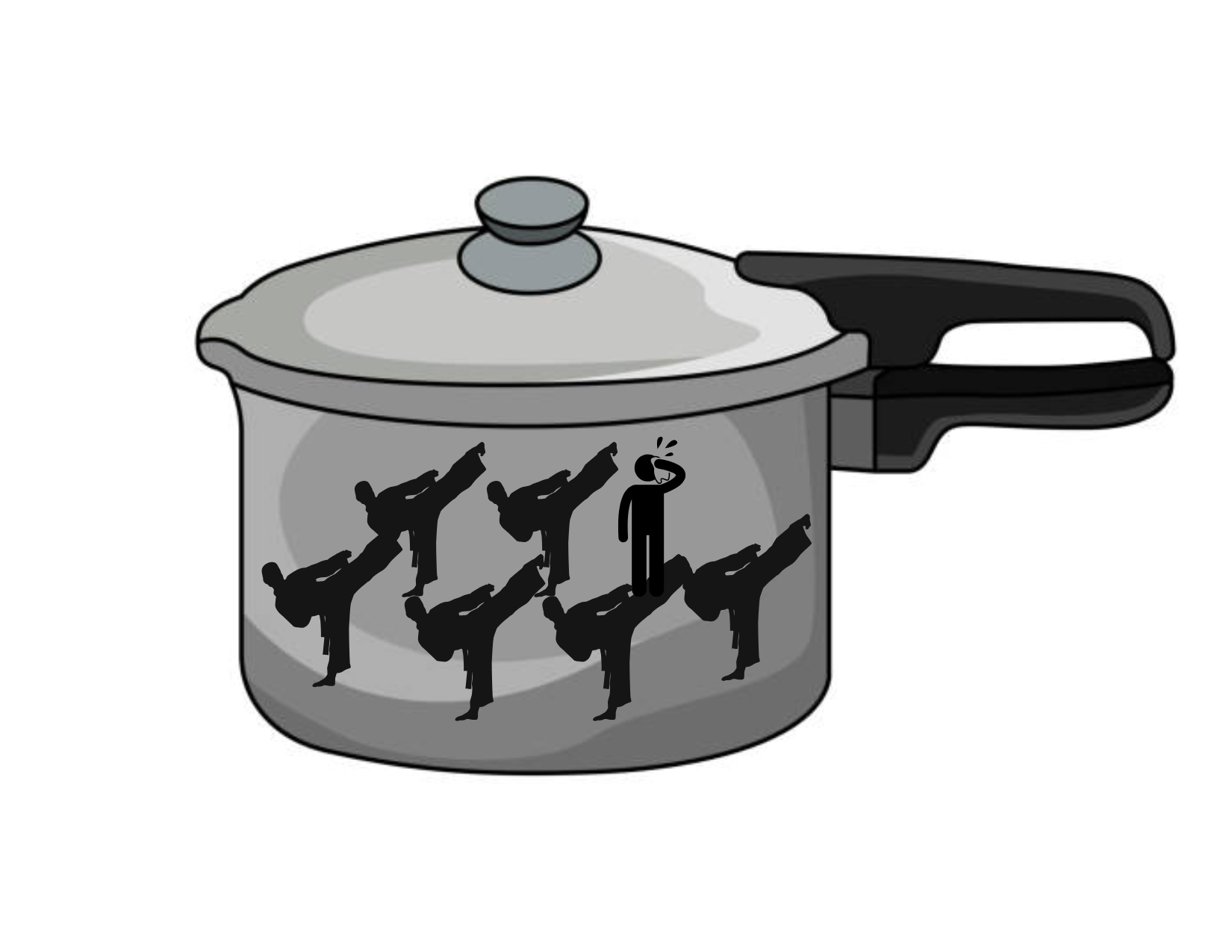
    Like in any nation, there are both responsible and strange people. We are no strangers to people “disappearing,” being unresponsive or uncooperative in the middle of important projects, which then becomes a “teaching lesson” for us young people to overcome and adapt. But this is incredibly difficult to overcome in a pressure cooker environment. We cannot be curious to explore our niches without worrying about falling behind in other stuff.

    These are the conditions that have shaped my writing. They have shaped me to choose what to write, even when I don’t know if anyone will read it; to recognize privilege; to have the courage to say this system isn’t working the way it should. On my J-Term trip to Arizona, I stood over the Grand Canyon and breathed. For the first time in months, I wasn’t overbooked. I was just burnt out—and suddenly, that felt okay. I had chosen these commitments. My hands were full and dirty, but the work wasn’t just functional. It was joyful. The Canyon’s layers reminded me of my own: research, newspaper, humanities journal, hours in the studio. The strife had deepened my appreciation for what it means to create something honest.

    The conditions of strife have created my appreciation for a sincere humanity. I see it in and am thankful to my teachers who gave me unconditional support, small chats, deep discussions, and great restaurant recommendations. My peers who live on my polar opposite but make time and effort to connect. If not for them, I would have actually become devoid of all happiness and hope, and become one of those people who complain about the impossible when they’ve never seen the other side of the earth. I would never have had the courage to write this, nor the skillset to write with an open mind.

    I’m glad we’re snowflakes. I wish everyone had the chance to be one. Because if that were true, maybe we would all learn to live a little. It matters that we persist through these troubles so that eventually all our crash-outs today will just be like minor inconveniences in the future. We keep making life harder for everyone so then more people can know the privilege of real dialogue.

    And my final confession: yes, I was a reluctant editor-in-chief. But I am always proud to sign Teresa Fang on my works—not because it’s perfect, but because it’s honest.

    Here ends my case study on my NCSSM experience. Q.E.D.

  • What the Flip was ‘A Minecraft Movie’

    What the Flip was ‘A Minecraft Movie’

    (Teresa Fang/Stentorian)

    By Teresa Fang, Stentorian Editor-in-Chief

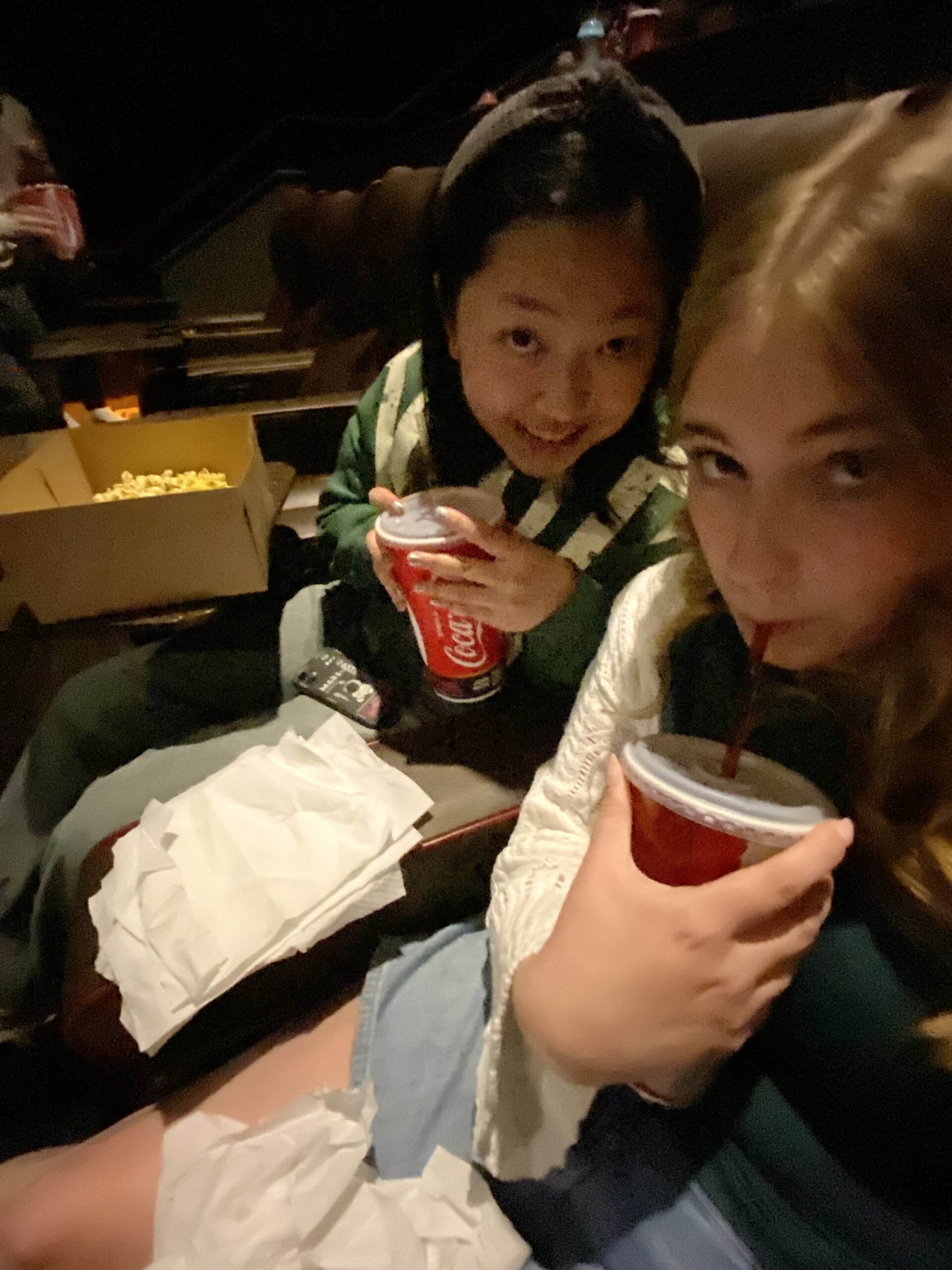
    Or should I say, what a flip it was. The Mojang logo flipping into their familiar font literally made me want to do a flip right there and then at my AMC Southpoint 17 seat in theatre 9. This has to be the first film where watching it behind a row of fidgeting eight-year-olds was an enjoyable, if not surreal, experience. 

    Everyone knows what Minecraft is. My first interactions with people who were not my classmates were through Minecraft, and my first memories of Minecraft were made with others teaching me how to build bad roller coasters. I remember that high-contrast old cobblestone texture and the Herobrine totems, and watching, if not DanTDM’s mod showcase videos, Stampylonghead’s Lovely World videos. Minecraft is meant to be learned from someone else. It is a video game, but it has always been a profoundly social experience.

    Seeing Jack Black cosplay as Steve was truly priceless; it got a few haha’s out of me from the first teasers–which I initially thought were completely satirical and AI-generated–but by the time my Instagram reels were full of “Chicken jockey”s and villager “hrrngh”s, I knew it was the official Minecraft movie. There was so much going on, I only remember the names of four characters: Garrett (Jason Momoa), Henry (Sebastian Hansen), Steve (Jack Black), and Jennifer Coolidge. The other two human characters, Natalie (Emma Myers) and Dawn (Danielle Brooks), simply did not appear in half the movie. Calling it “A” Minecraft Movie is already a suspicious act of the producers, like they knew it wouldn’t be accepted as canon by the 16-year-old fandom. 

    So, when I saw “A Minecraft Movie” with a couple of friends last month, if anything, it was weird. As a theatre experience, I give it a 10/10. Being a young person today is truly exhilarating and rewarding (I regard this movie as a fitting reward for my incredibly difficult second semester of senior year), and this movie is proof that social media can be a positive influence, or at least a social phenomenon. We like this movie so much, it scores 86% on the Popcornmeter, but critics hate it at a 47% on the Tomatometer. This movie is so bad that it’s good. I promised not to throw popcorn, but I had a fun time anyway—probably because everybody there subconsciously knew it was so bad, yet couldn’t stop repeating and erupting in joy at particular phrases from the trailers that we hear so much on social media.

    But as a film, I give it a 2/10. The first 20 minutes are basically the whole movie; the protagonists are introduced in a random order, every trope and cheap emotional trick is there, every meme is there, every character is summarized in terms of their favorite things, and Jack Black’s constant narration is pretty much the entire old Minecraft tutorial. The exposition is so long that the protagonists are basically thrown into the Minecraft world from the real world and expected to agree that all the mechanics are dumb and to just roll with it. If that wasn’t the easiest way to introduce a possibly clueless audience to Minecraft, then this was just disrespectful to the game. 

    To address the elephant in the room, the most basic decision to make this movie live-action was a strange one, albeit ambitious and executed rather poorly. The cinematography was poor and predictable with green screen scenes that often broke immersion, styrofoamy or clothy looking textures, villagers from uncanny valley, and more… which reminds me that Jennifer Coolidge’s character was named Vice Principle Marlene, because she had a funny but cleverly-written side plot romance with a villager she hit with her Jeep Grand Cherokee.

    I will also list absurd “creative” additions in “A Minecraft Movie.” Henry’s main weapon is a tater tot gun, and tater tots do not exist in a game built of cubes. Jack Black has only one ender pearl but has two incredibly rare elytra. There is no blue portal, no MCU tesseract-looking thing, and definitely not flying shoes (or flying shoes on an iron golem). Half the mobs of the evil piglin army are from other Minecraft games (which are not the OG sandbox one). The creepers are dysfunctional, and the creeper farm having a minecart running through it is plain nonsensical. 

    The plot—a classic MacGuffin chase for a magical item—was predictable from the start, but would have worked better if the characters had any depth to their personalities and motives. What’s sadder is that Minecraft itself already has an exceptional lore (I read the entire prose after defeating the ender dragon in my personal survival world, and it is so inspiring) built out of the developers’ and audience’s own creative interactions. 

    For a movie about the game that told its players “the universe said I love you,” it severely undershoots the love of its fanbase and the extent of their nostalgia. For that, “A Minecraft Movie” failed to impress.

  • Sunrise on the reaping: a review

    Sunrise on the reaping: a review

    (Barnes and Noble)

    By Louisa Weinard, Stentorian Staff Writer

    On March 18th, 2025, acclaimed author Suzanne Collins published Sunrise On The Reaping, the second prequel to her iconic Hunger Games trilogy. This tale, which follows the thrilling journey of Katniss and Peeta’s mentor, Haymitch Abernathy, was met with great fanfare from the dystopian fantasy world. Collins’ new novel rode the wave of momentum from the popular film adaptation of The Ballad of Songbirds and Snakes and quickly became a worldwide success with more than 1.5 million copies sold, as found by Scholastic. After buying, readers were not disappointed. Sunrise on the Reaping delivers an action-packed retelling of the 50th Hunger Games, with Abernathy presented as an unconventional tribute who creates close connections between familiar faces and newly introduced characters and struggles to survive the cruelties of the corrupt nation of Panem. The fast-paced story earned a 4.65/5 rating on Goodreads with raving reviews, an impressive feat. Even though the ending of Abernathy’s games has already been spoiled in the original trilogy, the character development and intricate plotlines leave readers captivated by the connections between past and present worlds, with many going to popular social media sites to share their thoughts. Popular theories and new insights on the original Hunger Games trilogy are trending all over apps like TikTok and Instagram, and for good reason. Collins is known for using her clever and meaningful writing to reflect pressing real-world issues. In Sunrise on the Reaping, she explores the dangers of propaganda and media manipulation, which are becoming increasingly apparent in the polarizing nature of the United States. At just about four hundred pages, Collins’ new book is sure to zoom by for readers, but its unique perspective is likely to linger. A film adaptation is already in the works, and will be making its way to theaters in August 2026 to bring Haymitch’s story to life!

  • Mediocrity is failure. And you are not mediocre.

    Mediocrity is failure. And you are not mediocre.

    (Teresa Fang/Stentorian)

    By Teresa Fang, Stentorian Editor-in-Chief

    “I’ve set myself to become the King of the Pirates, and if I die trying, then at least I tried” is one of the many great lines from “One Piece” (1999-present) I think about often. Monkey D. Luffy, a silly but optimistic boy with the ability to stretch his body like rubber, accurately captures a rather fantastical but current perspective on attaining excellence in life—if I do not excel, then why would I pursue? I would rather be unknowing than know failure.

    A few weeks ago, I received my college decisions. Now, I’ve never been the social butterfly winner of everything great and holy, but I consider myself fairly well-rounded as an applicant. Yet, when I started opening the letters, I realized that the feeling of satisfaction was very rare. In other words, the results were unexpectedly expected.

    I was mediocre.

    What does it mean to be mediocre? Merriam-Webster defines mediocre as “of moderate or low quality, value, ability, or performance: ordinary, so-so.” It already sucks to be called “so-so,” but even further I’d argue that the modern use of mediocrity is much simpler (and more brutal). Mediocrity is the failure to excel.

    There’s nothing wrong with being mediocre. The only problem was that my computer screen did not match my ego and pride. I felt humiliated. Let down by none other than myself. By living this day alone, I knew that other people would also be doing this, and they would ask me in return. It is embarrassing to be reluctant to reply.

    I went on spring break with my head hanging low. Upset at myself, not for being mediocre, but for feeling embarrassed to be mediocre. Is my self-esteem this fragile? That I can’t even tolerate the possibility that I may not excel at everything I do? So pathetic.

    I am pathetic, but so are most people. It’s our nature to excel because it feels good. Being handed a blue ribbon warrants us a little more pep in our step. The pleasure and glee are multiplied when we post and promote these ribbons to the rest of the world through likes, comments, and shares.

    There’s nothing wrong with being mediocre. The only problem is that we feel there is nothing worthy of celebrating in mediocrity. There’s nothing impressive about learning your way around using public transportation. Seeing zero assignments to do on Canvas. Jack Black saying “chicken jockey.” If it’s not worth celebrating, then it’s not special.

    In the same way judges rule people guilty or innocent, we deliver our own verdicts as mediocre or exceptional. In a time where anyone can easily leave a mark on the world through social media posts and 10-second shorts, being mediocre is almost like a crime (in the least flattering, least interesting way). We perceive being mediocre as an either-or option.

    The minute our binary perspectives designated ourselves as mediocre, we find ourselves stuck between judgment and self-consciousness. What value do I have if I can’t get out of here? If I’m anything but exceptional?

    Why would we be so stringent with our happiness? Leisure is frowned upon, and failure calls for punishment. We may not all be content if we had a “the great” attached to the end of our names, but there is just a big difference between being recognized and being “great-less.” It is appealing to be recognized, but there is also so much freedom abandoned in settling for mediocrity. Do we always have to excel to have value? Have we regressed enough to times when not attending an Ivy for undergrad is embarrassing rather than endearing?

    There’s nothing wrong with being mediocre. The only problem is that we believe mediocrity to be a problem. What if we expanded our narrow, binary perspective across a scale, into a spectrum? What if I valued the result not by my performance in comparison to others, but by its influence on my outlook on life? Indeed, the “oh, Yale!” and “where’s that college again?” still exist on this scale—but not necessarily at the endpoints. The value of my life is not evaluated by the decisions, but by the process. Was it a meaningful process? Did it give me joy and sometimes misery? Yes, and even if I could have done some things differently, my accomplishments are valuable experiences.

    Hence, let’s redefine mediocrity as not a failure to excel, but just one experience of many on a spectrum of a set standard. Mediocrity is not a shameful measure of performance, but a measure of meaningfulness. That way, even a poor performance, which you can consider a mediocre experience, can be a learning opportunity. These learning opportunities drive us to discover the world and society, inviting new discoveries about the world and, perhaps, ourselves. 

    What if our drive to be not mediocre is just a purpose to excel? What if we didn’t have a purpose? What if I applied to college for fun? What if all I went through in the November and December grind was to enjoy the feeling of that grind being over? What if I could laugh, be carefree, and celebrate the one single instance of confetti filling my screen? There is so much joy, happiness, satisfaction, and freedom in these experiences. 

    There is so much untouched potential in mediocrity, to be free of judgment and simply live for the experience. Rather than saying the generic “don’t be afraid of failure,” how about we recognize it as “risk failure” instead? Embrace our mediocrity, and celebrate just being able to be here.

    At the end of the day, I realize that I’d rather know failure than be unknowing.

  • thanks Ben Bridgers

    thanks Ben Bridgers

    (Teresa Fang/Stentorian)

    By Teresa Fang, Stentorian Editor-in-Chief

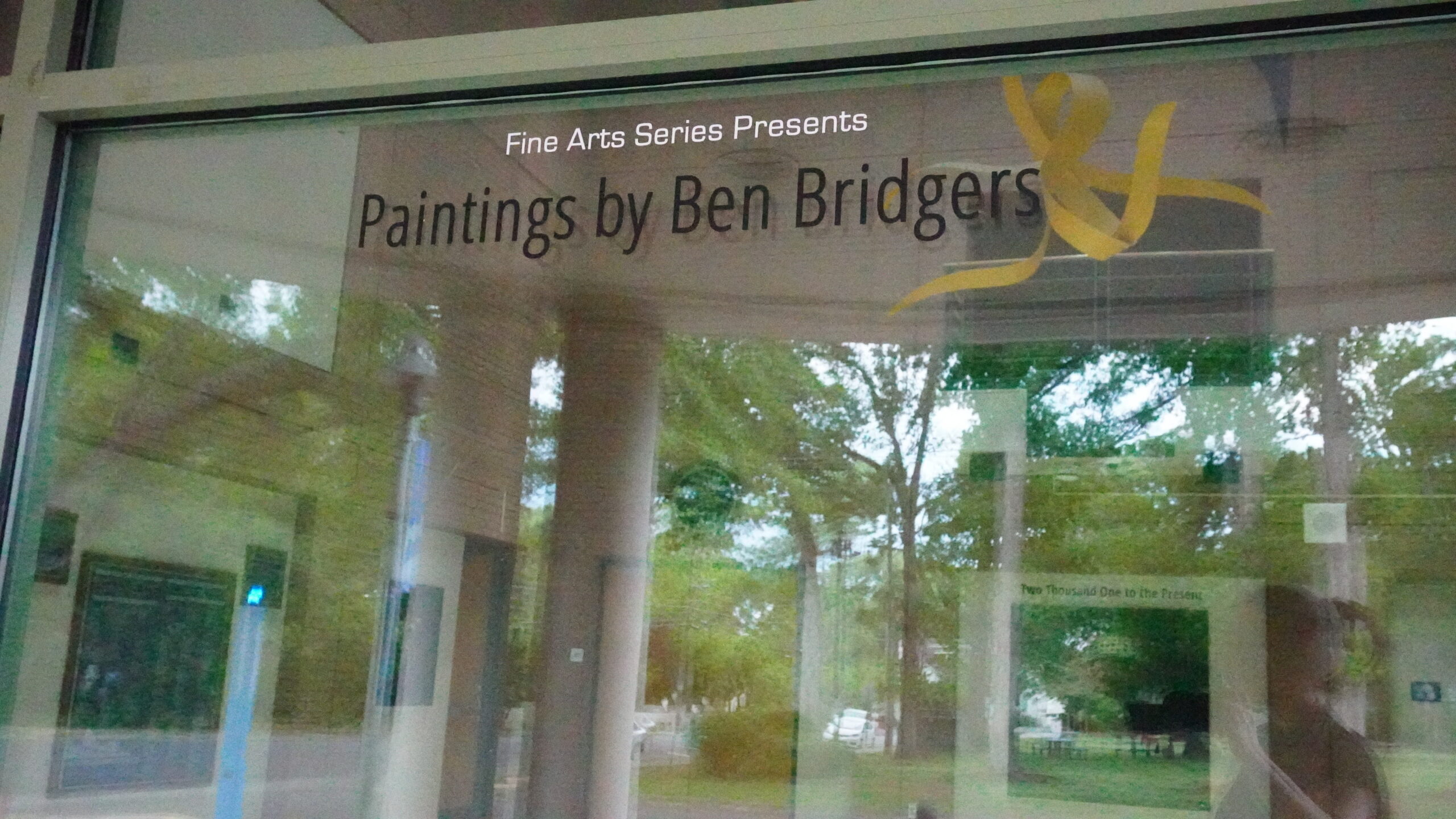
    I went to Ben Bridger’s exhibit in ETC lobby on April 25, and after checking out his works, I talked extensively with the artist about his process of making art from sketches to varnish, and a little about things I had heard before, read about, but never did, like mixing paint or stretching canvases. I had observed from his charcoal drawings that they were more abstract, and even when they weren’t inherently in the shape of any discernable object, they looked like familiar objects. On the other hand, his paintings felt like whimsical little furry creatures shrouded in darkness. It was cool to see the composition of things that the human brain thought up of and finding out that they somehow worked when executed like this.

    The darkness of the black paint impressed me, and the varnish on the entire painting was so reflective that it served as a sort of mirror as I waved my hands in front of it. It revealed the smoothness of the layers of paint, and it was like the painting was created on just one layer. The fur on the creatures was one with the black background itself; the white fur trailed into the abyss like the creature had simultaneously materialized and crawled out of it. I wondered if this effect was created using a fine fan brush, one so flexible if I ran a finger over the bristles, the bristles would bend a full 90 degrees.

    So, I asked Ben Bridgers about it. He replied it was not pure black, and shared a recipe for the black: crimson alzarin, ultramarine blue, a bit of something something yellow, a bit of some other two colors… he had multiple recipes for different toned blacks. I respect that mightily. I told him I preferred prussian blue and crimson red hue myself, and we compared recipes briefly. Color theory became more real as I imagined a palette knife digging into turds of color and producing a black splat on a piece of palette paper. And I had never met someone who mixed their own paints before, and as much as I would like to try mixing white lead powder, for starters it’d be hard to find some legal sellers, and if I did acquire some, my heart does not lie so much in the processes before paint hits the canvas. 

    But for Bridgers, that proccess was evidently very important. He made his own canvases his way, from start to finish, at around five or six per 0.5-1.5 years  at a time in his studio. My initial thought was how big his studio had to be, but he alluded to so many trips outside his studio that I had to readjust my thoughts. Perhaps his studio was the whole world; he had traveled abroad to Italy during his time at the University of Georgia and sketched people, parks, animals, and trees on small pieces of paper to bring back to his studio and inspire his works. I, too, find a particular cuteness in making art on tiny things, which makes trips outside like this precious condensations of creativity. But still, I am not one with the patience to stretch canvases, cover it with rabbit skin glue, wait three months, then do some extra stuff before being able to paint on it.

    I am impressionable though, and I will scratch “handmixed paint” off my bucket list sometime soon. One thing that will not come to me soon, however, is an eye for abstractness. Bridgers calmly said the eye to come up with new ideas for abstract work takes time and practice, and even he brings four-ish of his works with him to people-watching trips, just to remember his style and have a starting point for the final work. I look at this man, bald, maybe in his 40’s, and I think of his classical art training and years of teaching art to college students. I think of my tendency to not sit still, especially in foundational, technical art courses with private instructors. I think back to my paintings, each one of them based off a photo or multiple photos clipped together, and I cringe at my inability to be original.

    Maybe that is just pessimism and strict standards. It is normal, if not encouraged, to be inspired by other works in life–natural and artificial. And it is normal for an 18-year-old to have less art experience as a middle-aged experienced artist–maybe this summer I will sit myself down and finally practice skeletal anatomy, which was a promise to myself made years before. As I prepared to leave this exhibit, stealing the last of the tangerines from the snacks table of course, I hear Bridgers talking about him working on multiple paintings at once. And so, to my 26 paintings blocked out in thin burnt umber but rotting in the corner of my studio space, I’m inspired once again to throw upon each a stroke of color—or prussian blue black—before I leave them alone again.

  • March Madness 2025 Tips Off

    By Preston Mullins, Stentorian Staff Writer

    The 2024-25 Division I college basketball season is entering its thrilling conclusion and the tournament brackets for the men’s and women’s teams are set! There is a reason that many sports fans consider this to be the best time of the year. Not only are we treated to the most exciting tournament in sports, but viewers get extremely invested in the action as they fill out brackets with their predictions for how the games will play out. March always brings the madness and upsets are prevalent, particularly in the tournament’s early rounds. That’s what makes the whole competition so exciting. The action will continue through the rest of the month, packed full of excitement and memorable moments all the way until a champion is crowned in early April.

     Every year, millions of brackets are filled out in hopes of being the first one ever to be perfect and pick every game correctly. Each person knows in their heart that a perfect bracket is almost impossible, but the dream is reborn each year with every new tournament. In reality, the odds of picking all games correctly are 1 in 9.2 quintillion. That’s an uphill battle that will almost certainly never be won. Nevertheless, brackets continue to be filled, not only for the pursuit of perfection but also for the fun of competing against friends and family and envisioning all of the possible outcomes. 

    This year, the Men’s Final Four will take place in San Antonio, Texas, and the Women’s Final Four will be held in Tampa Bay, Florida. The top four overall seeds (one seeds) in the men’s tournament are Auburn, Duke, Florida, and Houston, while the top four in the women’s bracket are UCLA, South Carolina, Southern California, and Texas. Choosing one of these teams as the national champion is a safe choice for a bracket picker. Don’t count out some of the lower seeds though, there are lots of high-quality teams seeded lower in the bracket as well. 

    The tournament contains a diverse selection of teams with a wide range of unique goals. Some teams are ecstatic just to qualify for the tournament, others hope for a run to the Sweet 16 or Elite 8, and still more aspire to reach the Final Four and capture a National Championship. One thing that every team shares is their drive to compete and win in the tournament and that is what makes it so entertaining to watch.

    I have always been one of those previously mentioned sports fans for whom this is the best time of the year. Tournament season is very exciting and I have a lot of fun every year filling out my bracket and watching the madness unfold. Doing this with my friends and family over the years has created countless happy memories, and I hope that readers will have a similar experience this year and in the future. So what are you waiting for? Get out there, create your bracket, and enjoy the show!

  • The Ramifications of The Return To An Old Title IX Policy

    By Marcellus Day, Stentorian Staff Writer

    Title IX is a famous, yet misunderstood policy on our campus. Everyone knows about it; we joke about it in the hallway and we half read then delete the emails about it. However, our last email about Title IX was a notification from our Title IX Coordinator, JAshe, that NCSSM has updated their Title IX procedures in compliance with federal standards, but what changed and what does that change mean for students?

    On June 23, 1972 the first ever Title IX policy was published with the main goal of of ending sex discrimination in federally funded eduaction progams and activities. However, the policy has come under attack, being criticized for extending beyond its original intentions and being unnecessary altogether; Title IX cannot be found on the Department of Education website as of April 15th, 2025. This has led to a variety of legal challenges to the policy and changes, but here’s what you need to know about our current changes.

    NCSSM’s Title IX no longer provides protections for LGBTQ+ students. This change is in compliance with Trump’s Executive Order “Defending Women From Gender Ideology Extremism and Restoring Biological Truth To The Federal Government” and recent rulings from the Federal Courts. Here is the direct statement from our Title IX Office in the email sent on March 27th: 

    “Incidents of gender based harassment and discrimination that impact LGBTQ+ students can be resolved through the Code of Conduct procedures separate from the Title IX process; this includes discrimination based on gender identity, gender expression, and sexual orientation.”

    Effectively, Title IX policies will no longer apply to students who are seeking protections for LGBTQ+ related discrimination. Instead, students in those situations can receive support from the Code of Conduct. However, discrimination is not a specific major or minor violation, so the discrimination would have to be in line with some other outlined violation such as physical/sexual violence although verbal abuse is unclear. While some informal resolutions may take place, this change will prevent students from many protections.

    However, these guidelines are not clear. As of April 15th, 2025 our nondiscrimination policy still seems to define gender, gender identity, and gender expression and imply that they are still protected by Title IX, although this is not the case. Further, developments are being watched as our system is needlessly complex and know that if you or someone you know are experiencing discrimination or harassment you can still reach out to a trusted NCSSM employee for support.