My favorite thing about NCSSM is our advocacy. We are megaphones for change and inspiration, on both a community and personal level. Despite this, very little is known about our own history when it comes to political advocacy, for both issues on and off campus. Many do not know about the amazing student advocacy that led to the creation of our Safe Officers or about our advocacy for pressing issues in the state of North Carolina. Why is that? Why is this history, as rich and diverse as it is, lost? The answer is multifaceted and complex, but there is one glaring issue: we, the students, fail to preserve our own history. This is due to several reasons: the workload of classes leaves very little time for both advocacy and preservation, and every year around half of our student body graduates and takes their history with them.
Regardless, for a variety of reasons, our student body has no established means of carrying political history and legacy. However, we have the power to change that. We have the power, as the student body, to maintain our own history so that it may be continued and inspire the Unicorns that come after us. The answer to our problem is storytelling. Seniors, tell the story of our political advocacy to our Juniors and work to pass on our political advocacy. Juniors, absorb our stories so that you may pass them on, take up passed-down advocacy, and work to do your own. Nobody is going to preserve our political history but us, so we must preserve it through storytelling.
On June 5,2024, the High Court Division of the Supreme Court of Bangladesh (responsible for exercising jurisdiction in civil and criminal matters) reinstated the job quota that reserves a large portion of jobs for the descendants of freedom fighters. This was subsequently met with backlash, with six universities peacefully protesting against the quota ruling. The quota system in Bangladesh has been a contentious topic for several years and has just spiked in controversy due to civilians’ recent protests in the past couple of months.
This controversial system, according to an article published by The Hindu Bureau, declares that roughly 30 percent of government jobs will be reserved for the children and grandchildren of freedom fighters (or, more specifically, the soldiers who fought for the nation’s independence in the Bangladesh Liberation War). Previously abolished in 2018 following similar protests, the quota system was seen as unjust and discriminatory with numerous citizens believing that several civilians would be placed at a disadvantage due to their “not-so-favorable lineage.”
After the holiday season, several clashes between police officers and students took place, mostly on July 10-17. Blockades were placed, officers were positioned to keep students out, and universities were closed.
But, the most notable incident that took place occurred on July 18-19, when the police clashed with BRAC University students on the streets of Badda, as student protestors allegedly vandalized a police box and torched multiple motorcycles in Rampura as the violence spilled over to the Rampura Bridge.
This incident quickly escalated with many officials retaliating with lethal weapons. Police officers started to use tear gas, rubber bullets, and even live ammunition. Multiple students were harmed as a result, with at least 17 reported deaths resulting in the aftermath according to a report published on Al Jazeera‘s Website.
Videos and documented reports have surfaced indicating that officers used firearms, particularly an AK-pattern assault rifle, during the height of the protests. Many human rights organizations (such as Amnesty International, a human rights non-governmental organization) deemed these actions as highly inappropriate and dangerous given the context of these situations.
Emphasizing that the actions of the security forces were alarming and violated basic human rights, United Nations’ chief Volker Turk reacted to these events by calling for restraint and disapproving of the violence taken against the university’s students.
Soon after the event, law enforcement filed cases against hundreds of protestors, with documents detailing arrests and legal actions. The authorities inflicted several communication restrictions, targeting internet and social media access to control the spread of information and prevent the coordination of continued protests.
This action was condemned by many journalists and news outlets, saying that this can produce harmful consequences. When people aren’t able to interact with each other freely, they may feel isolated and oppressed, which can spark more fire in protestors and thus lead to more aggressive demonstrations. Moreover, timely communication is necessary for coordinating responses to emergencies, like medical needs for injured individuals.
While there have been many discussions about revising or even abolishing the quota system in Bangladesh, the federal government has not expressed any intention to eradicate (or lessen the effects) of the quota system.
Ultimately, the protests surrounding the Bangladesh quota system are dynamic and have resulted in a multitude of casualties. These demonstrations show no sign of calming down, and can very well lead to a more drastic outcome. One can only hope that an agreement is reached between the protestors and the federal government, so that these events reduce in its brutality and magnitude.
The Class of 2024 seniors were accepted to over 49 colleges in the United States to the Class of 2028 in the first admissions cycle since the fall of affirmative action prohibited colleges from considering race during the process.
According to Dean of Counseling Lori Newnam, NCSSM Counseling Services worked with seniors from May 1-6 to complete their final transcript requests. After May 1, seniors self-reported their decisions to the department, which has released data on the colleges the class of 2024 committed to for The Stentorian. As of May 14, 2024, college commitment data was available for 289 out of the total 317 graduating seniors, including early decision, early action, and regular decision commitments:
college
city
state
final choice
Barnard College
New York
NY
1
Bates College
Lewiston
ME
1
Boston College
Chestnut Hill
MA
1
Boston University
Boston
MA
1
Brown University
Providence
RI
1
California Institute of Technology
Pasadena
CA
1
Carnegie Mellon University
Pittsburgh
PA
1
Columbia University in the City of New York
New York
NY
2
Cornell University
Ithaca
NY
2
Davidson College
Davidson
NC
2
Drexel University
Philadelphia
PA
1
Duke University
Durham
NC
17
Elizabethtown College
Elizabethtown
PA
1
Florida Atlantic University
Boca Raton
FL
1
Georgetown University
Washington
DC
1
Georgia Institute of Technology-Main Campus
Atlanta
GA
6
Harvard University
Cambridge
MA
3
Howard University
Washington
DC
1
Johns Hopkins University
Baltimore
MD
1
Massachusetts Institute of Technology
Cambridge
MA
5
Middlebury College
Middlebury
VT
1
New York University
New York
NY
1
North Carolina State University at Raleigh
Raleigh
NC
39
Northwestern University
Evanston
IL
1
Princeton University
Princeton
NJ
1
Rice University
Houston
TX
1
Saint Joseph’s University
Philadelphia
PA
1
St Olaf College
Northfield
MN
1
Stanford University
Stanford
CA
3
Swarthmore College
Swarthmore
PA
1
Tufts University
Medford
MA
1
University of California-Berkeley
Berkeley
CA
1
University of Chicago
Chicago
IL
1
University of Delaware
Newark
DE
1
University of Florida
Gainesville
FL
1
University of Illinois at Urbana-Champaign
Champaign
IL
1
University of Michigan-Ann Arbor
Ann Arbor
MI
1
University of North Carolina at Chapel Hill
Chapel Hill
NC
163
University of North Carolina at Charlotte
Charlotte
NC
3
University of North Carolina Wilmington
Wilmington
NC
1
University of Pennsylvania
Philadelphia
PA
5
University of Pittsburgh-Pittsburgh Campus
Pittsburgh
PA
1
University of Southern California
Los Angeles
CA
1
University of Toledo
Toledo
OH
1
Vanderbilt University
Nashville
TN
1
Wake Forest University
Winston-Salem
NC
1
Washington and Lee University
Lexington
VA
1
Western Carolina University
Cullowhee
NC
1
Yale University
New Haven
CT
3
Data acquired by The Stentorian from Counseling Services. (The Stentorian)
Counseling Services is still in the midst of processing acceptance data, and according to Program Assistant Pam Oxendine, the full data sheet will be released in June.
78.5% of graduating seniors staying in-state
Compared to last year, more seniors are staying in-state than going out-of-state, making up 78.8% of the graduating class. The two states with the greatest number of graduating seniors are Massachusetts and Pennsylvania, at 3.81% (11 students) each out of the total reporting seniors.
This year, the University of North Carolina-Chapel Hill (UNC-CH) received a total of 163 committed NCSSM students, making up 56.4% of the total reporting seniors. In 2023, there were 169 commits. This marks the first decrease in committed UNC-CH students since 2021, the first year of in-person schooling after the pandemic. As the number of total applications to UNC-CH has been increasing by a steady 5.75% every year, it would not be a surprise to see more applications to UNC-CH than ever before.
Ivy league, MIT, and Stanford commits
Upending decades of legal precedents, the Supreme Court ruled in June 2023 that race-conscious college admissions programs at Harvard University and UNC-CH are unconstitutional, causing higher-education institutions to shift to race-neutral policies. NCSSM students going to Ivy League, MIT, and Stanford made up 7.61% of all graduating seniors.
College
# Admits in 2024
Av. # Admits since 2020
avg. # accepted since 2020
avg. % increase in applications since 2020
Harvard
3
2.75
4.75
5.12%
UPenn
5
2.5
6
15.1%
Princeton
1
1
3.5
13.4%
Columbia
2
5
9
18.9%
Cornell
2
4
10
12.2%
Brown
1
1.5
3.25
21.8%
Dartmouth
0
0.5
2
21.9%
MIT
5
5.5
6.25
9.84%
Stanford
3
1.25
3
8.71%
Data acquired by The Stentorian from Counseling Services and Naviance. (The Stentorian).
In the wake of the fall of affirmative action and the first cycle of some applicants admitted to the first test-required policies since 2020, the statistics for NCSSM graduating classes is not unusually different. Counseling Services did not release the statistics for race and ethnicity data (nor gender and socioeconomic details) for the graduating class to each college.
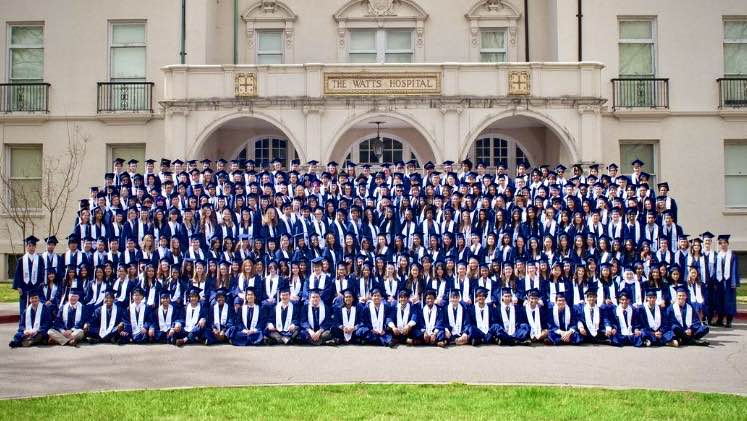
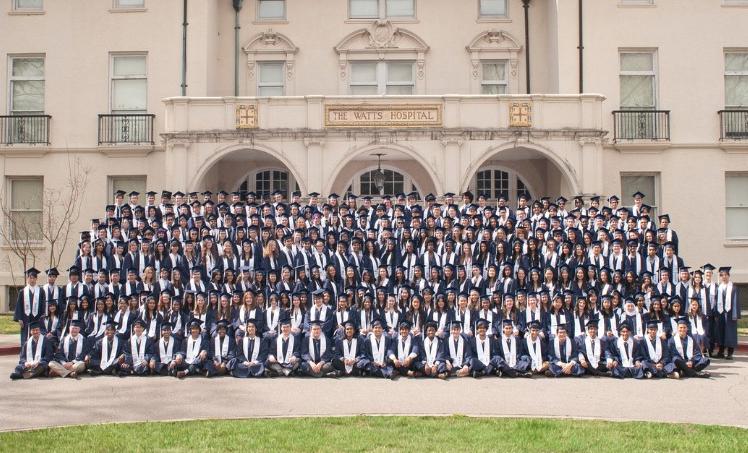
On May 25, 2024, seniors of the Class of 2024 graduated at the North Carolina School of Science and Math in Durham after receiving their diplomas on what Chancellor Roberts described as a “beautiful day.”
Other speakers included Vice Chancellor for Student Life and Chief Campus Officer Terry Lynch, Gene Davis of the UNC Board of Governors, Provost and Vice Chancellor for Academic Programs Katie O’Connor, student speaker Lucia Paulsen ’24, Student Body President Steaven Ramírez Serrano ’24, Vice Chair of the Board of Trustees and President of the Sloan Foundation Adam Falk ’83, and Chair of the Board of Trustees Stephanie M. Bass ’91.
As Counseling Services released to The Stentorian two weeks ago, out of the 289 seniors who reported their final college decisions out of the total 317 graduating seniors, the Class of 2024 represented 49 colleges across the United States. More information and statistics on the Class of 2024’s college decisions can be viewed on stentorianncssm.wordpress.com.
In this broadcast, The Stentorian reporter Teresa Fang interviews Lilianna Heffner ’25, Anna Tricomi ’25, Dr. Heather Mallory, Lucia Paulsen ’24, Riziki Chabeda ’24, May Ming ’24, Cole Thomas ’24 (and his grandmas), Eva Lou ’24, John Jahn ’24, Asa Zengerle ’25, Israel James ’25, Taylor Ellis ’25, and Ms. Maria Mileti.
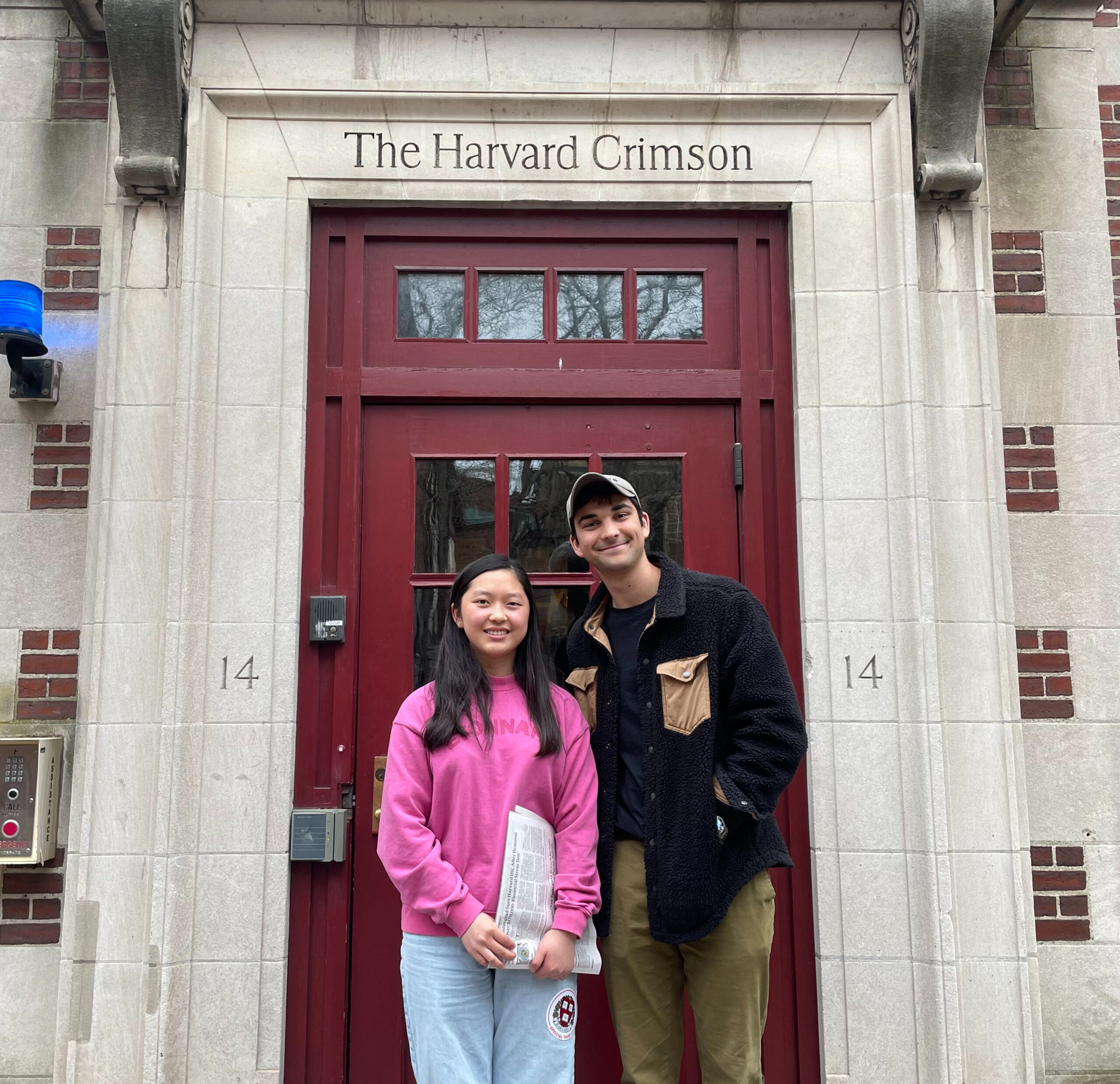
At The Harvard Crimson building on 14 Plympton St., Sellers Hill ’20 and Teresa Fang ’25, former and upcoming editors-in-chief of The Stentorian. (Teresa Fang/The Stentorian)
‘20 alum Sellers Hill’s rise to the 151st president of The Harvard Crimson reflects a student journalist’s take on the student journalism world and an age of renewal. He started as an editor for The Stentorian.
Several thousand student journalists – whether entering accidentally or not, in high school or collegiate – continue to serve their school newspapers. An unlikely base for continued journalism can arrive from unlikely places, like a STEM school called NCSSM. Although the transition from high school journalism to a college student newspaper is “certainly different,” Sellers Hill ‘20 considers his love of writing and engagement with The Harvard Crimson to his time at NCSSM.
Journalism through The Stentorian
Sellers Hill joined NCSSM with a goal of being an electrical or mechanical engineer but learned to maximize his time and opportunities. He eventually joined RChem, loved American Studies, became a senior senator, and taught himself how to be a journalist through The Stentorian.
“When I was in Science and Math, I don’t think a lot of people saw themselves as being interested in journalism. If people actually tried it, they would find that they were a lot more into it,” Hill said in an interview with The Stentorian in February. “There’s so many extracurriculars and classes that someone dedicating themselves to just one thing is not even possible.”
As the newspaper advisor and instructor of engineering John Kirk reminisced, the 2019-2020 Stentorian editorial board Hill was a part of was the closest to staying on top of monthly publishing quotas than any other year at the present… if not for the pandemic turning the campus remote midyear. However, especially with COVID, a written record of the past remains ever important as the goal of any student newspaper.
The Stentorian is no exception. “I think an important role of student journalism is to be a check on institutions and gauge how students are doing, feeling, and creating a record of that.” Hill said. “That’s the kind of most important role The Stentorian could have at Science and Math: the institutional memory.”
… and advancing to The Harvard Crimson
After arriving at Harvard College, Hill immediately joined the newspaper, where he spent the next two years writing over 100 stories as a staff writer and a reviewer for the newspaper’s readership analytics. This experience was not too different from his current responsibilities as president.
“The job is kind of a bit of everything. You’re doing a little bit of coverage. You’re doing a little bit of editorial work. [The Crimson] is a business, and now you’re dealing with business.” Hill said.
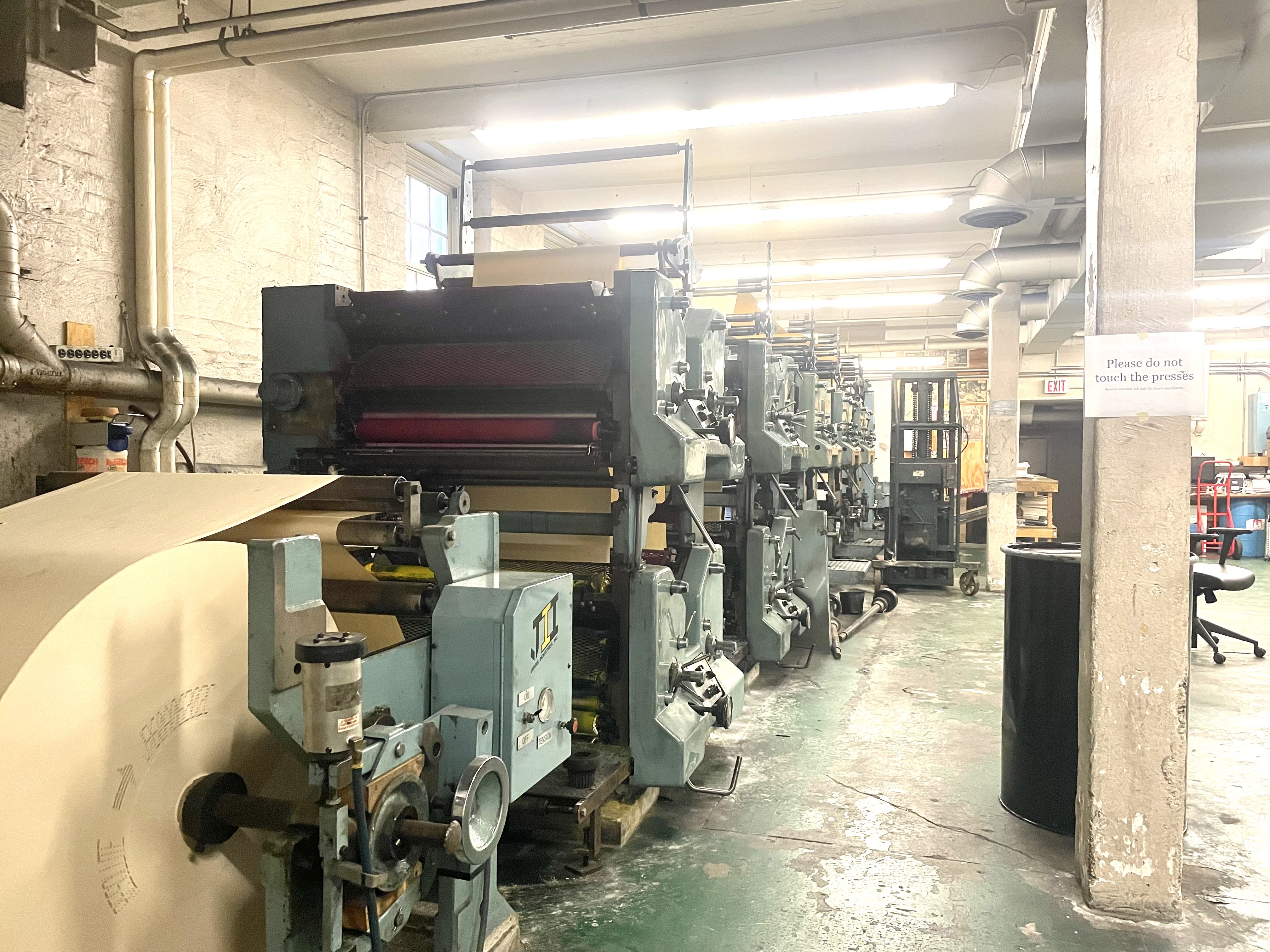
In the office’s basement, The Harvard Crimson’s old printing presses stopped rolling in 2020. (Teresa Fang/The Stentorian)
In a tour of The Crimson’s small office building hidden behind construction, he showed The Stentorian the old printing presses, which had been in use until the pandemic, with rollers still covered in ink in the 2000s-esque basement. Then, Sellers and his staff completely renewed the paper as a business. Now, they print with the help of local printing presses and are supported by external donations and advertisements.
“Over a few months, I had to understand our revenue streams, framework for making certain business calls, certain expenses, and things like that. You just kind of get thrown into it and try to learn as quickly as you can, knowing you’re probably going to make some mistakes here and there and that’s okay.” Hill said, shrugging nonchalantly.
Spending about 60-90 hours a week at The Crimson’s small office building hidden behind construction, Hill admits it is very hard to be a student. As an organic chemistry major, Hill has learned to adapt to a “brutal” work-life balance, but not without spending every day honing his sense of judgment in handling multiple tasks. But unlike at NCSSM, “you didn’t necessarily have to switch between multiple interests like research and journalism.” Students can do both.
After nearly a year as president of The Crimson, Hill offered some pieces of advice for The Stentorian and NCSSM students. With any published article or controversial/conflicted topics, the relationship between the editorial board and its interviewees and readers is one of trust and clear communication.
“When people speak to us, they know that we’re not going to turn around and say that they said something else,” Hill said. “It’s hard to get that reputation back once you’ve lost it. You have to assure your readership through years of quality journalism to show you can be trusted with things like that.”
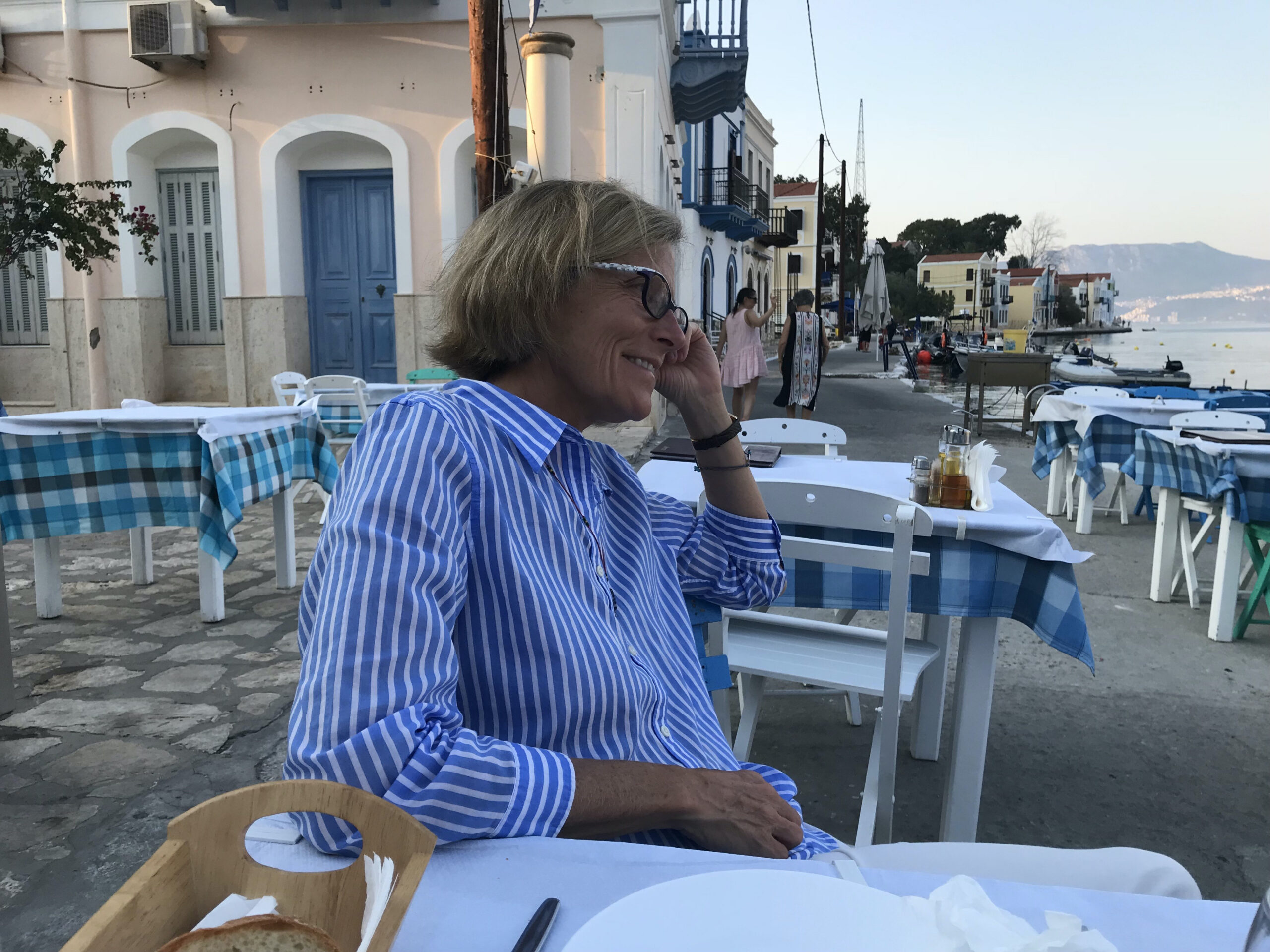
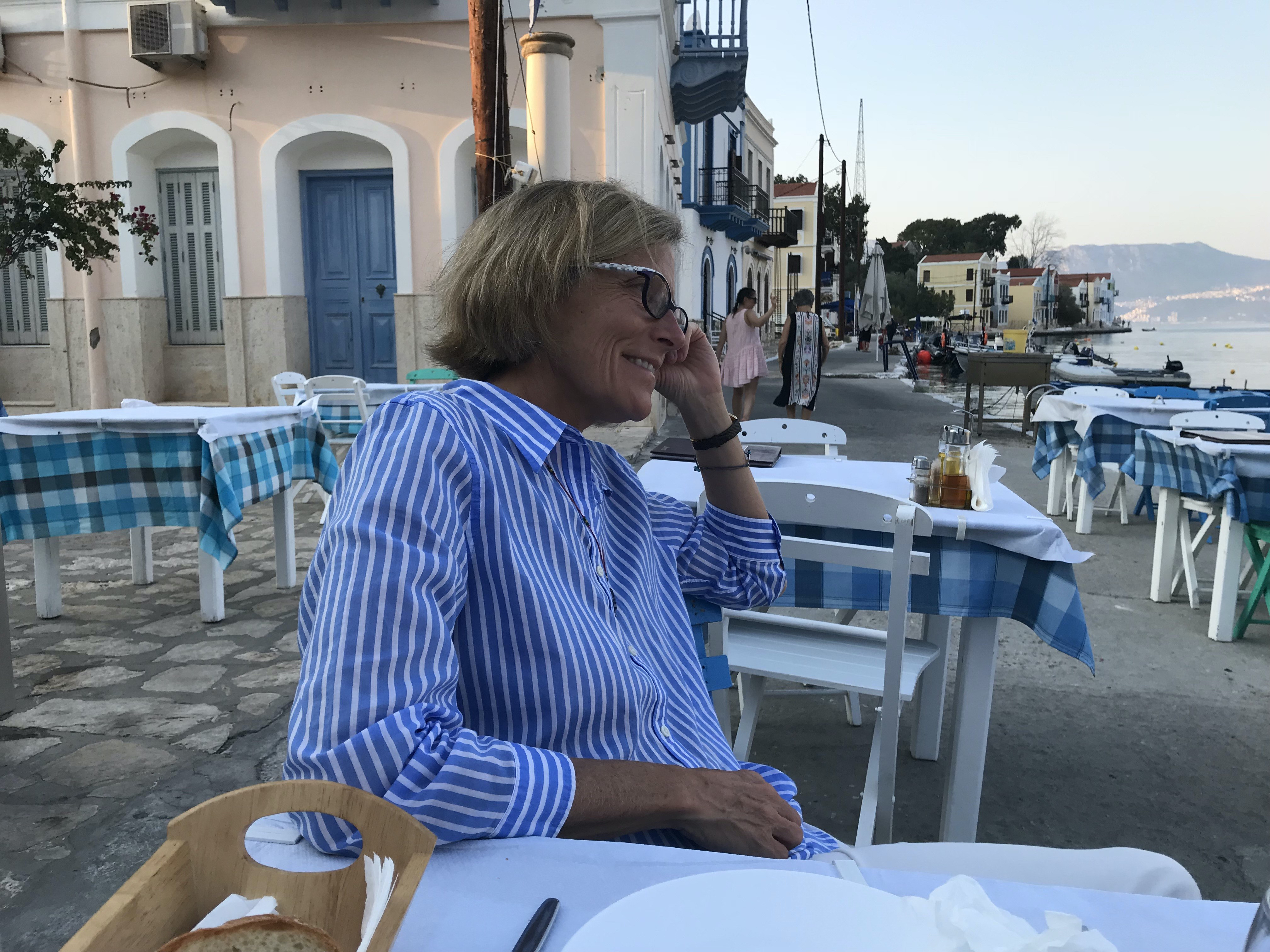
Retiring Dean of Humanities, Elizabeth Moose, on the Island of Kastellorizo. (Elizabeth Moose)
Dean of Humanities Elizabeth Moose will retire at the end of this academic year after thirty-one years of service to NCSSM. We asked her to reflect on her long career and what message she would like to share with the NCSSM Classes of 2024 and 2025.
Teaching and working here at NCSSM for the past thirty-one years has been one of the greatest gifts of my life. I am especially grateful to Dr. Ginger Wilson, Founding Faculty Member and NCSSM’s first Dean of Humanities, for hiring me.
NCSSM has given me the opportunity to put my mind, imagination, energy, and heart into the service of something greater than myself. I cannot imagine any work that could have been more engaging and meaningful to me. I have so many wonderful memories of class discussions and students’ presentations and performances in WRRD, WECS, Writing and American Literature, American Studies, Creative Writing, and Classical Myth. Beall 1 and those other basement classrooms will always be sacred spaces to me. Although our time together was passing and will never come again, our connection and communion over texts and ideas will endure as long as we can think and feel.
I am grateful to all the students who have shared their NCSSM journeys with me, and I am grateful to all my colleagues who, through the years, have shared the challenges and joys of inspiring and supporting our students and school.
As I leave NCSSM, I’d like to share with you a poem that has long been meaningful to me. I hope that it will speak to you as it has to me.
With love,
Elizabeth Moose
Ithaka By C. P. Cavafy Translated by Edmund Keeley
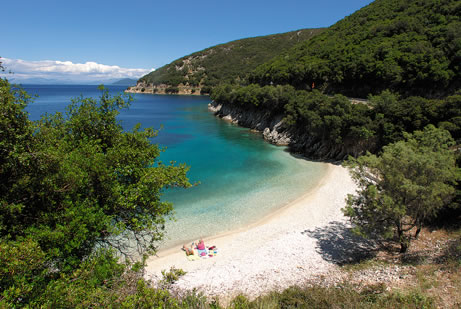
As you set out for Ithaka hope your road is a long one, full of adventure, full of discovery. Laistrygonians, Cyclops, angry Poseidon—don’t be afraid of them: you’ll never find things like that on your way as long as you keep your thoughts raised high, as long as a rare excitement stirs your spirit and your body. Laistrygonians, Cyclops, wild Poseidon—you won’t encounter them unless you bring them along inside your soul, unless your soul sets them up in front of you.
Hope your road is a long one. May there be many summer mornings when, with what pleasure, what joy, you enter harbors you’re seeing for the first time; may you stop at Phoenician trading stations to buy fine things, mother of pearl and coral, amber and ebony, sensual perfume of every kind— as many sensual perfumes as you can; and may you visit many Egyptian cities to learn and go on learning from their scholars.
Keep Ithaka always in your mind. Arriving there is what you’re destined for. But don’t hurry the journey at all. Better if it lasts for years, so you’re old by the time you reach the island, wealthy with all you’ve gained on the way, not expecting Ithaka to make you rich.
Ithaka gave you the marvelous journey. Without her you wouldn’t have set out. She has nothing left to give you now.
And if you find her poor, Ithaka won’t have fooled you. Wise as you will have become, so full of experience, you’ll have understood by then what these Ithakas mean.
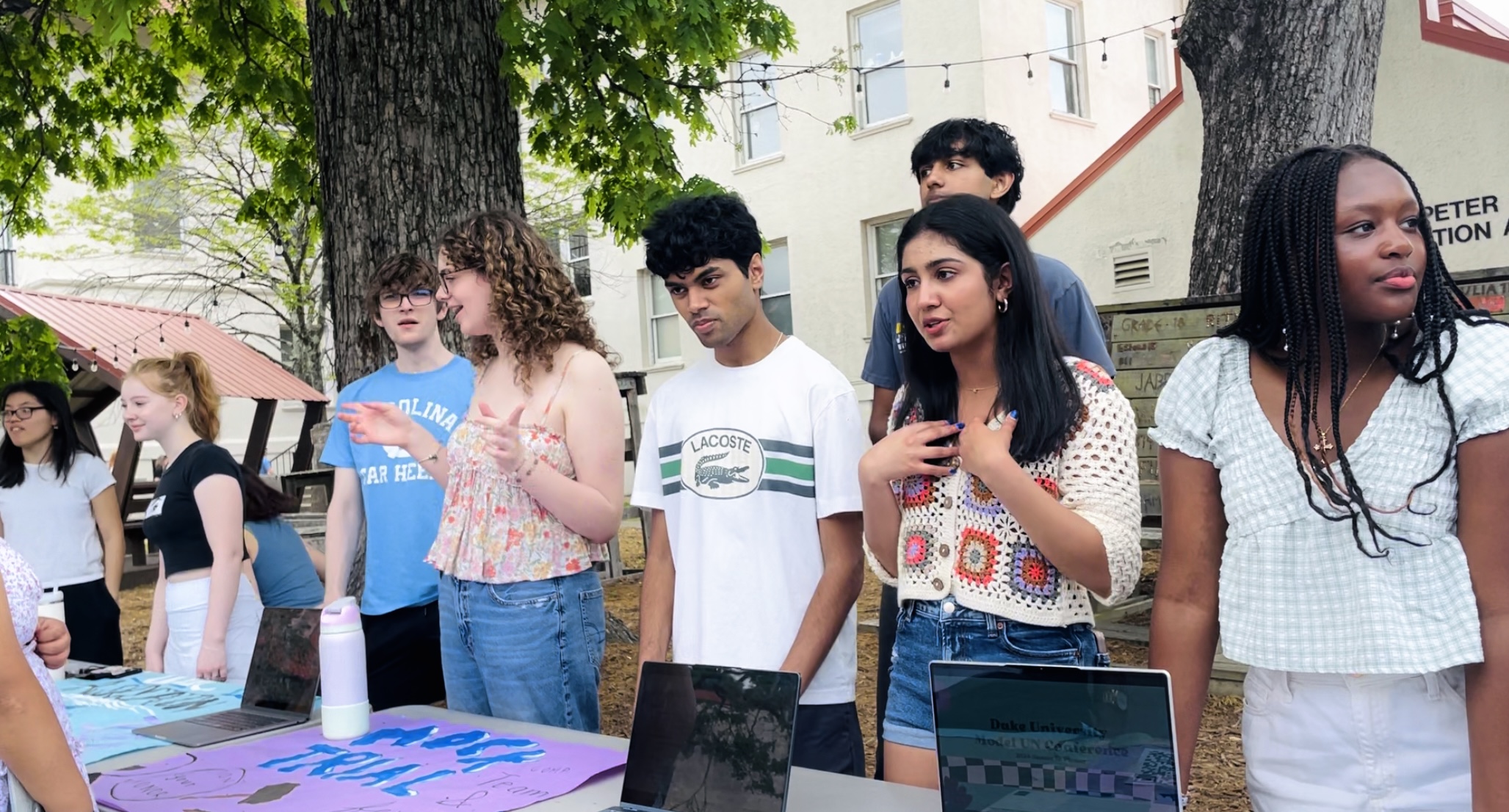
On April 20, 2024, the North Carolina School of Science and Math hosted their annual Welcome Day to orient the incoming NCSSM-Durham students, or the class of 2026. Along with starting their flight at NCSSM in the PEC, taking photos for IDs, and dorm tours, and Students and families were invited to participate in the school’s Club Fair, in which the current students of the classes of 2024 and 2025 showcased nearly 80 student-led clubs on the Durham campus.
Ranging from the Balkan Cultures Club to Quiz Bowl to Smath Tutors to NCSSM Rocketry and more, this club fair is the first of many fairs for the new class of 2026.
In this broadcast, The Stentorian reporter Teresa Fang interviews students Natalie Jones ’24, Hayden Moritz ’25, Avanesh Vijayakumar ’24, and Tejasvi Shirolkar ’26 about their hopes and experiences on Welcome Day 2024.
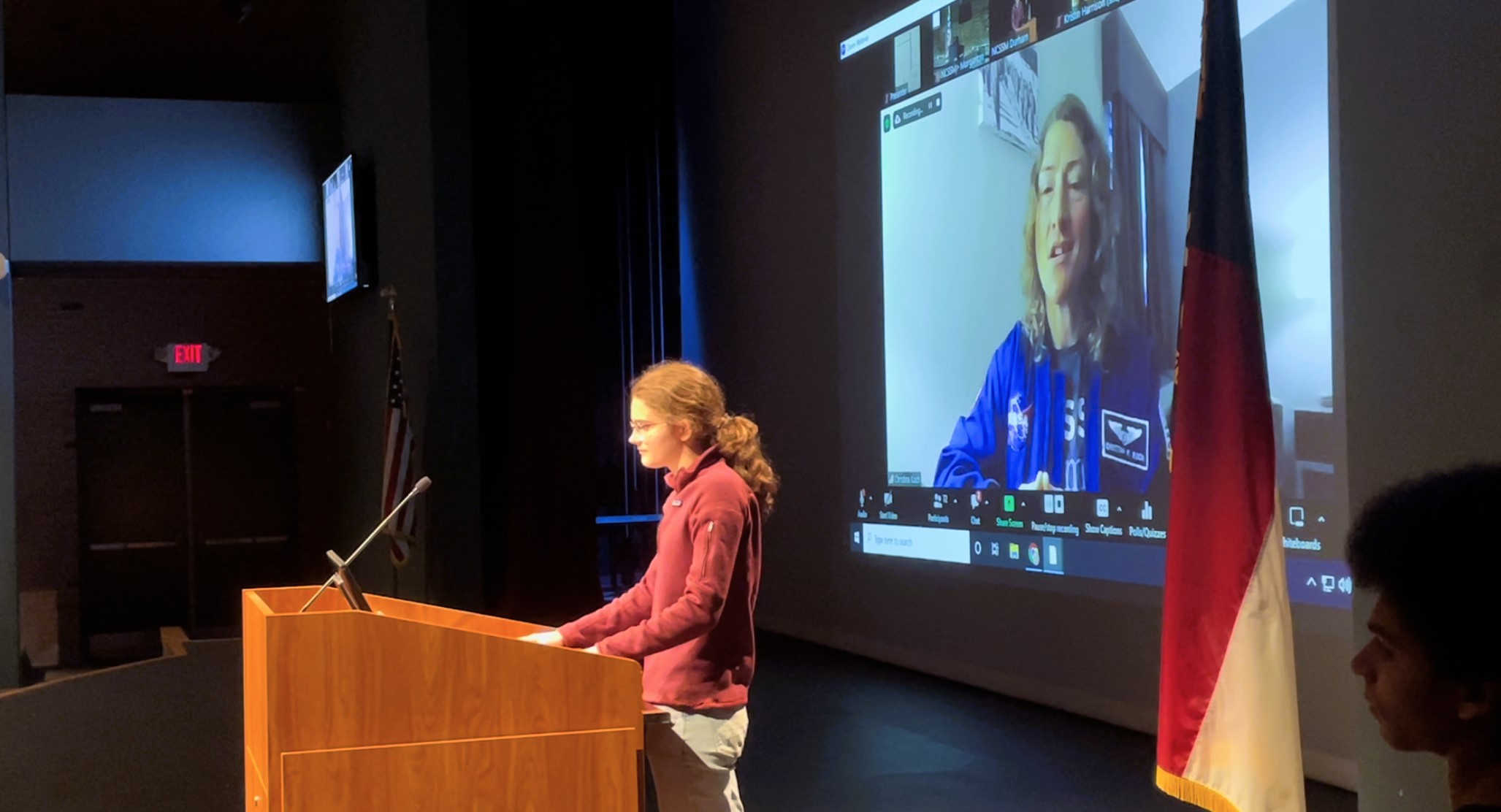
On April 12, 2024, the North Carolina School of Science and Math hosted a schoolwide assembly, as part of the school’s Space Week event which included eclipse-viewing, to talk to NASA astronaut and Class of 1997 alumni Christina Koch.
After setting the record for the longest single spaceflight by a woman with 328 days and participating in the first all-female spacewalk in 2019-2020, Koch is currently preparing to go to space once again as the Mission Specialist for NASA’s Artemis II mission, which will be be flying around the Moon as NASA’s first crewed flight in their long-term goal for establishing human presence on the Moon for science and exploration.
In this broadcast, The Stentorian reporter Teresa Fang interviews students Arianna Lee ’25 and Ava Snider ’25, both students who were chosen to ask Koch questions during the assembly, and chancellor Todd Roberts.
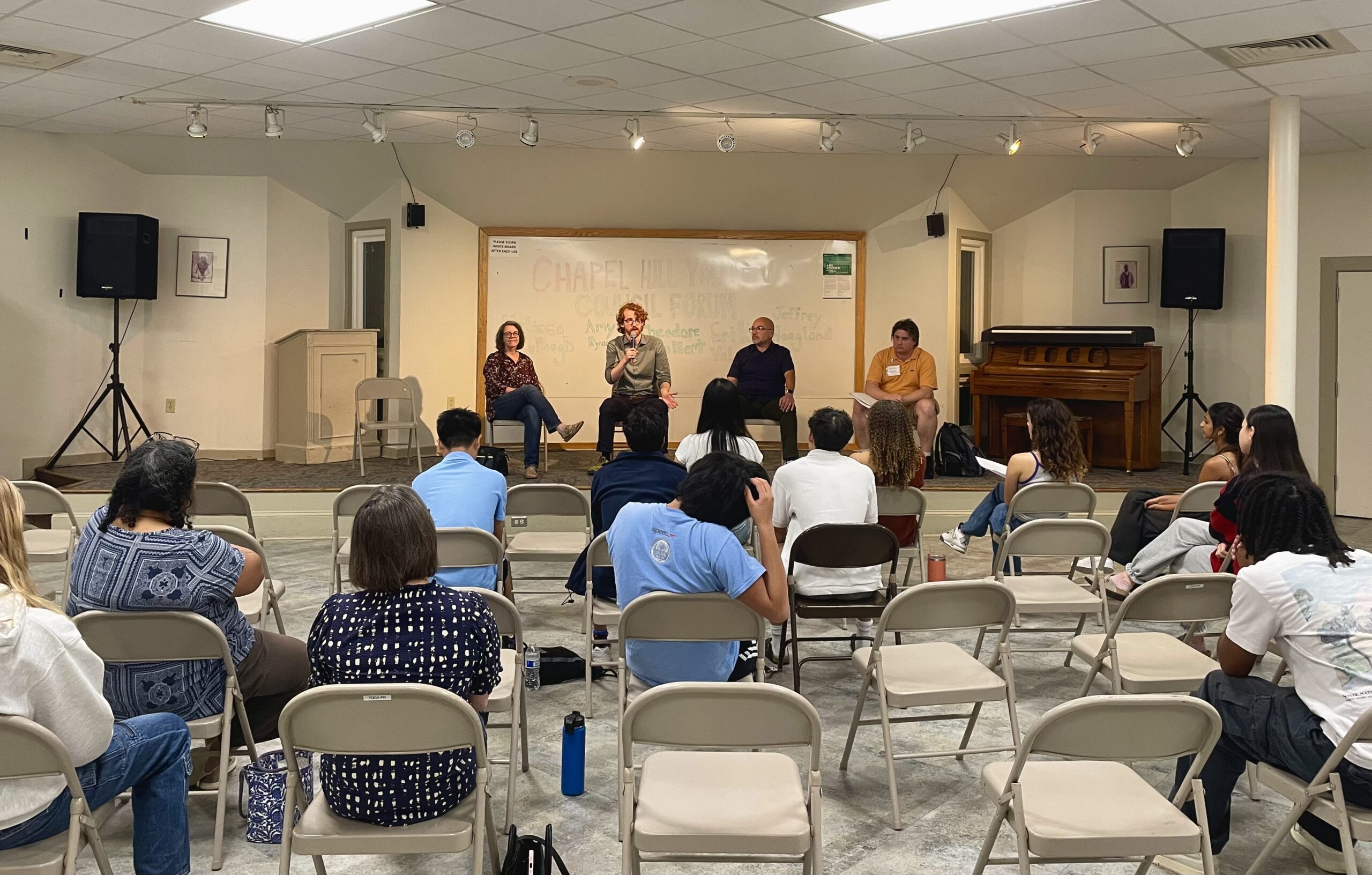
On October 30, the Chapel Hill Youth Council hosted a forum for the mayoral and town council candidates for the then-upcoming municipal elections. (Teresa Fang/Stentorian)
Many young people lament the polarized national politics we are set to inherit. But are we worthy of lamenting when we don’t even care about local politics first?
I am a product of what I know as journalism and Chapel Hill civics. I worry less about the health of US democracy than I do about the deteriorating health of interest in it. Too many times have I heard a fellow high schooler voice their opinion about a recent national policy, but when confronted, they stare and cite a TikTok influencer or a popular podcaster. This response is exaggeratedly worse for local politics; local political apathy tears young people from reality and sets a precedent for misinformation.
I single out social media as one of the largest facilitators of political apathy. A survey from Gallup reports that over half of US teens (ages 13-19) spend a minimum of four hours on social media every day. That’s four hours of being exposed to conformity influences, from beauty standards to cancel culture to the polarization of national politics. With social media becoming ever increasingly accessible, anyone can exercise their laws of free speech on social media while the consequences of spreading baseless claims become nigh invisible.
Anyone can complain about an issue, but can just anyone change anything about said issue? People may be knowledgeable on national politics, but if a citizen has concerns about a bus route or stormwater runoff, their representative in Congress can’t help them. But their local town council member can. If a student notices a decrease in the quality of their education at a public school, that’s just an observation supporting the recent national trend. If that student notices a difference in education at their school relative to other schools in the district, then that’s a different story.
Local politics impacts day-to-day lives. If young people can change our nation’s future, why don’t we try paying closer attention to our town first?
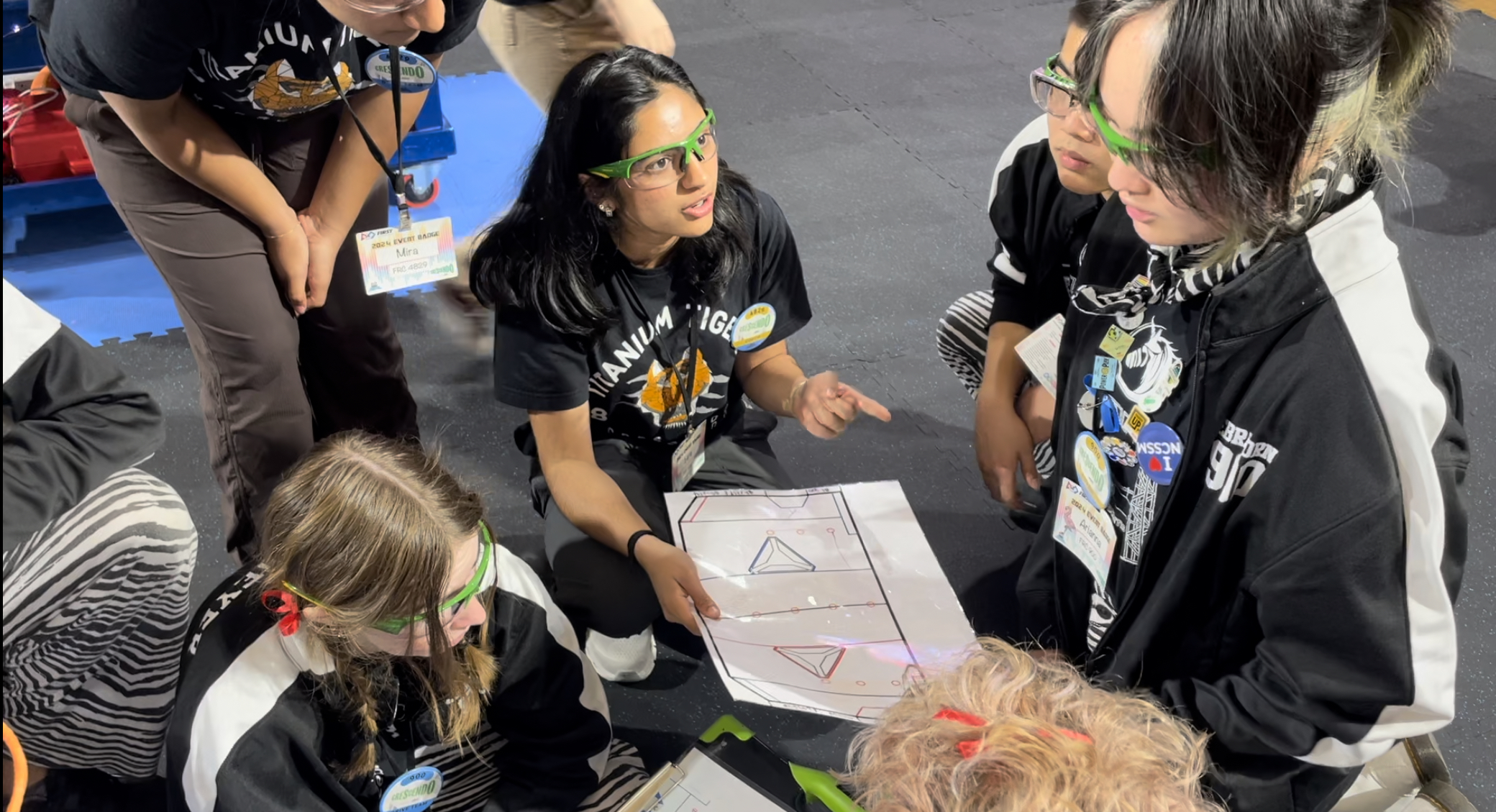
Continuing the FIRST North Carolina District State Championship, held at the East Carolina University, on April 6, 2024, the Zebracorns Team 900 update their strategies, robot, and programming to get rid of small issues that could happen as the team competes to see who would qualify for the Worlds Championship in Houston, TX.
In this broadcast, The Stentorian reporter Teresa Fang interviews Zebracorns members Robbie Stoffel ’25, Vincent Barboriak ’25, and Ketan Mummareddy (Green Level High School) ’26.