While many seniors are thinking of college admission, many juniors are thinking of a different type of admission: the one for research. A common question asked is should one do RSci or Research in the Humanities (RHum)? The answer is why not both, and furthermore, why not RHum?
Earlier this year, Teresa Fang ‘25 wrote an astonishing article where she emphasizes the importance of interdisciplinary academics and practice. This couldn’t be more true; the limits of research are never confined to just one field.
If one wishes to be an effective academic, one should be well versed in all their curiosity–including ones that are not traditionally considered “useful”, which is in quotes as when one says not useful they usually mean not profitable. As Fang points out, the tools humanities arm you with go beyond your humanities research and into effectively communicating, critically thinking and questioning. So, then why not research the humanities?
The common answer to this is that it’s not “useful,” but useful is not used in the sense of profit but of leverage. So here’s a sense of truth: a college will not accept you purely because you are in impressive, STEM focused academic programs.
You can do a hundred RSci programs, and still not be what they are looking for. They are looking for your curiosity. What sparks it and do you follow it? If a humanities question sparks you, follow it, and even if you have no specific question let your interest as a human lead you. The follow-through of something that captivates you, is way more impressive than something you did to put on your resume. RHum is designed to captivate and explore captivation.
Additionally, humanities research goes beyond the capabilities of science research. Certainly, there are some questions that are furthered by science, but Humanities doesn’t serve as an add-on to pick up where STEM drops off, it goes where STEM cannot. Humanities concerns itself with questions not necessarily bound by the same restrictions as STEM, not to say that humanities doesn’t come with its own complex restrictions. You are bound by human thought, records, and where you can take yourself. We can take the work of STEM and apply it, as questions of AI usage, or we can take it outside of the science sphere and expand.
Make no mistake, however, I am not arguing against the RSci programs; I do hobbyist research in math and believe that you should go where curiosity leads you. I am arguing for your serious consideration of all Research in the Humanities programs, despite the doubts rebuked above. It is an experience that strengthens the heart and skills of a researcher, and if not that is sure is a lot of fun.
Here are some of the research opportunities in the Humanities!
Research Experience in the Humanities, (REXHum)
Available to all students who have completed AmStud I, this course serves as the introduction to humanities research for all who are interested, even if you have conducted research in the past. Students learn the basic skills of research, and produce a thesis. This course is available to juniors and seniors and is a choice for a prerequisite of RHum.
Summer Research in the Humanities, (SRIPHum)This program introduces students to research inside and outside of archives, libraries, and the world. A three-week program during the summer, students get the opportunity to travel to diverse museums and research a question of their choice. The student will produce an abstract, that they will get to present to a group of peers, and at the SRIP Showcase. This is a summer experience offered to juniors via application, and can also serve as a prerequisite for RHum alternatively to REXHum.
Research in the Humanities (RHum)
This is a course taught in the fall semester surrounding your research. The course aims to encourage students to enhance their reading and writing skills while expanding their knowledge in general topics and their research questions of choice. Students will produce a full research paper and will have the chance to be published in Fifth World, the student humanities research journal of NCSSM. This course is only for seniors who have met the RHum requirements.
Luckily, for both juniors and seniors, there is still time to apply and do research! I do hope that you consider, apply, and pursue any curiosity of the humanities; it is a worthy pursuit.
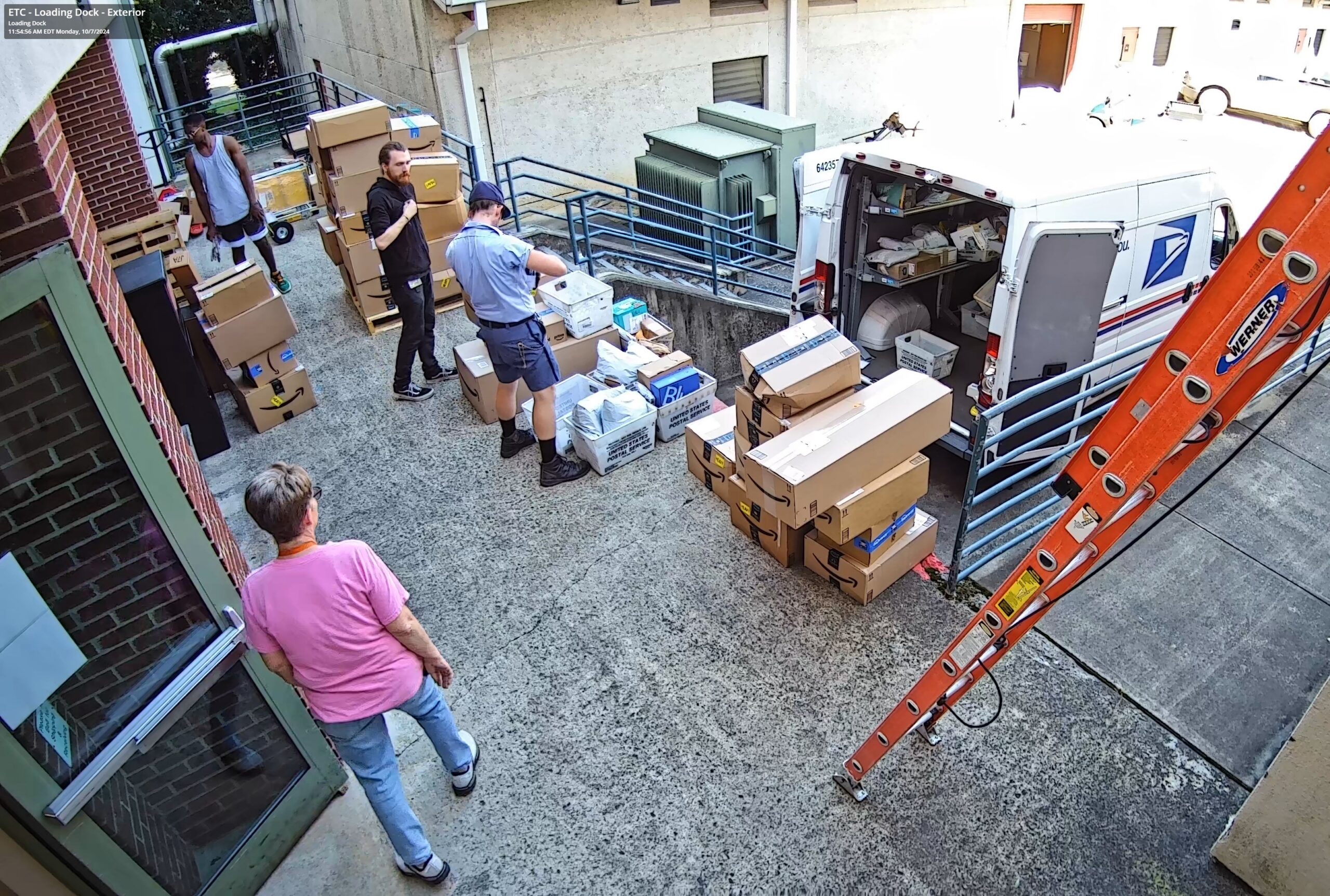
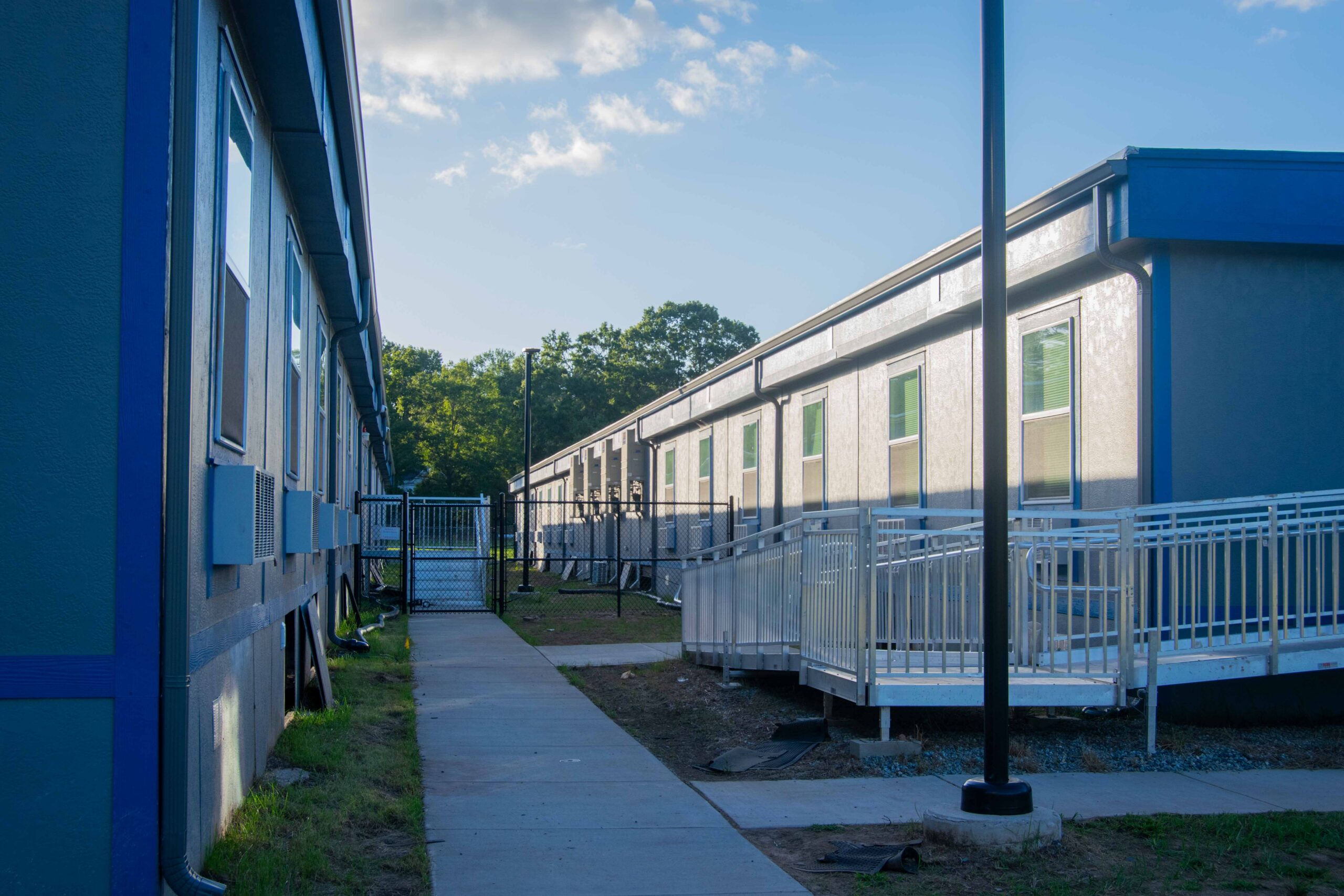
Students volunteer with staff at the NCSSM Mailroom. (Denise Burgette)
By Teresa Fang, Stentorian Editor-in-Chief
Service Learning coordinator Sue Anne Lewis and Mailroom staff organize a successful Western NC Supply Drive, thanks to students who have donated and volunteered to pack supplies and teachers including Ms. Gabriela Stefan who took shifts supervising the truck.
The truck, a 40-foot long container on wheels, was driven to Western North Carolina by Director of Residential Education and Housing Michael Newbauer on Friday morning. This supply drive was born out of a way for NCSSM to “support our community and neighbors in need” and “send as many supplies as possible to Western NC,” Lewis wrote in a October 2 email.
From October 2-12, items were donated to the drive via dropping them off directly at the truck in the Bryan parking lot or shipped as packages directly to the Mailroom. More than 120 students signed up to help pack those items in cardboard boxes, labeled, then carried to the truck, contributing more than 400 total hours.
“We repacked them to make sure baby bottles, baby formula, and the like, all went in a box and we labeled it. Batteries, first-aid kids, medicine, feminine products, stuff like that.” said Mailroom Manager Denise Burgette. “We had a lot of those. So we just took them all. The students that came over were just totally amazing.”
During our chat, she gave me a tour of the Mailroom storage, where she showed me a box of white shipping labels ripped off from packages. She says that Lewis plans to have some students write thank you notes to the senders.
“Within two hours, we had 372 Amazon packages.” Burgette said, describing the scene in the Mailroom on October 14. “They couldn’t fit on the shelf so we had them lined up on the dock, and there were extra tables for the students to work, breaking down packages and everything.”
In addition to just holding the supply drive, NCSSM partnered with local Durham business Lee’s 24-Hour Towing to bring a “Stuff the Truck” semitrailer at the parking lot at Club Boulevard and Broad Street. Students were also encouraged to sign a large “NCSSM <3 Western NC” poster in the Bryan lobby and share images on social media promoting the supply drives.
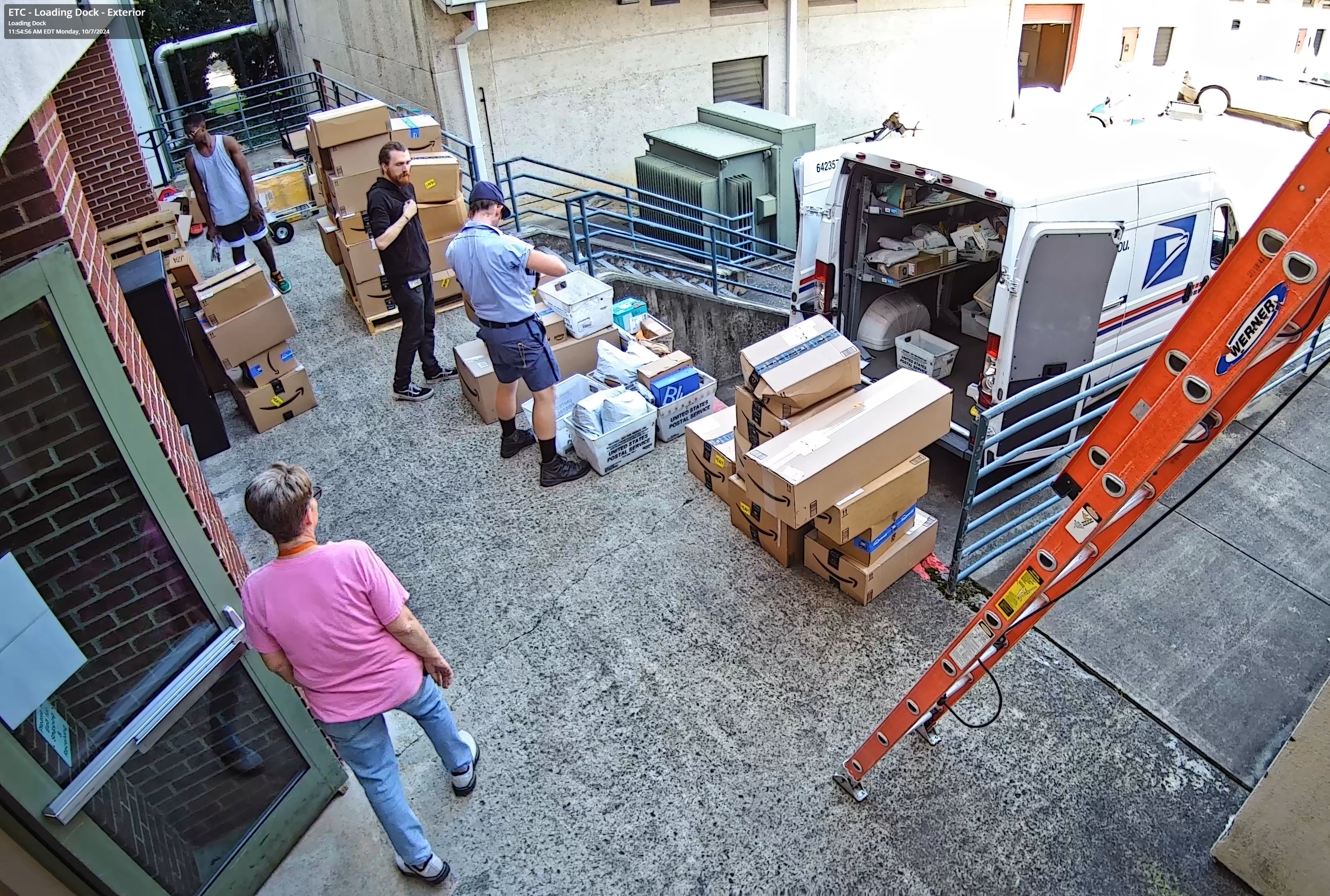
At the conclusion of an all-employee professional development session at NCSSM-Durham last month, members of the administration unveiled news that 5th Bryan was ready for employees to move in. They reportedly chanted “we are a community” louder and louder until complaining faculty members grew tired of objecting.
“So that’s why we bought that custom-made circular conference table?” a confused but increasingly aware employee, Joseph “Sharp” El Bows, observed. “Anyways, good riddance, because I always hated not being able to stare at everybody’s faces equally across the old square table. Oh, and I guess I’m excited to live rent-free.”
The move will be effective over Fall Break, while students “don’t have the chance to mess stuff up” and faculty members can move in “without a hitch,” aided by all available residential staff. This will be overseen by Dean of Students Patricia Punctly, who volunteered for the position. “Rain or shine, I’ll be there. This is a great opportunity to demonstrate that the NCSSM comm-UNI-ty has immense compassion for our students going above and beyond the scope of the classroom!” she declared, chuckling at her own wordplay.
Additionally, the 28 rooms on 5th Bryan will all be triples; an idea created by the new Director of Community Building, Wallopy Jones.
“I love that we’re finally seeing eye-to-eye with each other through the thick and thin,” said Jones. “In my past job, we didn’t get to live on school campus. We were always bored on the weekend! That’s why I quit.”
Other employees share Jones’ excitement, including Community Coordinator Mary Ramsbottom, who has been at NCSSM since 1994 and was ecstatic to live closer to her teacher friends but slightly disheartened to hear she wasn’t able to room with them. Wondering why she couldn’t invoke the “Seniority Privilege,” she was quickly shut down by the administration.
“I don’t need to share a room though, I’ve got mine right here,” Chancellor Tom Hawkins said, motioning to a hidden door on the far wall of his office, revealing a closet full of colorful sleeping bags fitting every holiday from Christmas to Tax Day. “I’m literally the chancellor of this place.”
While this move is certainly novel in a variety of ways, the consensus among faculty is overwhelmingly positive due to the convenience of residential living and the opportunity to see the relaxed side of their students.
“Sweet! In all my years at Science and Math, I’ve always wanted to work on the weekends and see what my students are really like–like, what they’re really like,” said counselor Chitan Lee. “I hate seeing my seniors through grades on their transcripts. Now that’s saying something.”
But despite the excitement of the administration, it was noted that during the professional development meeting, a fifth of the table stared at their fumbling hands in worry while imagining their work-life balance torn apart. Reporters were about to ask them for interviews before the loud chanting started and all forms of media was pushed out of the room.
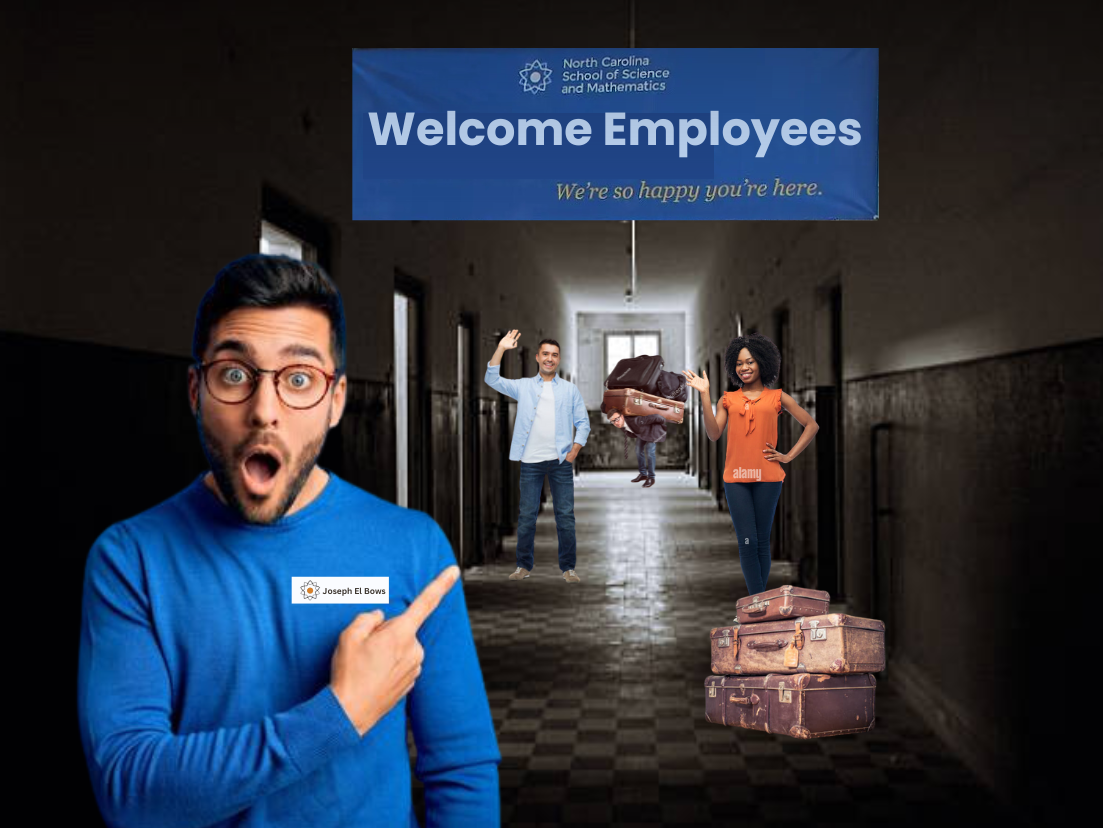
The modular units, also known as “Univille.” Louisa Weinard.
By Mabel Kennedy, Stentorian Staff Writer
From supposed fox sightings, bigger rooms, and an overall change in NCSSM culture, the non-Hill residents of NCSSM have been consistently curious about the much-needed insights into modular life, aka UniVille. After the first Interhall Visit (IVIZ) of the year on September 6, an event allowing students to explore and visit friends in 1st Hill, many questions have been answered: this article presents itself to answer the remaining few.
As this year’s Convocation’s speaker Katharine Stewart ‘85 notably described, it seems as though every graduating class has some misshapen anecdote about their years at this school. Whether that be the COVID-19 lockdown or perhaps something more relatable as the past year’s storm at Convocation, or the present Hill renovations.
It’s important to note the luxuries of the new modular units (“modulars”), primarily the bigger rooms in comparison to the previous ones in Hill House and the apparently substantial walk-in closets. All this to say the modulars aren’t free from their downfalls.
When asked if they would rather live on Hunt, Andrew Hattle ‘26 reported the vibe of the resident buildings was better. “They have ping pong but our hall lounge only has a foosball table, a TV, and some chairs. Hardly anyone goes into the lounge. But in the [Hunt] building at least one person in the lounge, just chilling.”
I found this to be the case across the board, with an apparent lack of lounge activity present. Could this be the case because of the new round of juniors or rather the lack of the long-serving Hill House? Either might be the case, but the bottom line stands that the modulars are evidently a quiet hall to reside in. Notably, the faulty water heaters, spotty air conditioning systems, and distance from the center of campus give the modulars an equal playing field with the rest of the resident halls.
However, with the 1st Hill IVIZ now complete, many wonder if the tradition of “Haunted Hill” will continue. Or is this it?
We can still look forward to this classic NCSSM event, revealed by Khalil Murray-Azam ‘25, who said the tradition was “in the works,” contrary to the student’s general assumptions that this event would no longer be hosted in the now off-limits Hill House.
Will campus culture change after the relocation of Hill House to the modulars? Some interviewees said there wasn’t much change, while some said there was. Even so, the common conclusion is that the modulars aren’t the same. Obviously, this was going to be the case but with the lengthy distance to key points of campus, it becomes a more important annoyance to anybody in this situation.
Adriel Simeon ‘25 recalled that at Hill last year, “All you had to do was to walk outside and you can see everyone, and a lot of people went inside the lounge just to hang out.” But after the relocation between the soccer and baseball field, “it just wasn’t the same.”
Murray-Azam echoes these sentiments.“Now at Happy Half people go in right at 10 pm, when people would still live on Hill they’d stay out right until 10:05 pm,” he said.
All this to say Hill–or should I say, the modulars–regardless of their location will always have their ups and downs. Yet the school year has just begun, leaving much to be known.
It has been almost a month since becoming a junior at NCSSM. Over the course of four weeks, I adjusted to the unpredictable schedule of classes, with unfamiliar faces shifting into friends. To look back and feel as though the first week was ages ago registers as surreal.
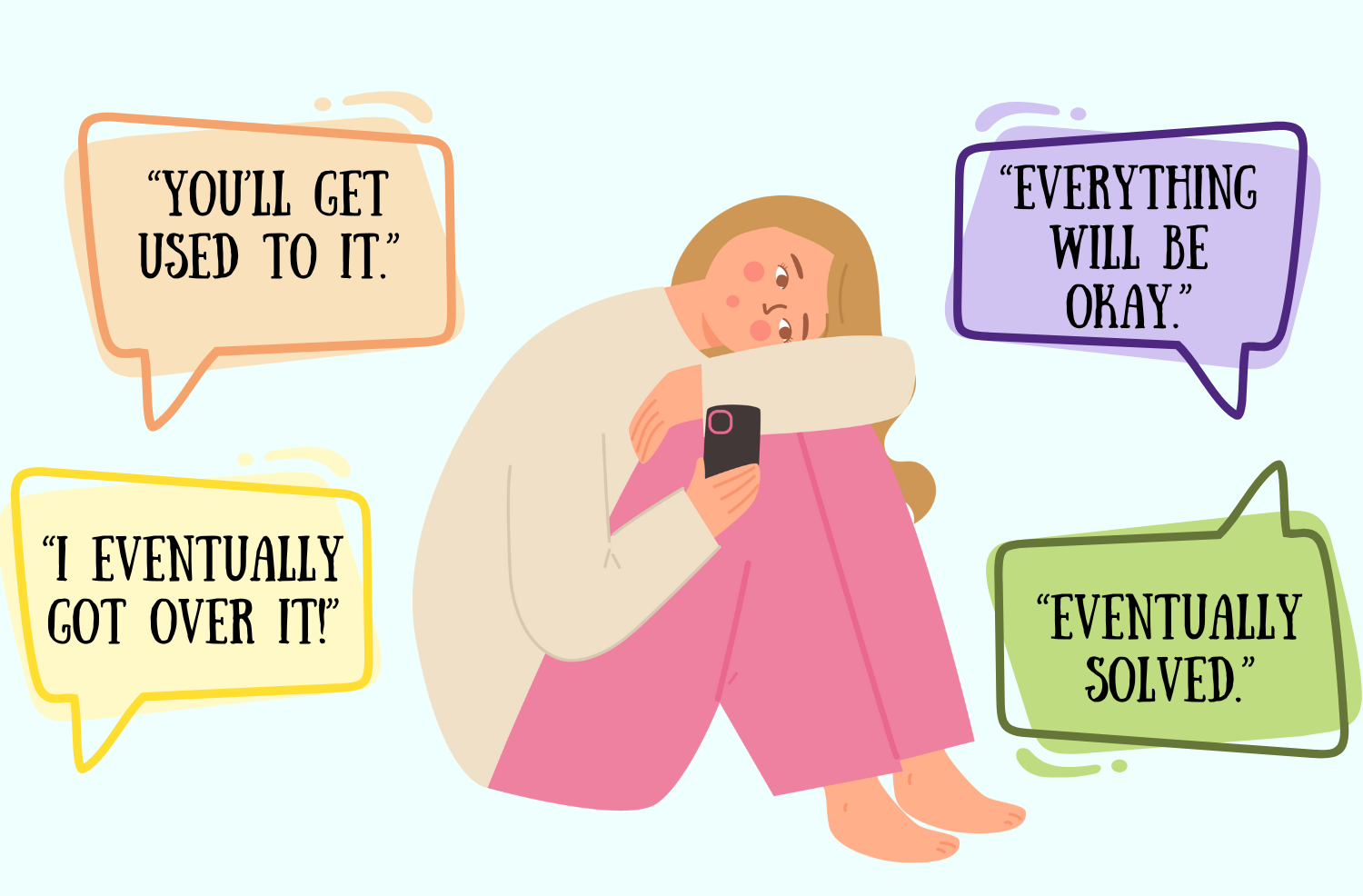
Yet, I still remember the burning heat of the first Ice Cream Social, of learning and struggling to complete my first housekeeping task, and of feeling so overwhelmed. But for the first week, I was wrapped with positive affirmations by so many seniors that “it will all turn out okay” and the classic reassuring phrase, “You’ll get used to it.”
Enthusiasm flashed in the faces of seniors as they recounted the early days of their junior year, narrating their difficult experiences with newfound humor of the present. They backed up their experience by telling stories of the amazing friends they’d made over the years, of having fun at school clubs and performing at festivals. Every sentence of hardship they said was followed by, “I eventually got over it.”
“It,” to them, was now a small reference seniors made as they looked back in retrospect.
But to me, It is the overwhelming current of my reality, the pounding in my ears, the expanding hole in my stomach when trying to make sense of this new life. It means feeling unsure in almost every step, and hopelessly clinging onto the words of the students before you that everything will be fine.
The discomfort of being a junior needs to be talked about more–of feeling that you are doing everything wrong, of starting fresh and being so terrified about it. Of beginning a new high school journey and not knowing what to do with all the blank pages. The endless support from this community is something I appreciate; however, there needs to be more conversation about feeling lost. Of not glossing over the nuances when navigating junior year, but focusing on them.
When we talk about ourselves not in retrospect, but in the present, is when life becomes more real. Instead of discussing every time how adjusting to school life was “eventually solved,” why not expand the conversation to how we are “currently in progress?”
Life isn’t static–we’re constantly dealing with new problems, subtle moments emerging and revealing themselves every day.
To say that “at this moment, you don’t have everything figured out”–that’s what feels more reassuring. More relatable. Of maybe talking about how there are things we still haven’t fully adjusted to, or acknowledging that we are currently struggling with certain things.
When we open the door to feeling lost, that’s when we can begin to find our way into the world again.
A viewer visiting the school website at ncssm.edu can immediately see the huge words, “Igniting innovation, cultivating community.” Inspiring words, but what does this really mean?
Initially, I did not plan on writing about the ncssm.edu website at all, considering it was redesigned between November 2021 and October 2023, according to webmaster Will Mack. Not to mention mixed concerns about the student newspaper giving any form of criticism to the school that governs it and has the power to shut us down. Yet, as a senior, with the student body gaining a larger digital presence, it’s time to take a stand.
The ncssm.edu website is the epitome of selective attention in representing a student body. Like the illusion of validity in politics, what is visible is superficial: there are very few families and applicants who wouldn’t like to be a part of the residential, online, or summer programs that NCSSM prides itself on in every marketing and outreach campaign. The reputation this selective marketing builds is outdated and reductive to the school’s current and prospective students.
Mack wrote that the website redesign was a two-year effort that “collected feedback from students, parents, faculty, and staff…to make it easy for new folks to understand what the school is, what its programs are, and which might be right for them.” But it’s hard to see what the school offers beyond research programs and how prospective funders can donate.
“Yes, we want to prospective students to check out the website, and for parents, donors. But there’s nothing really about the students,” said Chidera Ezenwenyi ‘25. “There’s a residential program. There’s online. There’s summer. But no actual student activities. It doesn’t showcase anything that we do.”
When you dig even a little bit deeper, it’s clear that the school administration’s idea of a good website is a good advertisement to expand, not to intensify–even if it means leaving voices from its employees and students behind.
If you’ve taken a look at the walls of Bryan lobby at all, the website’s tendency to wrap the school in vague and flowery language would not come as a surprise, but nonetheless a disappointment. As they claim to help “talented students find their niche and realize their potential,” they lag significantly behind in showcasing what niche and potential. While they say they promote a “highly talented, committed, and diverse workforce,” the supporting data is always behind a “coming soon” label or none at all, and they expect employees to make personal sacrifices out of compassion and loyalty to the school.
Even when they try to provide a window into what accomplishments or projects that students are working on, the news that are provided to the public are narrowly filtered into three types: the first or last day of school, retirees, and national/international recognitions. Everything we see in words seems prideful and great, but the coverage thoroughly undermines what else students can do once they come to NCSSM.
“Igniting innovation, cultivating community”
Now, I’m not an opponent of innovation and community. I love trying new things and socializing with people as much as anyone who lives under the sun. But the fact is that bragging about what we’re already the best at does nothing to innovate or grow the external–or even internal–community’s perceptions of NCSSM.
According to their website, third on NCSSM’s Strategic Plan 2024-2030 is to use an equity-oriented approach to meet student success and wellness needs, by implementing new and expanding existing programs that increase “faculty, staff, and student intercultural competence and humility” and give an avenue for students “to provide and receive feedback about their academic experiences.” While this is a valid objective for a diverse school, the first priority should be mitigating the causes of student dissatisfaction and troubles, whether that be academically or emotionally. Otherwise, they will just be plugging one hole while digging a wider one right next to it.
Once a student is accepted into the school, they tend to not visit the website at all, as Ezenwenyi and his parents never did. “I feel like everything is in Blackbaud, I’ve never had to go to this website for anything, which, in contrast to my old school, I definitely used the school website a lot,” he said.
At times, ncssm.edu’s lack of coverage speaks just as much as their coverage. We know that if something or someone is repeatedly covered in media, then they must be important to that media. It is telling when NCSSM’s idea of innovation and community, usually in the form of news coverage by communications specialist Brian Faircloth, barely even encompasses anything other than achievements in math and science.
Using the website’s search feature, we can see there are six mentions of Christina Koch ‘97, four of which are feature stories, and three of which contain primary-source quotes from her. Searching Rhiannon Giddens ‘95–Grammy Award-winning musician, MacArthur recipient, and Pulitzer Prize winner on vocals, fiddle, banjo, and viola–yields three stories, all of which are of recognitions to accolades.
In none was she directly interviewed by an NCSSM affiliate; all her remarks were outsourced from other mainstream media or her social media accounts. Prior to RexHum class, I didn’t even know Giddens was an alumnus, nonetheless that she was the banjo player in Beyoncé’s “Texas Hold ‘Em.” The selective perception is complicit even in searches of George Cheng ‘24, dubbed “STEM powerhouse,” who has three in-depth feature stories with interviews.
Regardless, if we are truly trying to build an innovative community encouraging students to think outside the box, we cannot continue to be an advertisement for the same old elite STEM education. If prospective students come to NCSSM only knowing the names of fancy-sounding courses and faulty links to Google Documents, then they will not be able to grasp what a vibrant community this campus really holds.
Students’ Definition of Student Culture
The team who worked on the website was comprised of the NCSSM Communications Team, ITS, External Relations, NCSSM-Morganton Administration, and the Communications Council, which is a representative committee of all departments at NCSSM. When asked if the purpose of a high school website should be promotional or as a window into current student life, Mack said they were “deliberate at making the primary purpose of our outwardly facing website to be introducing new people to NCSSM and all it offers.”
While it is understandable that NCSSM is an unusual school, it’s surprising to hear the team’s interpretation of “student life”: “Of course, a very important part of making that appealing for them is showing them glimpses of current students’ experiences, so we do seek to offer a window into current student life in all of the programs from Residential to Step Up to STEM to Summer Ventures to NCSSM Online and more.” Is that what students would expect to represent their everyday experience as a NCSSM student?
Taylor Eason ‘25 described what good qualities of a school website should look like, pinpointing the outdated news articles. “Honestly, being frequently updated to showcase what’s been going on in the clubs.” she said. “We have news about meeting the students, but [for example] in ‘NCSSM lets students craft tailor-made science research experiences,’ that student graduated two years ago.”
Eireann Marcus ‘25 added that the last quote from any student on the website was from 2023. “We don’t know who they are, and the pictures don’t help,” Marcus said.
What we need for a closer-to-true representation of NCSSM student culture is frequently updated information on ncssm.edu. Nevermind that we have 150+ student-run clubs and organizations across the two campuses; if the current website has a page for student publications, then we should continue to update all student publications whenever one is released, or ensure there are resources available to direct site viewers to the domains that students directly control. In the first place, student publications are supposed to be a representative showcase of students’ work and stories, and it’s advantageous for NCSSM to have four school-sponsored ones (Broad Street Scientific, Blue Mirror, Fifth World, and The Stentorian).
Ezenwenyi also thought of ideas. “I think the good qualities of a website are resources for the school students, and maybe some stuff for some parents. Having an interactive slide with photos of events that we do could also help,” he added.
Promoting the school, from an admissions and funding perspective, is inextricably tied to widening the outlet for student expression. Sure, this is an idea that might have complications that give a fraction of more work to the administration or webmasters to do and might seem like a wild risk to take for both publications and the school as a public institution, but that’s what igniting innovation means.
Letting Down Our Reputation As The #2 Best Public High School in America
I won’t argue that the website does have aesthetic appeal, and some functionalities are quite convenient. I like how each block looks different. I like our colors. I like the resources of the library. I like the ticking numbers that show our impact metrics. However, the vagueness of what students are doing to achieve those metrics graciously permits us to examine closely some of our school’s opinions and poll results on the Internet, since they’re not available on ncssm.edu.
NCSSM brags about their influence (do we not?); Institutional Effectiveness reports our total enrollment, including residential, online, and Connect students, represented 94 out of 100 North Carolina counties last year. NCSSM is ranked number one in Best College Prep Public High Schools in America and number two in Best Public High Schools in America. Well, let’s take a step back. Are we satisfied with where we are now? For instance, while the average graduation rate is 99 percent, the average SAT and ACT scores are 1440 and 33 respectively.
Is this all the “elite, academic reputation” that the NCSSM administration, the Board of Governors, the Board of Trustees, alumni, families, and donors want to see? The website certainly doesn’t live up to the standards the school has touted. It’s almost as if we, the students, aren’t solely academic machines but real people with breathing backgrounds and multiple disciplines to devote our bodies and minds. The same goes for faculty.
“There’s a navigation bar but it’s about residential, online, summer, and admissions, but NCSSM is so much more than those things,” Eason said. “How are you supposed to promote it if you don’t know anything about what it’s like to actually be here?”
Unless a student is one of the lucky chosen few who get a story done by Faircloth, students come and go without leaving a trace of their impact. Only if we are lucky enough to have access to social media, we can see the memorabilia of posts and past officers of clubs and organizations. Only if we are lucky enough to be permitted, tech-savvy to create a digital archive, or insistent enough to see real-life proof, we can access records of past students’ work, and likewise be inspired by their stories of struggle then success.
Is all of this the special legacy students want to take away from their two years at NCSSM?
If NCSSM’s website continue to be selective of our school’s student culture and life, we will forever be running on a hamster wheel of vague goals, blatant inappreciation, and laziness. We will constantly be asking ourselves the same question: where do I see myself in my “elite” school? Yet, the answer will always remain the same: we don’t.
With the stress of everyday life at NCSSM, it can be difficult to develop passions with your friends, much less start a whole band. But not for this group! Here’s the “scoop” about Big Spoon!
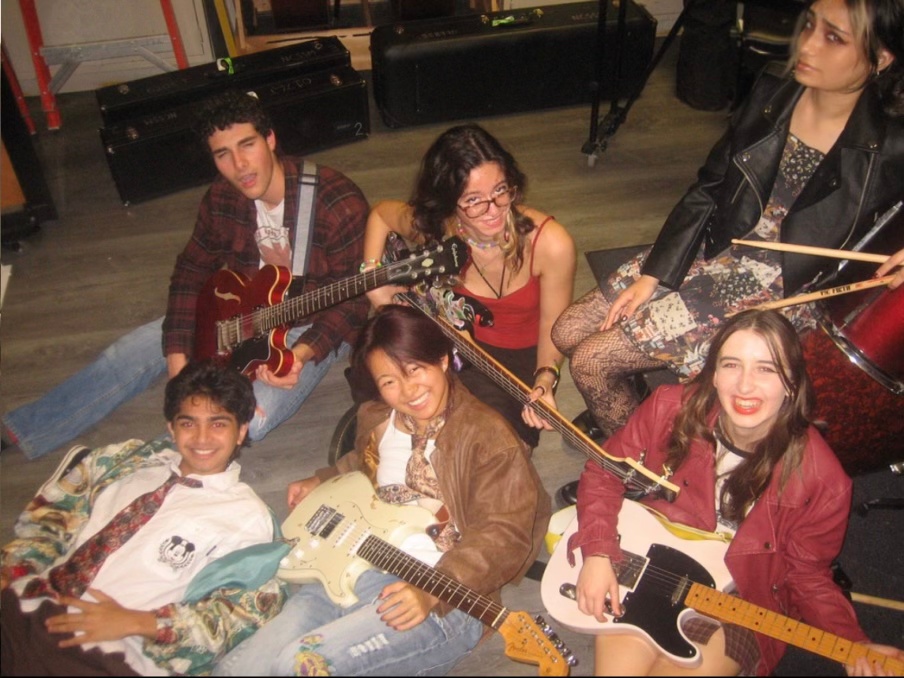
Big Spoon is NCSSM’s very own student-led band, playing the songs of their choice at a variety of school and community events. Big Spoon was founded in 2023 by Grand-Senior James Dudek ‘24,. who wanted to create something where students could come together to make music and build bonds. Along the way, he found some friends that shared his passion, and they started the band as we know it.
The History
The name was not always Big Spoon–the group thought of many possible names, including “Dubious Boobius” and “The After-Hours,” a reference to their late practice times. The final name came from one of the original members’ roles in the spring musical Beauty and The Beast, and from then on they were “Big Spoon.” They have since performed at every Koffehaus–the school’s monthly outdoor talent show–and created Unipalooza, NCSSM’s own spin on Lollapalooza, a mini concert full of music and friends.
Even though all of the original members of Big Spoon have graduated, Big Spoon is still at large! This year will be the third generation of Big Spoon, aptly named Big Spoon the 3rd. For long-time and incoming Little Spoons (the nickname for their fans), here’s what they’re stirring up!
Meet This Year’s Spooners
Shirley Tian ‘25: Hey!! I’m Shirley–classical pianist, indie-rock guitarist, and guitarist for Big Spoon the Third. My top artists right now are flipturn, Radiohead, and Fiona Apple.
Isaac Bosman ‘25: Hey I’m Isaac and I play lead guitar for Big Spoon. My top three bands are My Chemical Romance, Mayday Parade, and Blink-182.
Kahaan Khatri ‘25: Hello I’m Kahaan, I love playing piano, I have plans to learn guitar, and my favorite artist right now is Crying City!
Hazel Cochran ‘26: Hi! My name is Hazel and I’m so excited to be joining Big Spoon as lead vocals. I also play guitar, bass and piano, so you might get to see me on those too. My top three artists would definitely have to be le tigre, Mitski, and Ludwig Goransson. I can’t wait to get onstage and play music with the band, and I hope to see all of you there!
Anna Tringale ‘25: Hi! My name is Anna Tringale, I’m from Mooresville (originally from Detroit) and I’m the biggest, baddest bassist for Big Spoon this year! My three favorite artists are System of a Down, Stromae, and PSY!
Jiya Zaveri ‘26: Heyy, I’m Jiya and I’m from Greensboro (shoutout northwest!) and I’m on drumset for Big Spoon this year. Some of my favorite artists are The Neighborhood, Ethel Cain, Maneskin and Arctic Monkeys, and I’m so pumped to play for you!
Big Spoon The 3rd
This generation of Spooners plan to be just as active as the Spooners before them. To get the inside scoop, I interviewed lead member Shirley Tian and lead guitarist Isaac Bosman ‘, slightly adjusted for clarity:
What is your personal history with Big Spoon?
Tian: I started playing guitar about a year and a half ago, and I really enjoy it. I remember going up to the Physics department and playing their little pink guitar. I was already close with some of them (the members), and Linda [Xue ‘24] finally got me into it. They asked me to play “Bags” with them on the piano.
Bosman: I’ve always been into music with orchestra and guitar. James asked me to sing at the last Koffeehaus, which I said no to, but I did end up playing guitar. After that, I just started jamming with them.
What is your fondest memory with Big Spoon?
Tian: My fondest memory is goofing off with the band during practice. We’re all there to have fun, and it’s nice to just have fun.
Bosman: My favorite memory was Malcolm [Louigarde ‘25] screaming his heart out to “Butterfly Wings” at Unipalooza.
To you, what is Big Spoon all about?
Bosman: Big Spoon is all about the people and the music. We just get to make music with cool, talented people.
What advice do you have to anyone who wants to get involved with Big Spoon?
Tian: Reach out! We love it when people come jam with us. You can message us @bigspoonband on Instagram or reach out to me or Isaac @shirleybirleyy and @isaac.bosman.
Big Spoon plans to play at every Koffeehaus this year, and around May 3rd they will be hosting another Unipalooza! Come see them–there’s something for everybody!
The Class of 2024 seniors were accepted to over 49 colleges in the United States to the Class of 2028 in the first admissions cycle since the fall of affirmative action prohibited colleges from considering race during the process.
According to Dean of Counseling Lori Newnam, NCSSM Counseling Services worked with seniors from May 1-6 to complete their final transcript requests. After May 1, seniors self-reported their decisions to the department, which has released data on the colleges the class of 2024 committed to for The Stentorian. As of May 14, 2024, college commitment data was available for 289 out of the total 317 graduating seniors, including early decision, early action, and regular decision commitments:
college
city
state
final choice
Barnard College
New York
NY
1
Bates College
Lewiston
ME
1
Boston College
Chestnut Hill
MA
1
Boston University
Boston
MA
1
Brown University
Providence
RI
1
California Institute of Technology
Pasadena
CA
1
Carnegie Mellon University
Pittsburgh
PA
1
Columbia University in the City of New York
New York
NY
2
Cornell University
Ithaca
NY
2
Davidson College
Davidson
NC
2
Drexel University
Philadelphia
PA
1
Duke University
Durham
NC
17
Elizabethtown College
Elizabethtown
PA
1
Florida Atlantic University
Boca Raton
FL
1
Georgetown University
Washington
DC
1
Georgia Institute of Technology-Main Campus
Atlanta
GA
6
Harvard University
Cambridge
MA
3
Howard University
Washington
DC
1
Johns Hopkins University
Baltimore
MD
1
Massachusetts Institute of Technology
Cambridge
MA
5
Middlebury College
Middlebury
VT
1
New York University
New York
NY
1
North Carolina State University at Raleigh
Raleigh
NC
39
Northwestern University
Evanston
IL
1
Princeton University
Princeton
NJ
1
Rice University
Houston
TX
1
Saint Joseph’s University
Philadelphia
PA
1
St Olaf College
Northfield
MN
1
Stanford University
Stanford
CA
3
Swarthmore College
Swarthmore
PA
1
Tufts University
Medford
MA
1
University of California-Berkeley
Berkeley
CA
1
University of Chicago
Chicago
IL
1
University of Delaware
Newark
DE
1
University of Florida
Gainesville
FL
1
University of Illinois at Urbana-Champaign
Champaign
IL
1
University of Michigan-Ann Arbor
Ann Arbor
MI
1
University of North Carolina at Chapel Hill
Chapel Hill
NC
163
University of North Carolina at Charlotte
Charlotte
NC
3
University of North Carolina Wilmington
Wilmington
NC
1
University of Pennsylvania
Philadelphia
PA
5
University of Pittsburgh-Pittsburgh Campus
Pittsburgh
PA
1
University of Southern California
Los Angeles
CA
1
University of Toledo
Toledo
OH
1
Vanderbilt University
Nashville
TN
1
Wake Forest University
Winston-Salem
NC
1
Washington and Lee University
Lexington
VA
1
Western Carolina University
Cullowhee
NC
1
Yale University
New Haven
CT
3
Data acquired by The Stentorian from Counseling Services. (The Stentorian)
Counseling Services is still in the midst of processing acceptance data, and according to Program Assistant Pam Oxendine, the full data sheet will be released in June.
78.5% of graduating seniors staying in-state
Compared to last year, more seniors are staying in-state than going out-of-state, making up 78.8% of the graduating class. The two states with the greatest number of graduating seniors are Massachusetts and Pennsylvania, at 3.81% (11 students) each out of the total reporting seniors.
This year, the University of North Carolina-Chapel Hill (UNC-CH) received a total of 163 committed NCSSM students, making up 56.4% of the total reporting seniors. In 2023, there were 169 commits. This marks the first decrease in committed UNC-CH students since 2021, the first year of in-person schooling after the pandemic. As the number of total applications to UNC-CH has been increasing by a steady 5.75% every year, it would not be a surprise to see more applications to UNC-CH than ever before.
Ivy league, MIT, and Stanford commits
Upending decades of legal precedents, the Supreme Court ruled in June 2023 that race-conscious college admissions programs at Harvard University and UNC-CH are unconstitutional, causing higher-education institutions to shift to race-neutral policies. NCSSM students going to Ivy League, MIT, and Stanford made up 7.61% of all graduating seniors.
College
# Admits in 2024
Av. # Admits since 2020
avg. # accepted since 2020
avg. % increase in applications since 2020
Harvard
3
2.75
4.75
5.12%
UPenn
5
2.5
6
15.1%
Princeton
1
1
3.5
13.4%
Columbia
2
5
9
18.9%
Cornell
2
4
10
12.2%
Brown
1
1.5
3.25
21.8%
Dartmouth
0
0.5
2
21.9%
MIT
5
5.5
6.25
9.84%
Stanford
3
1.25
3
8.71%
Data acquired by The Stentorian from Counseling Services and Naviance. (The Stentorian).
In the wake of the fall of affirmative action and the first cycle of some applicants admitted to the first test-required policies since 2020, the statistics for NCSSM graduating classes is not unusually different. Counseling Services did not release the statistics for race and ethnicity data (nor gender and socioeconomic details) for the graduating class to each college.
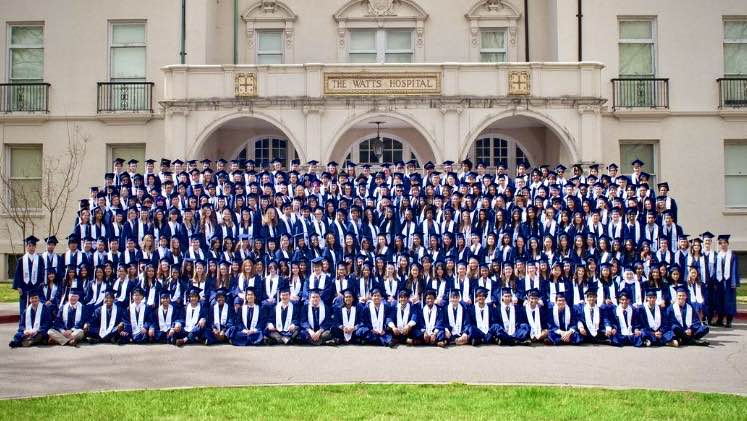
On May 25, 2024, seniors of the Class of 2024 graduated at the North Carolina School of Science and Math in Durham after receiving their diplomas on what Chancellor Roberts described as a “beautiful day.”
Other speakers included Vice Chancellor for Student Life and Chief Campus Officer Terry Lynch, Gene Davis of the UNC Board of Governors, Provost and Vice Chancellor for Academic Programs Katie O’Connor, student speaker Lucia Paulsen ’24, Student Body President Steaven Ramírez Serrano ’24, Vice Chair of the Board of Trustees and President of the Sloan Foundation Adam Falk ’83, and Chair of the Board of Trustees Stephanie M. Bass ’91.
As Counseling Services released to The Stentorian two weeks ago, out of the 289 seniors who reported their final college decisions out of the total 317 graduating seniors, the Class of 2024 represented 49 colleges across the United States. More information and statistics on the Class of 2024’s college decisions can be viewed on stentorianncssm.wordpress.com.
In this broadcast, The Stentorian reporter Teresa Fang interviews Lilianna Heffner ’25, Anna Tricomi ’25, Dr. Heather Mallory, Lucia Paulsen ’24, Riziki Chabeda ’24, May Ming ’24, Cole Thomas ’24 (and his grandmas), Eva Lou ’24, John Jahn ’24, Asa Zengerle ’25, Israel James ’25, Taylor Ellis ’25, and Ms. Maria Mileti.
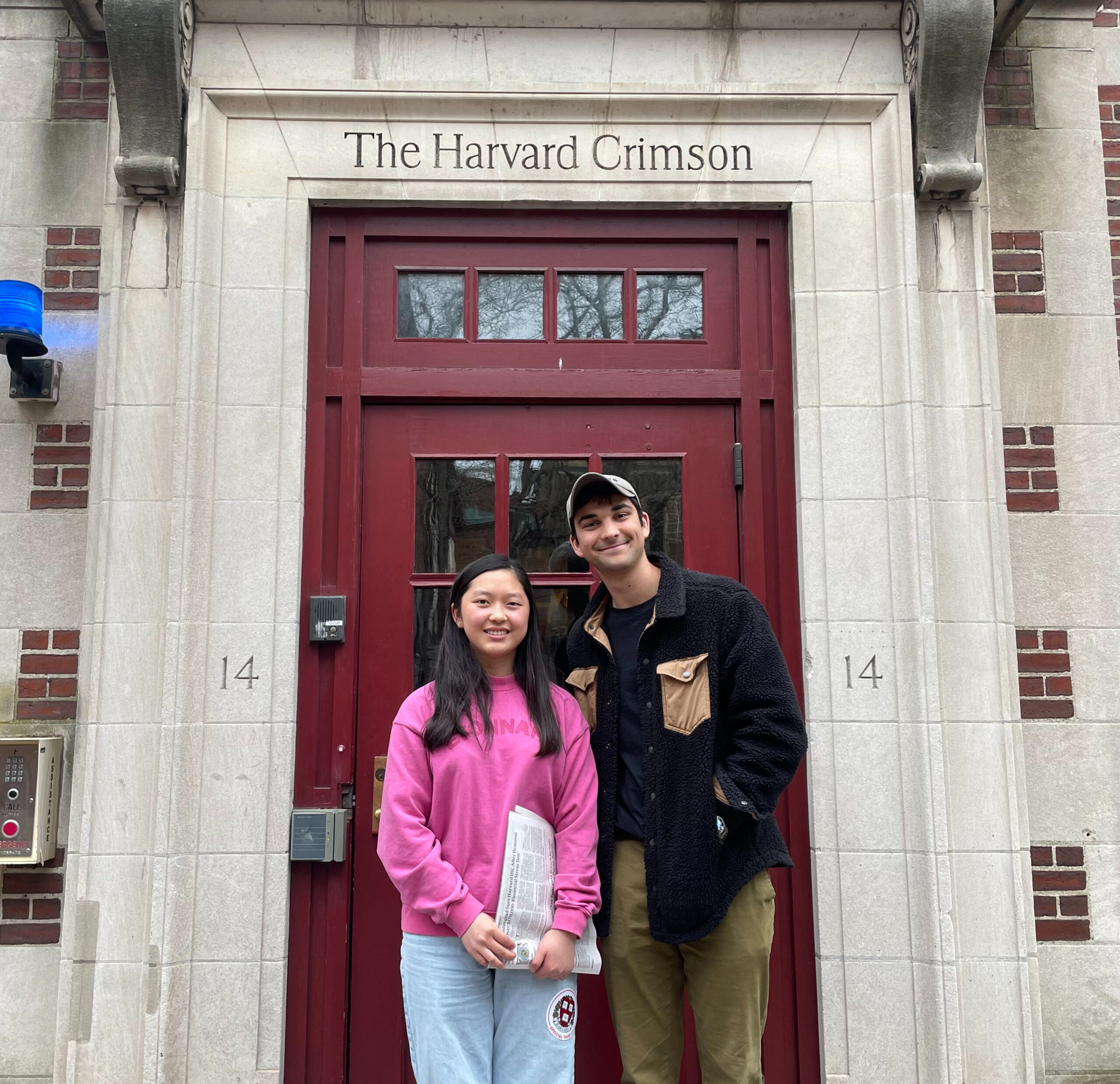
At The Harvard Crimson building on 14 Plympton St., Sellers Hill ’20 and Teresa Fang ’25, former and upcoming editors-in-chief of The Stentorian. (Teresa Fang/The Stentorian)
‘20 alum Sellers Hill’s rise to the 151st president of The Harvard Crimson reflects a student journalist’s take on the student journalism world and an age of renewal. He started as an editor for The Stentorian.
Several thousand student journalists – whether entering accidentally or not, in high school or collegiate – continue to serve their school newspapers. An unlikely base for continued journalism can arrive from unlikely places, like a STEM school called NCSSM. Although the transition from high school journalism to a college student newspaper is “certainly different,” Sellers Hill ‘20 considers his love of writing and engagement with The Harvard Crimson to his time at NCSSM.
Journalism through The Stentorian
Sellers Hill joined NCSSM with a goal of being an electrical or mechanical engineer but learned to maximize his time and opportunities. He eventually joined RChem, loved American Studies, became a senior senator, and taught himself how to be a journalist through The Stentorian.
“When I was in Science and Math, I don’t think a lot of people saw themselves as being interested in journalism. If people actually tried it, they would find that they were a lot more into it,” Hill said in an interview with The Stentorian in February. “There’s so many extracurriculars and classes that someone dedicating themselves to just one thing is not even possible.”
As the newspaper advisor and instructor of engineering John Kirk reminisced, the 2019-2020 Stentorian editorial board Hill was a part of was the closest to staying on top of monthly publishing quotas than any other year at the present… if not for the pandemic turning the campus remote midyear. However, especially with COVID, a written record of the past remains ever important as the goal of any student newspaper.
The Stentorian is no exception. “I think an important role of student journalism is to be a check on institutions and gauge how students are doing, feeling, and creating a record of that.” Hill said. “That’s the kind of most important role The Stentorian could have at Science and Math: the institutional memory.”
… and advancing to The Harvard Crimson
After arriving at Harvard College, Hill immediately joined the newspaper, where he spent the next two years writing over 100 stories as a staff writer and a reviewer for the newspaper’s readership analytics. This experience was not too different from his current responsibilities as president.
“The job is kind of a bit of everything. You’re doing a little bit of coverage. You’re doing a little bit of editorial work. [The Crimson] is a business, and now you’re dealing with business.” Hill said.
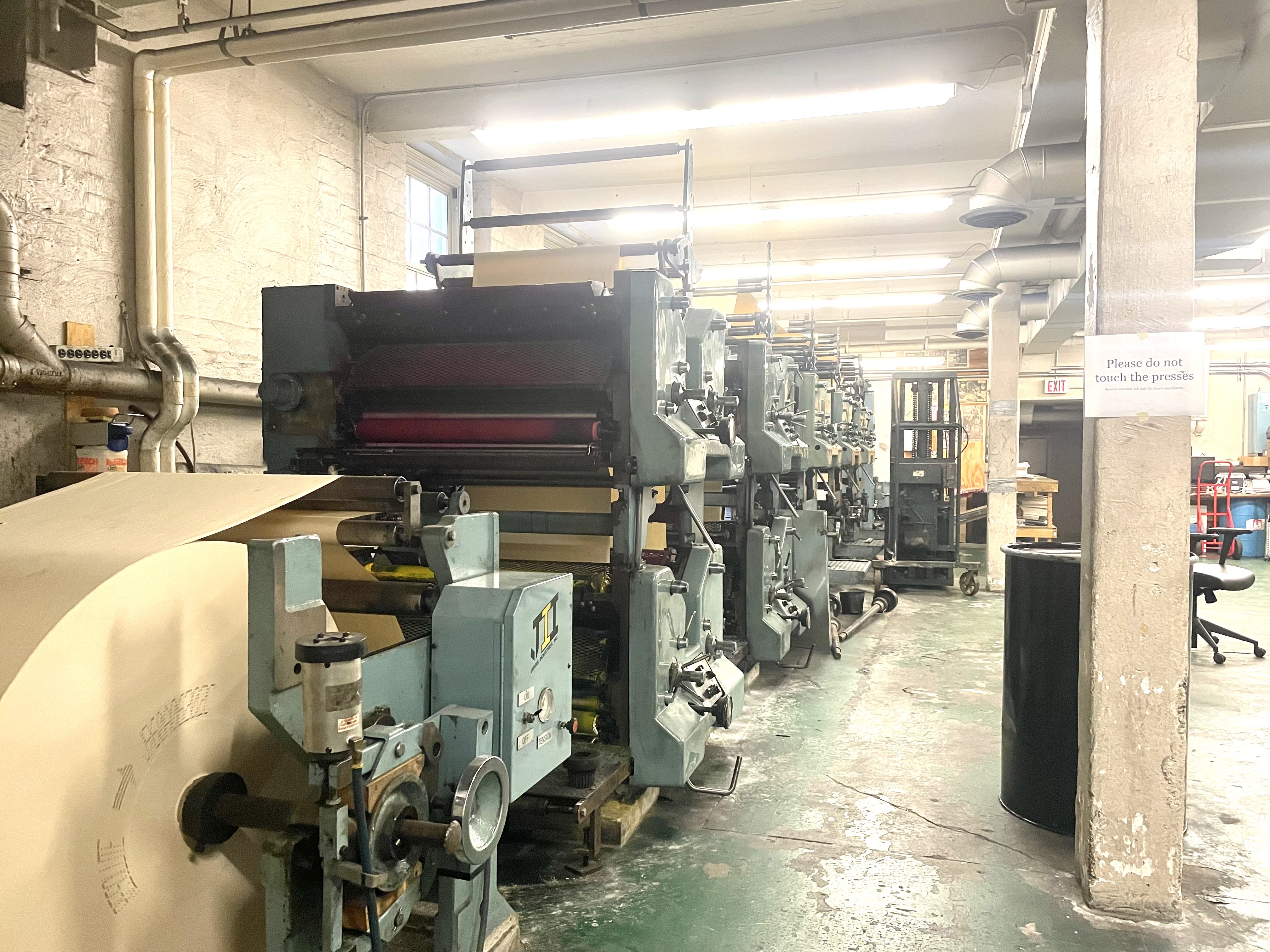
In the office’s basement, The Harvard Crimson’s old printing presses stopped rolling in 2020. (Teresa Fang/The Stentorian)
In a tour of The Crimson’s small office building hidden behind construction, he showed The Stentorian the old printing presses, which had been in use until the pandemic, with rollers still covered in ink in the 2000s-esque basement. Then, Sellers and his staff completely renewed the paper as a business. Now, they print with the help of local printing presses and are supported by external donations and advertisements.
“Over a few months, I had to understand our revenue streams, framework for making certain business calls, certain expenses, and things like that. You just kind of get thrown into it and try to learn as quickly as you can, knowing you’re probably going to make some mistakes here and there and that’s okay.” Hill said, shrugging nonchalantly.
Spending about 60-90 hours a week at The Crimson’s small office building hidden behind construction, Hill admits it is very hard to be a student. As an organic chemistry major, Hill has learned to adapt to a “brutal” work-life balance, but not without spending every day honing his sense of judgment in handling multiple tasks. But unlike at NCSSM, “you didn’t necessarily have to switch between multiple interests like research and journalism.” Students can do both.
After nearly a year as president of The Crimson, Hill offered some pieces of advice for The Stentorian and NCSSM students. With any published article or controversial/conflicted topics, the relationship between the editorial board and its interviewees and readers is one of trust and clear communication.
“When people speak to us, they know that we’re not going to turn around and say that they said something else,” Hill said. “It’s hard to get that reputation back once you’ve lost it. You have to assure your readership through years of quality journalism to show you can be trusted with things like that.”